
Lead magnets usually do not fail because they need more “power words,” a shinier PDF cover, or one more round of motivational font shopping. They fail because the thing is vague, overpromises, or asks for trust before it has earned any. That is the part worth fixing.
A better lead magnet does one job well: it helps a specific reader solve a specific problem fast enough to feel useful, but not so broadly that it turns into background noise. The goal is not to impress the internet. The goal is to make opting in feel like a sensible next step.
What a better lead magnet actually does
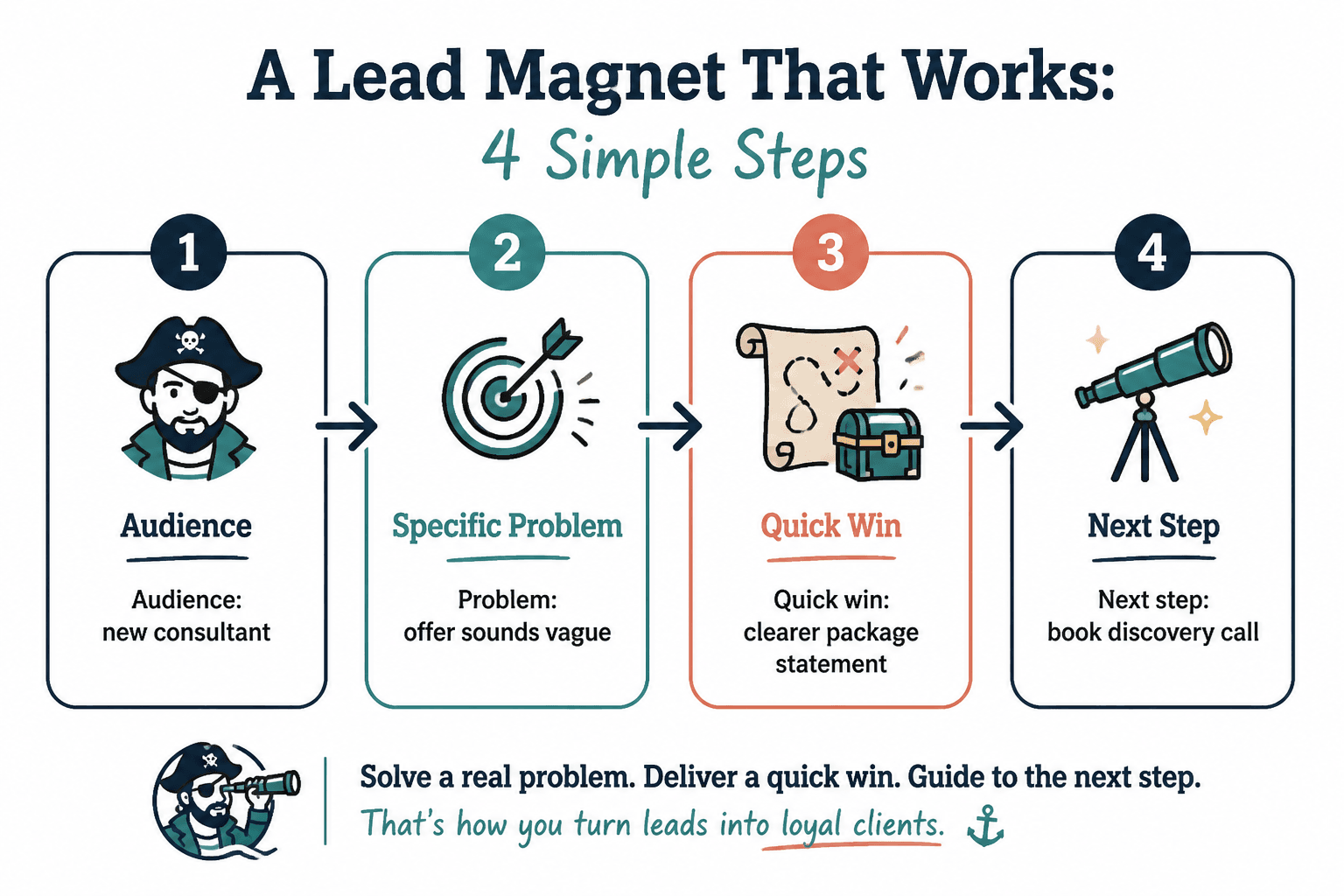
A good lead magnet is not just “free content.” It is a small trust-building machine. It should:
- name a real problem the reader already feels
- offer a useful win they can use quickly
- show what is inside so there is no guesswork
- lead naturally to the next step, whether that is another piece of content, a signup, or a paid offer
If the asset is helpful but disconnected, it becomes a little island. Nice island. No bridge. That is not ideal.
If you want the bigger strategic version of this, start with the parent guide: Lead Magnets Guide for Creators Who Want Better Results.
Start with one specific problem, not a category of suffering
“Grow your business” is not a lead magnet topic. It is a weather pattern. Useful lead magnets are built around a problem a reader can recognize immediately, such as:
- writing a signup page that does not sound generic
- choosing the right lead magnet format for a small audience
- turning old content into a freebie that people will actually use
- making the opening of a guide useful instead of sleepy
The narrower the problem, the easier it is to write the promise, the outline, and the CTA. Broad ideas tend to produce broad PDFs, which is how you end up with a download that feels like it was assembled by committee after lunch.
A useful test: can you finish this sentence without drifting into fog?
This lead magnet helps [specific reader] solve [specific problem] so they can [specific result].
If not, the idea is still too loose.
Pick the right format and length for the job
Lead magnets are not better just because they are longer. They are better when the format matches the reader’s need.
For example:
- Checklist when the reader needs a quick decision aid
- Mini guide when they need a little context before acting
- Template or swipe file when they need something to use immediately
- Scorecard or self-assessment when the value is diagnosis, not instruction
Length should follow the job. Short lead magnets work well when the goal is quick conversion. Medium-length ones work when the reader needs context. Long lead magnets only make sense when the subject genuinely needs more room.
For a fuller breakdown of length choices, see How Long Should Lead Magnets Be in 2026?
Write a title and signup hook that sound specific
The title is not the place for foggy optimism. It should tell the reader what the thing is, who it is for, and what kind of value it gives.
Compare:
- Free Guide to Marketing
- How to Write a Lead Magnet That Gets Opt-Ins Without Sounding Salesy
One sounds like a drawer labeled “miscellaneous.” The other sounds like a reason to click.
A stronger signup hook usually does three things:
- names the problem
- implies a useful outcome
- sounds like it came from someone who has actually seen the problem before
Do not inflate the promise into a lifestyle transformation. A lead magnet is not a minor miracle. It is a useful step. That is enough.
For a tighter breakdown of hook writing, use the sibling guide: How to Improve Lead Magnet Signup Hooks Without Sounding Generic.
Open with usefulness, not a warm-up paragraph
The opening of a lead magnet should help the reader orient quickly. It should not meander through polite context like a person trying to find their sentence in the hallway.
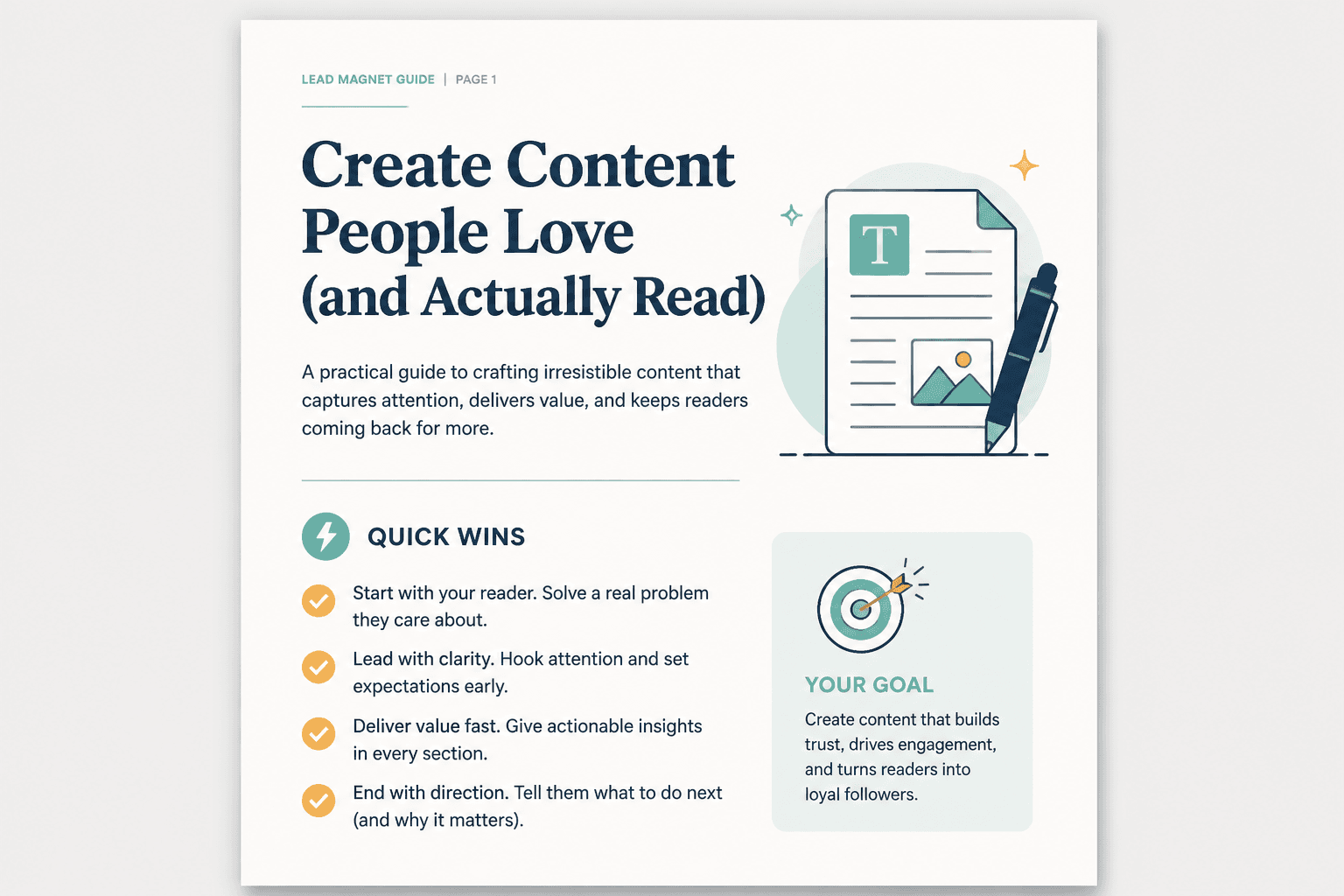
A strong opening does three things fast:
- names the problem
- adds just enough tension to make the problem feel worth solving
- shows what the reader will get from the rest of the asset
That means cutting the “welcome” fluff, the generic encouragement, and the “in this guide we will explore…” boilerplate that nobody ever printed out and framed.
If you want a deeper version of this, read How to Start Lead Magnets Without a Weak Opening.
When the opening works, the reader does not have to wonder whether the thing is going somewhere. It already is.
Write like you are helping, not performing expertise
People can tell when a lead magnet is trying to sound smart instead of useful. That usually shows up as:
- overly formal language
- abstract jargon with no concrete payoff
- paragraphs that explain the obvious in a ceremonial tone
- phrases that sound like they were generated by a corporate mood board
Better writing is clearer, not louder. It uses ordinary language when ordinary language works. It says what the reader needs to know without trying to impress them with vocabulary that walks in wearing a blazer.
A good question to ask while drafting: would a real reader say this out loud, or would they squint at it and move on?
For a more direct version of that problem, see How to Write Lead Magnets Without Sounding Salesy or Robotic.
Show the contents so people do not have to guess
One of the fastest ways to improve a lead magnet is to make the structure visible. Readers should not have to infer what they are getting.
Useful ways to show the contents include:
- a short contents list
- bullet points naming the steps or sections
- a preview of the framework, checklist, or method
- a brief “what this helps you do” summary
This matters because specificity reduces friction. When people can see the shape of the thing, it feels more trustworthy and more usable.
Make the quick win real, not tiny for the sake of being tiny
A quick win is not supposed to be a throwaway tip. It should create movement.
The common mistakes are predictable:
- the win is too generic to matter
- the win solves the wrong problem
- the win gives information but no momentum
- the win is so small it does not build trust
- the win is so big nobody finishes it
The sweet spot is a result the reader can understand, start, and feel within a reasonable amount of effort. That could mean clarity, a better draft, a simpler decision, or a usable first version of something.
If the asset cannot create movement, it is just a nicely formatted pause.
For more on this, see Lead Magnet Quick Win Mistakes That Hurt Performance.
Match the lead magnet to a clean next step
A lead magnet is not the end of the journey. It is the start of a better one.
That next step might be:
- reading a related article
- replying to an email
- viewing a relevant service or product page
- using a low-friction CTA that fits the reader’s intent
The mistake is treating every opt-in as if it should immediately sprint toward a sale. Sometimes that is right. Often it is not. The follow-up should match the trust level created by the lead magnet.
For a deeper take on this handoff, use How to Turn Lead Magnets Into More Leads or Sales.
How to rewrite a weak lead magnet fast
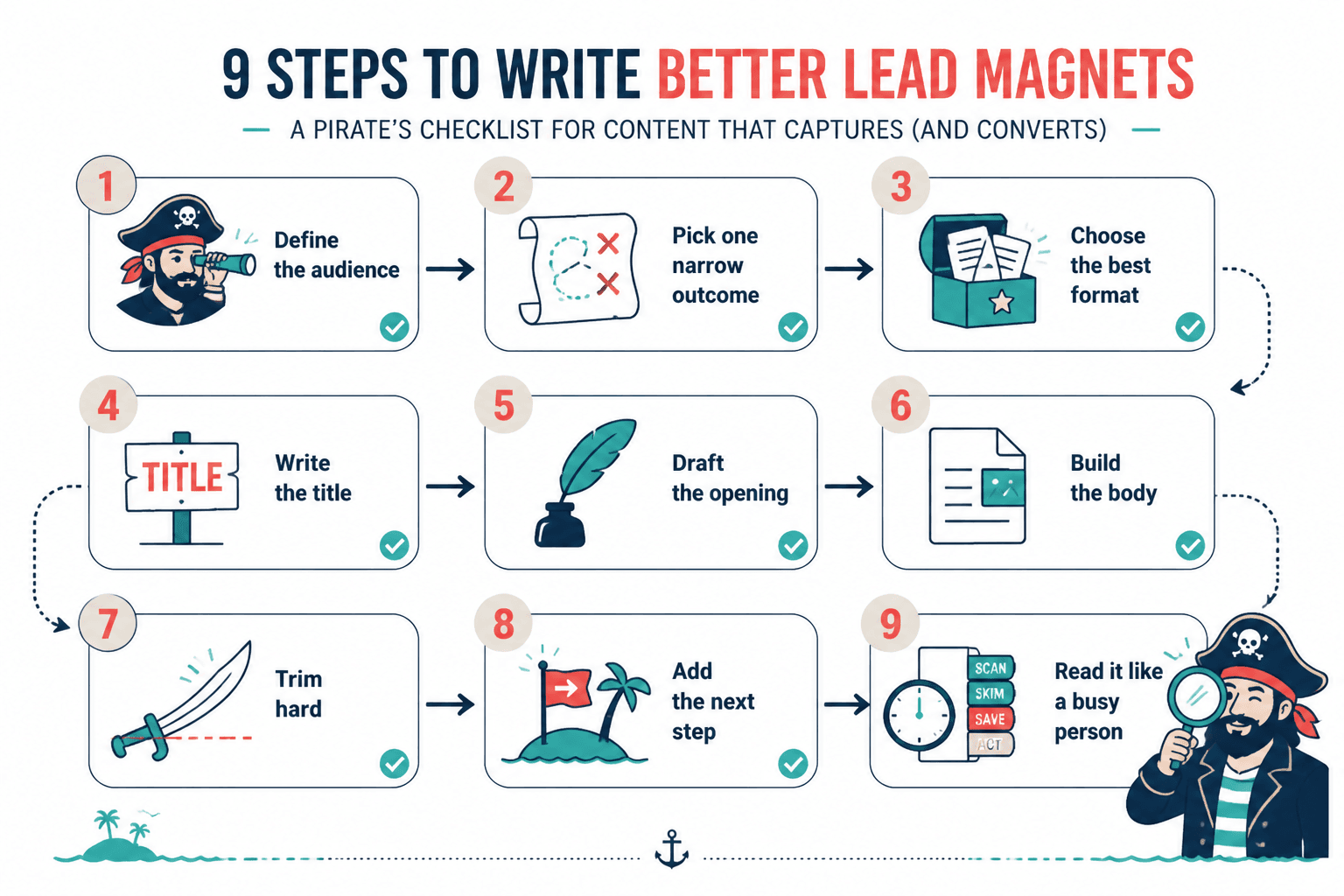
If a draft already exists, do not start by polishing the prose. Start by fixing the structure.
- Find the actual point. What is the one thing the reader needs from this?
- Cut the extras. Remove anything that does not support the promise.
- Sharpen the title. Make it more specific and less interchangeable.
- Rewrite the opening. Get to the useful part sooner.
- Show the contents. Reduce guesswork.
- Check the next step. Make sure the CTA fits the lead magnet’s job.
If the draft feels boring, the problem is usually not that it needs more energy. It needs more decision-making.
That principle also applies when you are turning old material into a new asset. If you are working from existing posts or notes, see How to Turn Old Content Into Better Lead Magnets.
Common mistakes to avoid
- Being too broad. Broad topics create weak promises.
- Writing for approval instead of clarity. If the draft sounds impressive but not useful, it is probably off track.
- Hiding the structure. Readers should know what they are getting.
- Overpromising the result. Lead magnets should be useful, not ridiculous.
- Using the wrong format. Not every problem needs a guide.
- Ignoring the next step. The lead magnet should connect to something.
If you are choosing the asset from scratch, the sibling guide Lead Magnets Examples for Coaches, Consultants, and Personal Brands can help you pick a format that fits the use case.
A simple quality check before you publish
Before the lead magnet goes live, ask:
- Does the title make a specific promise?
- Does the opening state the problem quickly?
- Does the content deliver one usable win?
- Does the structure make sense at a glance?
- Does the CTA fit the reader’s level of trust?
If you can answer yes to all five, the lead magnet is probably doing real work instead of decorative paperwork.
Build the lead magnet around the decision, not the decoration
The best lead magnets are not louder. They are more exact. They help a reader make progress without making them decode the offer first.
That is the whole point: specific problem, useful win, visible structure, clean next step. Do that well and the freebie stops acting like background noise and starts acting like the front door.
For the broader system this sits inside, go back to the lead magnets parent guide.