
A draft sits open in one tab, the landing page builder is asking for a headline, and the email platform wants a sequence before the sequence has a reason to exist. That is usually where lead magnets start to wobble: not in the idea itself, but in the gap between “free thing” and “useful next step.” Examples help because they make that gap smaller. They turn a vague content plan into something a reader can actually use.
This guide walks through lead magnet examples that fit coaches, consultants, and personal brands without turning the freebie into a miniature dissertation. If you want the broader strategy behind the formats, start with the lead magnets parent guide. If you want a stronger build process, see how to write better lead magnets.
What makes a lead magnet worth downloading
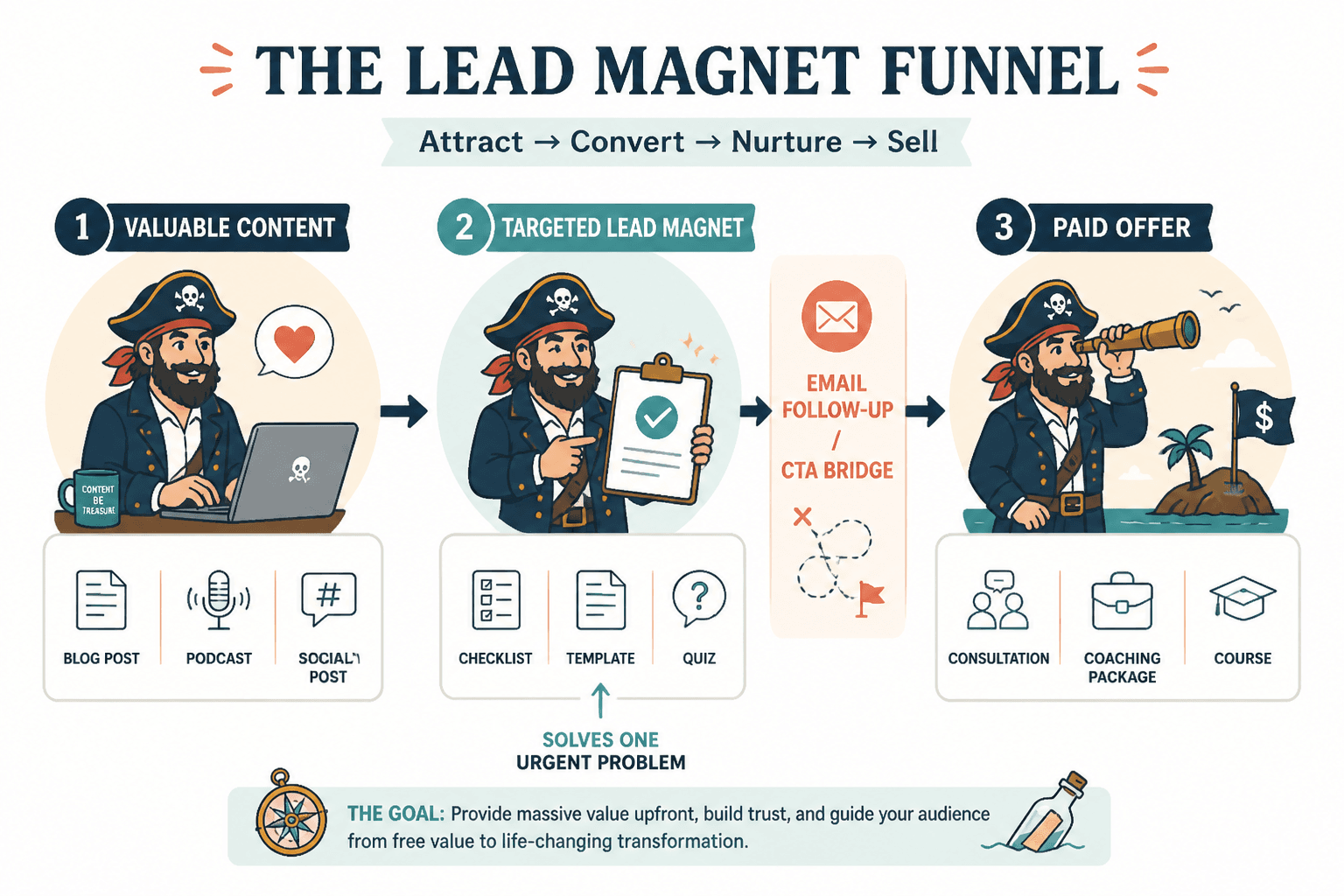
A good lead magnet does one useful job fast. It solves a narrow problem, creates a quick win, or helps someone make a decision with less friction. The point is not to impress them with breadth. The point is to make them feel, “That helped, and I can use the next thing too.”
For coaches, consultants, and personal brands, the best lead magnets usually do at least one of these:
- save time on a task the audience already wants to do
- reduce uncertainty around a decision
- show a process in a simple, usable format
- help the reader self-diagnose a problem
- create a quick implementation win that points toward a paid offer
That lines up with broader advice from sources like Nielsen Norman Group on reducing cognitive load and FTC guidance on marketing claims: if the promise is fuzzy, the trust gets expensive. Also, expensive in the annoying way.
How to choose the right example for your business
Do not start with the format. Start with the reader problem and the next paid step. A lead magnet should make sense in the path from attention to action.
Ask these questions:
- What problem is the audience already trying to solve?
- What is the fastest useful outcome you can give for free?
- What kind of paid offer comes next: service, consultation, course, membership, or productized support?
- Does the lead magnet need to teach, diagnose, compare, or package a process?
If the answer is “teach,” a short guide or mini course may fit. If the answer is “help me do it faster,” templates or swipe files usually win. If the answer is “help me know what to do,” worksheets, audits, or scorecards often do the job better.
Lead magnet examples that work well for coaches, consultants, and personal brands
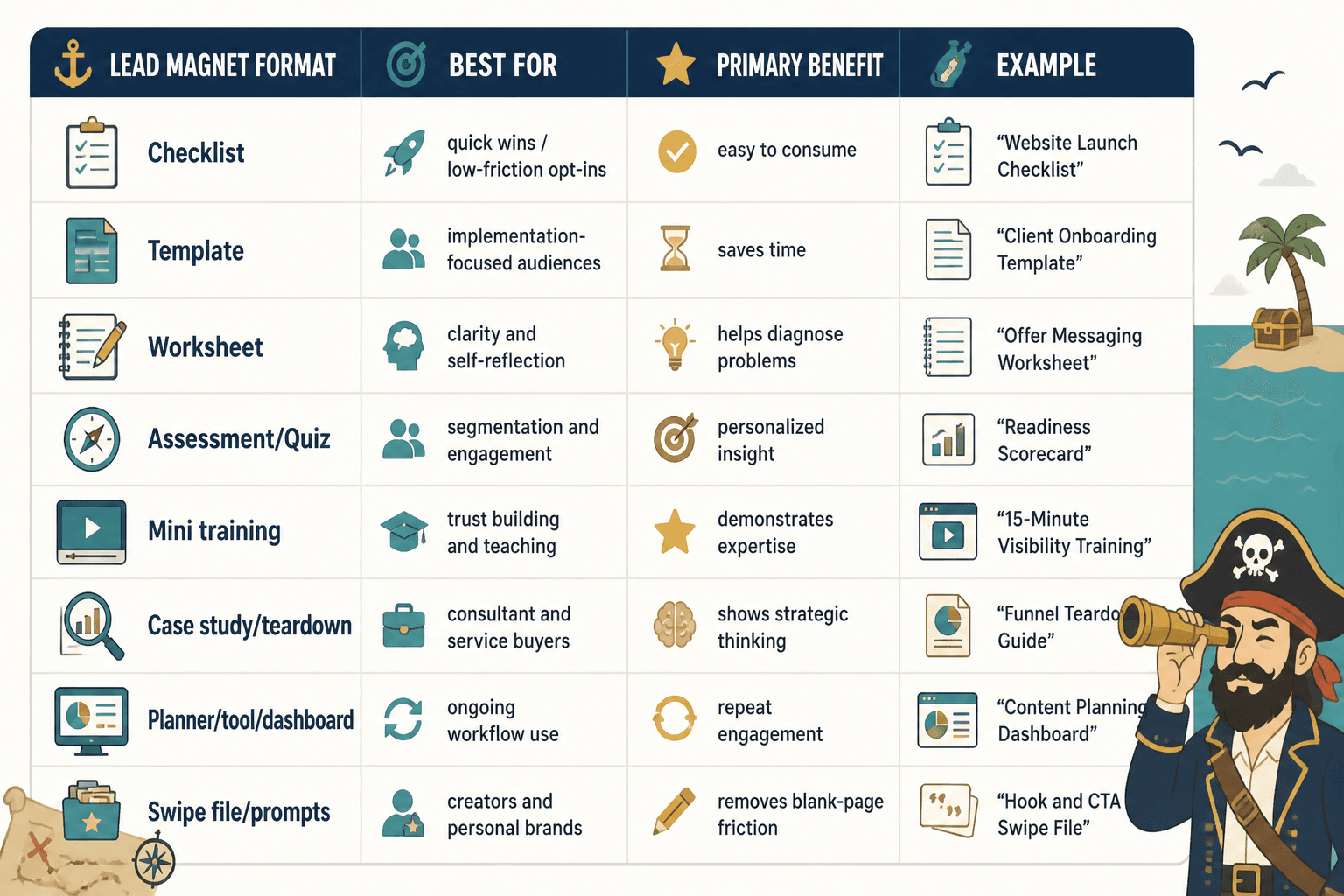
1. Checklist
A checklist is one of the simplest lead magnets because it helps a reader complete a task without overthinking the process. It works best when the audience already knows what they want to do but needs a cleaner sequence.
Best for: onboarding, launches, content planning, client delivery, or decision steps.
Example: “Pre-Discovery Call Checklist for Consultants” or “7-Step Launch Readiness Checklist for Coaches.”
Why it works: it feels practical immediately, and it is easy to skim, save, and use.
2. Template
A template is a strong choice when the audience knows the outcome they want but not the structure. It reduces blank-page friction, which is a generous thing to do for people who are already busy.
Best for: emails, client documents, content planning, workshop outlines, proposals, or onboarding flows.
Example: “Client Welcome Email Template Pack for Solo Consultants” or “Workshop Outline Template for Personal Brands.”
If you are also weighing format simplicity, the sibling guide on simple lead magnet delivery formats is worth a look.
3. Swipe file
A swipe file gives people examples they can adapt instead of inventing from scratch. This works especially well for messaging, headlines, email subject lines, or social posts.
Best for: communication-heavy offers and audiences who want inspiration plus structure.
Example: “10 Client Testimonial Prompts That Actually Get Useful Answers” or “Homepage CTA Swipe File for Service Providers.”
Use this format when the audience does not need theory first. They need language they can borrow without making it weird.
4. Worksheet or self-assessment
Worksheets are useful when the lead magnet should help the reader think, sort, or diagnose. They are particularly strong for consultants and coaches because they can tee up a deeper paid conversation.
Best for: clarity, segmentation, readiness checks, and self-diagnosis.
Example: “Offer Clarity Worksheet for New Coaches” or “Client Fit Scorecard for Consultants.”
This format is also a quiet way to qualify leads. No shouting required.
5. Mini email course
A mini email course works when the topic needs a little momentum and a few steps, not a long document. It is a good fit for building trust over several days while delivering a small but meaningful transformation.
Best for: education-led offers, mindset shifts, or multi-step processes.
Example: “5-Day Lead Magnet Strategy Email Course” or “3-Day Visibility Reset for Personal Brands.”
If you are building the content around the course, the guide on best AI tools for lead magnets can help speed up drafting without turning the whole thing into robot soup.
6. Short guide
A short guide works when the audience needs context before action. It should be compact enough to finish, but useful enough to change what they do next.
Best for: explainers, framework introductions, strategic decisions, and method overviews.
Example: “How to Choose a Service Package That Sells” or “A Short Guide to Writing a Better About Page.”
This is a good format when your paid offer sits one step deeper than the free topic and the freebie should create trust by being genuinely helpful.
7. Resource list
A resource list is useful when people are asking, “What tools, references, or steps should I use?” It is less about teaching from scratch and more about removing search fatigue.
Best for: tool recommendations, recommended reading, setup kits, and curated starting points.
Example: “Essential Tools for New Freelance Consultants” or “Brand Building Resources for Coaches.”
When this is done well, it feels like someone cut through the internet fog with a dull but effective knife.
8. Audit or scorecard
An audit-style lead magnet helps a reader evaluate where they stand and what they should fix first. It is one of the most natural ways to lead into a service offer because it creates a clear gap between current state and desired state.
Best for: service-based businesses, strategy offers, and diagnostic sales conversations.
Example: “Messaging Audit for Personal Brands” or “Client Journey Scorecard for Coaches.”
If you want to turn the lead magnet into more leads or sales afterward, see how to turn lead magnets into more leads or sales.
Matching format to business model
The same lead magnet format does not work equally well for every business. The better match depends on what you sell and how people buy it.
- Coaches: worksheets, self-assessments, mini courses, and short guides often work well because they support transformation and reflection.
- Consultants: audits, templates, scorecards, and checklists tend to fit because they show process and reduce uncertainty.
- Personal brands: swipe files, guides, resource lists, and templates are strong when the audience wants practical value tied to a point of view.
In other words: match the format to the kind of thinking you want the reader to do next. If the paid offer is strategic, the lead magnet should probably not be a random printable with a nice border and a sense of optimism.
Examples by audience problem
If the audience needs clarity
- Offer Clarity Worksheet
- Client Fit Scorecard
- Messaging Audit
If the audience needs speed
- Checklist
- Template pack
- Swipe file
If the audience needs education
- Short guide
- Mini email course
- Framework overview
If the audience needs implementation
- Workflow template
- Planning worksheet
- Step-by-step checklist
Common mistakes to avoid
- Making the promise too broad. “Ultimate guide to growth” is not a lead magnet. It is a cry for help.
- Overbuilding the format. If the PDF feels like homework, completion drops.
- Choosing the wrong job. A lead magnet should not try to teach everything, sell everything, and prove everything at once.
- Ignoring the next step. The freebie should lead naturally to the paid offer, not wander off into the forest.
- Using examples that do not fit the audience. A consultant and a personal brand may both need lead magnets, but not the same kind.
For a stronger starting point on execution, the article on how to write better lead magnets covers the writing side, while this page stays focused on the examples and format fit.
Simple lead magnet examples you can adapt fast
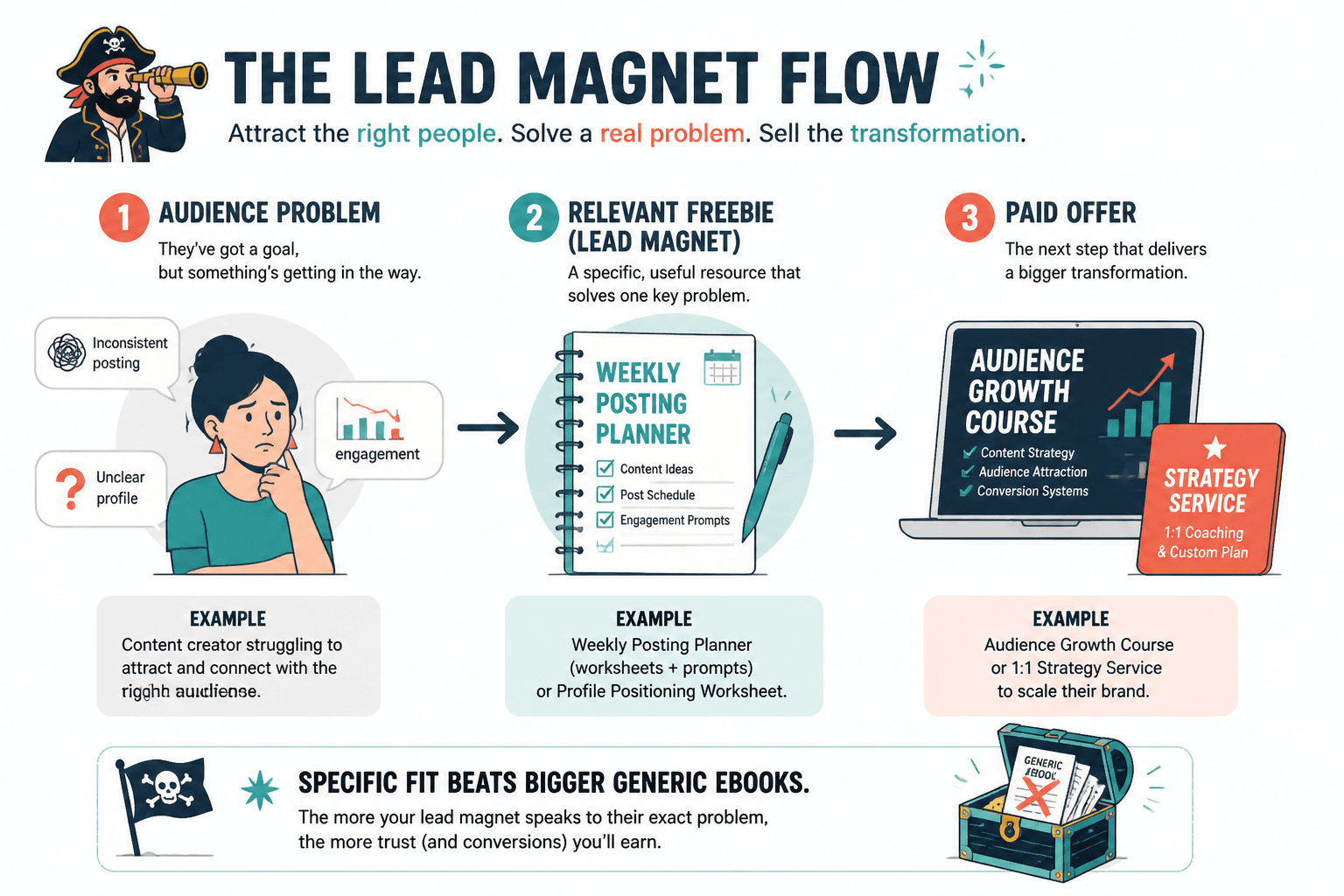
If you need to move quickly, use this pattern:
- Name the audience problem.
- Pick the smallest useful win.
- Choose the format that makes that win easiest.
- Connect the freebie to one clear next step.
That process works because it keeps the lead magnet useful instead of theatrical. The reader wants help, not a marketing exhibit.
Bottom line
The best lead magnet examples for coaches, consultants, and personal brands are not the fanciest ones. They are the ones that fit the problem, match the offer, and give the reader a useful next step without asking for too much in return.
If you want to build the full system around the magnet, use the lead magnets parent guide as the hub and pair it with the other practical pages in this cluster.