
Lead magnets tend to lose money in the same boring ways: the freebie gets the opt-in, then the handoff goes limp. The result is wasted trust, weak leads, and a funnel that looks tidy in a diagram but stalls where it should start paying for itself. The fix is not to get louder. It is to give the lead magnet a real next step.
If you are building the bigger system around this offer, the parent guide on lead magnets is the right starting point. This article is the monetization layer: what happens after the download, after the welcome email, and after the reader decides whether you were worth the inbox space.
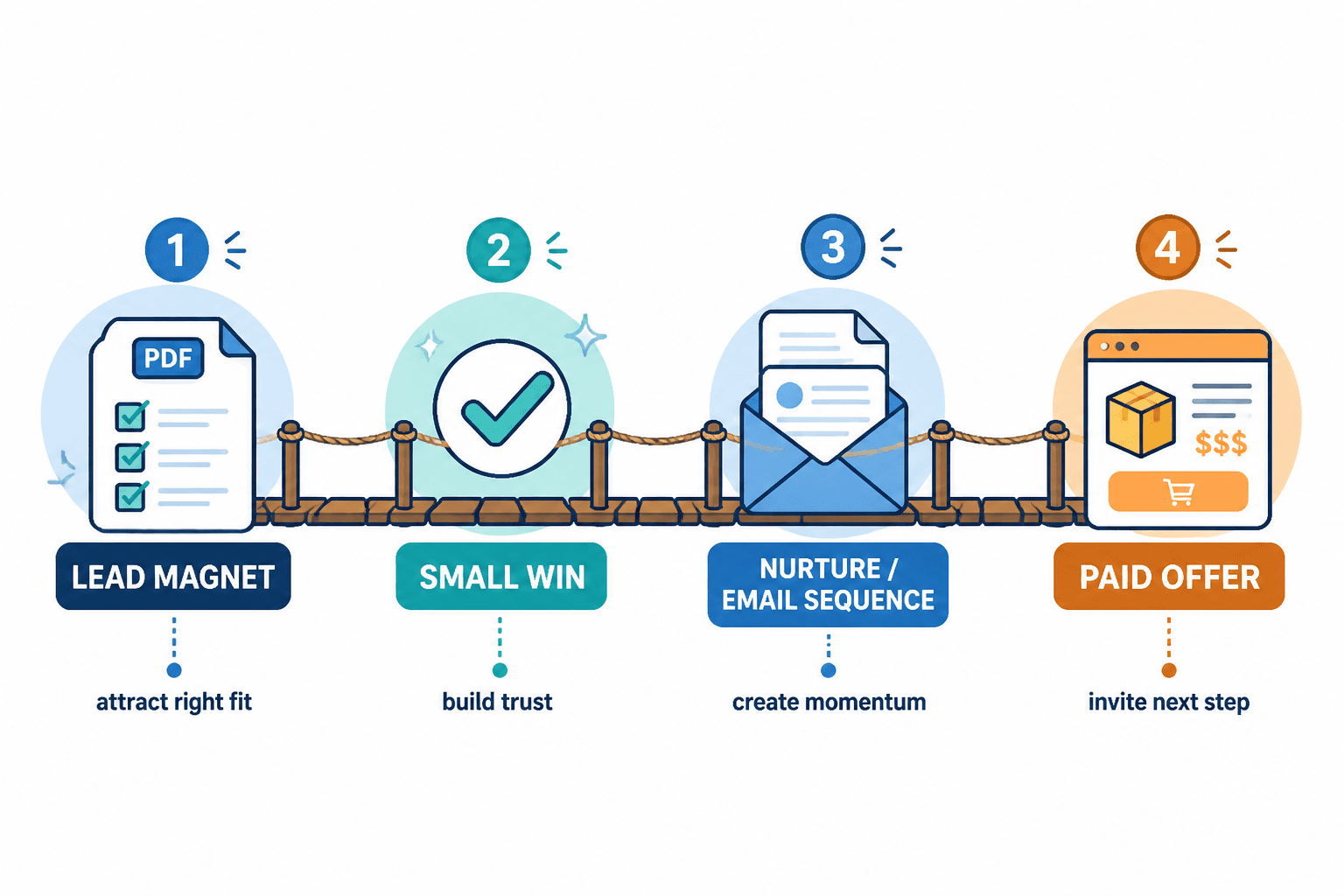
What a lead magnet should do after opt-in
A lead magnet is not just a file. It is a transition. The free resource should create enough momentum for one of three outcomes:
- the reader takes a small next step
- the reader enters a nurture sequence
- the reader moves toward a paid offer
That means the lead magnet should not try to do everything. It should solve one useful problem, then point to the next logical move. A good lead magnet earns attention. A better one earns the right to ask for a second click.
That second click matters more than people like to admit. Without it, the funnel becomes a one-and-done download with a thin hope attached.
The best ways to turn a lead magnet into more leads or sales
There is no single correct next step. The right move depends on how warm the audience is, how expensive the offer is, and how much explanation the sale needs. These are the most useful patterns.
1. Lead magnet to nurture email sequence to core offer
This is the safest and often strongest default. The lead magnet delivers a quick win, then a short email sequence builds context, handles objections, and introduces the main offer.
Use this when:
- the offer needs explanation
- the audience is early-stage
- the sale depends on trust more than urgency
A simple sequence can do a lot of work if each email has one job. One explains the problem. One shows a useful framework. One addresses a common hesitation. One invites action. No drama, no confetti cannon.
2. Lead magnet to tripwire offer to higher-value product or service
A tripwire can work when the lead magnet attracts the right people and the paid product solves the next obvious problem. The goal is not to squeeze revenue from the first touch. The goal is to let the first purchase confirm intent.
Use this when:
- your freebie attracts a broad audience, but the buyers are easier to identify after a small purchase
- you have a low-cost, high-confidence starter offer
- your higher-value offer needs a warmer lead
For a clean path here, the freebie should point toward a very specific paid outcome. Otherwise the tripwire becomes a random side quest.
3. Lead magnet to consultation or strategy call
This works best when the offer is high-consideration and personalized. The lead magnet should pre-qualify, not merely entertain.
Use this when:
- you sell services or custom work
- the buyer needs diagnosis before buying
- you want the lead magnet to do some sorting for you
A good consultation path asks for a clear next action and gives the reader enough confidence to take it. The lead magnet can do part of the qualifying by making the problem more specific.
4. Lead magnet to webinar or workshop
This is useful when the topic needs demonstration, examples, or live teaching. The lead magnet opens the door; the workshop deepens belief.
Use this when:
- your topic is easier to show than explain
- the audience needs a fuller picture before buying
- you want a time-bound conversion event
A workshop path works best when the lead magnet and workshop feel like one continuous lesson, not two separate marketing attempts in a trench coat.
5. Lead magnet to newsletter to soft conversion path
Sometimes the best conversion path is slower. A newsletter is useful when the audience needs repeated exposure before buying and the immediate offer would feel premature.
Use this when:
- the freebie attracts many readers who are not ready yet
- you want to build habit and familiarity
- your future offers depend on ongoing attention
This path is especially good for creators and solo businesses that want a stable audience relationship, not just a burst of clicks. For related examples, see lead magnet examples for coaches, consultants, and personal brands.
6. Lead magnet to segmented funnel based on interest or readiness
This is the cleanest way to avoid sending everyone to the same mediocre follow-up. Let the lead magnet trigger different next steps based on what the reader wants or how ready they are.
Use this when:
- your audience has distinct needs
- you offer more than one paid path
- you want the follow-up to feel relevant, not generic
Segmentation can be as simple as one question after opt-in or one behavior-based branch in the email sequence. The point is to stop treating every subscriber like they arrived by identical circumstances from the marketing cloud.
Where to place the next-step CTA
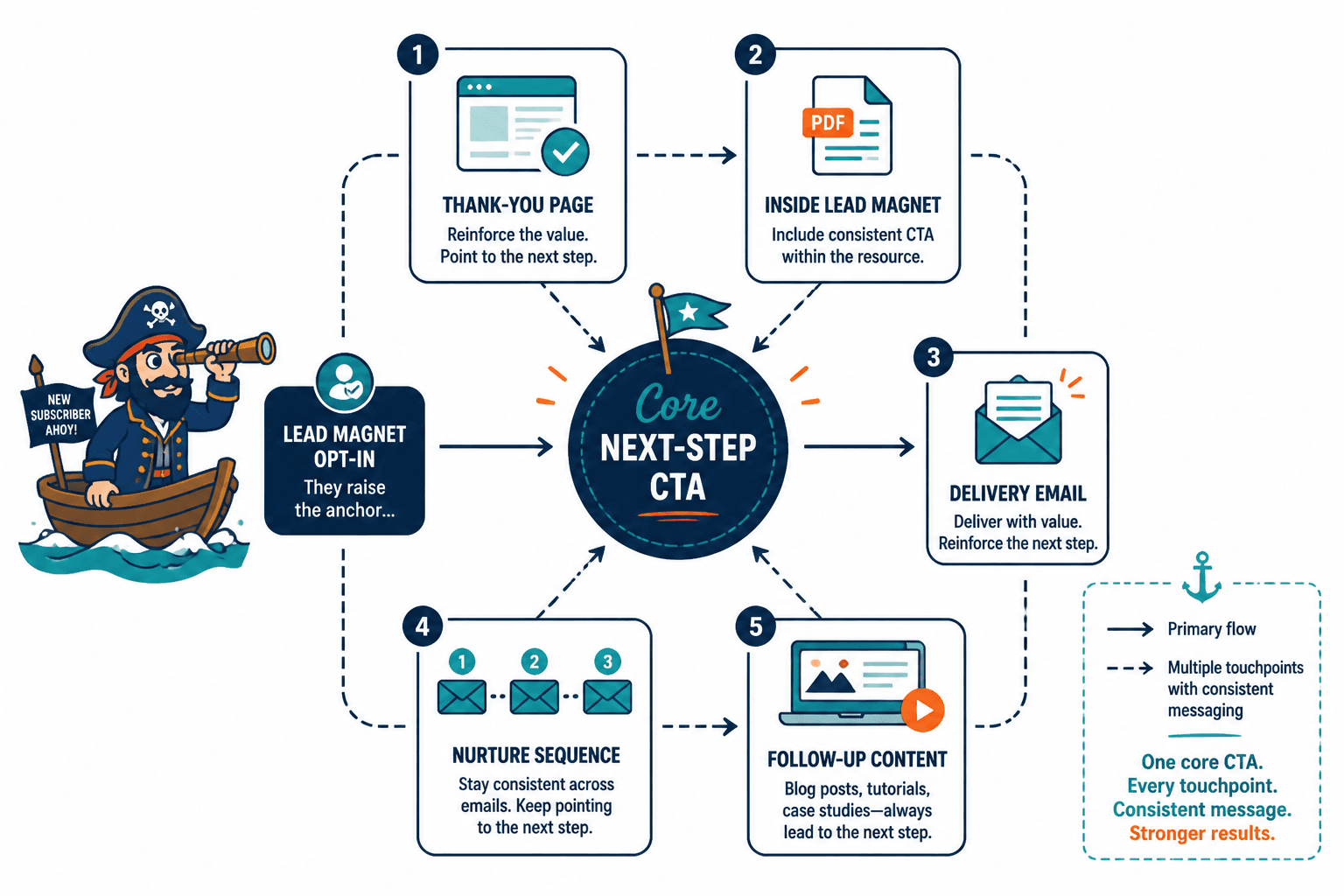
The CTA should not hide in one lonely spot at the bottom and hope to be discovered by curiosity and luck. Give it several chances to appear naturally.
Useful places include:
- the thank-you page
- the first delivery email
- the end of the lead magnet itself
- a mid-sequence email
- the final email in the sequence
The goal is consistency, not desperation. You are not ambushing the reader. You are making the next step obvious whenever they are ready to take it. The best placement depends on the offer, but the rule is simple: do not make people hunt for the thing you actually want them to do.
For a more trust-sensitive version of this setup, see how to monetize lead magnets without wrecking trust.
How to match the paid offer to the free promise
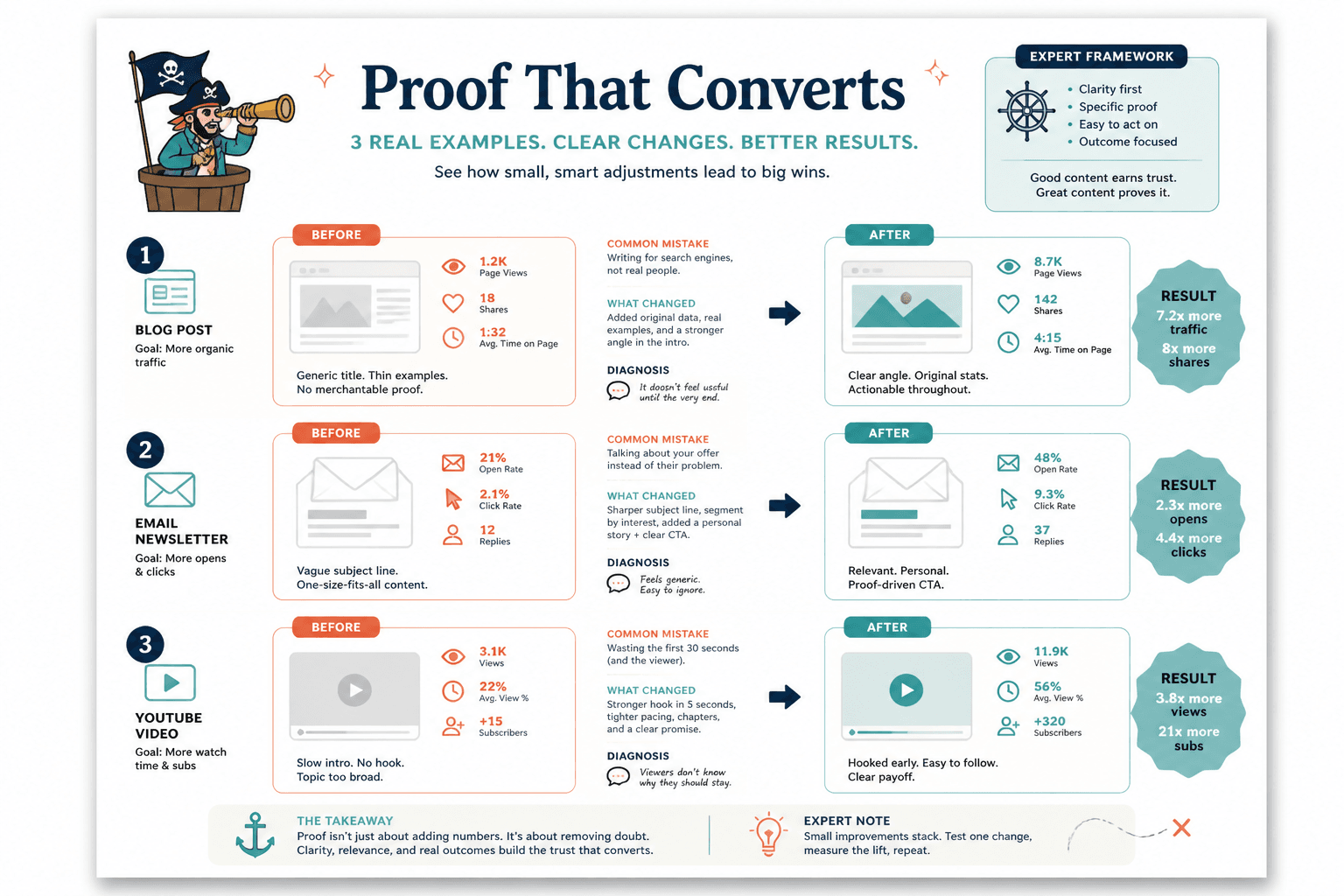
This is where a lot of funnels start lying by accident. The lead magnet promises one thing, then the paid offer solves something adjacent but not quite the same. That mismatch makes the next step feel pushy, even if the offer is good.
A clean match usually looks like this:
- Free promise: a quick win, framework, or diagnostic
- Paid offer: the implementation, deeper support, or full system
Bad match:
- freebie teaches a narrow tactic
- paid offer sells a broad unrelated service
Good match:
- freebie helps the reader understand the problem
- paid offer helps them solve it faster, more completely, or with less guesswork
A simple test helps: would a reader who found the freebie genuinely useful understand why the paid offer exists? If not, the funnel needs repair.
That repair is often easier than rebuilding the whole thing. Usually the issue is not the product; it is the bridge.
How to write follow-up emails that help first and sell second
Good follow-up does not feel like a hostage negotiation with extra punctuation. It should earn attention before it asks for action.
A practical sequence might look like this:
- Welcome and delivery: set expectations and point to one next step
- Quick win: help the reader use the lead magnet properly
- Problem framing: show the bigger issue behind the quick win
- Objection handling: address the most common hesitation
- Offer email: make the paid next step clear and relevant
If you need a structure reference, the article on how to write better lead magnets helps with the freebie side, while best AI tools for lead magnets can help with drafting and production if your workflow is moving at the speed of molasses.
Keep the tone useful. Every email should either teach, clarify, or remove friction. Selling is fine. Selling without contribution is where trust starts leaving by the back door.
How to tell whether the system is working
Do not judge the funnel only by downloads. That is a vanity metric with a clipboard.
Track the next-step behavior instead:
- opt-in rate
- email open and click rates
- thank-you page clicks
- conversion to call, workshop, or purchase
- unsubscribe rate after the first few emails
Look for drop-off points. If lots of people opt in but almost nobody clicks the next step, the offer match may be off. If people click but do not convert, the sales page or delivery path may need work. If they disappear after email one, the sequence may be too generic or too fast.
That is why the follow-up matters. It turns a free download into a measurable path instead of a vague asset sitting in the digital basement.
For more on building the system around the offer, the parent guide on lead magnets ties the whole cluster together.
Common mistakes that quietly kill conversion
- Promising too much: the freebie overhypes what it can do
- Offering too little: the lead magnet is pleasant but does not create momentum
- Sending everyone the same follow-up: no segmentation, no relevance
- Making the CTA hard to find: the next step is technically there, but only if the reader enjoys scavenger hunts
- Skipping the trust bridge: the sequence jumps from download to sale with no reason to believe
- Measuring the wrong thing: celebrating opt-ins while ignoring sales or qualified leads
These problems are common because they are easy to miss. The page still works. The email still sends. The numbers just quietly underperform and politely ruin your week.
Quick checklist
- Does the lead magnet solve one clear problem?
- Is the next step obvious and relevant?
- Does the paid offer logically extend the free promise?
- Is there a nurture path for readers who are not ready yet?
- Are you measuring clicks and conversions, not just downloads?
- Does the follow-up help before it sells?
Bring the lead magnet back into the money path
A lead magnet should not just collect emails and hope for the best. It should move the right people toward the right next step. That can mean a sale, a call, a workshop, a newsletter, or a segmented path that keeps the conversation relevant.
If you want more examples of what that can look like in practice, the sibling guide on best funnel ideas to pair with lead magnets covers the main models. If the real issue is whether your free offer deserves the follow-up, start with how to monetize lead magnets without wrecking trust.
In short: keep the promise tight, keep the handoff clear, and give the lead magnet a job beyond being mildly appreciated.