Most website bios for small creators try way too hard to sound established.
They pile on titles, vague promises, and polished fluff like “helping purpose-driven brands elevate their impact,” then wonder why nobody clicks, replies, or books. The issue is not that your audience is small. It is that your bio and profile copy are doing the awkward online version of overintroducing themselves at a dinner party.
Website Bio and Profile Copy for Creators With Small Audiences needs a different approach. When you do not have giant follower counts, huge logos, or a library of public proof, your copy has to work harder on clarity, relevance, and trust. Not harder in a louder way. Harder in a smarter way.
This is about writing bio and profile copy that makes the right person think, “Ah. This is for me,” instead of, “This sounds professionally meaningless.” If your audience is still growing, that is fine. You do not need celebrity copy. You need useful positioning, a believable promise, and a next step that does not feel like a trap.
For the full path around this topic, head to the parent guide.
Small audience does not mean small trust potential
A lot of creators write bios as if they need to compensate for a smaller audience by sounding bigger than they are. That usually backfires.
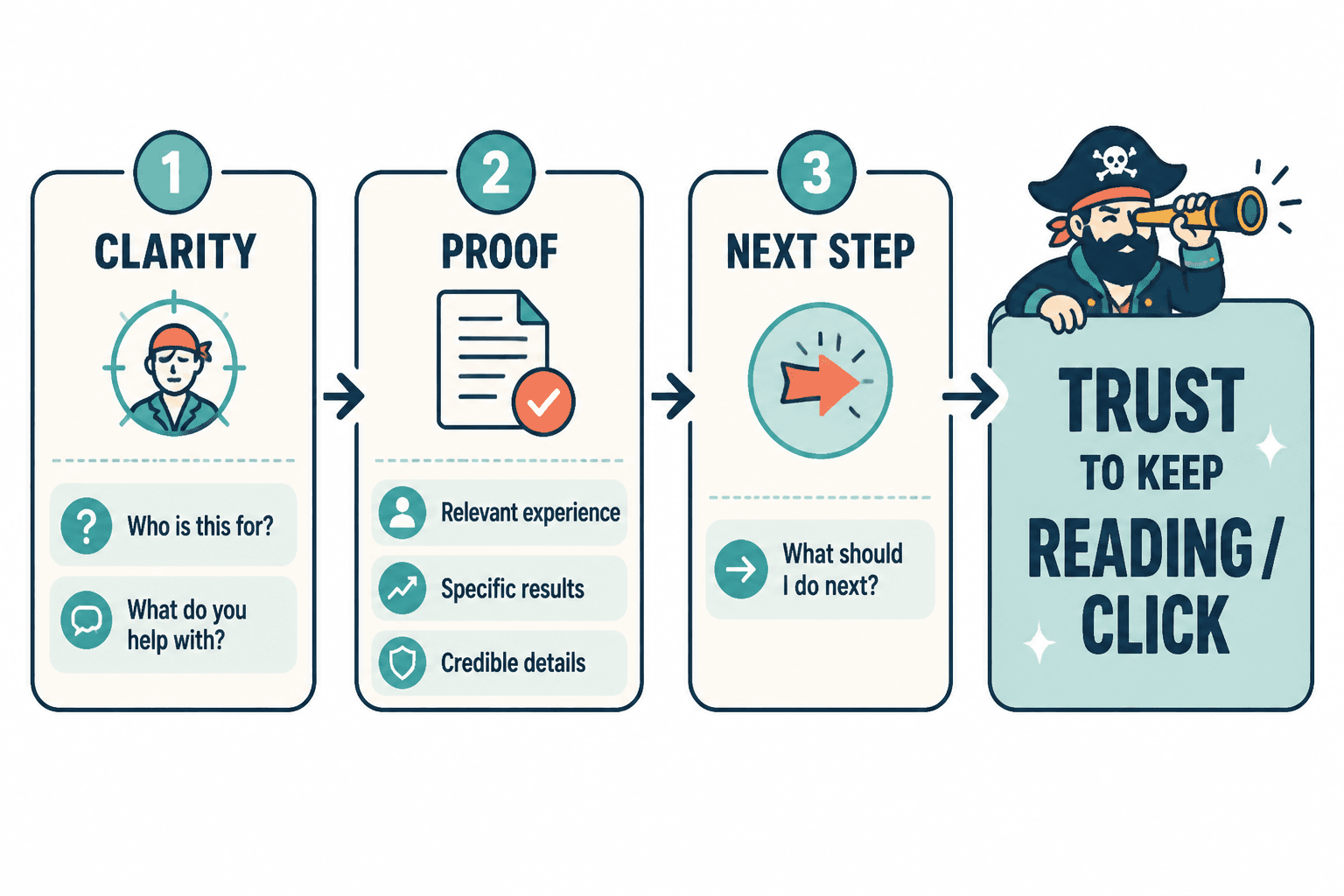
People are not scanning your website bio looking for internet fame. They are trying to answer a few simple questions fast:
- Who is this for?
- What does this person actually help with?
- Do I trust them enough to keep reading?
- What should I do next if I am interested?
If your bio answers those well, a small audience is not some fatal weakness. In a lot of cases, it can even help. Smaller creators often sound more human, more direct, and less inflated. That is useful. Keep it.
The goal is not to hide your size. The goal is to remove avoidable doubt.
What your website bio actually needs to do
Good bio and profile copy is not a life story. It is not a mission statement in a blazer. It is conversion copy in a smaller space.
At minimum, your bio should do four things:
- Identify the audience: who you help
- Name the outcome: what you help them do
- Add proof: why they should believe you
- Point somewhere: what they should click next
That is the structure. The style matters too. Your copy should sound like a capable person, not an exhausted brand workshop.
If you want a broader foundation first, this guide on bio and profile copy for websites covers the core principles. What matters here is how to adapt those principles when you do not yet have huge public proof or a giant platform.
The biggest mistakes small creators make in their bio copy
1. Sounding broad to sound important
“I help people grow.” Cool. With what? Toward what? Are we talking revenue, confidence, email lists, deadlifts, or tomatoes?
Broad copy feels safer because it seems more inclusive. In practice, it makes you forgettable. Specificity creates relevance. Relevance creates trust.
2. Listing too many roles
Writer. Coach. Consultant. Strategist. Speaker. Creator. Mentor. Founder. Human being. Coffee enjoyer.
You do not need to stuff every identity into your bio. Pick the role that best matches the offer or outcome your website is built around. Too many roles make people work to understand you, and people are not in the mood for homework.
3. Using empty promise language
Phrases like “empower,” “transform,” “elevate,” and “unlock” often show up when the writer does not want to say anything concrete. If your copy could belong to a business coach, yoga teacher, agency founder, or career mentor without changing a word, it is too vague.
4. Acting like proof only counts if it is huge
You may not have Fortune 500 logos or a seven-figure screenshot montage. Fine. That does not mean you have no proof.
Proof can include:
- Years of relevant work
- A specific type of result
- Client feedback
- A clear method
- Your own documented experience
- A niche area of expertise
- Volume, like number of projects, pieces, or sessions
Small creators often ignore perfectly usable credibility because it does not feel flashy enough. Flashy is optional. Believable is not.
5. Forgetting the next step
A bio without a CTA is just a nice little island. Your reader gets there, nods politely, then drifts away.
If someone likes what they see, make the next move obvious. Read the examples. Book a call. Join the list. Start here. View services. Pick one.
A practical formula for website bio and profile copy for creators with small audiences
You do not need one magic template, but you do need a structure that stops you from writing fog. Here is a practical formula that works well for creators, coaches, consultants, and personal brands with smaller but relevant audiences.
The 4-part bio formula
- Who you help
- What you help them do
- Why they should trust you
- What to do next
That is simple on purpose. Most bios get worse when they become more “creative.”
For example:
I help solo consultants turn messy expertise into clear website copy that earns more replies, leads, and inquiries. After 60+ brand messaging and website projects, I know where smart people start sounding vague. Start with my examples or book a strategy session.
That works because it is clear, targeted, and grounded. No dramatic origin story required.
How to write each part without sounding inflated
1. Who you help
Name a real group. Not “visionaries.” Not “changemakers.” Not “humans ready for more.”
Better audience labels include:
- Independent coaches
- Solo consultants
- B2B service founders
- Personal brands
- Freelance writers
- Creators selling digital products
If you serve more than one group, ask which one matters most on this page. Your website should not try to win every possible stranger.
2. What you help them do
This is where vague bios fall apart. Do not describe your process in abstract terms. Describe the useful outcome.
Weak:
I help entrepreneurs show up powerfully online.
Better:
I help consultants write clearer website messaging so more of the right prospects understand what they do and reach out.
The second version gives the reader something they can picture. That matters.
3. Why they should trust you
This is not where you chest-thump. It is where you reduce uncertainty.
Your proof can be modest and still persuasive if it is specific. Compare these:
Trusted by many amazing clients.
Over the past three years, I’ve helped 40+ service businesses tighten their website messaging and offers.
One is wallpaper. One gives shape.
If you need help strengthening this part, these credibility lines for personal brands can help you build trust without sounding like a résumé in heat.
4. What to do next
Your CTA should match the reader’s level of intent. If your audience is small, asking every visitor to “Book now” can be too abrupt. Many people need a softer next step first.
Better next-step options include:
- See examples
- Read the guide
- View services
- Join the newsletter
- Start here
- Book a fit call
If you want the bio to support actual conversion rather than just self-description, read how to turn bio and profile copy for websites into more leads or sales.
Before-and-after bio rewrites
Nothing clears this up faster than seeing the difference on the page.
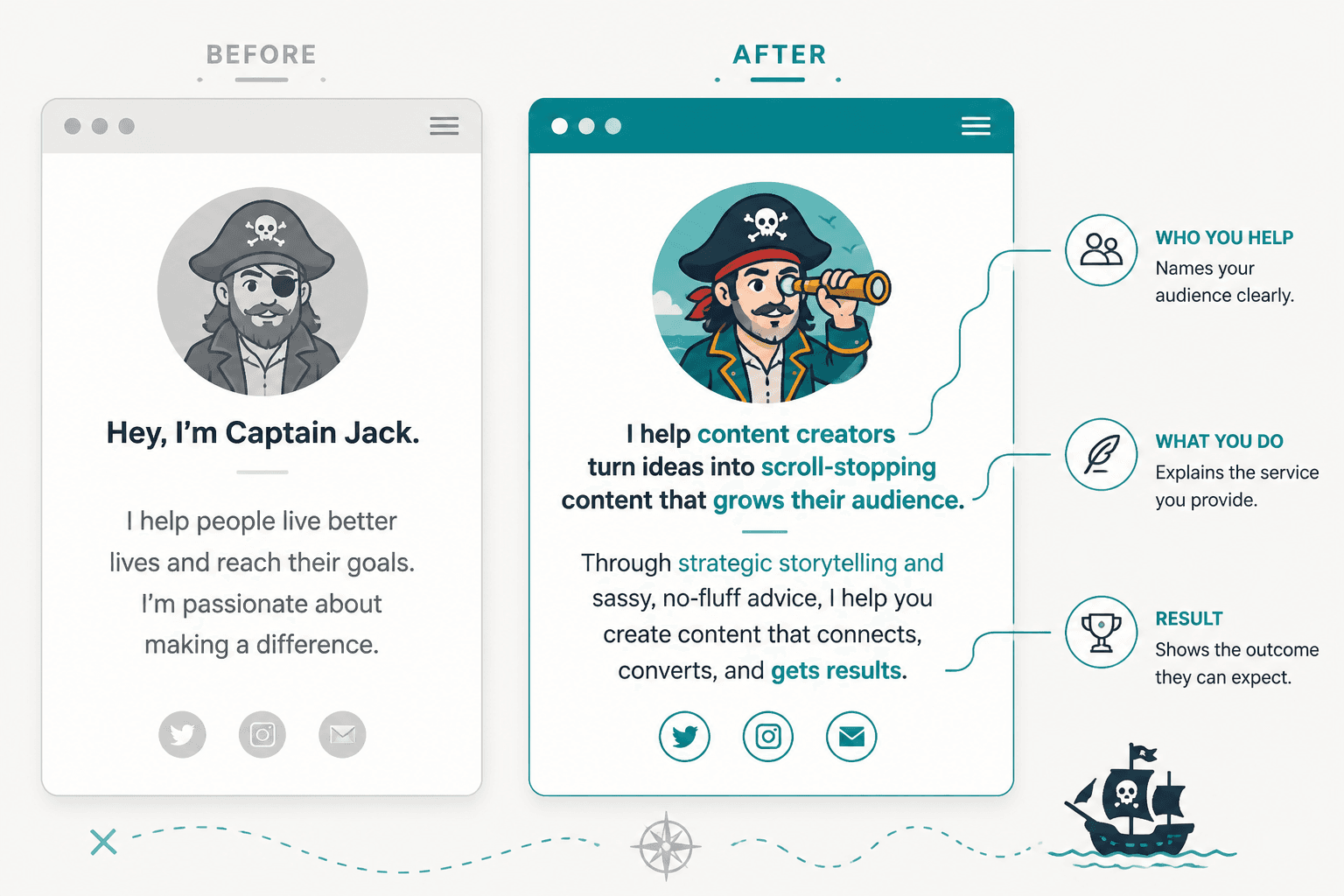
| Before | After |
|---|---|
| I’m a passionate entrepreneur helping ambitious leaders unlock their next level through strategy, mindset, and authentic growth. | I help independent coaches clarify their message, offers, and website copy so potential clients understand the value faster and inquire with more confidence. |
| Writer, speaker, mentor, consultant, creator, and founder building a meaningful life and helping others do the same. | I write conversion-focused website copy for solo service brands that want to sound sharper, clearer, and more credible without becoming corporate wallpaper. |
| I support purpose-driven businesses in elevating their digital presence. | I help small service businesses improve homepage, bio, and offer copy so their websites do more than just sit there looking responsible. |
The “after” versions are not better because they are fancier. They are better because they answer obvious questions quickly.
What to say when you do not have massive proof yet
This is the part a lot of small creators get stuck on, so it deserves a little more than a bullet list.
If you are early, you may feel like your only options are either underselling yourself or pretending to be further along than you are. Neither is great. The first makes you invisible. The second makes you sound slippery.
The better move is to use proof that is true, relevant, and concrete. You do not need to present yourself as a giant name. You need to present yourself as someone who understands a specific problem well enough to help solve it.
That can look like this:
- “I’ve spent the last two years helping coaches tighten their website messaging and service pages.”
- “I’ve written 100+ pieces of content on creator positioning, website copy, and audience growth.”
- “My background in sales gives me a sharper eye for the parts of a website that lose trust fast.”
- “I specialize in helping personal brands explain complex offers in plain English.”
See the pattern? Specific. Calm. Useful. No fake empire energy.
Best bio formats for different kinds of creators
For coaches
Focus on audience, transformation, and method clarity. Coaches often drift into soft emotional language that sounds nice and says very little.
I help first-time coaches build a clearer offer, sharper message, and simpler client journey so they can market with less flailing and more confidence.
For consultants
Focus on expertise, business outcome, and credibility. Consultants need less soul fog and more precision.
I help B2B service firms fix unclear positioning and website messaging so prospects understand the value faster and sales conversations start warmer.
For writers and creators
Focus on what you make, who it helps, and what the reader should do next. Do not assume your work speaks for itself. It does not. It mumbles unless your copy frames it.
I write practical content for creators who want sharper websites, stronger positioning, and less robotic marketing. Read the latest guides or join the email list.
If you want more models to work from, these bio and profile copy examples for coaches, consultants, and personal brands are worth bookmarking.
How to make a small audience feel like an advantage
You do not need to mention your follower count. In fact, usually do not. But your copy can still reflect the strengths smaller creators often have.
- Closeness to the audience: you understand the problem because you hear it directly
- Specific focus: you are not trying to serve the whole internet
- Hands-on experience: you are usually closer to the actual work than bigger “personal brands” with five layers of team polish
- Human tone: you can sound like a person instead of a content committee
There is a real advantage here. Small creators can often write more grounded copy because they are still close to the friction, confusion, and objections their audience actually has. That closeness is useful if you put it on the page well.
Where your bio should lead
Your website bio should not exist in isolation. It should feed into a simple conversion path.
For a lot of creators with small audiences, the best path is not complicated:
- Bio to services page
- Bio to examples page
- Bio to lead magnet
- Bio to newsletter
- Bio to booking page
The point is to reduce decision friction. If the reader likes your positioning, do not make them hunt for the next step.
If you are still deciding what that next step should be, these funnel ideas to pair with bio and profile copy for websites will help you avoid the classic mistake of writing trust-building copy and then sending people nowhere useful.
A simple bio checklist before you publish
The bigger point is simple: clearer structure and clearer writing make the piece more useful. That is usually what makes the ending land better too.
Bio and profile copy work best when they make the reader understand who you help and why it matters quickly. Clearer positioning usually beats extra polish.