
A newsletter subject line can do real commercial work, or it can generate open rates and a comforting pile of nothing. The expensive version is the second one: wasted trust, weak leads, and sales that never get a fair shot because the click was never matched to a useful next step.
The goal is not to make every subject line “salesy.” It is to make the subject line pull the right reader into the right path. That means the promise in the inbox, the body copy, and the offer all need to behave like they were introduced properly. Novel concept, I know.
What monetizing a subject line actually means
Monetizing a subject line does not mean cramming a sales pitch into the inbox line and hoping for the best. It means using the subject line to create the right kind of click for the right kind of conversion.
That could mean:
- a click to a lead magnet that starts a nurture path
- a click to a consultation or booking page
- a click to a webinar or event registration
- a click to a product or service page
- a click to a segmented email sequence that qualifies the reader
The subject line is the doorway, not the whole house. If you want a better map of how subject lines fit into the broader writing system, the parent guide on newsletter subject lines is the place to start. For broader framing on examples and phrasing, the companion page on best newsletter subject lines is useful too.
Why trust breaks so fast
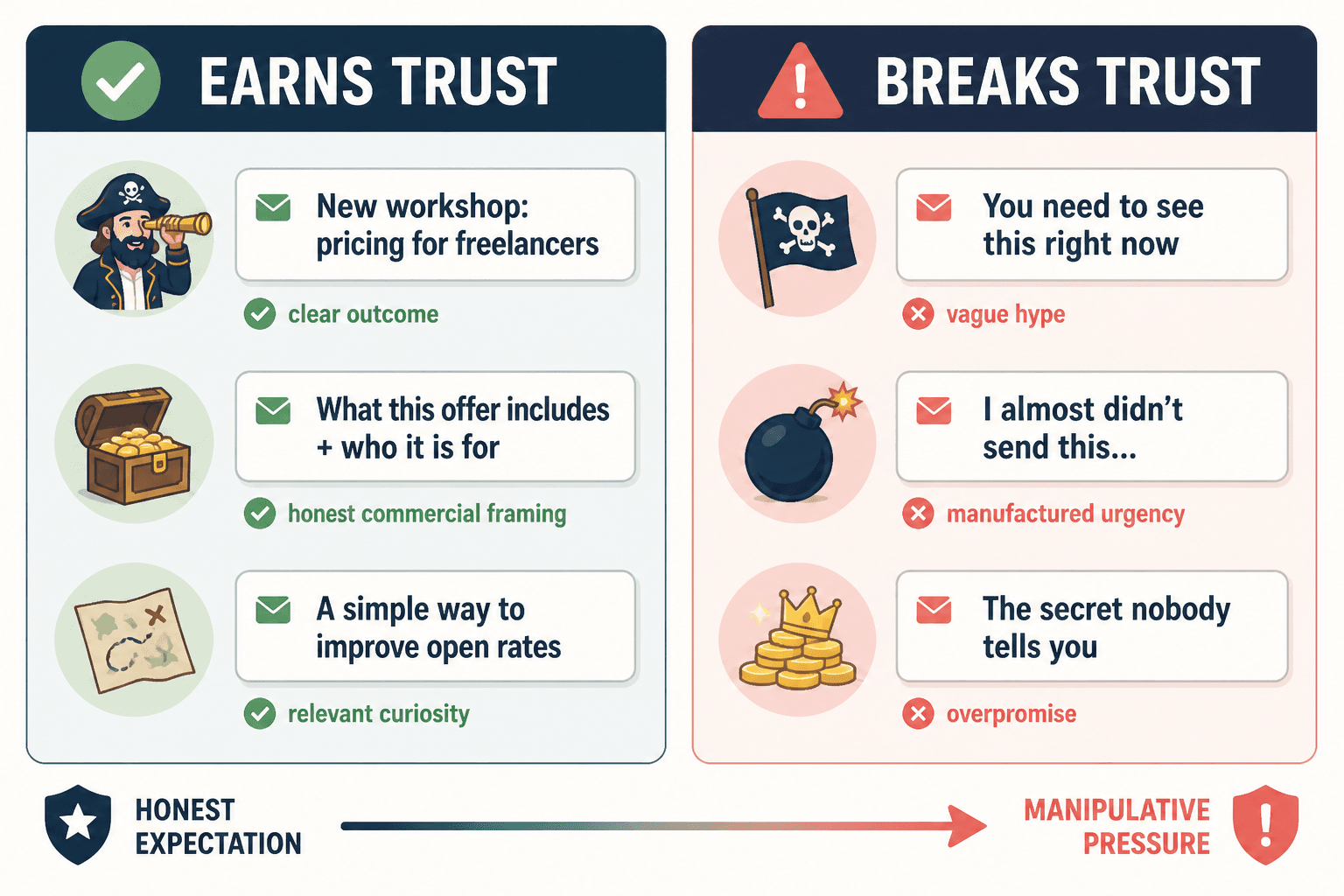
Subject lines fail at monetization when they create the wrong expectation or hide the commercial point until the reader feels tricked. That is usually where trust goes from “reasonable” to “I am now suspicious of your calendar invite.”
Common failure modes:
- Overpromising: the subject line implies a transformation the email cannot support.
- Hiding intent: the reader opens expecting useful content and lands in a hard sell without warning.
- Fake urgency: every message acts like the world ends at midnight.
- Generic launch language: the line sounds like every other campaign in the inbox.
Email guidance from Gmail and Apple keeps circling the same practical truth: send relevant mail people want, and avoid patterns that look misleading or spammy. For reference, see Gmail’s spam guidelines and Apple’s Mail privacy approach. If you are making commercial claims or time-sensitive offers, it also helps to remember the FTC’s rules on truthful advertising and endorsements: FTC advertising and marketing guidance.
What makes a subject-line-to-funnel pairing work
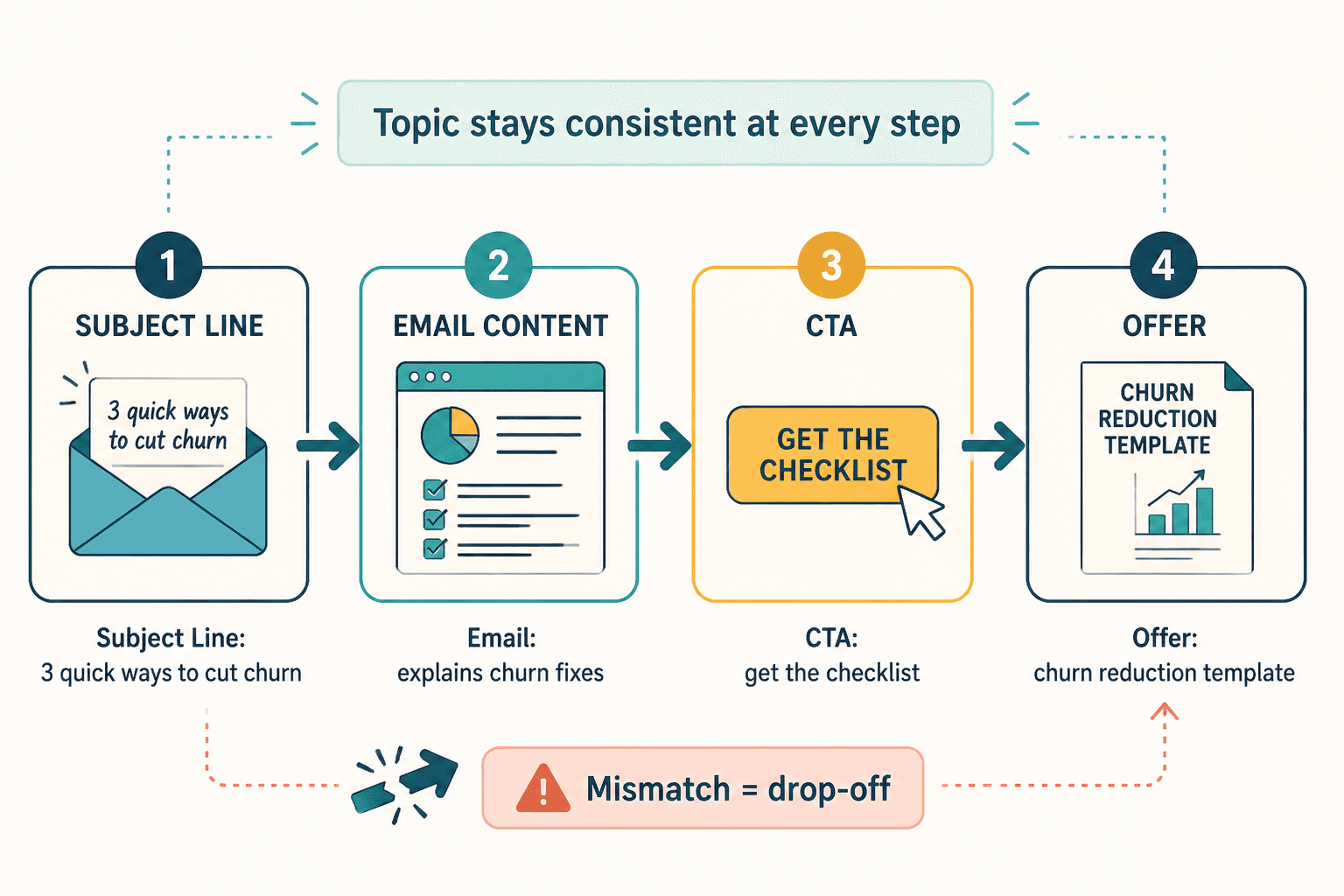
The best pairing is simple: the subject line attracts the right click, and the funnel continues the same conversation.
That means the subject line and the next step should agree on three things:
- Audience: who this is for
- Problem: what pain point or desire is being addressed
- Intent: whether this is educational, qualifying, or sales-focused
If those three are aligned, the reader does not feel baited. They feel guided. There is a difference, and the inbox notices it immediately.
The practical framework
1. Attract the right click, not just any click
A subject line should filter for fit. If you need leads, the goal is not broad curiosity; it is qualified interest. A vague teaser may lift opens and still produce poor downstream action.
Better approaches often sound like:
- problem-led: “One reason your welcome emails stall after the open”
- outcome-led: “A cleaner path from subject line to booked call”
- offer-aware: “A free checklist for turning opens into replies”
Those lines work because they set a clear expectation. No costume jewelry, no dramatic smoke machine.
2. Bridge naturally in the body copy
The email body should not abruptly change the subject. If the line promises a practical solution, the body should show the logic, not just restart the pitch deck from zero.
A clean bridge usually looks like this:
- name the problem or opportunity
- show why it matters now
- offer the next step
- make the click feel like progress, not pressure
This is where many emails lose the sale. They open strong, then wander. A subject line can only carry so much weight before the body starts freelancing.
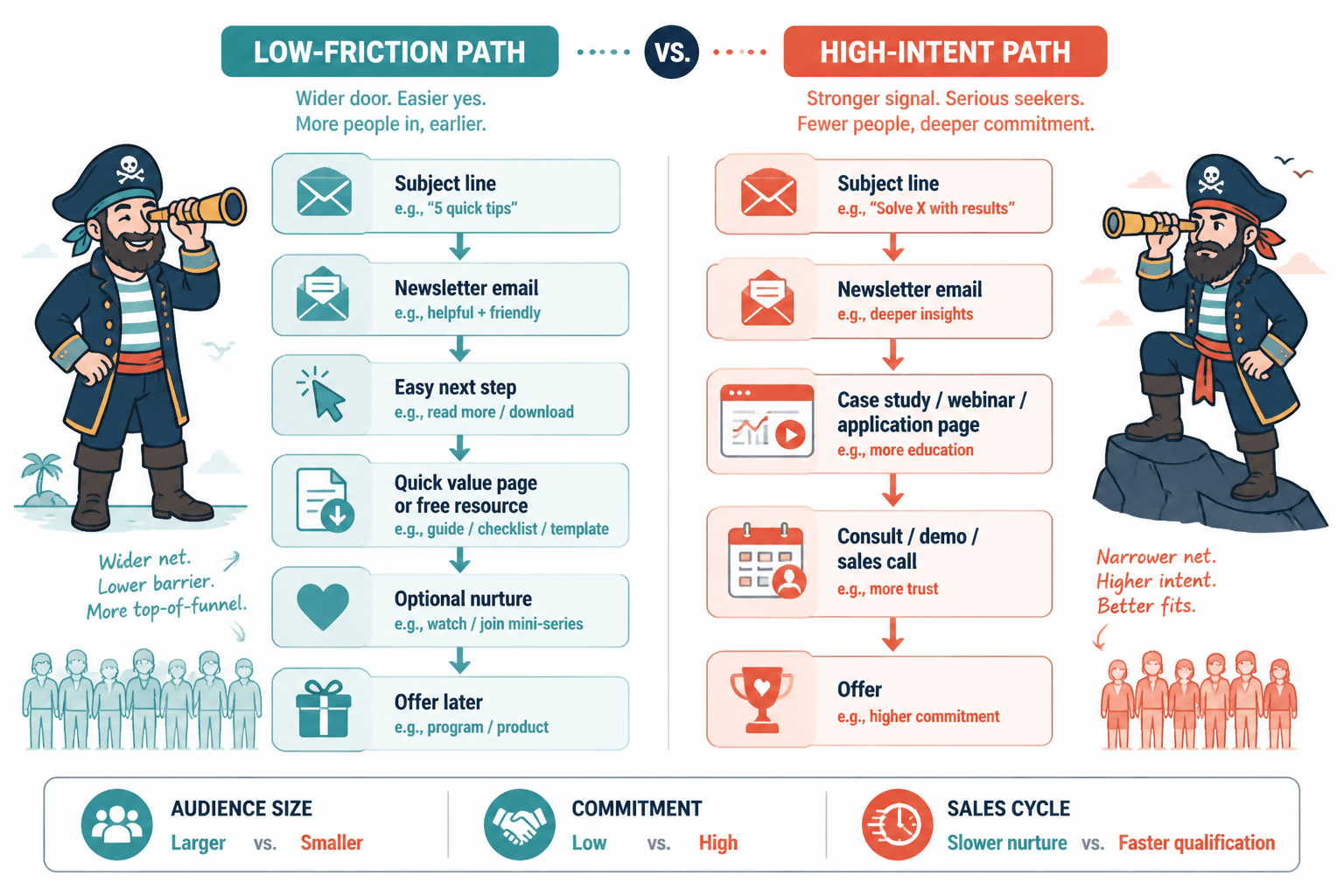
3. Match the ask to the reader’s temperature
Not every open is ready for a purchase. Some readers need education. Some need proof. Some need a smaller commitment first.
Use the ask that fits the moment:
- Low temperature: download, read, watch, or browse
- Medium temperature: register, compare, reply, or request details
- High temperature: book, buy, upgrade, or start
The subject line should hint at that temperature. A line that sounds like a quick tip should not dump the reader into a high-friction pitch without transition. That is how you get the digital equivalent of a cold handshake.
4. Keep the funnel on the same conversation
The funnel should continue what the subject line started. If the subject line promises a fix for weak leads, the landing page should not suddenly become a manifesto about brand identity and a seven-step audit.
Good continuity means:
- same problem framing
- same language level
- same buyer intent
- same call to action
For more on matching subject lines to downstream paths, see best funnel ideas to pair with newsletter subject lines. That page is especially useful when you want the subject line to feed a specific offer instead of floating around as clever inbox vapor.
7 funnel ideas that pair well with newsletter subject lines
1. Subject line to free resource funnel
This is the easiest place to start. The subject line promises a useful insight, and the email sends readers to a checklist, template, guide, or worksheet.
Best when you want:
- list growth
- lead qualification
- a softer first conversion
2. Subject line to consultation or call funnel
Use this when the reader already has a commercial problem and you want to move them toward a conversation.
Best when the subject line focuses on:
- a costly problem
- a strategic opportunity
- a clear improvement you can help deliver
3. Subject line to educational sequence funnel
Sometimes the immediate sale is too much. A subject line can start a mini-sequence that educates the reader before the offer appears.
Best when you need to:
- build trust
- handle objections
- move a lukewarm audience closer to action
4. Subject line to content upgrade funnel
A content upgrade turns a useful topic into a more specific asset. The subject line promises the topic, and the body offers the add-on.
This works well when the upgrade is tightly aligned with the email’s point, not tacked on like a coupon with stage fright.
5. Subject line to webinar or event funnel
When the reader needs more context or demonstration, a webinar or live event can be the right next step.
Good subject lines for this path usually emphasize:
- timeliness
- a visible problem
- a practical outcome
6. Subject line to low-ticket offer funnel
Low-ticket offers work best when the email makes the value concrete and the purchase decision simple.
The subject line should avoid making the offer feel like a surprise. If the reader opens for advice and lands on a product pitch, the mismatch can kill momentum fast.
7. Subject line to direct sales email funnel
Use this when the audience is warm enough that a direct offer makes sense. The subject line can be practical, specific, and outcome-focused.
That does not mean spammy. It means honest.
Subject line examples by monetization goal
Below are simple patterns you can adapt. They are not magic. They are just clearer than trying to smuggle a sales page into a subject line and calling it strategy.
- Lead magnet: “A simple way to get more qualified replies”
- Consultation: “Where most newsletter funnels lose buyers”
- Education sequence: “Three fixes for weak email conversions”
- Content upgrade: “The checklist that makes this easier”
- Webinar: “How to turn opens into next-step clicks”
- Low-ticket offer: “A faster path from subject line to sale”
- Direct sales: “If your email list is ready to buy”
For more phrasing options and style references, the sibling page on best newsletter subject lines ideas and examples for creators can help you widen the pool without losing relevance.
A trust-safe editing checklist
Before you send, check the line against the actual offer path. A good monetization subject line should pass this test:
- Does the line match the email’s real purpose?
- Would the reader feel tricked by the landing page or CTA?
- Is the call to action appropriate for how warm the audience is?
- Does the email make the next step feel useful, not forced?
- Could a first-time reader understand the promise without decoding brand folklore?
If you want a practical method for generating and testing variants, the page on best AI tools for newsletter subject lines can help with draft speed. The judgment still has to come from you. Software is not known for subtlety; it is known for offering six versions of the same idea and acting proud about it.
Bottom line
Newsletter subject lines make more leads or sales when they do three things well: attract the right reader, set an honest expectation, and connect cleanly to the next step. If the line and the funnel are aligned, the open becomes useful. If they are not, you get clicks that look busy and convert like furniture.
Start with the promise, keep the body honest, and match the offer to the reader’s temperature. That is usually enough to turn a subject line from a decorative line of copy into something the business can actually use.