A subject line document usually looks harmless right up until you open it and find twelve versions of the same idea: one too vague, one too clever, one trying to behave like a campaign, and one that sounds like it was written after three tabs of caffeine and optimism. That mess is normal. Examples matter because they give shape to the draft before the draft starts making grand speeches about “voice.”
This page is the practical version: subject line ideas, examples, and reusable patterns you can adapt for creator newsletters without turning every send into a tiny branding ceremony. If you want the bigger strategy behind the subject line itself, the parent guide on newsletter subject lines is the home base. If you want more on hooks, curiosity, or converting opens into action, those are worth a detour too: newsletter subject line guide for creators, best AI tools for newsletter subject lines, and how to turn newsletter subject lines into more leads or sales.
What strong newsletter subject lines actually do
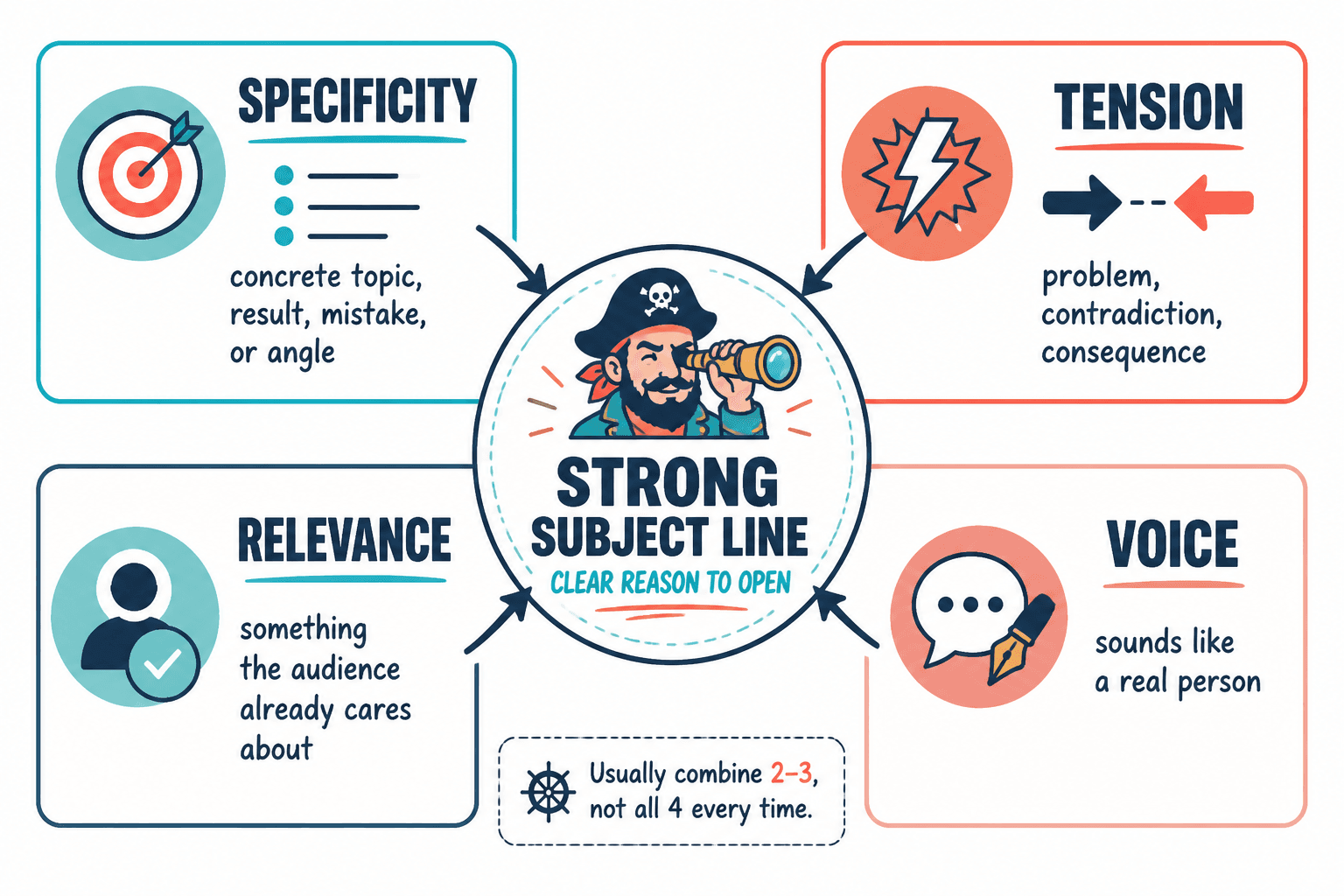
A good subject line does not need to announce the whole email. It needs to earn the open. That usually means it does four jobs at once: it is specific enough to feel real, tense enough to create curiosity, relevant enough to feel personal, and voiced like a human wrote it instead of a campaign dashboard.
That is the balance. Too much specificity and the line turns flat. Too much mystery and it starts reading like a tease from a game show. Too much personality and it becomes a little dramatic in the wrong way. The sweet spot is usually simple, concrete, and faintly unfinished.
The 4 ingredients behind better subject lines
- Specificity: name the topic, result, problem, or audience clearly enough that the reader knows this is for them.
- Tension: leave a small gap between what is said and what the reader wants to know.
- Relevance: make the payoff obvious to your audience, not just interesting in the abstract.
- Voice: keep it sounding like your newsletter, not a borrowed marketing template that wandered in and started improvising.
The simplest way to sanity-check a subject line is to ask: would the right reader recognize the value here in about two seconds? If not, it probably needs less decoration and more clarity.
How to choose the right hook before you write
Do not start by trying to be clever. Start by choosing the angle. A subject line hook is just the entry point: what kind of attention are you trying to earn?
For creator newsletters, the most useful hook types usually fall into a few buckets:
- Specific benefit: a clear outcome or useful result.
- Curiosity with boundaries: enough mystery to invite the click, but not so much that it feels like bait.
- Sharp opinion: a direct point of view that signals judgment and taste.
- Problem-first: name the friction the reader already knows.
- Numbered specificity: list-style framing that promises a tidy, bounded read.
- Behind-the-scenes: a peek at process, decisions, or a useful draft.
- Mistake or lesson: a fix, lesson, or “here is what went wrong” angle.
- Launch / deadline: useful when there is a real event or time limit.
If you want a deeper breakdown of hook mechanics, the sibling post on newsletter subject line hook examples creators can adapt fast is the more granular companion piece.
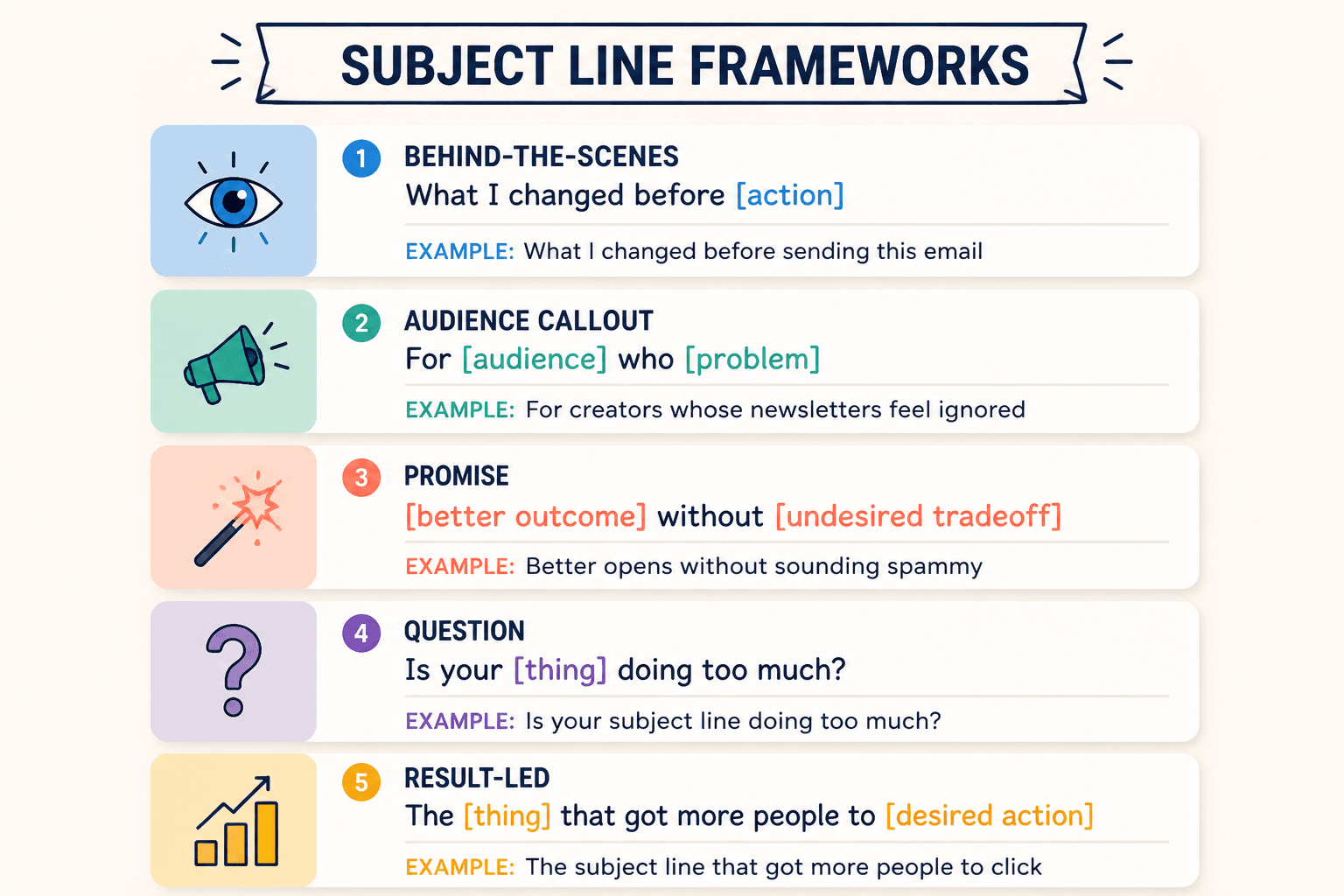
Newsletter subject line examples by type
1. Specific benefit subject lines
These work when the email delivers a clear payoff. They are direct, useful, and usually less fragile than trying to outsmart the inbox.
- How to write subject lines that get opens without sounding salesy
- 3 ways to make your next newsletter easier to ignore
- A cleaner way to write subject lines for creator offers
- Make your next email easier to open with this simple rule
- The subject line fix that usually helps before anything else
2. Curiosity with boundaries
This style works because it leaves one useful thing unsaid. Not everything. Just enough.
- The part most subject lines get wrong
- I tried a smaller subject line and the result was interesting
- What changed after the subject line got simpler
- The missing piece in a lot of creator newsletters
- One phrase I would stop using in subject lines
3. Sharp opinion subject lines
Opinion hooks work when the voice is clear and the point is defensible. They should sound like a position, not a tantrum in sentence form.
- “Quick update” is doing too much work
- Most subject line advice is too polite to be useful
- Creators do not need more clever subject lines
- The inbox does not reward vague confidence
- This subject line trend is not helping anyone
4. Problem-first subject lines
These are useful when the reader already feels the pain. The subject line names the friction and promises relief or clarity.
- If your open rate keeps stalling, start here
- When your newsletter sounds fine but gets ignored
- The reason a lot of creator emails feel skippable
- Still rewriting the same subject line? Read this
- Why “simple” subject lines still fail
5. Numbered specificity subject lines
Numbers can help because they create a shape the eye can trust. Just do not use them as decorative math.
- 7 subject line ideas for creators who hate clickbait
- 5 ways to make a newsletter subject line feel more human
- 3 subject line formulas that are easy to adapt fast
- 4 examples of subject lines that stay clear and interesting
- 6 ways to keep your next email from sounding generic
6. Behind-the-scenes subject lines
This angle works when the process itself is the hook. Readers often like seeing how the thing got made.
- How this newsletter subject line got rewritten 4 times
- The draft version that was too polite to publish
- What I changed before sending this email
- The subject line decision that made the rest easier
- A behind-the-scenes look at a cleaner email angle
7. Mistake or lesson subject lines
Useful when the email teaches through correction. The reader gets both a warning and a reason to keep reading.
- The subject line mistake that quietly lowers opens
- One thing I would not do again in a newsletter subject line
- What weak subject lines usually have in common
- The lesson from sending a subject line that was too vague
- Why the obvious version was not the better one
8. Launch and deadline subject lines
These should stay honest. Real urgency is fine. Fake urgency is just stage makeup for the inbox.
- Last day to join this week’s newsletter workshop
- One more thing before registration closes
- The subject line idea I am using before launch day
- Open until Friday: the resource I promised
- Final reminder for the creators’ newsletter session
9. Personal brand and relationship subject lines
These work when your audience already knows your tone and wants the human side of the newsletter, not just the utility.
- A smaller, better way to write this week’s email
- Something I kept noticing in creator newsletters
- A simple change that made this issue easier to send
- The version I almost did not publish
- What I would send if I wanted a cleaner open
Simple subject line formulas you can reuse
Formulas are not there to flatten your writing. They are there to get you moving when the blank field starts acting superior.
- How to [result] without [common frustration]
- The [number] [topic] ideas that actually work
- What I noticed after [action or change]
- Why [common assumption] is not the whole story
- The [topic] mistake that keeps showing up
- A better way to [task] for [audience]
- [Number] things to know before [action]
If a formula sounds useful but generic, make it concrete. Replace abstract nouns with real ones. Swap “better results” for the actual result. Swap “creators” for the audience you are really speaking to. The more the line feels like it was written for one real reader, the less it has to fake confidence.
Quick editing checklist for better subject lines
- Can a reader tell what this email is about in one glance?
- Does it promise something useful without overselling it?
- Is there one clear hook, not three competing ideas?
- Does the line sound like your newsletter voice?
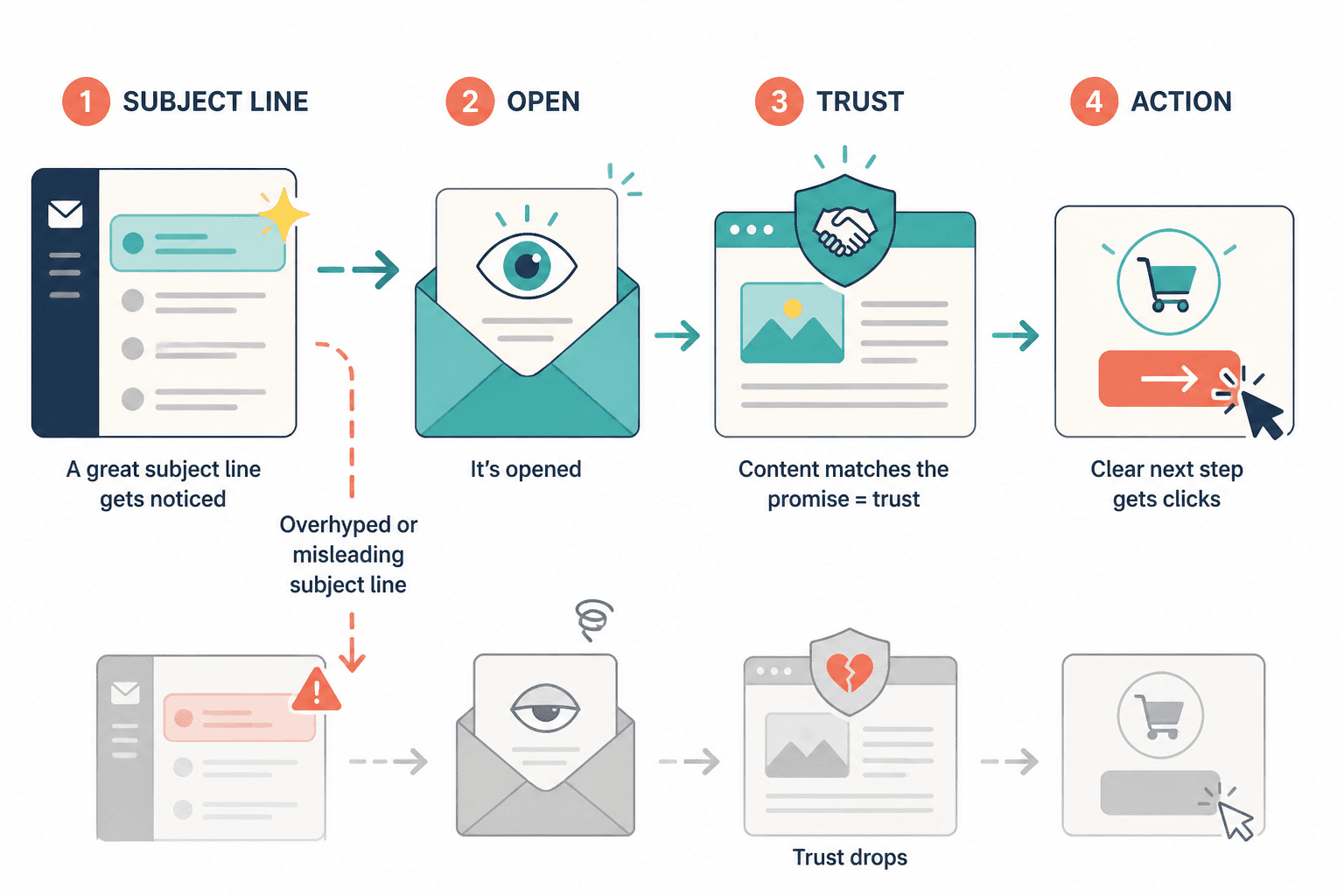
- Would the email content actually pay off this subject line?
- Is the wording specific enough to feel real?
- Have you removed filler like “quick note,” “just,” or “thoughts on” unless they genuinely help?
Two practical reality checks are worth keeping in mind. First, keep subject lines aligned with the email body; misleading opens can hurt trust over time, even if the short-term click looks nice. Second, deliverability and inbox placement are shaped by more than one line of copy. Authentication, sender reputation, and engagement all matter. For a stable, primary-source overview of email best practices, see the Google Workspace email sender guidelines, Microsoft’s DMARC setup guidance, and the FTC CAN-SPAM compliance guide.
When to use this page and when to go deeper
Use this article when you need examples fast and want to adapt a subject line without rebuilding the whole strategy from scratch. If you want broader method, start with the parent guide. If you want more hook types, go to the hook examples page. If you are testing AI-assisted drafting, the AI tools page is the better companion. If your bigger problem is what happens after the open, the leads-and-sales guide is the more useful next click.
That is the whole trick, really: a good subject line is not magic, and it is not a slogan in tiny type. It is a clear promise with just enough tension to make the reader curious. Which is a nicer job title than “admin,” even if the inbox occasionally disagrees.