
A newsletter subject line is not a tiny advertising slogan with inbox makeup on. That is the flattering myth. The real job is simpler and less glamorous: make the point fast enough that a reader can trust the email is worth opening.
When subject lines fail, they usually do not fail because they are too short or too long in some cosmic sense. They fail because they are vague, overworked, or trying very hard not to say anything embarrassing. That is a great way to become invisible.
The useful frame is this: a strong subject line gives the reader a reason to open without making them do interpretive dance first. Clarity matters. Specificity matters. And a little intrigue helps when it is attached to an actual point, not decorative mystery.
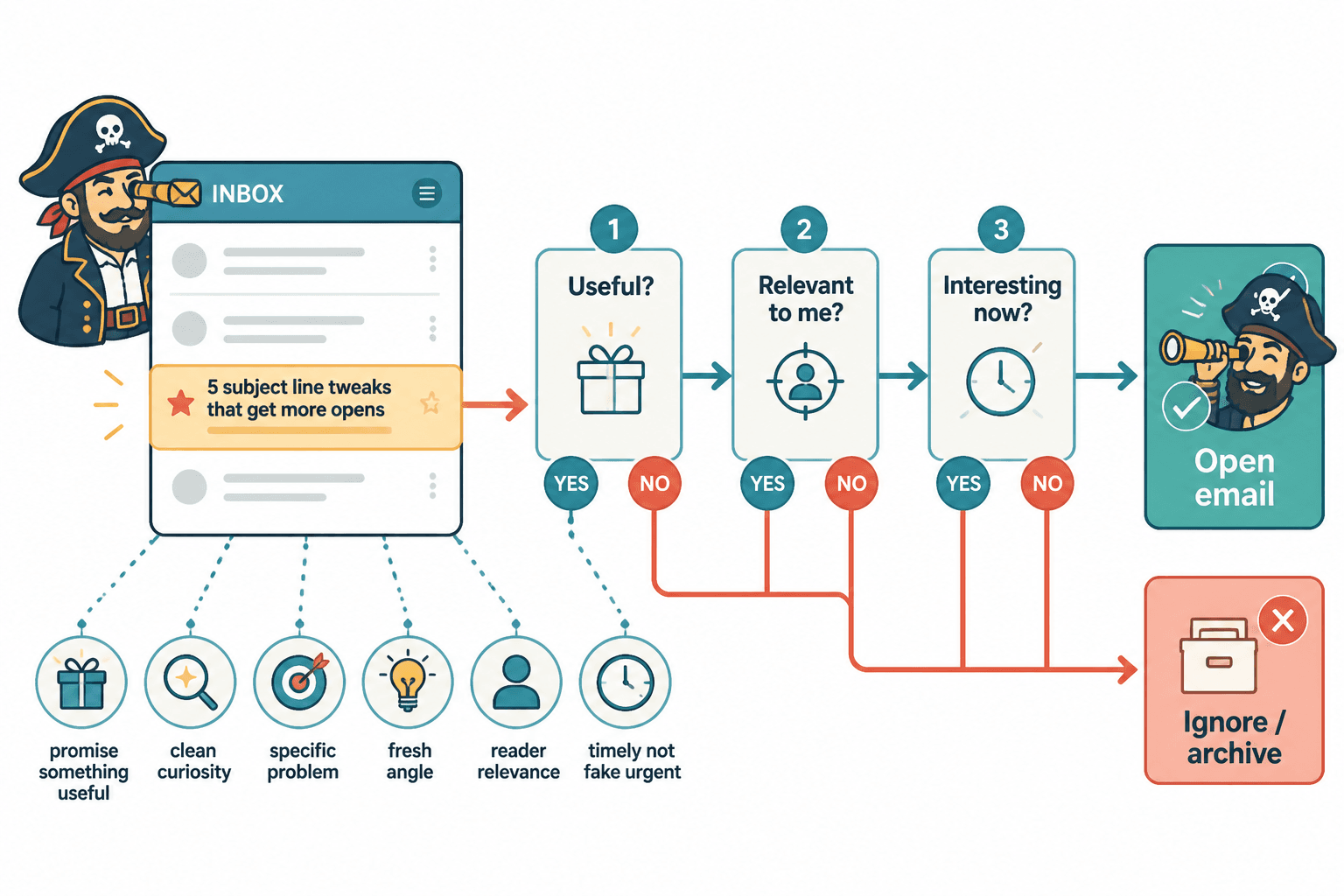
What a newsletter subject line is actually for
The subject line is not there to be clever in isolation. It is there to set an expectation the email can keep. If the line promises one thing and the email delivers another, the open may happen once, but trust does not.
A good subject line usually does three things:
- Names the point enough that the reader knows what kind of email this is.
- Signals the value so the open feels worth the friction.
- Creates a clean reason to care without making the reader work too hard.
That is why clarity tends to beat cleverness. A clever line can work, but only after trust has been earned and the audience knows your voice. Early on, vague cleverness is just an expensive way to say “please guess.”
If you want the broader system behind this topic, start with the parent guide to newsletter subject lines. This page is the practical version: how to write them better when you want results, not just notes in a draft folder.
The three traits that make better subject lines
1. Clarity
Readers should be able to tell what the email is about without decoding your mood. If the point is hidden behind a smart phrase, a vague question, or a bit of “newsletter voice,” you are making the inbox do unpaid labor.
2. Specificity
Specific subject lines feel more credible because they sound like they come from something real. “How to write subject lines that convert” is a category. “How to turn one idea into 10 open-worthy subject lines” is a reason to care.
3. Credible intrigue
Intrigue works when it points to a payoff. It does not need to shout. It does need to suggest that opening the email will reveal something useful, surprising, or at least less boring than the average Tuesday.
A practical way to write better newsletter subject lines
Use this sequence when you are stuck:
- Find the actual point of the email. Not the topic, the point. What should the reader think, feel, or do after reading?
- Pull out the sharpest detail. Look for the number, problem, outcome, mistake, contrast, or phrase that gives the email weight.
- Choose one angle. Do not try to be problem-led, outcome-led, clever, and mysterious in the same sentence. That is how people end up with copy that sounds busy.
- Write several versions. Draft 5 to 10. Better lines usually show up after the first three have stopped pretending to be final.
- Cut anything generic. If a word could appear in ten unrelated emails and still mean nothing, it is probably decorative.
This is also where the rewrite work happens. If your first version says “Quick update,” ask what the update actually is. If it says “Thoughts on growth,” ask which thought, and for whom. The answer is usually more useful than the draft.
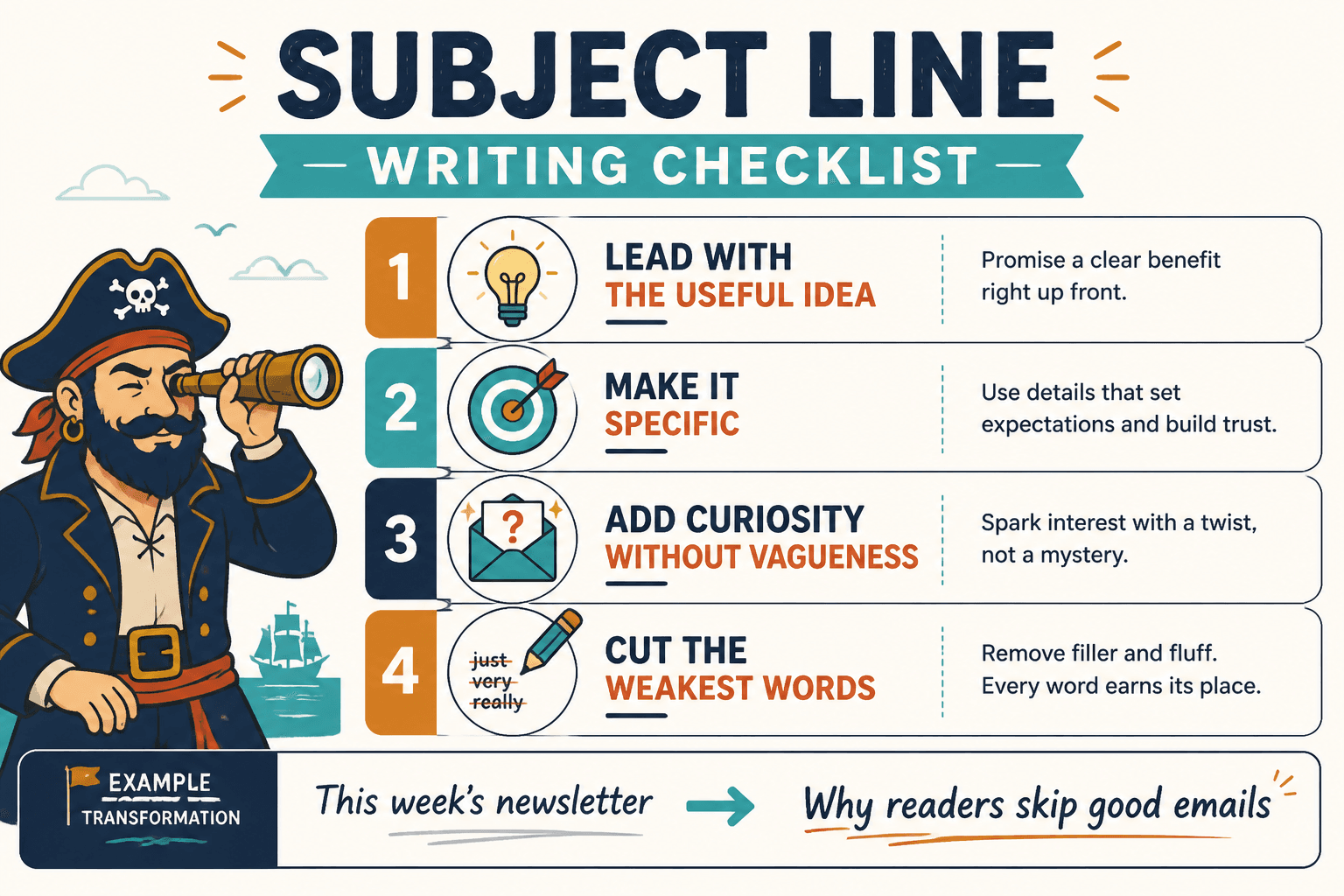
How to use formulas without sounding generic
Formulas are useful when they give structure to a real idea. They fall apart when they are used like copy-paste costumes. The problem is not the formula itself; it is filling it with fog.
A formula should help you organize:
- the reader’s problem,
- the promised outcome,
- the contrast or tension, or
- the specific detail that makes the line feel real.
For example, a simple structure like “How to [result] without [pain point]” can work well if the result and pain point are actually specific. “How to write better subject lines without sounding fake” is doing a lot more work than “How to improve your email game.” One has a point. The other has a lounge chair.
For a deeper breakdown of formula use, see how to write better newsletter subject line formulas without sounding generic.
Common subject line mistakes that hurt performance
Most weak subject lines are not broken because they are too bold. They are broken because they are unclear in familiar ways.
- Saying something without saying anything. “A few thoughts” is not a subject line. It is a shrug.
- Hiding the topic behind a clever phrase. If the reader has to decode it, many will not.
- Writing from your context instead of the reader’s. You know what the email is about because you wrote it. The inbox did not get the memo.
- Packing in too much. If the line tries to hold a whole paragraph, it usually loses the part that mattered.
- Using generic newsletter language. “Weekly update,” “creator thoughts,” “some notes,” and similar leftovers are what subject lines become when nobody wants to choose.
For a sharper diagnosis of these problems, link to newsletter subject line clarity mistakes that hurt performance.
How long should a subject line be?
There is no magic word count that saves a weak line. Length matters because it changes how fast the reader can scan the idea, especially on mobile, but the right length depends on the purpose of the email.
Short subject lines can work when:
- the email has one sharp idea,
- the brand already has some trust,
- speed matters more than detail, or
- the short line creates clean curiosity instead of fake mystery.
Longer subject lines can work when they buy precision. If the extra words sharpen the promise, they earn their keep. If they just repeat the same thought in softer language, they are doing decorative work.
If you want a focused take on the tradeoff, see how long newsletter subject lines should be in 2026 and the companion piece on when short newsletter subject lines beat long ones.
How to start a subject line without a weak opening
The opening words matter because they carry the first signal of relevance. A soft opener wastes space. A sharp opener earns attention faster.
Strong openers usually begin with one of these:
- The problem: “Why your subject lines are…”
- The outcome: “How to get more opens from…”
- A sharp claim: “Your subject line is probably…”
- Contrast: “The subject line trick that works better than…”
- The specific topic: start with the actual idea instead of throat-clearing words.
If you need more examples of better openings, use how to start newsletter subject lines without a weak opening.
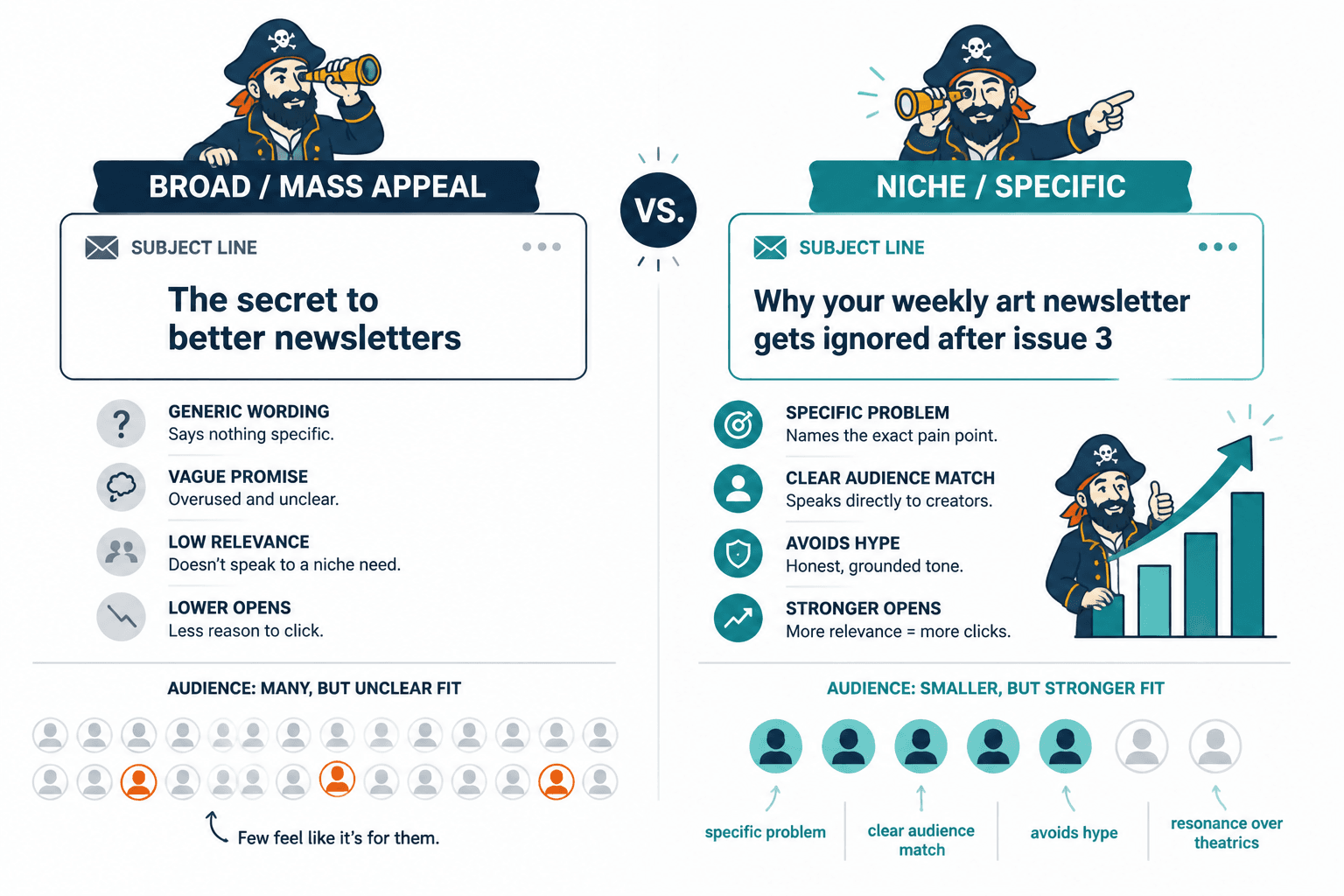
What changes when you write for a small audience
Small audiences do not need louder subject lines. They need more relevant ones. With a smaller list, you usually have less brand momentum to hide behind, which means the line has to earn the open more directly.
That often means leaning into:
- clear benefits,
- specific problems,
- opinions that feel real,
- structured formats that are easy to scan, and
- subject lines that sound like a person with a point, not a team of meetings.
For a more focused version of this advice, see newsletter subject lines for creators with small audiences.
What to write when the subject line needs to lead to sales or leads
A good open rate is nice. It is not the business outcome. If the email is meant to generate leads or sales, the subject line should match the next step honestly enough that the reader does not feel tricked into opening.
That means the subject line should set up the body of the email, not compete with it. If the email is selling a service, the line should hint at the problem, result, or opportunity that the body expands. If the email is teaching, the line should point to the insight the reader will get by opening.
That connection matters because the inbox is not the finish line. It is the doorway.
For the next step in that workflow, see how to turn newsletter subject lines into more leads or sales.
A fast editing checklist before you send
- Can a reader tell what this email is about?
- Does the line point to a clear payoff?
- Would this still make sense without my private context?
- Does it sound human, not assembled?
- Is there one strong idea here, or three half-ideas pretending to cooperate?
- Would I open this if it came from someone I respect but do not already trust deeply?
If the answer to most of those is no, the fix is rarely more cleverness. It is usually more specificity and less performance.
Bottom line
Better newsletter subject lines are not about tricking the inbox. They are about making the value legible fast enough that the reader does not have to guess.
Start with the real point, choose one strong angle, use formulas as structure instead of costume, and keep trimming until the line sounds like something a real creator would send on purpose. That is usually enough to turn “maybe later” into an open.
For the broader cluster, return to the newsletter subject lines parent guide, then branch into the specific subtopics that match your bottleneck.