
The usual mistake is thinking better Substack writing is mostly a talent problem. It is not. It is usually a packaging problem with a nicer font. The idea may be good, but the post opens late, the point arrives politely, the structure wanders, and the series behaves like five unrelated essays that happen to share a folder.
Better results on Substack usually come from making a few clear decisions early: is this a standalone post or a series, what single promise does it make, how fast does it get to the point, and what should the reader do after finishing it? Once those choices are clean, the writing gets easier. Not glamorous. Easier.
If you want the broader content system behind this, start with the parent guide to Substack posts and series. This article is the practical version: how to make the actual writing work.
Start with the right container: post or series?
Before you worry about voice, hooks, or whether the title sounds sufficiently thoughtful, decide what job the piece is doing. A standalone post and a series solve different problems.
A post is best when you have one strong point, one useful angle, or one timely idea that does not need a full runway. A series is better when the topic has enough depth that splitting it up will help the reader stay oriented instead of drowning in paragraph soup.
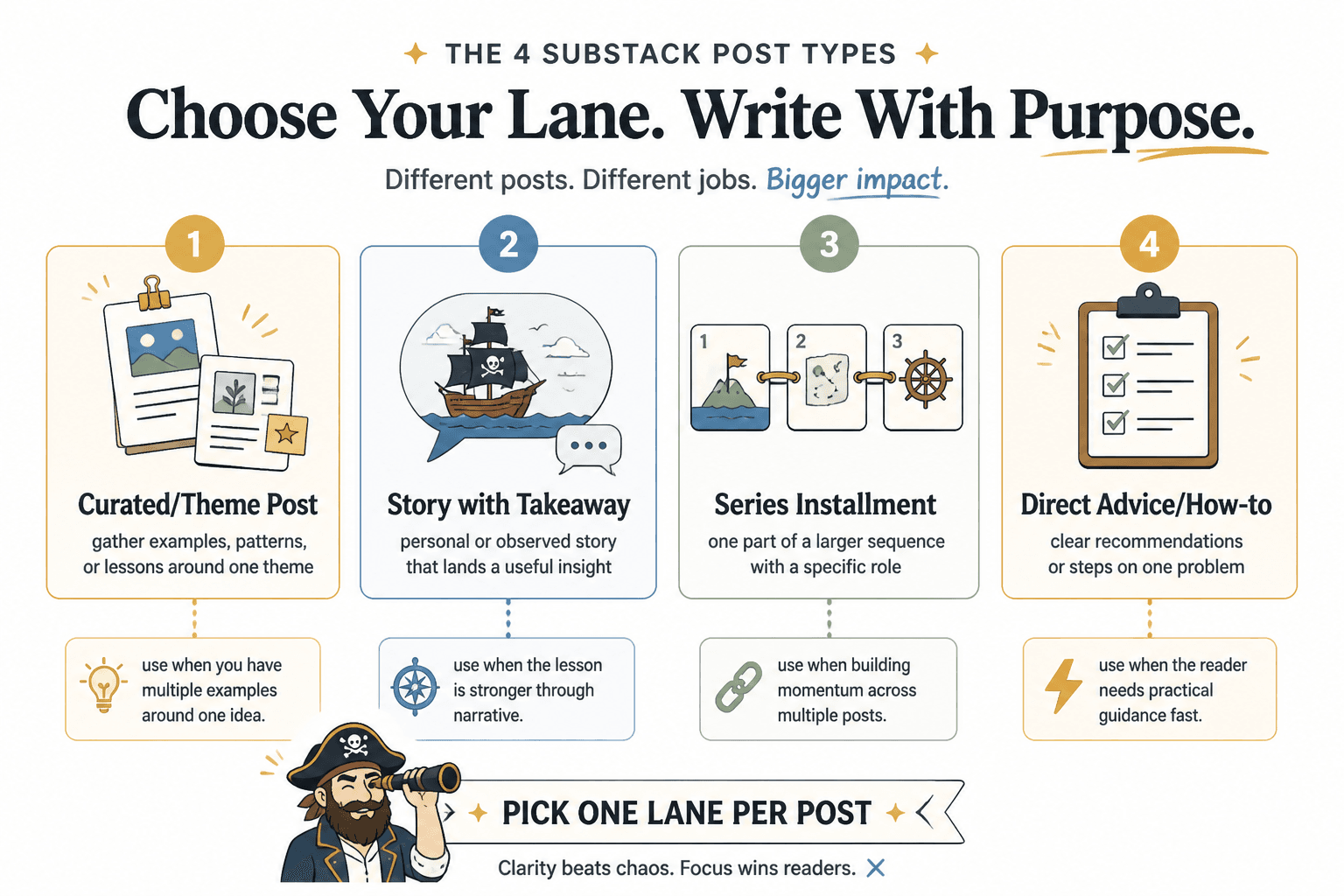
When a standalone post works best
- You have one clear takeaway.
- The topic is timely or narrow.
- The reader should be able to finish it in one sitting.
- You want a quick reaction, reply, or share.
When a series works better
- The idea needs stages, not one long explanation.
- Each part builds on the last.
- You want readers to return for the next issue.
- The topic benefits from progression: problem, method, examples, application, payoff.
If you are deciding between formats, compare this guide with Substack posts and series ideas and examples for creators. That page is more about topic selection; this one is about execution.
What a strong Substack post actually needs
A good Substack post does not need to sound grand. It needs to sound clear. That usually comes down to four things: a sharper opening, one main point, useful support, and an ending that knows where it is going.
1. Open with the real point, not the warm-up
Weak openings often waste the first few lines explaining the weather of the topic instead of the point. Readers do not need a slow handshake. They need a reason to keep reading.
Start with the tension, the mistake, the shift, or the useful claim. Cut the throat-clearing. The first paragraph should tell the reader what kind of ride this is.
If you want a fuller breakdown of opening problems, see how to improve Substack post openings without sounding generic and how to start Substack posts and series without a weak opening.
2. Make one point do the work of three
Many posts fail because they try to carry five decent ideas at once. The result is not depth. It is delay. One strong point, well developed, usually beats a wide but fuzzy tour of everything you know.
Ask: what is the one thing the reader should remember after finishing this? If you cannot answer that in a sentence, the draft probably needs pruning, not more polish.
3. Use specific support instead of abstract atmosphere
Vague claims tend to multiply. Specific examples stop that. You do not need dramatic case studies or fake personal war stories. A short, realistic scenario is enough if it clarifies the point.
- Use before/after contrasts.
- Show what a weak version looks like and what a stronger one does.
- Use numbers, steps, or concrete labels where helpful.
4. End by moving the reader somewhere
A useful ending does not just fade out. It gives a next step, a decision, a question, or a reason to continue. The point is not to be theatrical. It is to leave the reader with momentum.
If the post is meant to support discovery, retention, or conversion, make that next step explicit. The article should not limp off the stage and hope for applause.
What a strong Substack series needs
A series is not just “more posts.” It is a promise with sequence. The reader should understand why the issues belong together and why it is worth coming back for the next one.
1. Pick a narrow promise
The best series usually have one clear lane. Not “everything about marketing,” but a specific problem, outcome, audience, or method. The tighter the promise, the easier it is to make every issue feel earned.
That promise does not need to be tiny. It just needs to be legible.
2. Give the series a logical flow
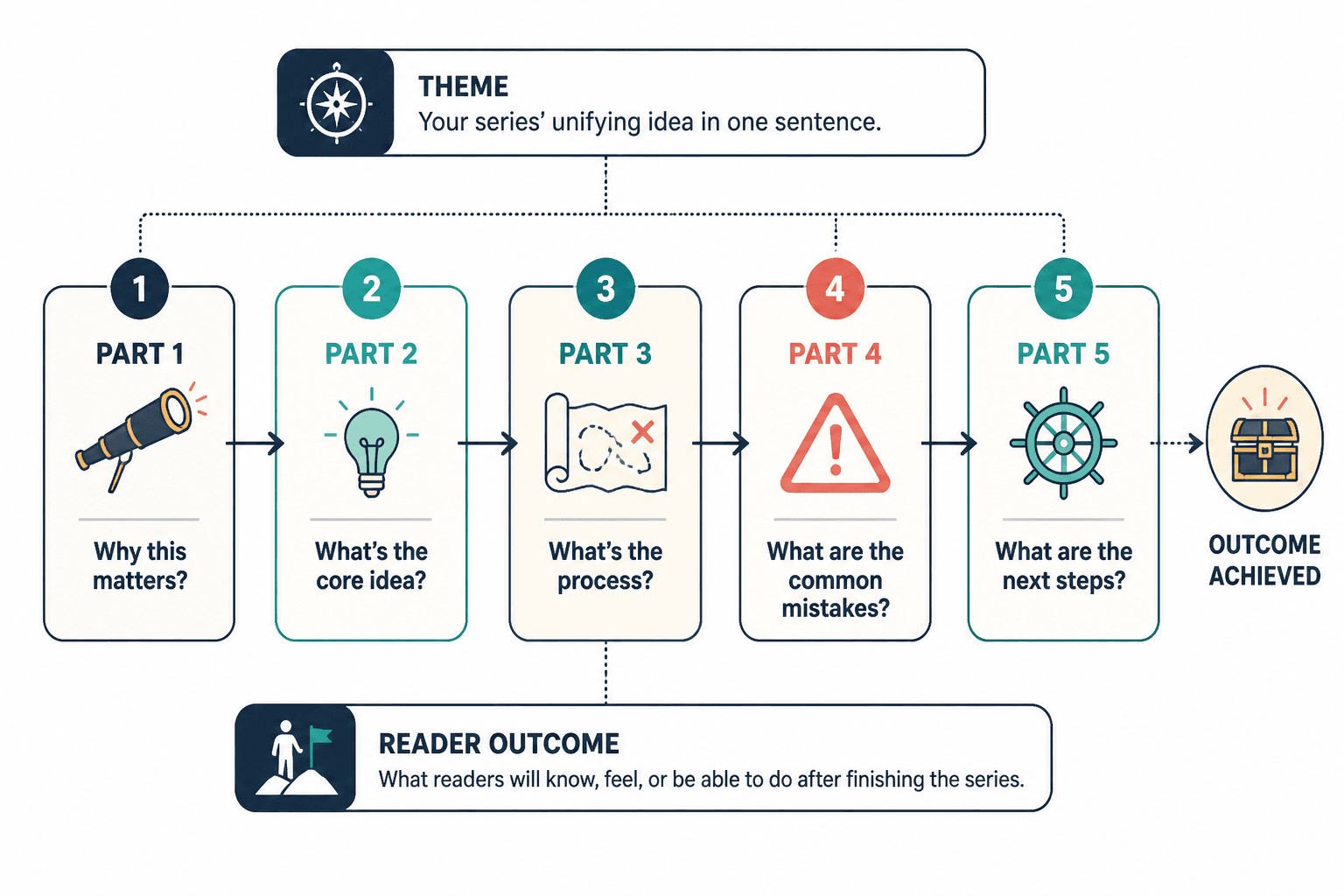
Good series are not random piles. They move. One issue should set up the next. A simple pattern might look like this:
- Issue 1: define the problem
- Issue 2: explain the key mistake
- Issue 3: show the framework
- Issue 4: give examples
- Issue 5: show how to apply it
3. Keep each issue useful on its own
A series should connect, but it should not require the reader to decode issue four to understand issue one. Each installment needs a clean local payoff. Otherwise the series feels like a hostage note with better spacing.
4. Use a consistent shape
Readers like familiarity more than writers like admitting it. A recurring structure makes a series easier to follow: same kind of opening, same kind of development, same kind of close, with enough variation to keep it alive.
That structure can be simple:
- what this issue is about
- why it matters
- the main point
- an example or two
- the next step
If you are shaping a recurring format, the retention angle matters too. See better Substack reader retention for personal brands for a closer look at why recurring structure helps readers stick around.
How to write Substack posts and series without sounding generic
Generic writing usually shows up when the draft tries to sound broad, safe, and universally relevant. That is a fine way to become forgettable. A better approach is to sound precise.
Precision does not mean stiffness. It means the reader can tell you know what you are talking about. Specific verbs, concrete examples, and a clear angle will do more for trust than another paragraph of “in today’s fast-moving world.”
For a deeper pass on tone, see how to write Substack posts and series without sounding salesy or robotic.
A simple test: if you remove the topic label, does the paragraph still sound like it belongs to a person with a point? If not, rewrite it.
How long should a Substack post or series be?
Length should follow purpose, not ego. Long is not automatically better. Short is not automatically shallow. The useful question is how much space the idea needs before the reader starts checking the time.
- Short post: one strong point, quick payoff.
- Standard post: one main idea with enough support to make it useful.
- Deep-dive post: layered explanation, examples, and nuance.
- Series: complex material that reads better in stages.
If you want a fuller framework, use how long Substack posts and series should be in 2026. The short version: match the format to the amount of actual substance you have.
How to turn old ideas into better Substack posts and series
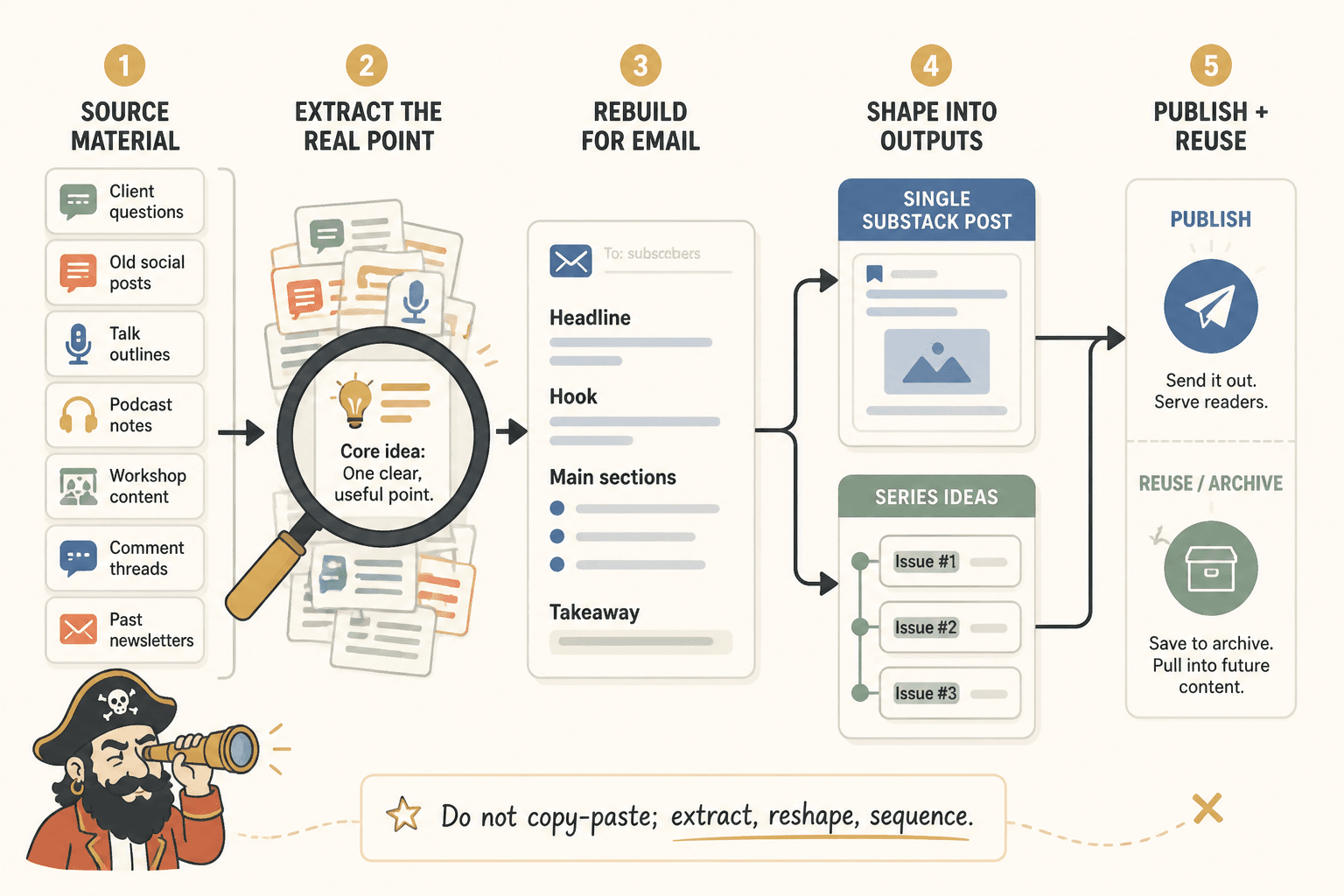
Old content is often not bad. It is just misfiled. A weak draft, a half-finished idea, or an old note can become a better post if you find the real point and rebuild around it.
Sort old material into three buckets:
- Standalone post material: one clear idea with a clean takeaway
- Series material: a topic with multiple useful steps or angles
- Scrap material: interesting, but not useful enough yet
For a more systematic repurposing process, see how to turn old content into better Substack posts and series.
A practical editing checklist
Before you publish, run the draft through a simple filter:
- Does the opening reach the point fast enough?
- Is there one main idea, or several competing ones?
- Does each paragraph earn its place?
- Are examples concrete and useful?
- Does the ending create a clear next step?
- If it is a series, does each issue connect to the next?
- Does the piece sound precise rather than generic?
If the answer to any of those is no, the fix is usually structural before it is stylistic. Writing gets easier once the container is doing its job.
Related guides
- Best Substack posts and series ideas and examples for creators
- Best AI tools for Substack posts and series
- How to turn Substack posts and series into more leads or sales
Better Substack writing is mostly better decisions made earlier. Choose the right format, open harder, stay specific, and give the reader a reason to continue. That is less mystical than “finding your voice,” but it tends to work.