
When a Substack post attracts attention but does nothing commercially useful, the loss is not abstract. It wastes trust, creates weak leads, and leaves sales stuck behind a pile of polite reading. The reader gave you attention. The post spent it on atmosphere. That is expensive busywork with a nicer font.
The better move is not to turn every post into a pitch. It is to make each post or series point to the right next step. Sometimes that means a lead magnet. Sometimes a paid upgrade. Sometimes a consultation, a product, or a nurturing sequence that does the selling later. The content job is to earn the click and clarify intent. The funnel job is to keep the momentum going without making the reader feel trapped in a funnel, which is a sentence nobody wants to have to think about twice.
If you want the broader structure first, start with the parent guide to Substack posts and series. If you want stronger writing mechanics before monetization, see how to write better Substack posts and series. If you need topic ideas that can actually support an offer, the ideas and examples guide is the more useful place to start.
What makes a Substack post monetizable
A monetizable post does three things well:
- It attracts the right reader.
- It makes a clear promise or point of view.
- It gives that reader an obvious next step.
That next step does not need to be a direct sale. In fact, forcing a sale too early usually makes the post feel clumsy. The point is to match the content to the business outcome you actually want.
Substack’s own publishing and paid subscription tools make it easy to segment free and paid work, but the useful part is still judgment: what should this post do for the business, and what should happen after the read? Substack Help Center covers the platform basics; the strategy still has to come from you.
Start with reader intent, not your revenue goal
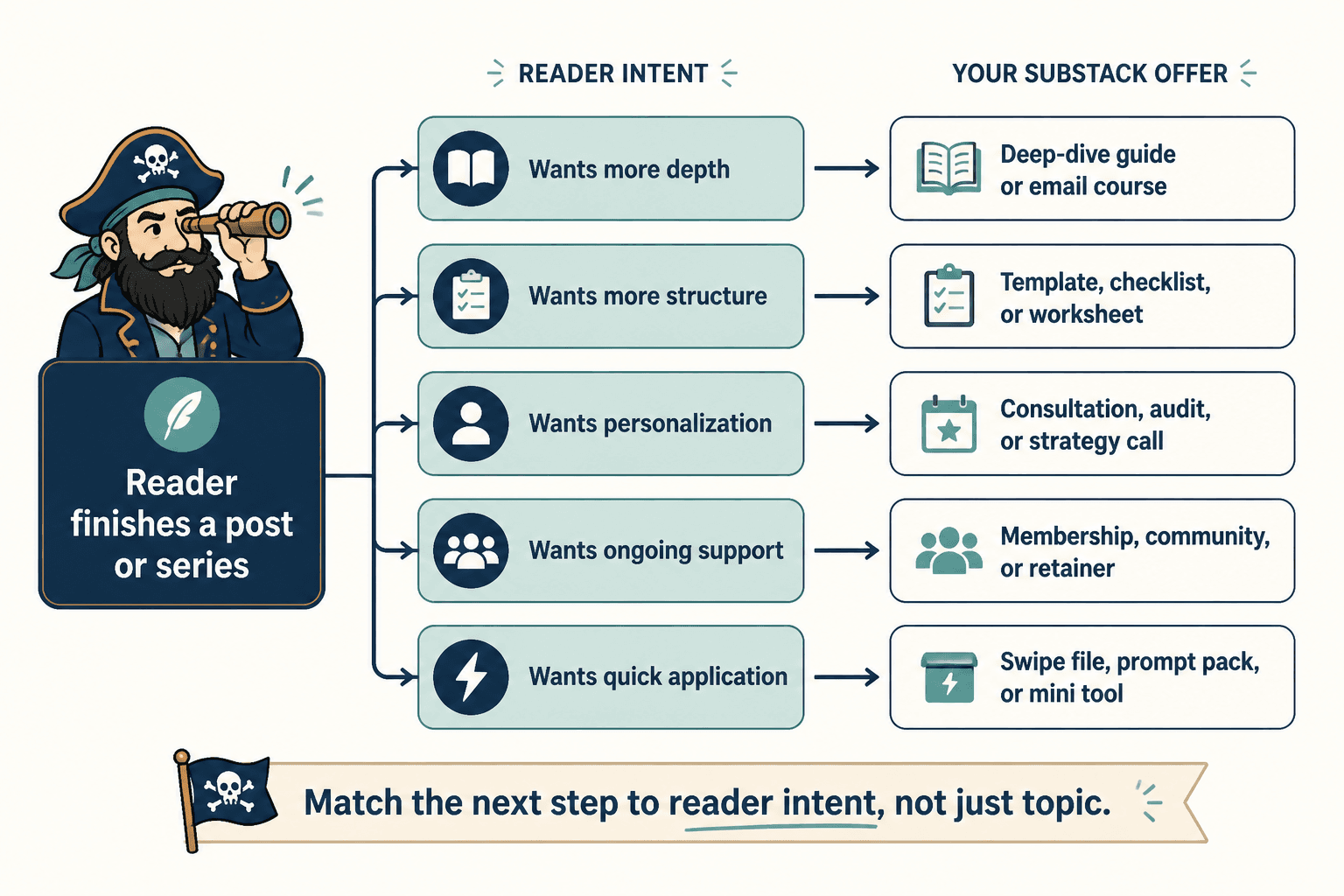
Bad monetization starts with the revenue goal and works backward in a way that makes the reader feel like a hostage. Better monetization starts with reader intent.
Ask a few plain questions:
- What problem is this reader trying to solve?
- How ready are they to act?
- What would be a useful next step right now?
- Is this a discovery post, a decision post, or a conversion post?
That last distinction matters. A discovery post earns attention. A decision post helps the reader compare options. A conversion post points directly to a purchase, signup, or inquiry. Not every post should try to do all three. That way lies content soup.
Best funnel ideas to pair with Substack posts and series
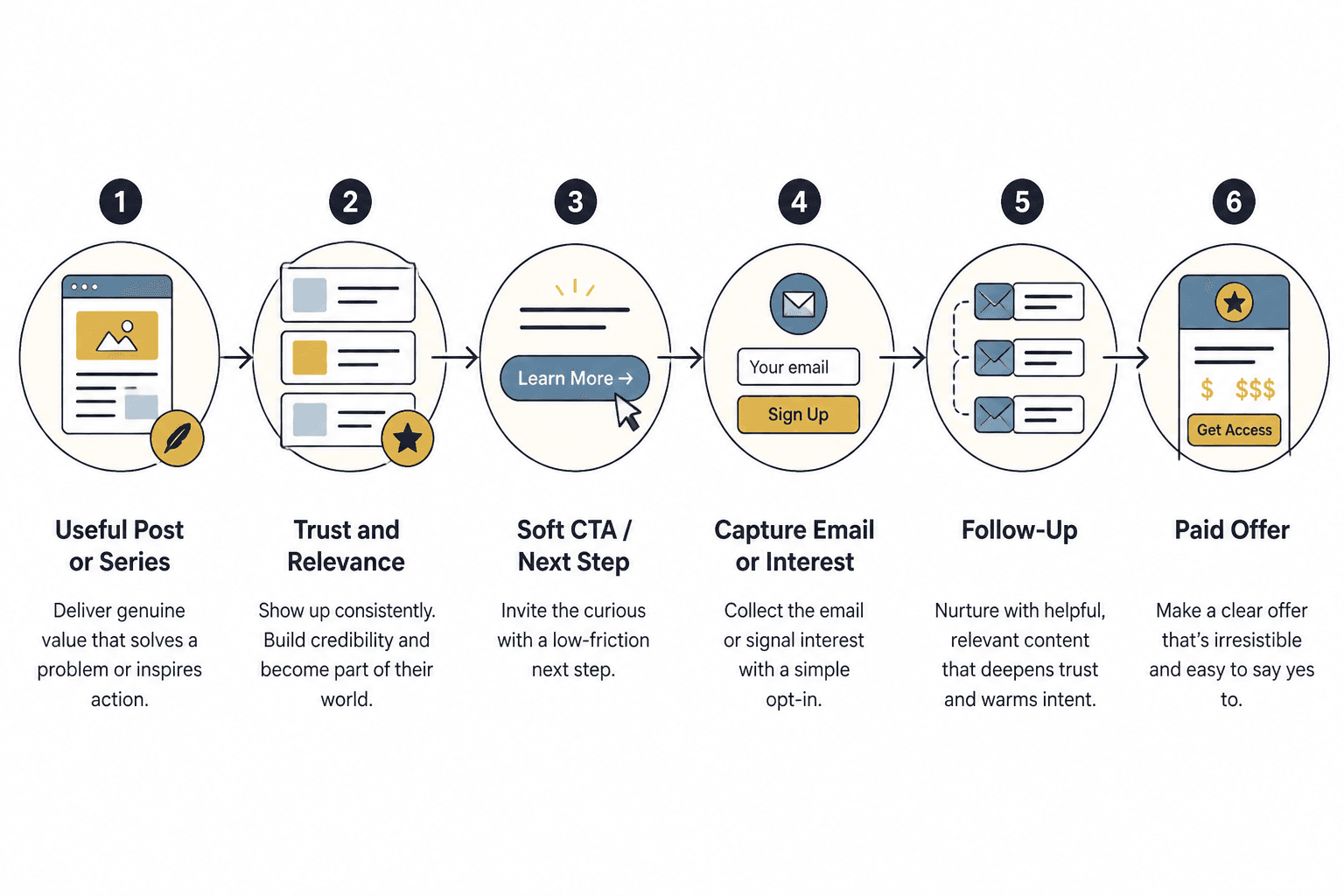
Here is the cleanest way to think about it: the post or series creates movement, and the funnel catches that movement before it disappears.
1. Post to lead magnet
This is the easiest fit when the post solves part of a problem and the lead magnet solves the next layer. A post about subject lines can point to a swipe file. A post about launch planning can point to a checklist or planner.
Use this when the reader is interested but not ready to buy. The lead magnet extends the value and gives you a way to continue the conversation.
2. Post to email nurture sequence
Sometimes the post should not try to close the sale immediately. It should move the reader into a short sequence that builds trust, handles objections, and eventually points to an offer.
This works well for services, higher-ticket products, and anything that needs more explanation than a single post can reasonably carry.
If you are building that bridge, the logic in best AI tools for Substack posts and series can help with drafting and repurposing, but the sequence should still sound like a person who understands the reader. Delegating judgment to software is how you end up with smooth nonsense.
3. Post to paid newsletter upgrade
Some free posts should naturally lead to paid content. The free version proves the value. The paid version goes deeper, gives the framework, or includes the implementation detail.
This works best when the free post reveals a useful pattern but stops before the full method. Not a bait-and-switch. A fair preview.
For a deeper look at trust-safe paid depth, see how to monetize Substack posts and series without wrecking trust.
4. Series to consultation or service inquiry
A series is often stronger than a single post for service-based conversion because it can show range, judgment, and process. A well-structured series can move a reader from “this is useful” to “I need help with this.”
Use this when the service depends on trust, diagnosis, or strategic guidance. The series becomes proof of thinking, not just proof of writing.
5. Post to low-ticket product
Low-ticket products are often the easiest direct sale because the ask is smaller. Templates, workshops, short guides, and small digital products can fit naturally after a highly practical post.
If the post removes one major obstacle, the product can remove the next one. That is the whole trick.
How to structure the offer inside the post or series
The offer works better when it arrives as part of the logic, not as a random banner ad wearing your brand colors.
Use the body to earn the next step
Before you ask for anything, make sure the reader has seen enough of the problem, the method, or the opportunity to care. That usually means:
- clear problem framing early
- useful examples or specifics
- a point of view that feels stable, not slippery
- a transition that makes the next step feel obvious
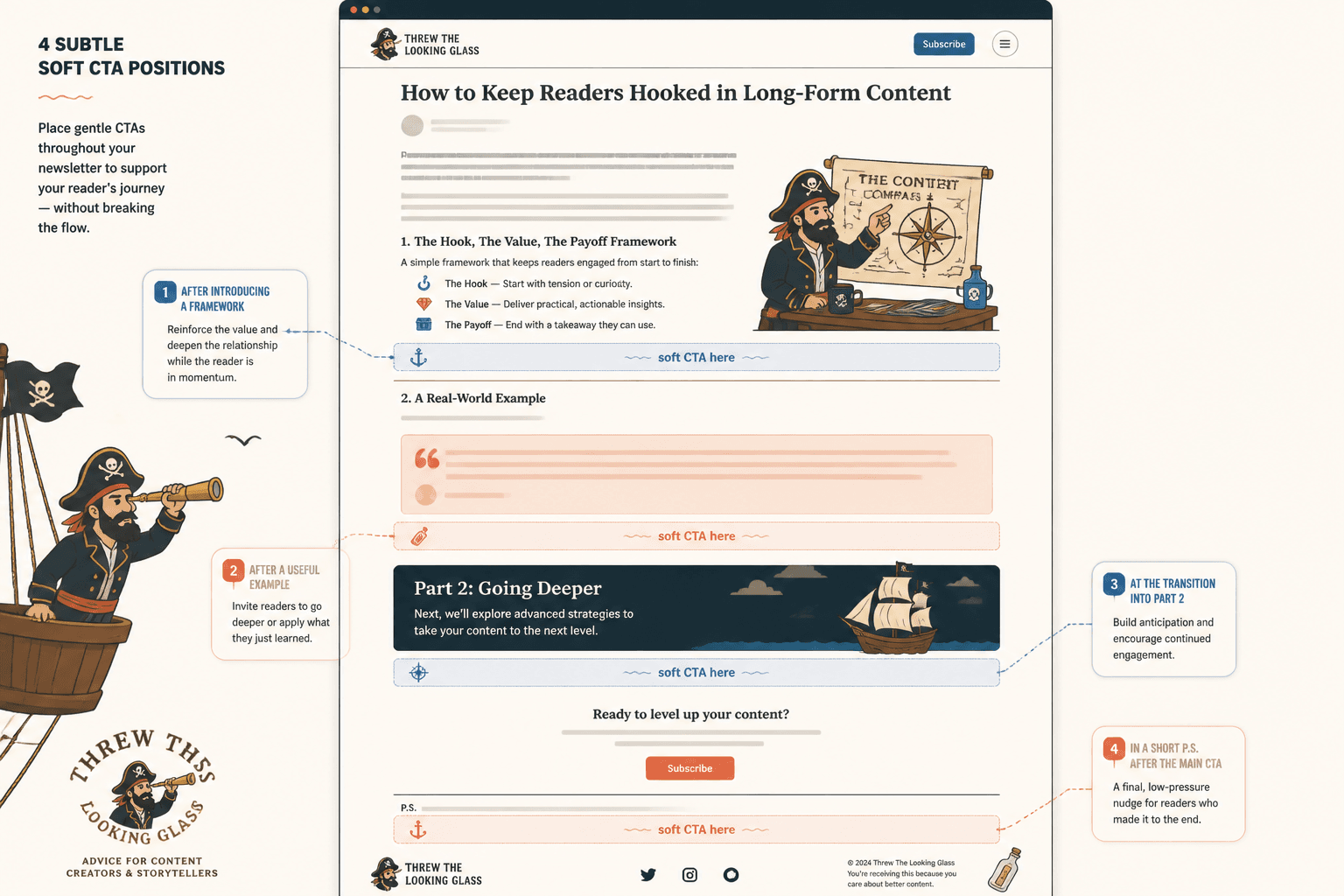
Place the CTA where the reader has context
For many posts, the best CTA placement is after the core argument, not before it. You want the ask to feel like the next logical move, not a interruption from a very eager intern.
Small CTA placements can work well in the middle of a long post or series when they are subtle and relevant. The point is not volume. It is alignment.
Make the CTA specific
“Learn more” is not much of a reason. “Download the checklist,” “book a consult,” “join the paid series,” or “get the template” gives the reader an actual decision to make.
Specificity helps with conversion and with trust. Readers are less suspicious when they know what happens next.
What makes paid Substack series worth buying
A paid series needs a promise that is narrow enough to understand and deep enough to matter. If it feels like a pile of loosely related posts with a paywall, readers will treat it like one.
A stronger structure usually includes:
- a clear starting problem
- a sequence that builds complexity
- one practical outcome per installment
- a final piece that ties the whole thing together
This is also where the trust issue becomes obvious. If the paid series keeps promising the real answer later but never delivers enough to justify the price, people notice. Readers have a pretty sharp nose for decorative withholding.
If the paid series is part of a bigger ladder, this logic pairs naturally with the monetization guide above and the funnel ideas guide.
What to measure
Monetization is not just about open rates and vibes. Track the path from content to action.
- Open rate and click-through rate
- Lead magnet signups
- Paid upgrade conversions
- Consultation inquiries
- Product sales
- Replies that indicate buying intent
For email and list growth work, Mailchimp’s documentation on email marketing benchmarks is a practical reference point. The exact numbers matter less than whether your posts are moving readers into a next step at all.
Common mistakes
1. Making every post a sales pitch
That usually burns attention faster than it earns revenue.
2. Hiding the offer so well nobody sees it
Politeness is not conversion strategy.
3. Selling the wrong thing
A discovery post should not point to a high-friction ask unless the reader is clearly ready for it.
4. Using vague CTAs
The reader should not need a decoder ring.
5. Ignoring the next step after the click
A post can do its job and still underperform if the landing page, email sequence, or checkout flow is weak.
A simple implementation checklist
If you want to turn a Substack post or series into leads or sales without overengineering it, start here:
- Choose one business outcome for the piece.
- Match the offer to reader intent.
- Make the post genuinely useful before you ask for anything.
- Place the CTA where it feels like the next step.
- Use a lead magnet, sequence, product, or consult offer that fits the topic.
- Track the handoff from post to action.
If you want more examples of what to publish before monetizing, go back to the ideas and examples guide. If you want the writing itself to pull more weight, the writing guide is the better next stop.
Final take
Substack posts and series are not supposed to be elaborate content furniture. They are supposed to move the right reader toward the right next step. When the topic, structure, and offer line up, the content stops being decorative and starts doing actual business work.
That is the goal: not louder selling, just better conversion. Fewer random clicks. Better leads. More sales that make sense.