
Most product and service descriptions are not bad because the offer is bad.
They are bad because they are foggy, flattering to the seller, and weirdly allergic to specifics.
You get a paragraph about transformation, passion, and bespoke support. What you do not get is the part a buyer actually needs: what this is, who it is for, what happens next, and why this is worth paying for.
If you are a creator, coach, consultant, freelancer, or personal brand, your product and service descriptions are doing sales work long before a call, DM, or checkout page. They shape first impressions. They filter the wrong people out. They help the right people decide faster. And if they are vague, your conversions usually get vague too.
This Product and Service Descriptions Guide for Creators Who Want Better Results will help you write descriptions that are clearer, sharper, and much more useful. Not prettier. Not “premium-sounding.” Useful. The kind that make someone think, “Yes, this is for me,” instead of “I guess this person helps with stuff.”
To see how this fits into the wider strategy, open the parent guide.
What a good product or service description actually needs to do
A strong description is not just there to describe. It needs to do four jobs at once:
- Clarify the offer
- Show relevance to the right buyer
- Reduce uncertainty
- Move the reader toward a next step
That means your description cannot survive on pretty language alone. “High-touch support for ambitious founders” is not clear. “Two 60-minute strategy sessions, async feedback on your sales page, and a custom messaging doc within 10 days” is clear.
Buyers do not need more adjectives. They need fewer mysteries.
Good descriptions answer practical questions fast. What is this? Who is it for? What problem does it solve? What do I get? What makes this different enough to care? What should I do next?
Miss too many of those, and the reader has to work. People rarely enjoy homework on a sales page.
Why creators struggle with product and service descriptions
Creators tend to fall into one of two traps.
- They write like an artist protecting the mystery
- They write like a marketer cosplaying as a corporate brochure
Neither helps much.
The first version is emotional but unclear. The second is polished but dead behind the eyes. In both cases, the buyer still does not know what they are buying.
This gets worse for services, because services are naturally less tangible. If you sell strategy, coaching, consulting, copywriting, design, audits, ghostwriting, or brand support, your work involves thought, process, judgment, and collaboration. That can be harder to package than a physical product.
But harder is not the same as impossible. It just means you need to describe the experience and outcome in a grounded way. A vague service description usually signals one of three things:
- You have not defined the offer tightly enough
- You are trying to appeal to too many people
- You are hoping tone will cover up missing specifics
Tone matters. But tone cannot rescue confusion.
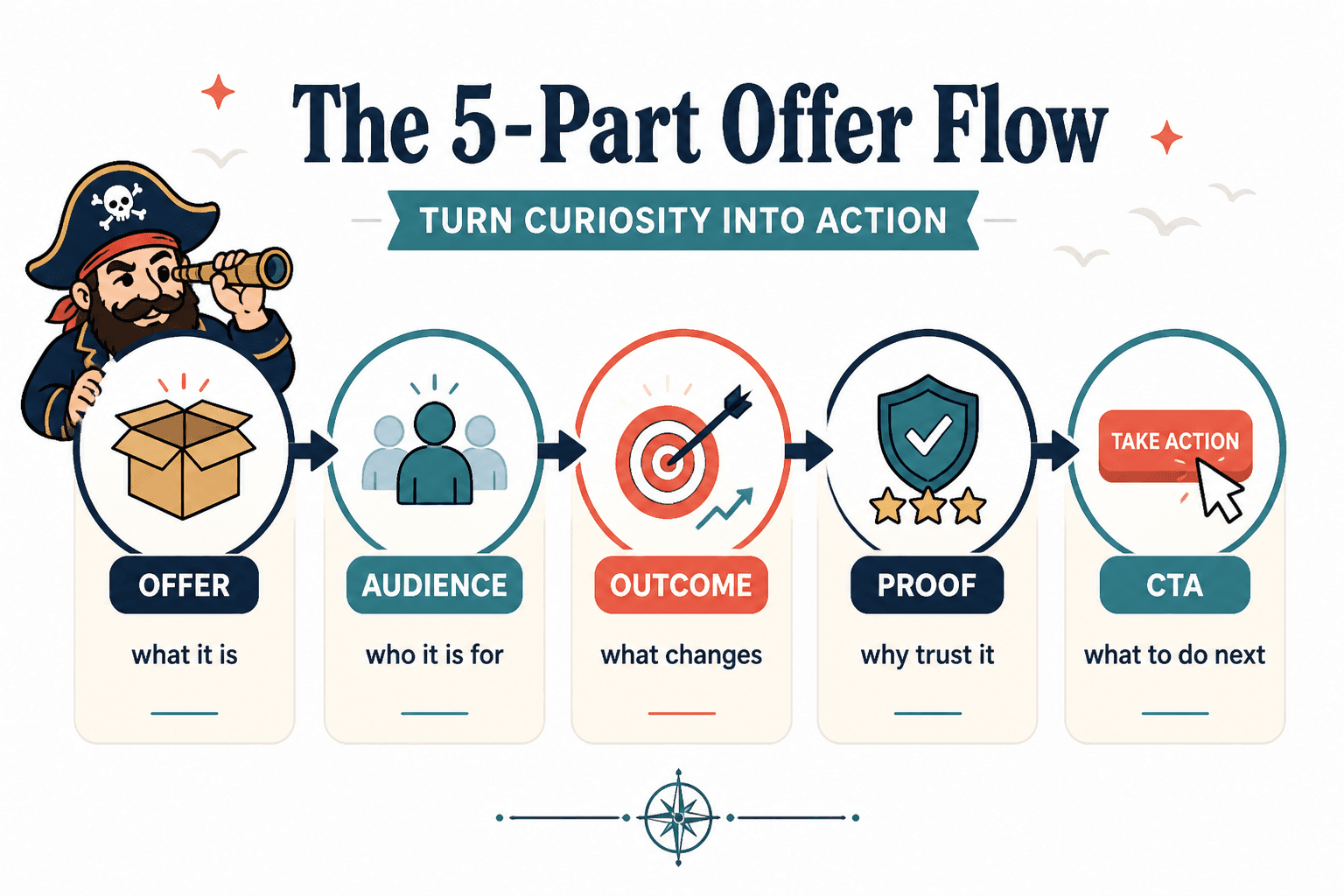
The simple structure that makes descriptions easier to write
If you tend to freeze when writing offer copy, use this structure:
- Name the offer clearly
- Say who it is for
- Explain the problem or goal it addresses
- Describe what is included
- State the outcome or benefit
- Add proof, credibility, or a differentiator
- Tell the reader what to do next
That is the skeleton. Then you make it sound like you.
A basic template
[Offer name] is for [specific audience] who want [specific outcome] without [specific pain, delay, or frustration]. You will get [what is included], so you can [practical benefit/outcome]. It is a strong fit if [fit signal]. [CTA].
That template is not meant to be pasted raw onto your site like a hostage note. It is there to stop the drift into vague nonsense.
Example: weak version vs stronger version
Weak: “A personalized coaching experience designed to help you unlock clarity, confidence, and growth in your business journey.”
Stronger: “This 4-week messaging coaching package is for coaches and consultants who know their work is solid but struggle to explain it clearly online. We’ll tighten your positioning, fix muddy offer language, and build sharper website and profile copy so more of the right people understand what you do and why it matters.”
The second version is not fancy. That is exactly why it works.
Start with the buyer, not your brilliance
A lot of creators open descriptions by talking about their philosophy, process, mission, or values. Those things can help later. They should not usually lead.
The buyer arrives with one quiet question: is this relevant to me?
Answer that first.
Lead with audience + problem + outcome
Try combinations like these:
- For creators who need clearer offer messaging before launching
- For consultants who want a sharper LinkedIn profile that brings in better leads
- For coaches with a good offer and a homepage that currently reads like warm wallpaper
- For personal brands trying to turn polite attention into actual inquiries
That last one has a bit of bite, sure. But it also paints a real problem.
Specificity is not about narrowing for the sake of it. It is about helping the right person feel seen fast enough to keep reading.
Describe what they get in plain English
One of the biggest mistakes in product and service descriptions is describing the promise while barely describing the thing.
If someone buys your service, what actually happens?
Spell it out.
For services, include the practical mechanics
- Duration
- Format
- Number of sessions or deliverables
- Communication method
- Feedback or support included
- Timeline
- What the client walks away with
For example:
“You’ll get a 90-minute strategy session, a full homepage copy review, and a rewritten hero section, offer section, and CTA block delivered within 7 days. You can also send follow-up questions by email for one week after delivery.”
That is much easier to buy than “high-level messaging support tailored to your unique vision.”
For products, include the decision-making details
- What it is
- Who it is for
- What problem it solves
- How it is used
- What is included
- Any key differentiators
If you sell digital products, templates, workshops, guides, toolkits, prompts, swipe files, or mini-courses, be concrete. “Includes 35 hook templates organized by content goal” beats “everything you need to write better content.” Almost nobody trusts “everything you need.” They should not.
Benefits matter, but they need to be believable
Features tell people what is included. Benefits tell people why it matters. You need both.
Still, benefit-heavy copy goes off the rails when it starts promising emotional fireworks from a very normal business service.
Try grounding your benefits in practical change.
| Weak benefit | Stronger benefit |
|---|---|
| Feel more aligned in your brand | Explain your offer more clearly so the right clients get it faster |
| Unlock business growth | Improve conversion on your service page by reducing confusion |
| Create confidence in your messaging | Stop rewriting your homepage every two weeks because it still feels off |
| Build momentum in your content | Turn one clear offer into posts, emails, and profile copy that all point the same direction |
Notice the stronger versions are less shiny and more buyable. They sound like outcomes a sane person could actually want and recognize.
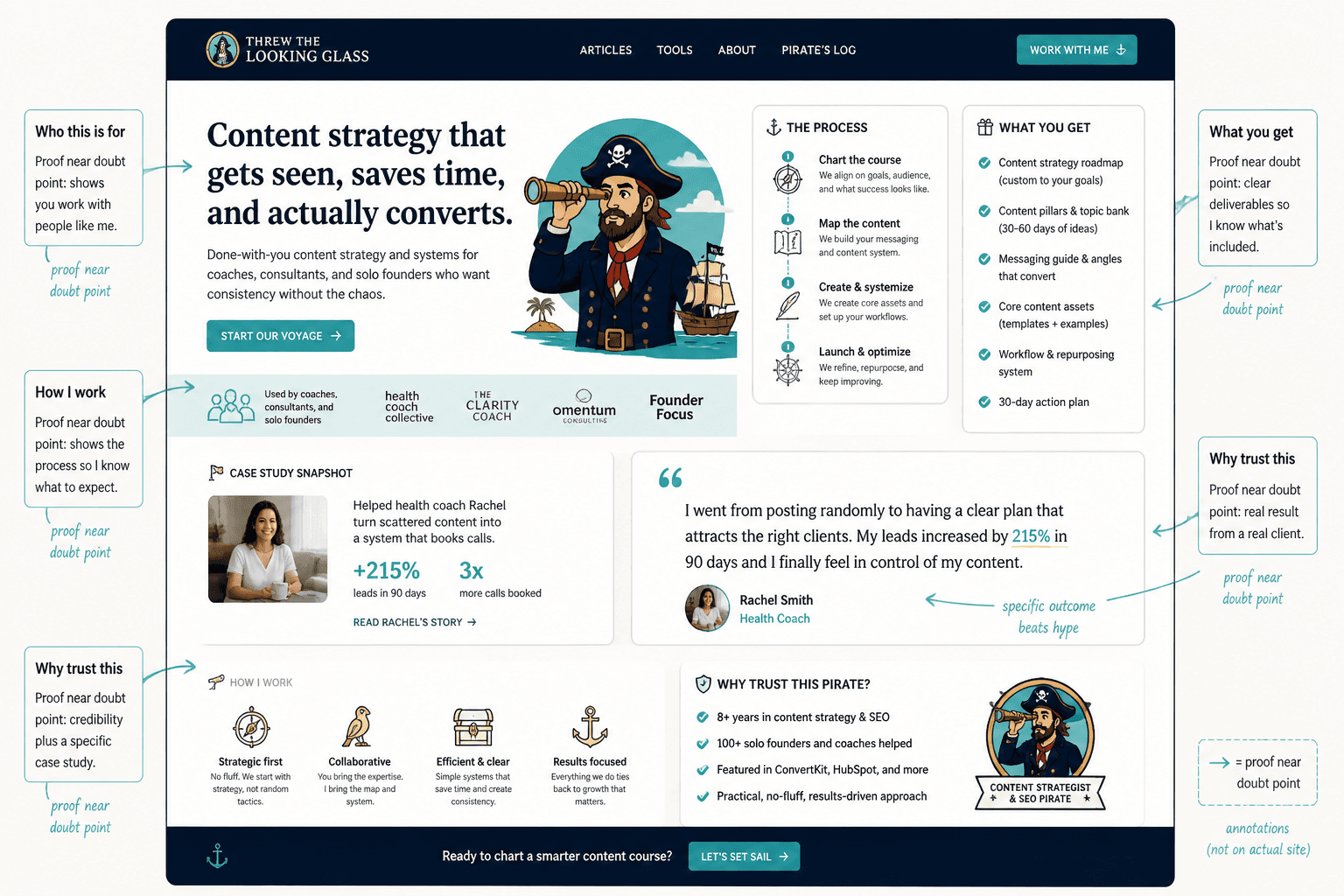
Use proof where the reader naturally doubts you
Descriptions often fail right at the point where the buyer’s skepticism quietly shows up.
You say you help people clarify their messaging. Fine. How do they know you are not just another person rearranging adjectives for money?
This is where proof helps. Not chest-thumping. Proof.
Useful kinds of proof
- Relevant results
- Specific client types served
- Notable deliverables
- Experience in the niche
- Clear process
- Short testimonials with concrete outcomes
- Mini case-study details
For example:
“Used by coaches, consultants, and solo founders who needed cleaner offer positioning before relaunching their websites.”
Or:
“This audit is built from the same homepage review framework I use in private client work to spot clarity gaps, weak CTA logic, and offer friction.”
You do not need a dramatic “10x revenue” claim. In many cases, those make smart buyers trust you less.
Write with enough personality, but do not get cute at the expense of clarity
Yes, your descriptions should sound like you. No, that does not mean every offer needs a whimsical name and three lines of poetic fog.
Brand voice should sharpen comprehension, not interfere with it.
If your audience likes dry humor, clean bluntness, warmth, irreverence, or a more premium tone, great. Bring that in through phrasing, rhythm, examples, and confidence. But keep the core meaning obvious.
A useful test: if someone skimmed your description for 15 seconds, would they know what you sell?
If not, your voice is probably wearing too much cologne.
The sections every strong description usually includes
You do not need every one of these every time, but most strong product and service descriptions pull from this list:
- Offer name: clear and not trying too hard
- Who it is for: specific audience or situation
- Main problem: what they are struggling with
- Outcome: what improves after buying
- What is included: sessions, files, deliverables, access, format
- How it works: process, timeline, steps
- Proof: results, credibility, trust signals
- Fit guidance: who this is and is not for
- CTA: what to do next
That fit guidance piece is underrated. Sometimes the fastest way to improve conversion is to make your offer easier to self-qualify for.
For example: “Best for creators who already have an offer and need sharper messaging, not for people still deciding what business they want to start.”
That line does not repel good buyers. It reassures them.
How to make service descriptions less vague
Services usually get vague because the seller describes intentions instead of the experience.
Here is a simple fix.
Use this three-part service formula
- Situation: what the client is dealing with now
- Support: what you do with or for them
- Shift: what improves by the end
Example:
“If your website sounds competent but forgettable, this messaging intensive helps you fix the parts that blur your value. We’ll refine your positioning, tighten your service descriptions, and rewrite the sections most likely to lose qualified buyers. By the end, your site should sound clearer, more distinct, and much easier to act on.”
That works because it mirrors how the buyer thinks. Current problem. Help offered. Expected shift.
How to make product descriptions less generic
Product descriptions often go generic when the seller assumes the product category already explains the value. It does not.
“A template pack for creators” tells me almost nothing. Templates for what? Used when? To achieve what? Written for whom? Beginner creators? Experienced ones? For posts, sales pages, bios, launches, emails?
Good product descriptions narrow the use case.
Example: generic vs specific digital product copy
Generic: “A powerful collection of templates to streamline your content and boost engagement.”
Specific: “This pack includes 50 reusable post starters for creators who know their topic but struggle to open strong. The templates are organized by post goal, including authority posts, conversation starters, soft-sell posts, and audience-building hooks, so you can write faster without sounding copied and hollow.”
Again, less hype. More clarity. Better sales.
Common mistakes that quietly kill conversions
Some mistakes are obvious. Others are sneaky.
- Writing too broadly: If it sounds for everyone, it usually feels for no one.
- Leading with abstract benefits: Transformation is nice. Tangibility closes.
- Using filler adjectives: bespoke, elevated, soulful, premium, strategic. Fine in moderation. Empty when overused.
- Burying the actual offer: The buyer should not have to hunt for what is included.
- No next step: A description without a CTA is a shrug in paragraph form.
- Sounding copied from your own industry: If your page could belong to twelve competitors, that is a problem.
- Ignoring objections: If the offer sounds helpful but risky, effort-heavy, or vague, people hesitate.
One more: trying to sound expensive instead of useful. Premium buyers are not allergic to plain English.
A practical rewrite process for better descriptions
If your current copy feels weak, do not start by tweaking random sentences. Rewrite in this order:
- Find the real offer. What exactly are you selling?
- Name the audience. Who is this actually for?
- Identify the main problem. What pain, friction, or goal makes this relevant?
- List the concrete inclusions. What does the buyer get?
- Translate features into practical benefits.
- Add proof. Why should they trust this?
- Tighten the CTA. What should they do now?
Then cut anything that only exists to sound polished.
If a sentence does not clarify, differentiate, reassure, or convert, it is probably just decoration.
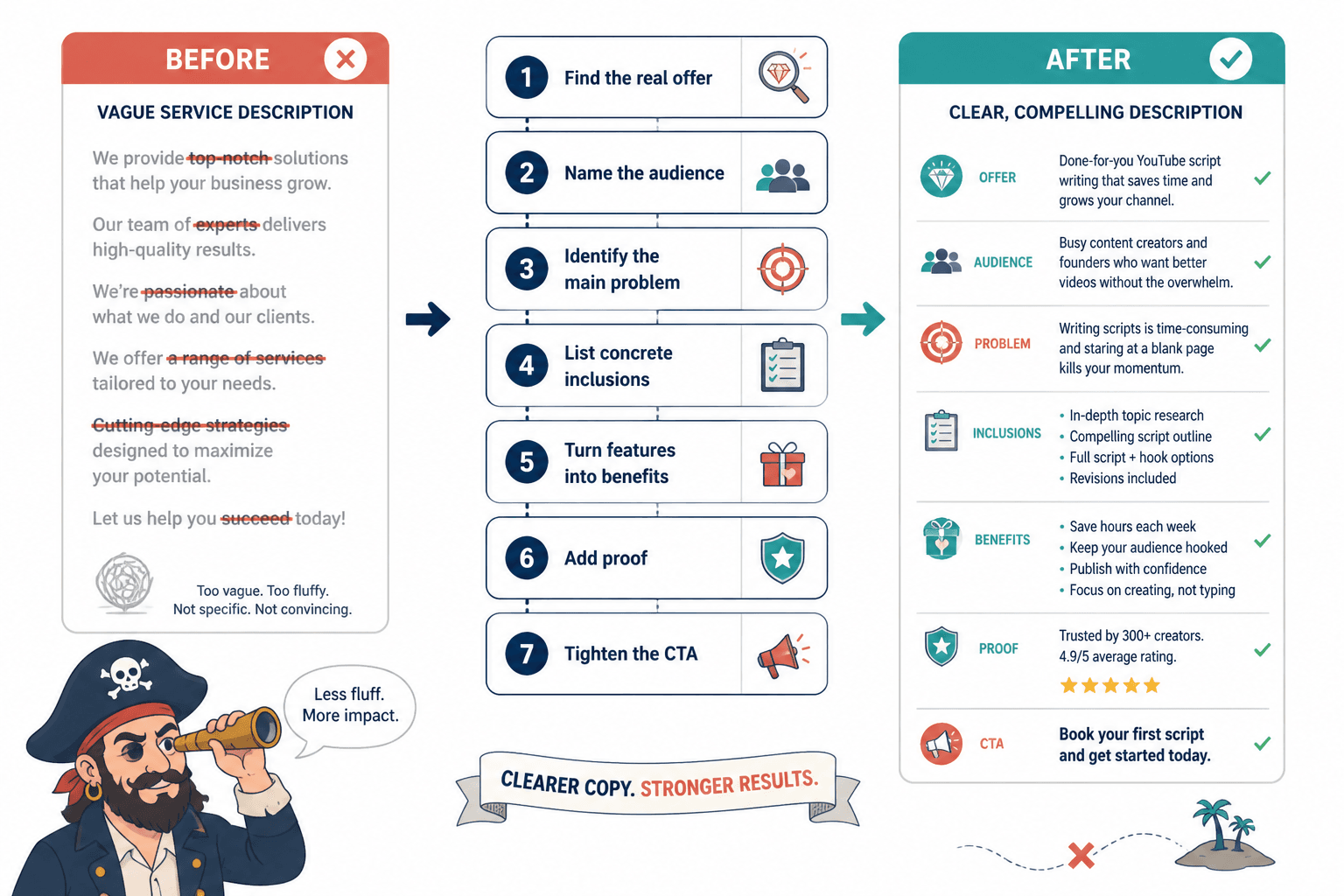
A before-and-after service description rewrite
Here is what this looks like in practice.
Before: “My signature offer helps visionary entrepreneurs align their message, elevate their brand presence, and step into a new level of growth through strategic support.”
Problems:
- “Visionary entrepreneurs” is vague
- “Align their message” is fuzzy
- “Elevate their brand presence” means almost anything
- No clue what the service includes
- No practical outcome
After: “This messaging strategy package is for coaches and consultants whose websites sound fine but do not clearly sell the value of their offer. You’ll get a full offer-positioning review, rewritten homepage messaging, and a CTA strategy that makes the next step easier to act on. It is built to help you sound sharper, reduce buyer confusion, and turn more of your traffic into qualified inquiries.”
Not magical. Just much better.
How long should a product or service description be?
There is no holy number. The right length depends on what the buyer needs to believe before taking the next step.
A small digital product may need a short, crisp description. A higher-ticket service usually needs more detail, especially if the buyer is deciding without a call first.
As a loose guide:
- Simple low-ticket product: 75–200 words
- Digital template pack or guide: 150–400 words
- Mid-ticket service section: 200–500 words
- Full service sales page section: often more, if the detail is useful
The better question is not “How long should it be?” It is “Have I given the buyer enough clarity, confidence, and reason to act?”
If yes, stop. If not, more words will only help if they add substance.
What creators with smaller audiences should focus on
If you do not have a big audience, your descriptions need to work harder on clarity and trust. You cannot rely on social proof alone. That is fine. Plenty of smaller creators sell well with smart, specific copy.
Focus on:
- A clearly defined audience
- A tightly scoped offer
- Useful specifics
- Simple proof
- A low-friction next step
You do not need to sound bigger than you are. You need to sound clear enough to trust.
If that is where you are right now, this guide for creators with small audiences will help you tighten the right parts first.
Helpful examples and related guides
If you want to keep improving your product and service descriptions, these related resources will help:
- Product and service descriptions hub
- How to write better product and service descriptions
- Best product and service descriptions ideas and examples for creators
- Product and service descriptions examples for coaches, consultants, and personal brands
You can also browse more guidance in website conversion copy resources if your descriptions are part of a larger site rewrite.
Quick FAQ
What is the difference between a product description and a service description?
Product descriptions explain what the buyer gets and how it is used. Service descriptions also need to explain the process, scope, and what working with you actually looks like.
Should I write short or long descriptions?
Write as long as needed to make the offer clear and easier to trust. Simpler offers can be short. Higher-friction offers usually need more depth.
The bigger point is simple: clearer structure and clearer writing make the piece more useful. That is usually what makes the ending land better too.