
Facebook long-form can waste a lot of trust very quickly when the post sounds sharp but the offer feels bolted on. The result is expensive busywork: the writing gets published, the comments look busy, and the leads stay politely elsewhere. The fix is not to sand off the personality. It is to give the post a conversion path that fits the level of trust the audience actually has.
If you are building out a Facebook content system, this sits right next to the parent guide on Facebook long-form & rants and the companion pieces on writing better long-form posts, ideas and examples, and AI tools for drafting. The point across the cluster is simple: strong posts still need a job.
Why Facebook long-form and rants need a different kind of funnel
Facebook long-form is not a cold ad. It usually works because it sounds human, opinionated, and specific enough to feel worth reading. That means the monetization path has to respect the format’s trust level. Push too hard and the post feels like bait. Stay too vague and it becomes a public diary entry with nice engagement and no business result.
The useful frame is not “How do I sell here?” It is “What kind of next step fits the amount of trust this post has earned?”
That is why the best conversion paths for long-form and rants are usually low-friction:
- a comment-based starter conversation
- a lead magnet tied to the pain point
- a newsletter signup for slower nurture
- a profile visit to a clear pinned offer
- a short consultation or call only when the post has already built real intent
Meta’s own guidance on business messaging and lead generation leans in the same direction: keep the next step clear, simple, and matched to the user’s stage rather than pretending every post is a closing page. See the official Meta Business Help Center for current product and messaging guidance.
Start with the right post-to-funnel match
Not every rant should point to the same outcome. A post about a painful mistake in your workflow might fit a checklist or guide. A sharper opinion post might do better with a comment prompt and a soft DM follow-up. A story with proof may deserve a profile click to a pinned offer.
Before you write the CTA, decide which of these describes the post best:
- Awareness post: people recognize the problem but are not ready to buy yet
- Consideration post: people agree with the point and want a next step
- Intent post: people already want help and need a clean path to buy
That small distinction matters. The wrong CTA does not just underperform; it can make the whole post feel oddly needy. And needy is not a great business strategy, despite its popularity.
The best funnel ideas to pair with Facebook long-form & rants
These are the conversion paths that tend to fit the format without making the post feel like a trapdoor.
1. Post to comment to soft DM
This works well when the post starts a conversation, not a hard pitch. Invite a simple comment response, then continue the conversation privately only when there is a natural reason to do so.
Best for:
- strong opinions
- problem-aware audiences
- offers that need a little context
Keep the comment prompt specific. “Want the checklist?” is better than “Thoughts?” when the goal is conversion and not open-ended entertainment.
2. Post to lead magnet
If the post identifies a problem clearly, a useful resource can bridge the gap between attention and action. A checklist, template, swipe file, or short guide gives the post somewhere to send the reader besides the void.
Best for:
- educational rants
- posts with a common mistake or myth
- content that needs a proof-of-value next step
For structure, the lead magnet should solve one narrow problem that the post has already made urgent.
3. Post to newsletter signup
This is the slower but steadier path. If the post is strong on perspective and weak on immediate buying intent, a newsletter signup can capture interest without forcing a premature decision.
Best for:
- broad topics
- trust-building posts
- buyers who need more repetition before they act
Use this when the long-form post is doing relationship work. It is less flashy than a direct sale, but so is compounding. Annoyingly, that is also why it works.
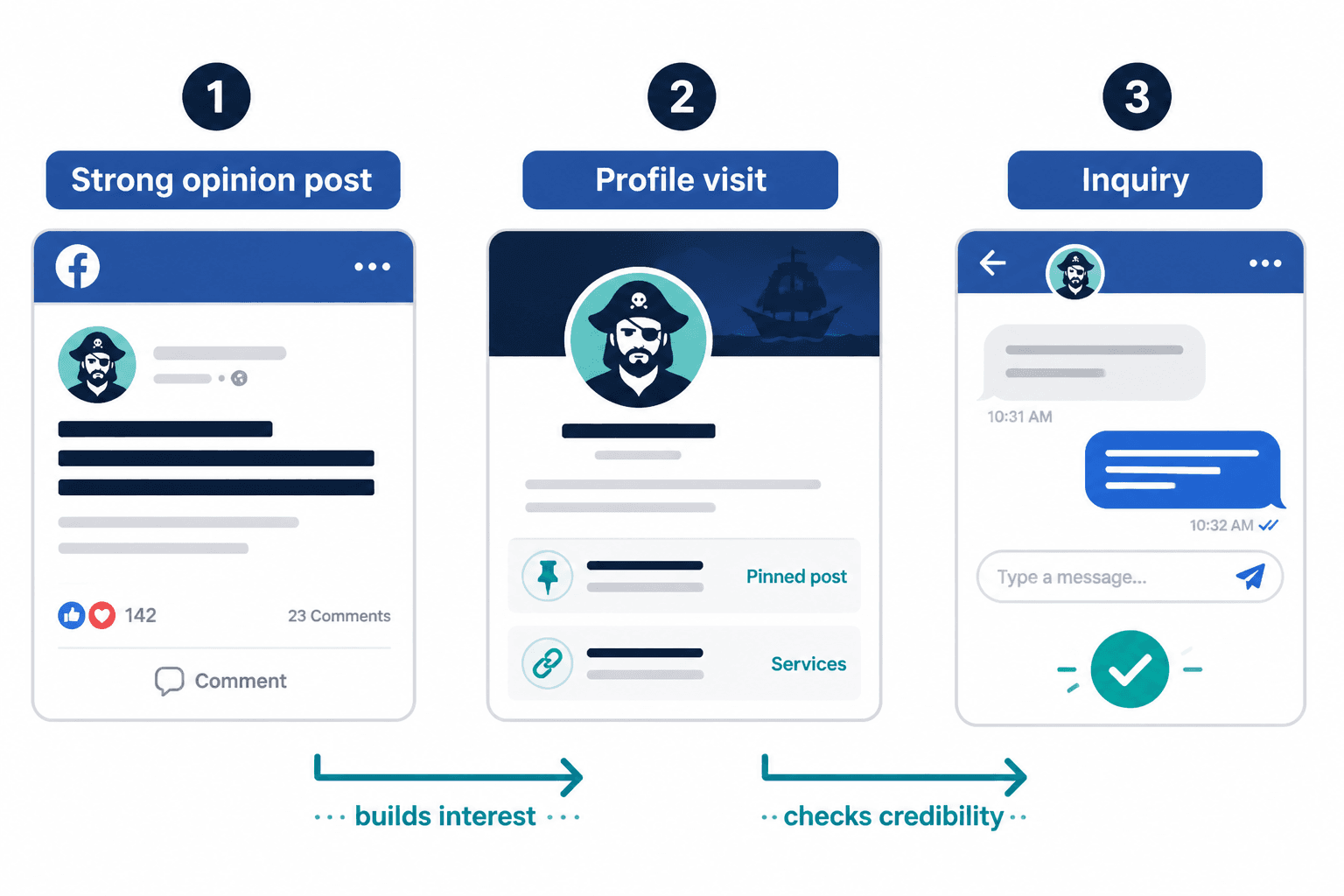
4. Post to profile to pinned offer
If the post is already doing a lot of trust-building, send readers to your profile where the offer is clear, pinned, and easy to inspect. This works especially well when the CTA is not “buy now” but “see the next step.”
Best for:
- authority posts
- personal-brand positioning
- services with a clear fit signal
The profile has to do its part. If the pinned content is vague, buried, or stuffed with four different offers, the post’s momentum dies in administrative confusion.
5. Post to low-friction consultation
Use this only when the audience is already warm and the service is a natural fit for direct conversation. The bar is higher here. You need enough trust, enough clarity, and enough proof that the reader can imagine the outcome.
Best for:
- service businesses
- high-value offers
- posts with concrete expertise or results
Keep the ask short. A short call, booking page, or inquiry form beats a long intake maze. Nobody enjoys being punished for showing intent.

How to write the post so the offer feels earned
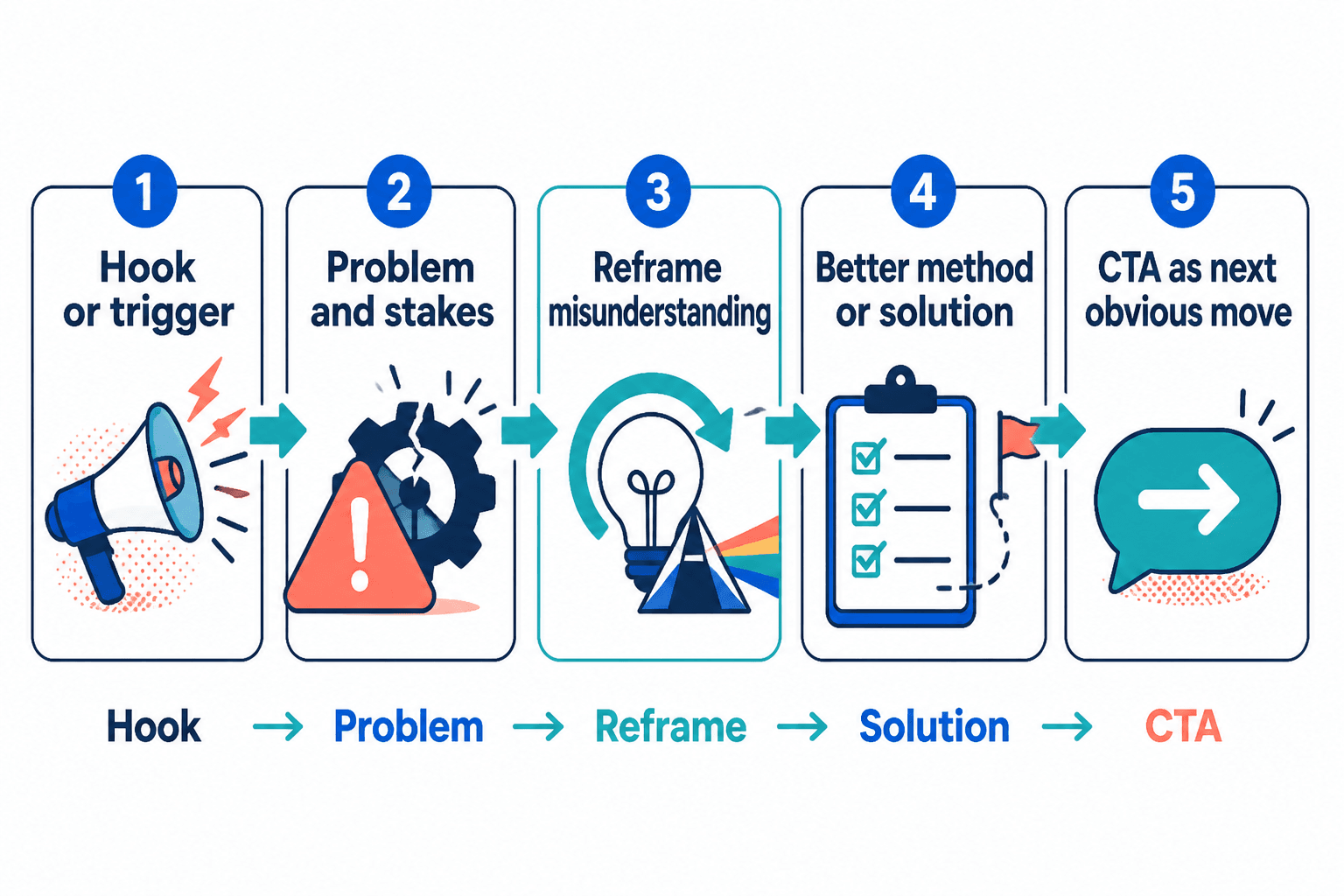
Facebook long-form and rants convert better when the structure feels earned instead of pasted on. A useful post usually moves through five parts:
- Hook: open with a real business tension, not a generic opinion
- Tension: show why the problem matters
- Proof: give a concrete example, observation, or pattern
- Payoff: reveal the useful insight or method
- CTA: point to the next step that matches the stage
That structure keeps the post from feeling like it exists only to smuggle in a link. The CTA becomes the last logical sentence, not a surprise visit from the sales department.
A few practical examples:
- Hook: “A sharp post with the wrong CTA does not build demand. It leaks it.”
- Tension: explain how the wrong ask turns a good rant into disengagement
- Proof: outline the audience stage or buying signal that changes the best next step
- Payoff: name the better conversion route
- CTA: “If you want the framework, grab the checklist” or “If this is already a fit, see the pinned offer”
If you need a stronger writing foundation before monetizing, the companion guide on how to write better Facebook long-form and rants is the better first stop.
Match the CTA to audience temperature
One of the fastest ways to wreck a good Facebook post is to use a hot CTA on a lukewarm audience. That is how you turn interest into friction.
Use the CTA based on how ready the reader is:
- Cold or early-stage: newsletter signup, useful guide, low-commitment resource
- Warm and engaged: comment prompt, soft DM, profile visit
- Hot and intent-driven: booking page, inquiry form, direct offer
Meta’s lead generation and messaging products are built around reducing that friction, not increasing it. A clean next step usually beats a clever one. See official Meta business resources for lead generation and messaging flows at the Meta Business Help Center and Meta Lead Ads pages.
In plain English: do not ask for marriage on the first date, and do not act surprised when the audience objects.
What to avoid if you want leads instead of eye-rolls
Some monetization mistakes show up so often they may as well have a recurring calendar invite.
- Hard selling too early: the post has no trust built, but the CTA acts like it already has
- Vague offers: readers cannot tell what they get or why it matters
- Too many links: the post loses focus and starts feeling like a yard sale
- Mismatch between tone and offer: the rant sounds honest, but the CTA sounds like a brochure
- No follow-through: comments, DMs, and profile visits are not managed once the post works
If a post gets attention but no leads, the problem is often not the writing itself. It is the absence of a believable next step.
A simple workflow for turning one rant into multiple assets
A good rant can do more than one job if you treat it like a content source instead of a one-off. One post can become:
- a long-form Facebook post
- a shorter follow-up post
- a newsletter intro
- a lead magnet outline
- a sales page angle
- a consultation prompt
That does not mean extracting every last molecule of utility until the idea screams for release. It means building one clear argument, then adapting it for adjacent steps in the funnel.
If you want more structure on the idea side before conversion planning, use ideas and examples for creators. If your draft needs speed or reshaping, the AI tool guide can help with the mechanics without pretending software can replace judgment.
Bottom line
Facebook long-form and rants make more leads when they are treated like trust-building assets with a clear next step, not just content with a link taped onto the end. The best conversion path depends on the audience stage, the strength of the post, and the amount of trust already in the room.
Start with the post’s job, match the CTA to the reader’s temperature, and keep the offer simple enough that it feels like the obvious next move. That is how a strong rant stops being just a good read and starts doing actual business work.