
Weak positioning does not just sound bland. It taxes every downstream decision: fewer profile clicks, less trust, weaker inquiry quality, and more sales conversations that start with a long, awkward clarification. A creator can be good at the work and still lose the lead if the bio reads like it was assembled from motivational confetti and a half-finished noun phrase.
The fix is not to write louder. It is to write clearer. A strong creator positioning line tells the right person who the work is for, what changes, why that claim is believable, and what to do next. Once that line works, the rest of the profile gets much easier to shape. For a broader framework, the creator bios and profile copy guide is the parent map; this article is the part that turns positioning into leads and sales support.
What a creator positioning line is supposed to do
A positioning line is the shortest version of the answer to: what do you do, who is it for, and why should anyone care? It is not a slogan contest. It is not a tiny autobiography. It is the sentence or two that helps a visitor decide whether they are in the right place.
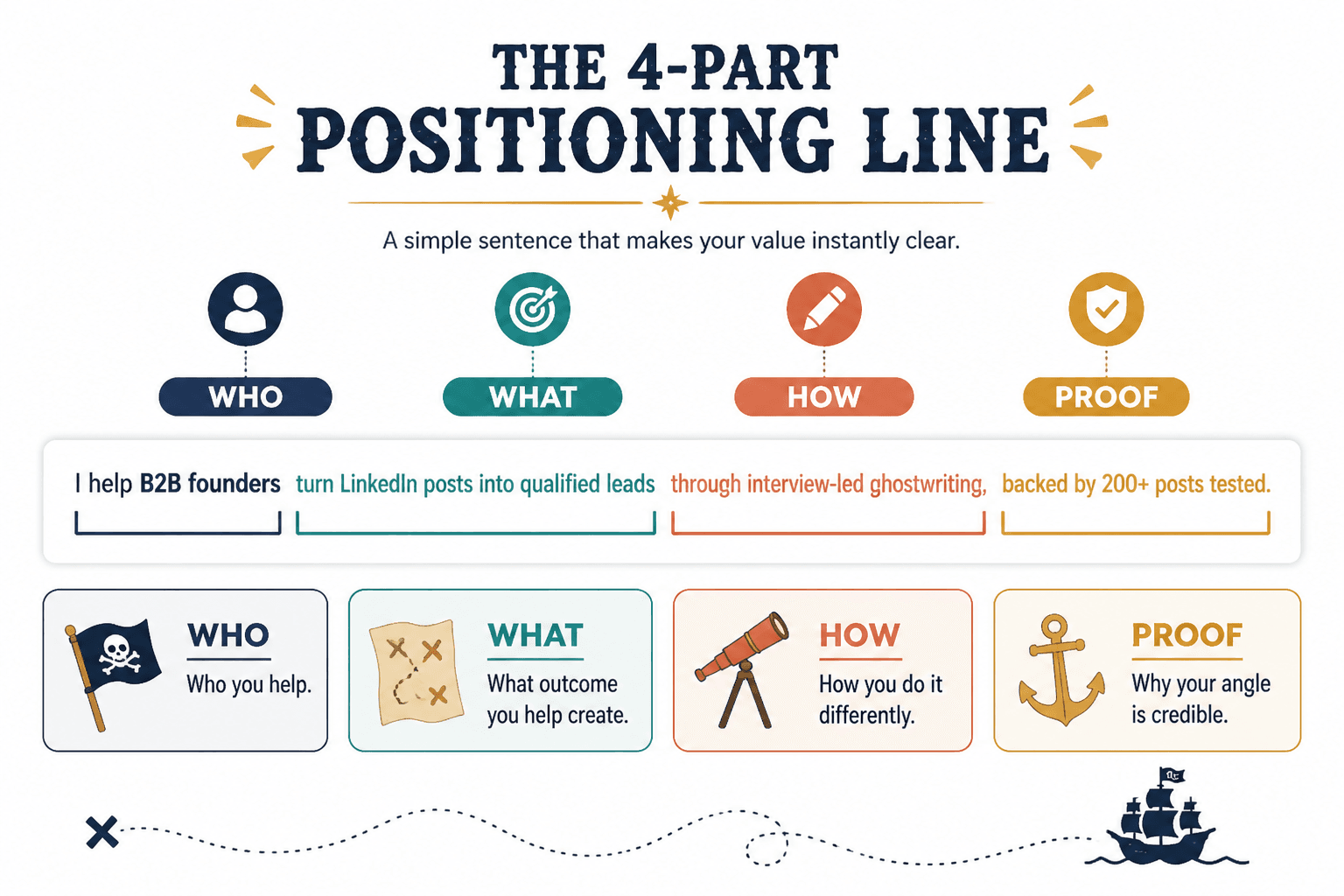
Good positioning lines do four jobs at once:
- They make the audience obvious.
- They state the outcome or transformation.
- They hint at the method, angle, or specialty.
- They make the claim feel credible instead of decorative.
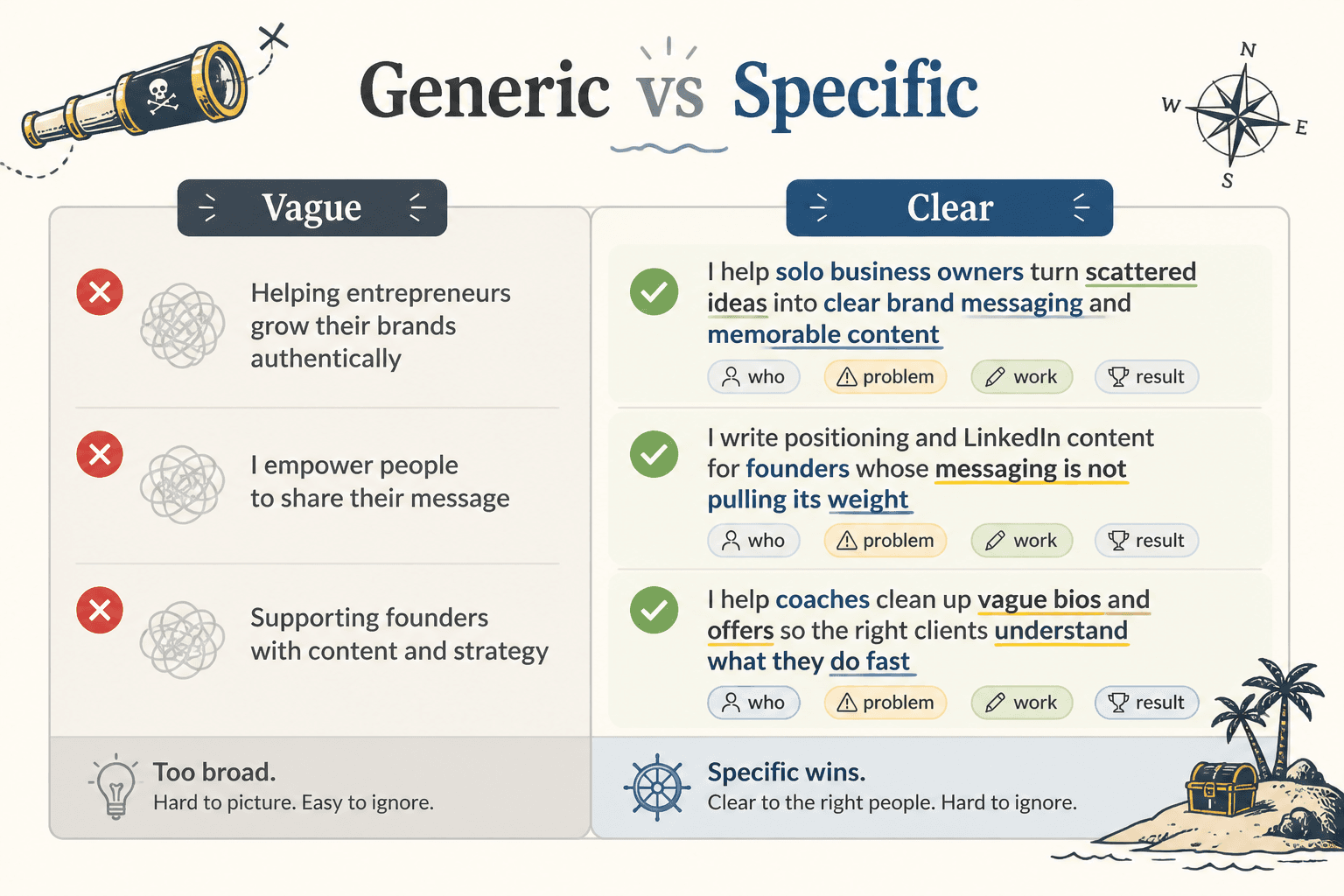
That is why generic language falls flat. “Helping brands grow” sounds fine until you notice it could describe half the internet and a very enthusiastic PowerPoint deck.
Why generic creator positioning lines underperform
Generic lines fail because they ask the reader to do too much interpretive work. The visitor has to guess who the content is for, what kind of result is on offer, and whether the creator is any different from the next profile in the feed. Guesswork is not a conversion strategy.
The most common failure modes look like this:
- Broad appeal language that tries to be inclusive and ends up meaning very little.
- Role-only descriptions that say what the creator is, not what value the profile delivers.
- Proof-free claims that sound confident but not convincing.
- Vague process words like “empowering,” “elevating,” or “unlocking potential” doing all the heavy lifting.
If a profile line could be pasted onto ten other creator pages without sounding obviously wrong, it is probably too soft to earn attention.
What better positioning lines usually have in common
The useful version is simpler than the polished version. It does not try to impress first. It tries to orient first.
Strong positioning lines usually include some combination of the following:
- Audience specificity – a clear type of person, business, or creator.
- Outcome specificity – what changes because of the work.
- Method or angle – the distinctive way the creator helps.
- Credibility signal – proof, experience, niche focus, or results.
A useful test: if someone skimmed the line while mildly distracted, would they still know what kind of help is being offered? That is the bar. Not poetry. Not performance art. Just useful clarity.
How to turn a positioning line into bio copy that sells
A positioning line becomes better bio copy when it stops trying to be only a label and starts acting like a handoff. The profile should make it easy for the reader to move from interest to next step without needing a marketing decoder ring.
A practical structure looks like this:
- Lead with who you help. Be specific enough that the right reader recognizes themselves.
- State the change. Name the result, outcome, or problem solved.
- Add the angle or proof. Say why this work is credible or distinct.
- Close with a next step. Send people somewhere useful instead of hoping they invent the rest.
That last part matters more than many bios admit. A profile that describes the offer but does not direct the reader anywhere leaves money on the table and a slightly smug silence in its wake.
For a fuller breakdown of how that handoff works, see the creator bios profile copy guide and creator bios profile copy examples.
What a profile CTA is actually supposed to do
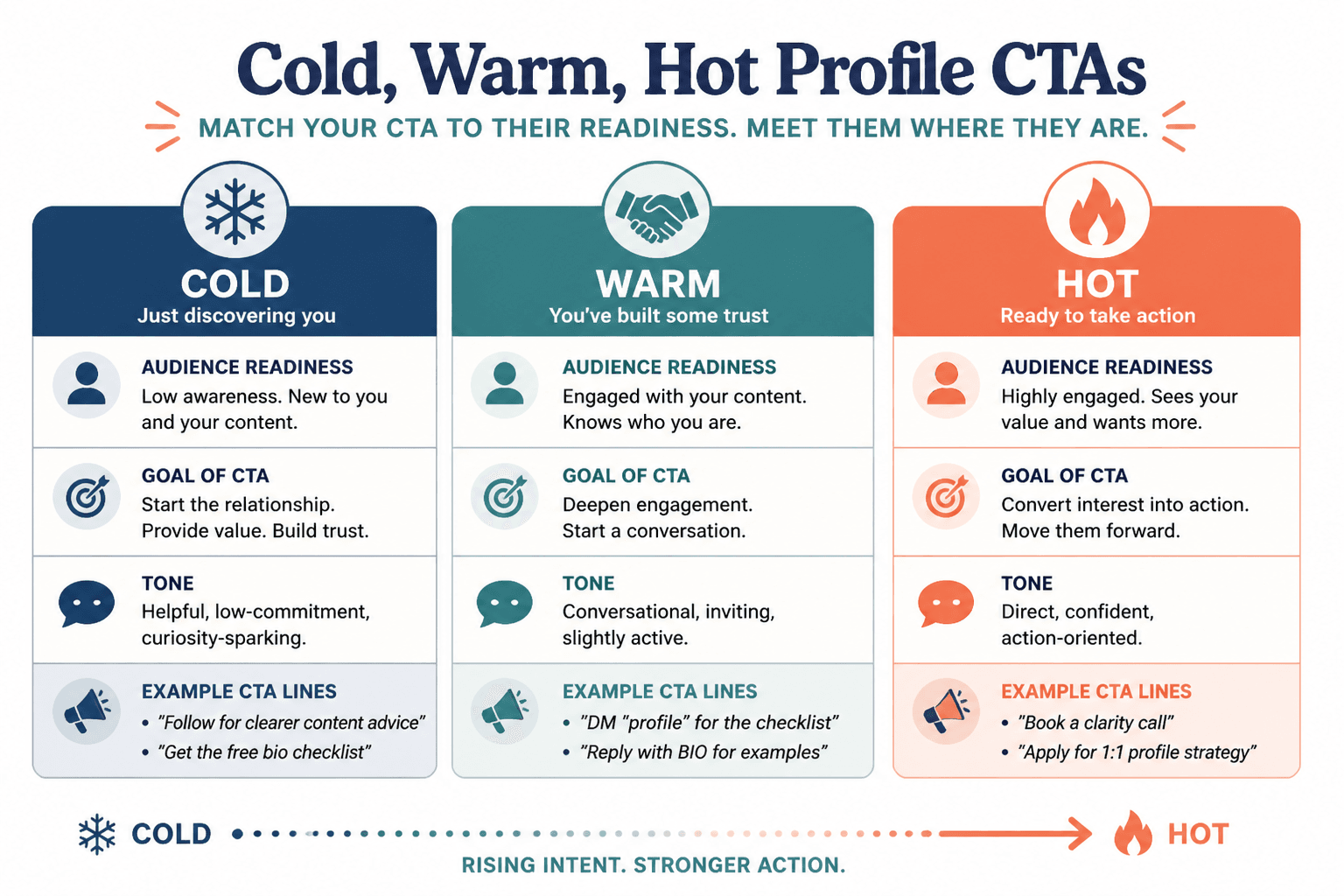
A bio CTA is not there to be clever. It is there to make the next action obvious. The right CTA depends on where the audience is in the trust sequence. Asking a cold visitor to book a call can be a bit much. Asking a ready buyer to “stay tuned” is also not ideal, unless the goal is performance art.
The CTA should match the temperature of the audience:
- Cold audience – invite a low-friction step such as a free resource, newsletter, or useful page.
- Warm audience – invite deeper engagement such as a guide, case study, or service overview.
- Hot audience – invite action such as inquiry, booking, or direct purchase.
Cold audience CTAs
Cold audience CTAs should reduce friction, not manufacture urgency. The visitor is still deciding whether to care. So the CTA should point to something helpful, specific, and low commitment.
Examples:
- Read the guide
- Get the checklist
- Join the newsletter
- See how it works
These work because they offer value before they ask for trust. A fair trade, which is refreshingly rare online.
Warm audience CTAs
Warm readers already understand the creator’s lane. They need a little more proof, specificity, or context before they take the next step.
Examples:
- See recent examples
- Read the case study
- Explore the service page
- Learn how the process works
This is where supporting assets matter. If the profile says the work is strategic, the linked page should not look like it was written during a power outage.
Hotter audience CTAs
Hotter audience CTAs are for people who are already close to yes. At that stage, the page should make the action obvious and uncomplicated.
Examples:
- Book a call
- Apply here
- Request a quote
- Contact me for availability
The point is not to sound pushy. The point is to stop hiding the door.
How to rewrite a creator positioning line step by step
Start by stripping the draft down to plain language. If the first version sounds like it was padded with “strategic” and “authentic,” that is not a style choice. That is a warning light.
- Write the audience. Name the exact type of person you help.
- Write the outcome. What changes for them?
- Write the method. What is your angle, niche, or approach?
- Write the proof. What makes the claim believable?
- Write the CTA. What should they do next?
Then compress. Aim for usefulness over flourish. A good line should feel specific enough to attract the right reader and plain enough to survive a skim.
Before-and-after patterns that usually improve the copy
These are not meant to be copied word for word. They are patterns that show how much clarity can be gained by removing fog.
- Before: Helping people grow their online presence.
After: Helping independent creators turn profile visits into qualified inquiries.
- Before: Content strategist and brand storyteller.
After: Content strategist helping service-based creators write bios, hooks, and profile copy that convert.
- Before: Building brands that matter.
After: Helping coaches and consultants position their offers clearly so the right clients know when to reach out.
The difference is not just style. The second version tells the reader what kind of help is on offer and why the profile exists in the first place.
Common mistakes to avoid
There are a few classic ways a profile line can sabotage itself while trying to sound polished.
- Using too many abstract nouns. Brand, impact, alignment, transformation, synergy. A fine group, but not a complete sentence.
- Writing for everyone. When the line tries not to exclude anyone, it usually attracts no one in particular.
- Skipping proof. A claim without credibility is just a hopeful sentence in business clothes.
- Hiding the offer. If the page never says what is actually being sold or promoted, the profile becomes a decorative hallway.
- Overloading the CTA. Too many next steps create the same outcome as no next step: inertia.
The cleanest profiles usually avoid the drama of overexplaining. They say enough, then get out of the way.
Where supporting pages help
Bio and positioning copy work better when they are part of a simple content path. The profile should not carry the whole conversion load by itself.
Useful next pieces include:
- best AI tools for creator bios profile copy if you need help speeding up drafts without surrendering judgment;
- examples pages that show different positioning angles in context;
- lead magnets, service pages, or booking pages that continue the promise made in the bio.
Final check before you publish
Read the bio out loud and ask four questions:
- Can I tell who this is for?
- Can I tell what changes for them?
- Can I tell why this is credible?
- Can I tell what to do next?
If any answer is fuzzy, tighten the line before the page goes live. The goal is not to sound impressive to everyone. It is to sound unmistakably relevant to the right people.
That is what turns creator positioning from nice-looking copy into lead-supporting, sales-ready profile text.
For the broader system around it, keep working through the creator bios profile copy guide and the sibling articles on examples, tools, and funnel fit.