Weak product and service descriptions waste trust, stall sales, and turn useful traffic into expensive busywork. The page gets seen, the reader keeps scrolling, and the offer ends up sounding like it was assembled to impress a committee rather than help a buyer make a decision. A description that does not make the next step obvious is not neutral copy. It is a conversion leak.
The fix is usually not cleverer wording. It is clearer positioning, tighter buyer intent, and a better handoff from description to action. If you want the broader framework behind that work, start with the product and service descriptions guide. If you want examples of how stronger wording looks in practice, the examples page is the better companion piece.
This article focuses on the monetization layer: how to turn a description into a page that earns more leads or sales without turning into pushy sludge.
What a conversion-ready description has to do
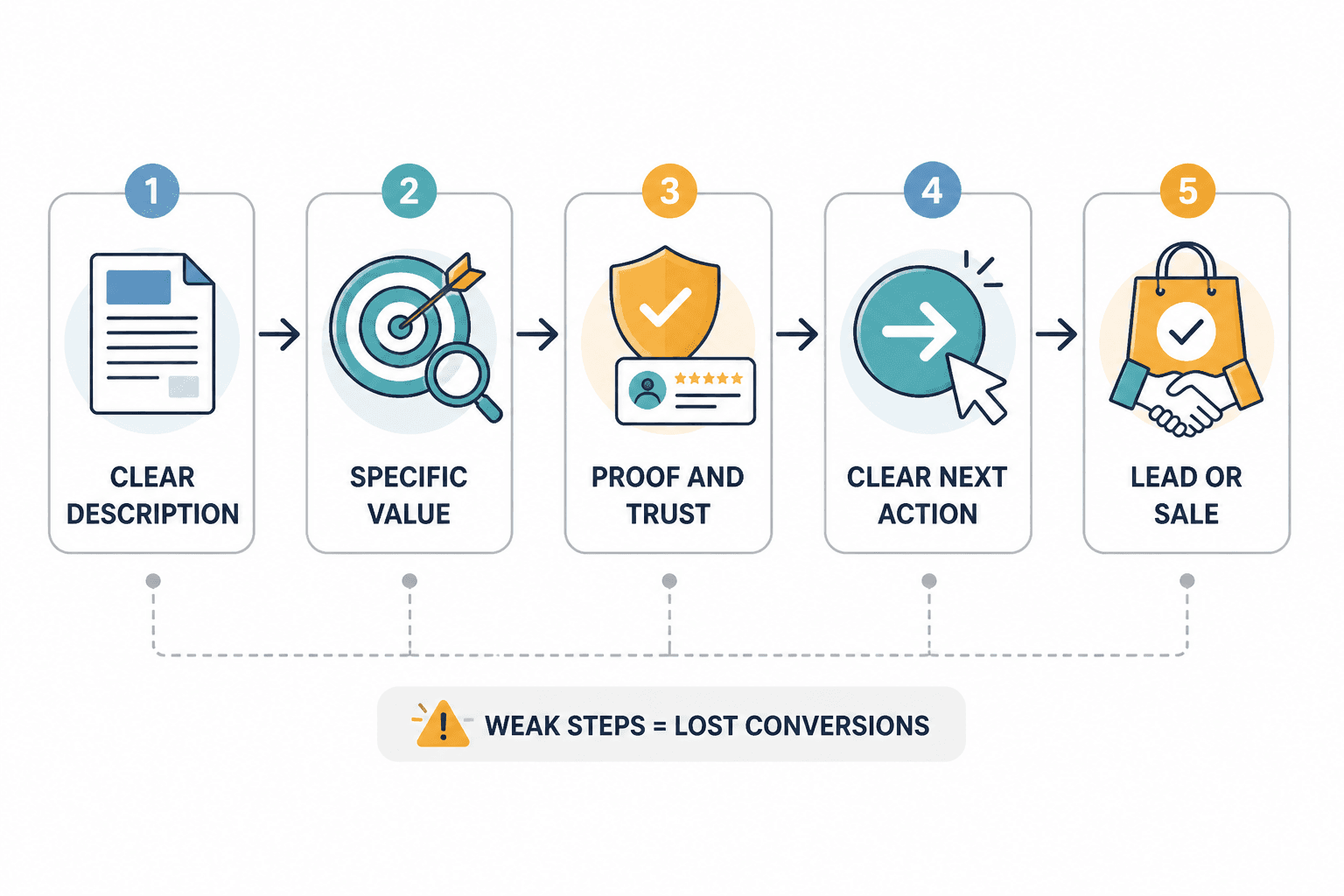
A good description has to do three jobs fast:
- make the offer easy to understand
- show the right buyer that it fits their situation
- give them a reasonable next step
If any one of those is missing, the page starts leaking conversions. Too vague, and people do not know what they are buying. Too generic, and the right buyer does not feel seen. Too aggressive, and trust takes one polite step backward.
Conversion-focused copy is not about hyping the offer into submission. It is about removing friction from the decision.
Start with buyer intent, not polish
One of the easiest mistakes is to write a description that sounds polished before it sounds usable. That usually produces clean sentences that do not answer the buyer’s actual questions. Useful copy starts earlier.
Before you rewrite anything, get clear on these four things:
- What exactly is the offer?
- Who is it for?
- What problem or outcome does it connect to?
- What happens after the reader clicks, books, buys, or inquires?
That is the difference between “nice writing” and copy that helps people move. If you want a more detailed treatment of this shift, the sibling page on buyer-intent phrasing goes deeper into how to make the offer sound like a decision, not a brochure.
Say what it is, who it is for, and why it matters
People do not convert on elegance alone. They convert when the page helps them answer: “Is this for me, and is it worth my attention?”
A practical description usually gets there in plain language:
- Name the offer plainly. No fog, no branding fog machine.
- Show who it is for. Be specific enough that the right reader recognizes themselves.
- Connect it to a real outcome. Not a fantasy outcome. A believable one.
Example shape:
Weak: Strategic growth support for modern brands.
Stronger: Monthly conversion copy support for small businesses that need clearer service pages, sharper offers, and more qualified inquiries.
The stronger version is not trying harder to sound impressive. It just gives the buyer fewer excuses to keep guessing.
Add proof and decision-shaping specifics
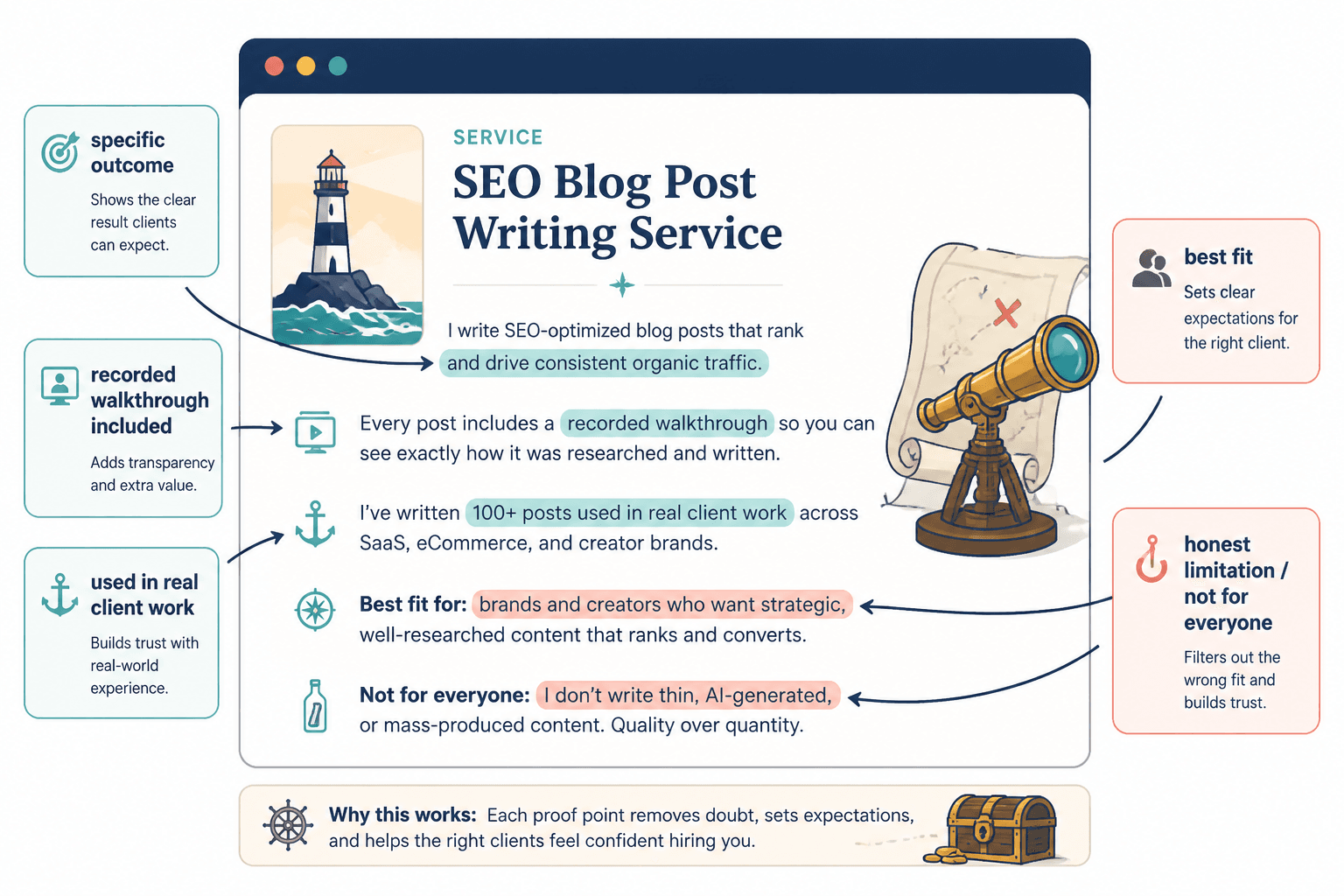
Once the offer is clear, the next job is to make it believable. Buyers rarely need every detail. They do need enough proof to feel safe moving forward.
Helpful specifics include:
- deliverables
- scope
- timing
- process
- who it is not for
- what the reader should expect next
Those details shape the decision. They lower anxiety, reduce back-and-forth, and keep the page from sounding like it is hiding something behind the curtain.
For service pages especially, proof works best when it sits near the claim it supports. A claim without support asks the reader for faith. Proof gives them a reason to keep going.
If you want a more trust-centered version of this section, see how to monetize product and service descriptions without wrecking trust. That piece is useful when the copy is already clear but still feels a little too eager for its own good.
Match the description to the right next step
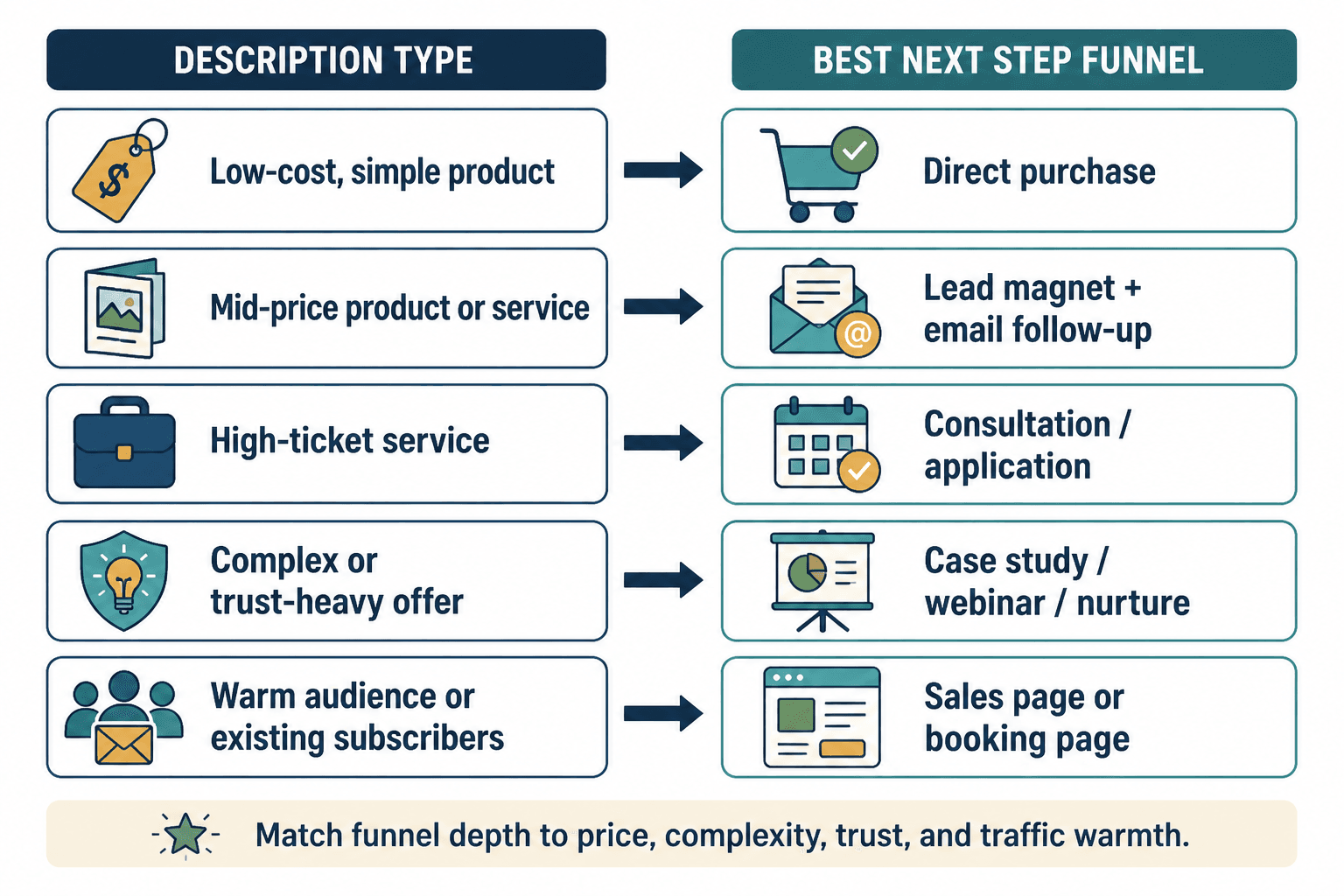
A description does not convert in isolation. It converts as part of a path. That path should match the level of buyer readiness.
Common next steps include:
- Direct purchase for simple, low-friction offers
- Lead form or inquiry for service offers that need fit checking
- Case study or proof page when the buyer needs more confidence
- Quiz or selector when the offer has different paths or packages
- Newsletter or lead magnet when the reader is not ready to buy yet
The point is not to add more steps for the sake of it. The point is to remove the wrong kind of pressure. A reader who needs reassurance should not be shoved into a hard sell. A reader who is ready should not be sent into a maze.
The companion article on funnel ideas for product and service descriptions maps these paths more explicitly and is worth using if the page needs a better post-click route.
Common mistakes that quietly kill conversions
Descriptions usually underperform for familiar reasons. None of them are glamorous, which is annoying in a useful way.
1. The offer sounds too broad
If the reader cannot tell what the offer actually does, they will not work very hard to admire it.
2. The copy hides the practical details
People want enough specifics to judge fit. Vagueness feels safer to the writer and riskier to the buyer.
3. Everything sounds equally important
When every sentence is trying to carry the whole message, the page gets noisy. Prioritize the one outcome that matters most.
4. The CTA asks for commitment too soon
“Buy now” is not a strategy. It is a vibe. Sometimes a useful next step is “See pricing,” “Check fit,” or “Book a short call.”
5. The page reads like a feature list with no interpretation
Features matter, but they need translation. Explain why they matter to the buyer.
That is where a lot of description pages lose the plot. They do not lack information. They lack guidance.
A simple rewrite workflow you can reuse
Use this compact sequence when you are turning a flat description into something that can actually sell.
- Write one plain sentence that names the offer.
- Add one sentence on who it is for.
- Add one sentence on the outcome or problem it addresses.
- Insert one or two proof details.
- Choose the next step that matches buyer readiness.
- Cut anything that repeats, flatters, or wanders.
That is usually enough to turn “nice page” into “clear decision.” Not magical. Just less mushy.
If you need a practical tool stack for drafting, refining, and testing these pages faster, see best AI tools for product and service descriptions. The point there is speed with judgment, not auto-generated confetti.
Examples of stronger conversion structure
Here are a few simple structures you can adapt.
For a product page
What it is + who it is for + what it helps them do + one proof cue + clear purchase action
Example shape:
Reusable content planning template for solo creators who need a faster way to map posts, offers, and calls to action. Built to reduce blank-page time and make publishing decisions easier. Includes a simple workflow, examples, and a clean download link.
For a service page
What you do + who you help + specific outcome + process detail + inquiry or booking CTA
Example shape:
Conversion copy support for service businesses that need clearer pages and stronger leads. We refine the offer messaging, tighten the page structure, and make the next step easier to trust. Start with a short inquiry form to check fit.
These examples are deliberately plain. Conversion copy gets stronger when the reader does not have to perform interpretive dance to understand the offer.
A short checklist before you publish
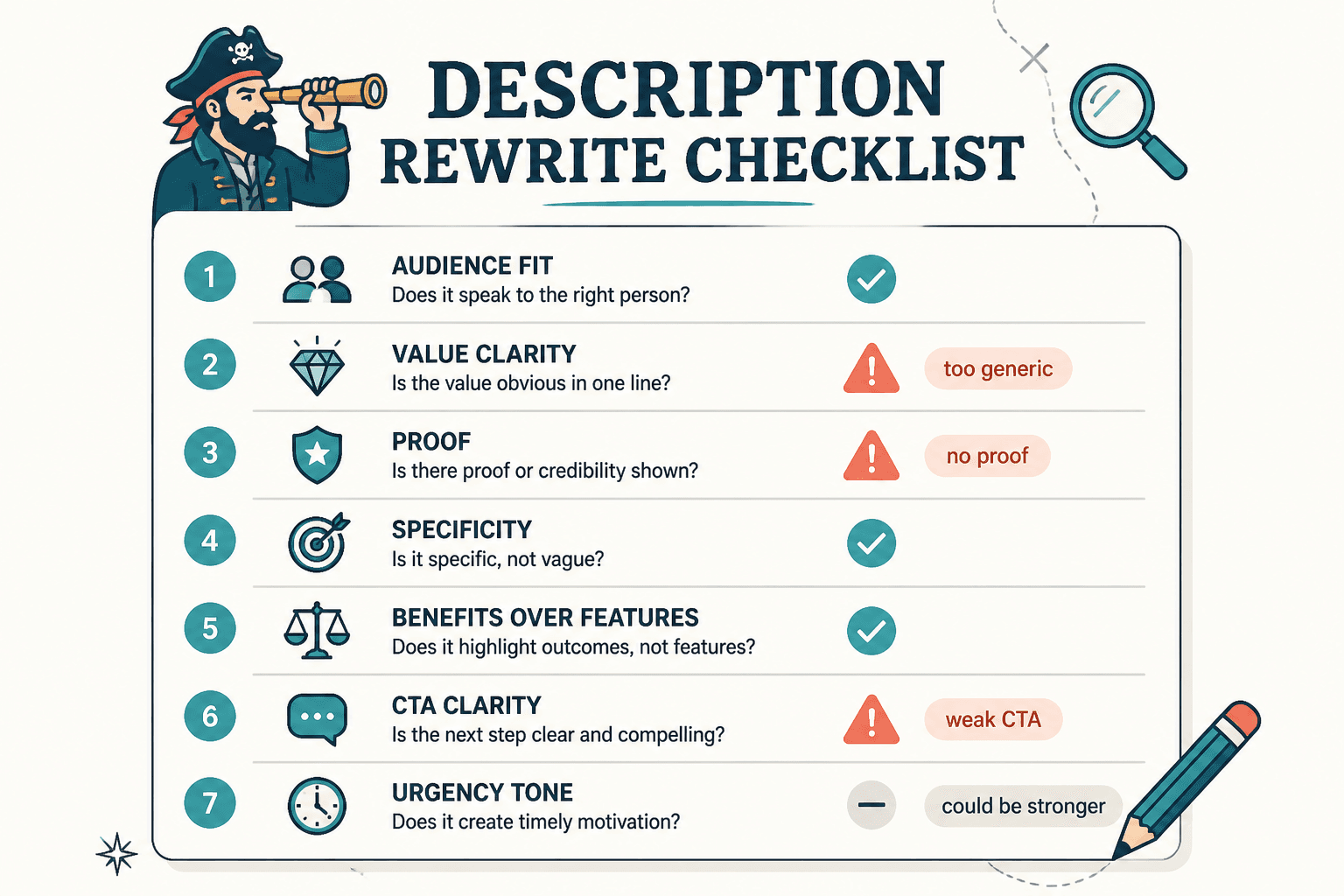
- Can a new visitor tell what this offer is in one glance?
- Does the page say who it is for?
- Is the outcome believable?
- Are the practical details easy to find?
- Does the proof support the promise?
- Does the CTA match the buyer’s likely readiness?
- Would the page still make sense if half the adjectives were deleted?
If the answer to several of those is no, the page probably needs clarity before it needs more persuasion.
One final rule: sell the next step, not the whole universe
The best product and service descriptions do not try to close every sale in one sentence. They give the reader enough clarity to continue. That is the whole game. A description that earns more leads or sales usually does so by reducing confusion, not increasing drama.
For the full topic map around this cluster, return to the parent guide on product and service descriptions. From there, the related pages on wording, funnels, trust, and examples fit together more cleanly than a bunch of isolated pages trying to out-explain each other.
Bottom line: if your description is not converting, do not start by making it louder. Start by making it easier to trust, easier to understand, and easier to act on.