
A draft tab is open, the post is half good, the opening line is trying to sound smarter than it needs to, and the last sentence has clearly been there since lunch. That is the usual state of play when an X post is almost working but not quite. Examples help because they give the post a shape before the polish goes on. They show what to say, how much to say, and where the point actually lands.
If you want the broader framework first, start with the X posts guide. If you want the useful part right now, keep reading. This page is the example-and-template version: concrete formats, quick patterns, and enough structure to stop the post from becoming a tiny public diary entry with punctuation.
What makes a good X post example actually useful
A good example does more than sound clever. It shows a repeatable decision. The best ones make three things obvious: the opening move, the main point, and the payoff for the reader.
- It starts quickly. X rewards speed. Not sloppiness, speed.
- It says one thing clearly. One post, one main job.
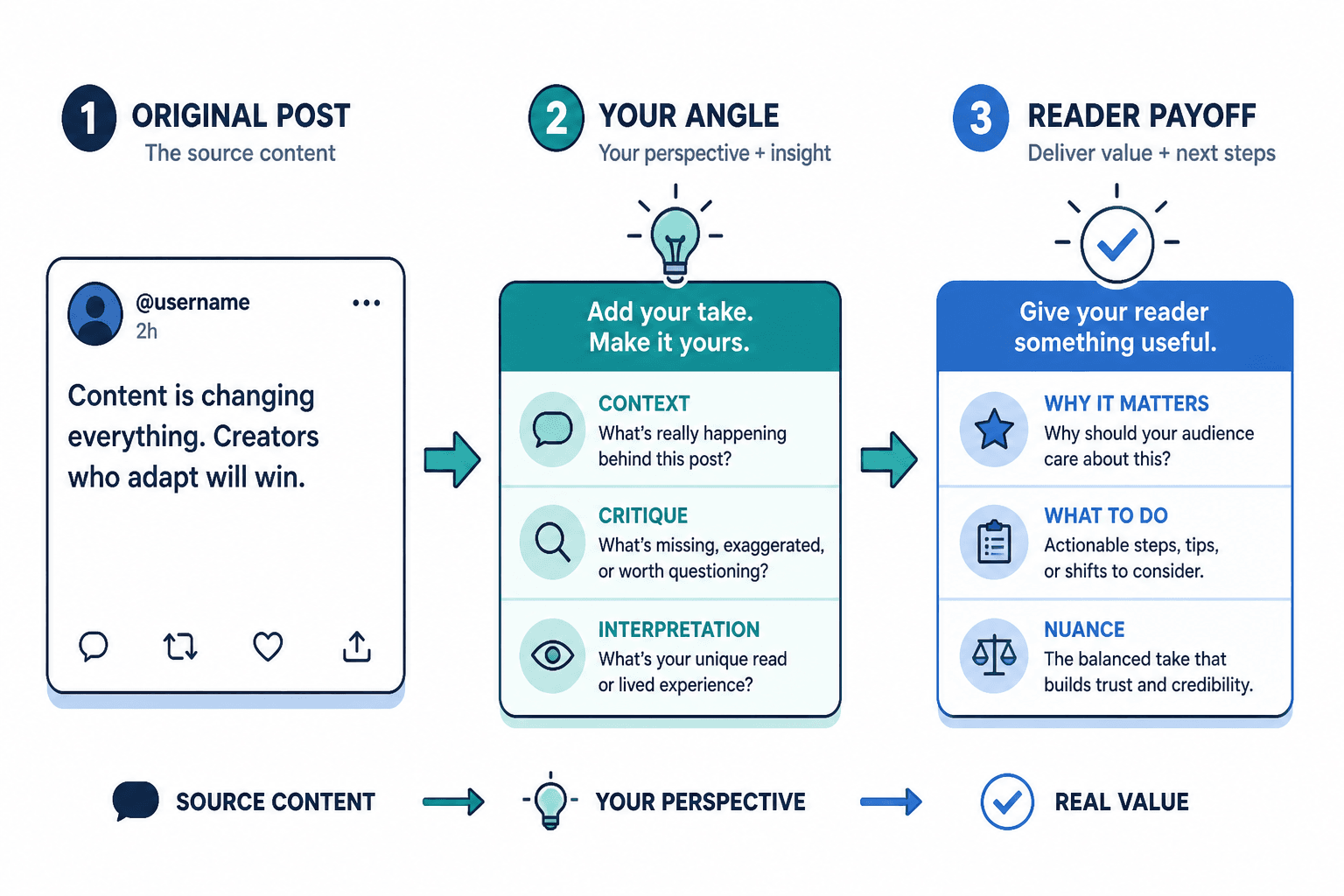
- It gives the reader something to do with it. Think insight, shortcut, warning, or conversation starter.
- It fits a real use case. A founder post, a creator post, and a service-business post may share a shape, but they should not sound like identical twins in a blazer.
X’s own help docs keep the basics grounded in format and behavior: the platform is built around short-form posts, replies, reposts, and media attachments, so clarity matters more than decorative buildup. See the X Help Center on posting and X posts for the platform’s own framing.
The simplest structure behind most good X posts
You do not need a separate architecture degree for every post. A lot of strong X writing follows a compact pattern:
- Hook: the first line earns the stop
- Point: the post says what it means
- Proof or detail: one useful example, reason, or contrast
- Payoff: a takeaway, question, or next step
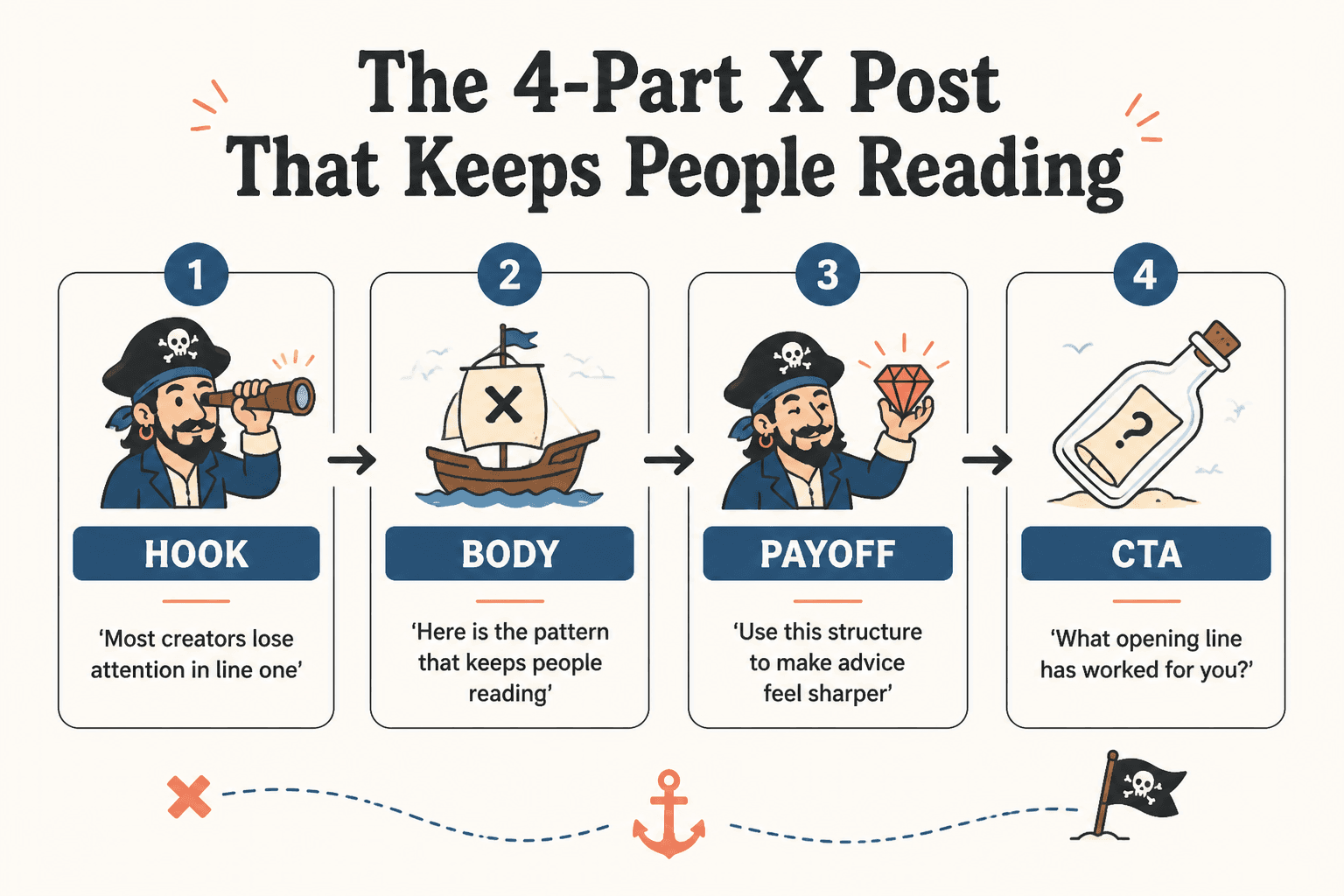
That structure is flexible enough for a sharp opinion, a practical tip, a short story, or a post that invites replies without begging for them. The post can be casual. The structure should not be.
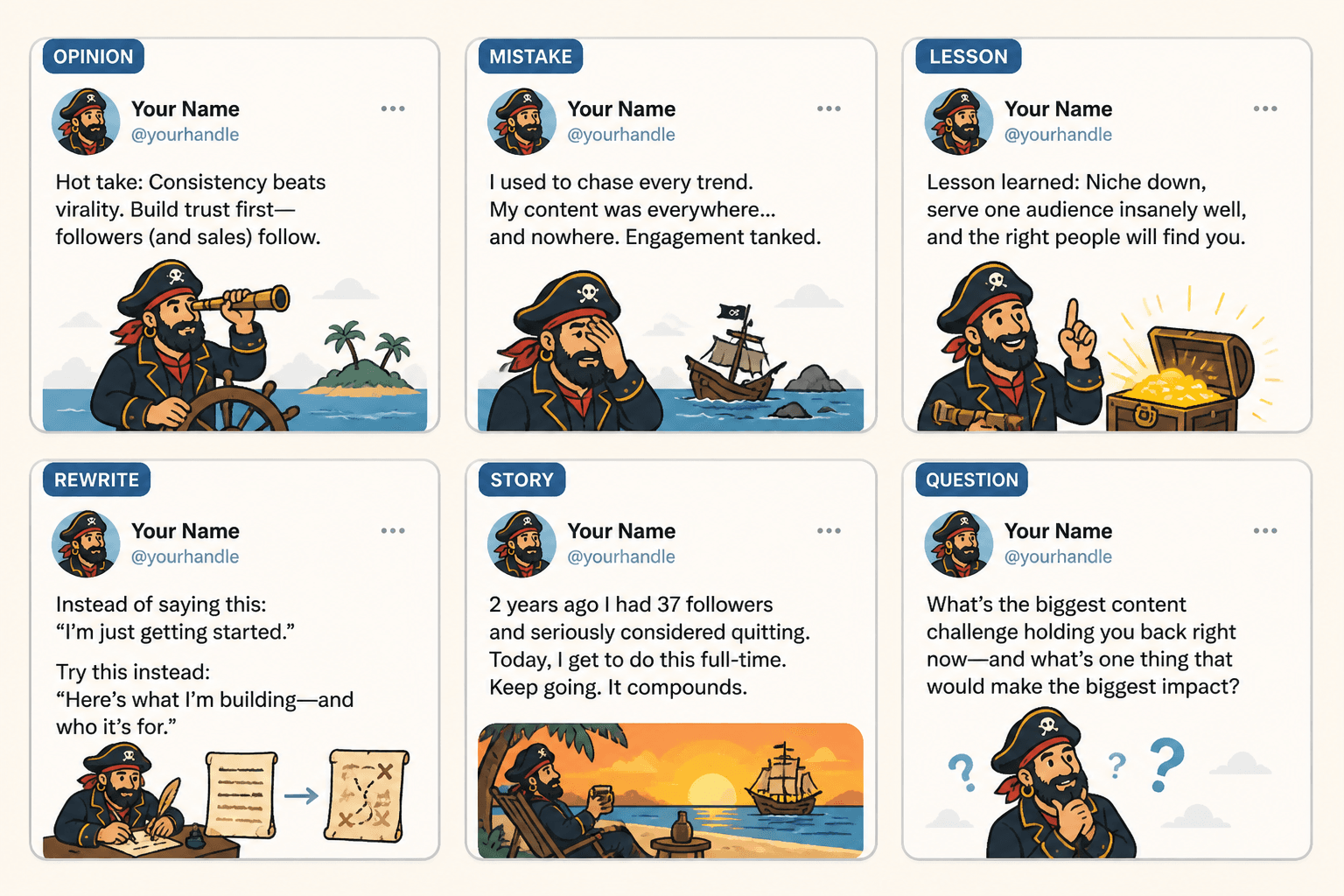
X post examples by type
These are not meant to be copied word for word. They are models you can adapt to your niche, your offer, and the level of directness your audience will tolerate before breakfast.
1. Opinion post
Use when: you want attention fast and have a point worth stating plainly.
Template:
I think [common advice] is overrated for [specific audience].
What works better is [clear alternative].
Why: [brief reason].
Example:
I think “post more content” is overrated advice for small creators.
What works better is posting less, but with a clearer point of view.
Volume helps. Clarity pays the rent.
2. Practical tip post
Use when: you want to share something immediately useful without turning it into a thread.
Template:
Quick tip for [audience]:
[Specific action].
It helps because [reason].
Example:
Quick tip for creators writing X posts:
Write the second line before you obsess over the first.
It usually makes the hook less dramatic and more useful.
3. Contrarian reframe post
Use when: the audience keeps seeing the same advice and needs a cleaner way to think about it.
Template:
[Popular belief] is not the real issue.
The real issue is [better framing].
That changes [result].
Example:
The problem is not that your X posts are too short.
The problem is that they are too vague to feel worth reading.
Short works. Empty does not.
4. Proof and credibility post
Use when: you want to show evidence, progress, or a concrete result without sounding like a case-study brochure.
Template:
Here is what changed when [action] happened:
[Result 1]
[Result 2]
[Result 3]
Example:
Here is what changed when I stopped writing X posts like mini blog intros:
More replies.
Faster drafting.
Less self-editing in circles.
Proof posts work best when the evidence is plain and the claim is modest. No one needs a fireworks show over a sensible improvement.
5. Conversation starter post
Use when: you want replies, not just passive impressions.
Template:
Hot take: [statement].
What is your take?
Example:
Hot take: most creators do not need more content ideas.
They need fewer ideas and better filters.
What is your take?
6. Reaction post
Use when: something in your niche is timely, relevant, and worth responding to with your own angle.
Template:
[Observation about the event/post/news].
What matters is [your angle].
Example:
Everyone is celebrating speed, but speed without judgment is how mediocre posts get published faster.
What matters is whether the post earns attention after the first line.
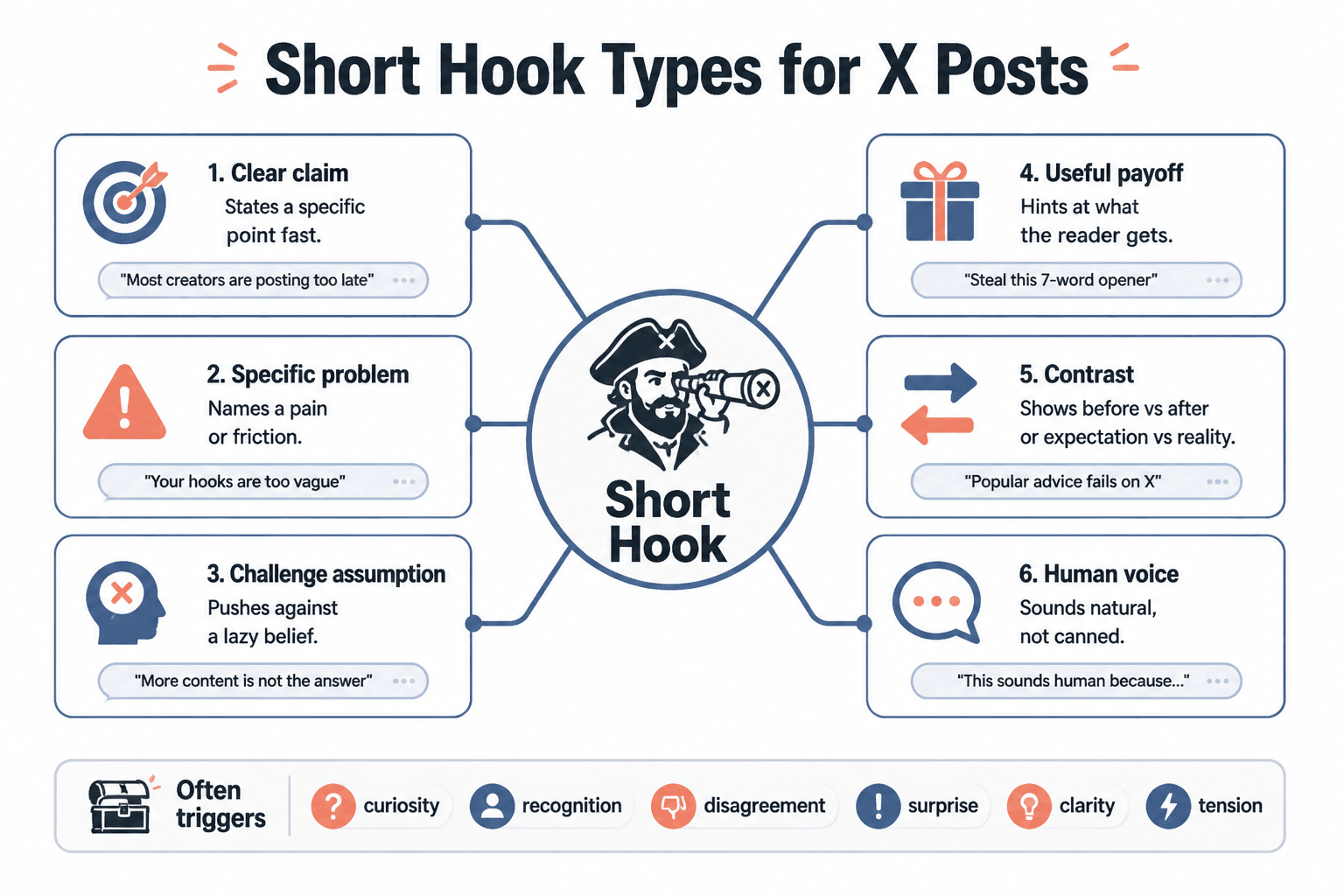
7. Short hook examples
These are the opening lines you can adapt into full posts. They are useful when the rest of the draft is fine but the opener is wearing concrete boots.
- Clear opinion hook: “This advice is wrong for small creators.”
- Problem-first hook: “Your X posts are not weak because they are short.”
- Contrast hook: “More posting is not the same thing as better posting.”
- Stop-doing-this hook: “Stop trying to make every X post sound like a keynote.”
If you want more hook-specific patterns, the sibling guide on X posts is the broader home base for that part of the process, and the hook-focused examples page can sit naturally beside it once published.
How to adapt examples without sounding copied
Examples are scaffolding, not costume jewelry. The goal is to keep the structure and replace the generic parts with something that belongs to your work.
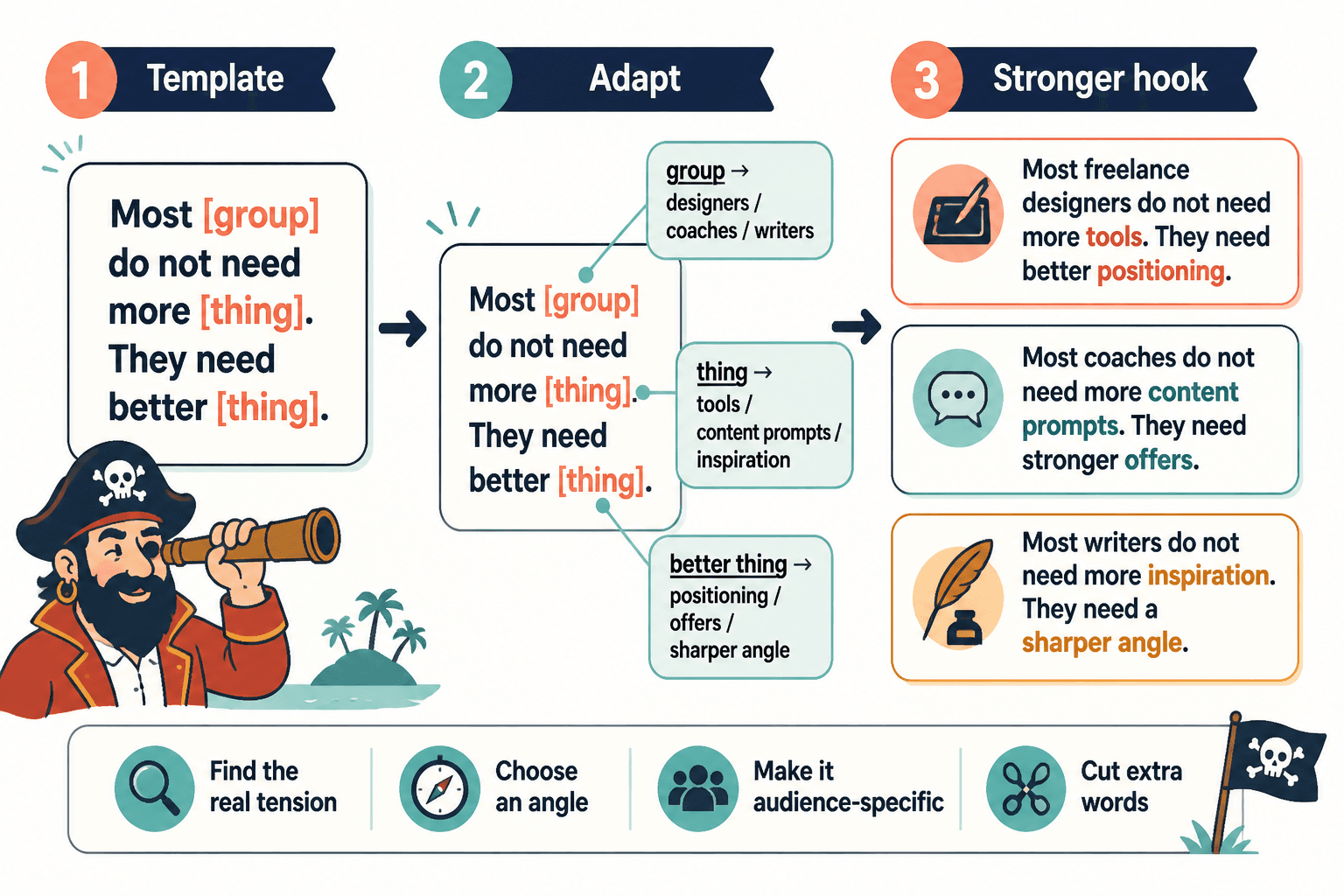
- Swap the audience. “Creators” becomes “coaches,” “designers,” “course sellers,” or whatever is real.
- Swap the tension. What problem actually shows up in your niche?
- Swap the evidence. Use an observation, a common mistake, a concrete metric, or a short before/after.
- Trim the extra line. If a sentence exists only to sound polished, it is usually auditioning badly.
- Read it out loud once. If it sounds like a press release with Wi-Fi, simplify it.
A good adaptation keeps the rhythm and loses the fluff. The audience should recognize the usefulness, not the template wallpaper.
A few fast-fill X post templates
Opinion template
I think [belief] is overrated for [audience].
What matters more is [alternative].
That usually leads to [result].
Tip template
Quick tip for [audience]:
[Specific action].
It helps because [reason].
Reframe template
The real problem is not [surface issue].
It is [deeper issue].
That changes how you [action].
Conversation template
Hot take: [statement].
What do you think?
Reaction template
[Observation about a relevant post or trend].
The part worth paying attention to is [your angle].
Common mistakes to avoid
- Writing a headline instead of a post. A hook is not the whole job.
- Trying to sound universally smart. Specificity beats fog.
- Hiding the point. A reader should not need a decoder ring.
- Forcing a sales pitch into every post. Sometimes the post earns trust by being useful first.
- Using examples as wallpaper. If you cannot adapt them, they are just decorative text.
For creators who also care about timing and replies, X’s own guidance on posting and engagement is worth keeping in view. The platform is explicit about basic posting mechanics and reply behavior in its help center, which is useful when you want the content plan to match the medium instead of fighting it.
Use these examples as a working system
The point of X post examples is not to collect a folder full of pretty lines. It is to build a faster drafting habit: hook, point, proof, payoff. Once that shape gets familiar, writing becomes less of a rummage through your own brain and more of a decision about which job the post needs to do.
If you want the broader strategy for the platform, go back to the X posts guide. If you want more specific angle ideas, the hook-focused sibling page belongs right next to this one. Together, they cover the part where a post stops looking like a note to self and starts behaving like content.