A draft can look fine right up until the details start doing their usual sabotage: the first sentence sounds vague, the features list reads like a spreadsheet, and the call to action lands like a polite shrug. That is usually where product and service descriptions lose people. Not because the offer is weak, but because the copy makes readers do too much interpretive dance to figure out what is being sold, who it is for, and why it matters.
Examples help because they show the shape before the polish goes on. They make it easier to see how a description should move, what to emphasize, and where the proof or payoff belongs. If you want the broader framework first, start with the parent guide to product and service descriptions. This page is the examples-and-templates companion: less theory, more usable copy.
What strong product and service descriptions actually need to do
A good description is not just “clear.” It has a job. It should help a reader quickly understand the offer, feel the benefit, and decide whether to keep going. In practice, that usually means five things:
- Name the offer plainly.
- Show who it is for.
- Explain the result or outcome.
- Translate features into benefits.
- Make the next step obvious.
That sounds basic because it is basic. Basic is underrated when the copy is trying very hard to sound impressive instead of useful. The best descriptions do not perform competence; they communicate it.
A simple structure you can reuse for nearly any offer
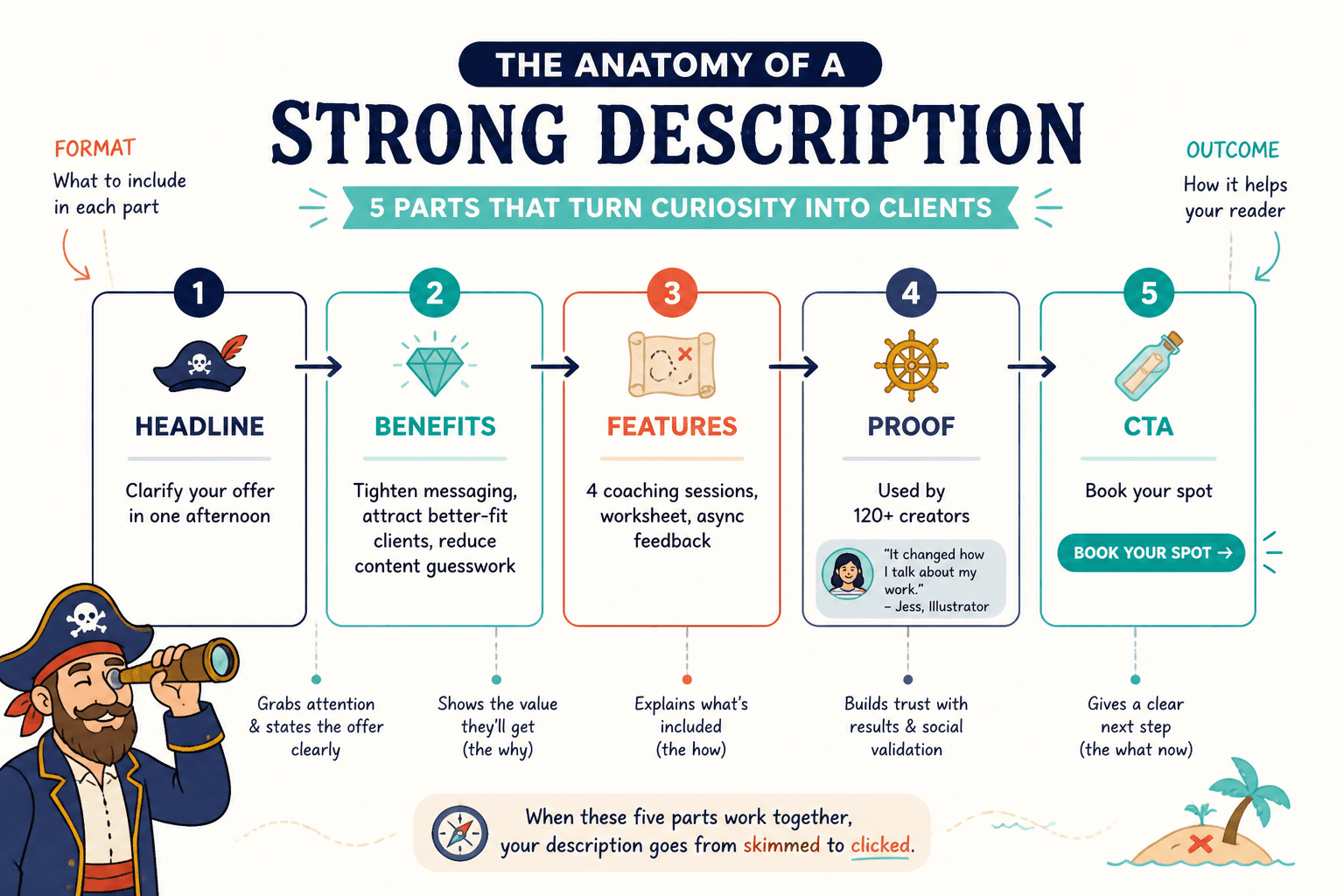
If you are building from scratch, this structure keeps the page from wandering off into vague marketing fog:
- Headline: what the offer is.
- Short lead: who it is for and what problem it solves.
- Benefits: what changes for the buyer.
- Features or inclusions: what is actually included.
- Proof or support: examples, specifics, outcomes, process.
- CTA: what to do next.
That structure works whether you are selling a digital product, a coaching package, a consulting service, or a done-for-you offer. The wording changes, but the logic stays stable. Which is convenient, because reinventing the wheel every time is a great way to end up with a very expensive circle.
Product and service description examples
Example 1: creator digital product description
Product: Content Planning Kit for Independent Creators
Example description:
Plan your next 30 days of content without starting from a blank page. This content planning kit gives you a simple framework for choosing topics, organizing posts by goal, and turning scattered ideas into a workable schedule.
Use it if you want to:
- stop overthinking what to post next
- organize ideas around content goals, not random inspiration
- move from “I should post more” to a plan you can actually follow
Includes:
- 30-day planning template
- topic bank prompts
- weekly content map
- simple review checklist
Why it works: it leads with the outcome, names the audience, and makes the inclusions concrete. No mystery box energy.
Example 2: coaching offer description
Offer: 8-week pricing clarity coaching package
Example description:
This 8-week coaching package helps service providers set prices with more confidence and less guessing. We will review your offer structure, positioning, and pricing logic so your rates feel grounded in the value you provide instead of dragged in by panic, comparison, or vague optimism.
You will leave with:
- a cleaner pricing framework
- clearer language for explaining your rates
- more confidence in sales conversations
Best for: coaches, consultants, and service providers who know their pricing needs work but do not want a generic “charge your worth” speech dressed as strategy.
Example 3: consultant service description
Service: Messaging audit for small brands
Example description:
This messaging audit reviews your homepage, service pages, and core offers to identify where your copy is too broad, too clever, or too hard to trust. You will get specific notes on what is unclear, what is missing, and what to tighten so your message feels easier to buy.
Deliverables include:
- a page-by-page review
- message clarity notes
- prioritized recommendations
- rewrite direction for your top opportunities
Why it works: it focuses on the buyer’s problem, not the consultant’s process theater.
Example 4: done-for-you service description
Service: Product page rewrite service
Example description:
This done-for-you product page rewrite turns a rough or underperforming offer page into copy that is clearer, sharper, and easier to scan. The goal is not to make the page sound fancy. The goal is to make the value obvious enough that the reader does not have to hunt for it.
What is included:
- rewrite of the main product description
- benefit-led section headings
- feature and inclusion cleanup
- CTA refinement
Best for: creators and founders who already have an offer, but need the page to work harder than the current copy is willing to.
Benefit bullet examples for product and service descriptions
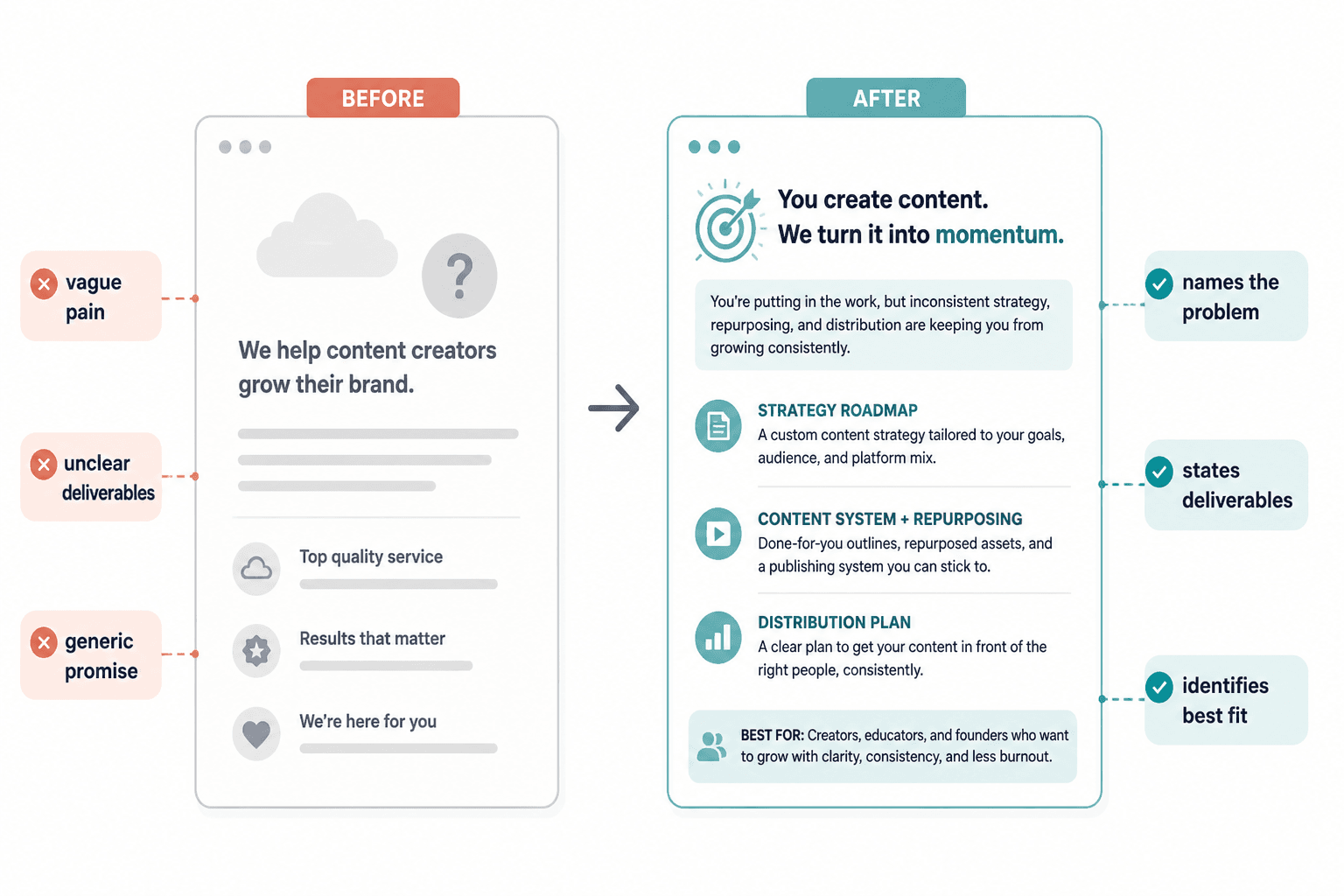
Benefit bullets are where a description stops merely listing things and starts selling the point of them. A feature says what something is. A benefit says why that matters.
For more on the difference, see the related guide on writing stronger product and service descriptions.
What benefit bullets actually do
- They translate features into outcomes.
- They help the reader picture the result.
- They keep the offer from sounding abstract.
The difference between features and benefits
Feature: 12 ready-made content prompts
Benefit: less time staring at a blank page
Feature: 90-minute strategy call
Benefit: a focused plan instead of three more weeks of circling the same problem
Feature: editable template files
Benefit: faster setup and easier customization
A simple formula for writing better benefit bullets
Feature + so that + result
Examples:
- Content prompts so that you can plan faster and post with less second-guessing.
- Brand messaging audit so that your homepage says what you do without a scavenger hunt.
- Project roadmap so that your next steps are obvious instead of vaguely motivational.
What strong benefit bullets usually include
- specific language instead of generic praise
- realistic outcomes, not miracle claims
- language the buyer would actually recognize
- enough detail to sound credible, not bloated
Benefit bullet examples for coaching offers
- Get a clearer plan for your offer positioning.
- Leave each session with one practical next step.
- Stop improvising your next move every Monday morning.
Benefit bullet examples for consulting services
- See where your message is losing attention.
- Identify the pages that need the most immediate cleanup.
- Walk away with specific recommendations, not vague feedback.
Benefit bullet examples for done-for-you services
- Save time by handing the rewrite off to someone else.
- Get polished copy without starting from a blank document.
- Ship a page that is easier for buyers to understand and trust.
Feature section templates for product and service descriptions
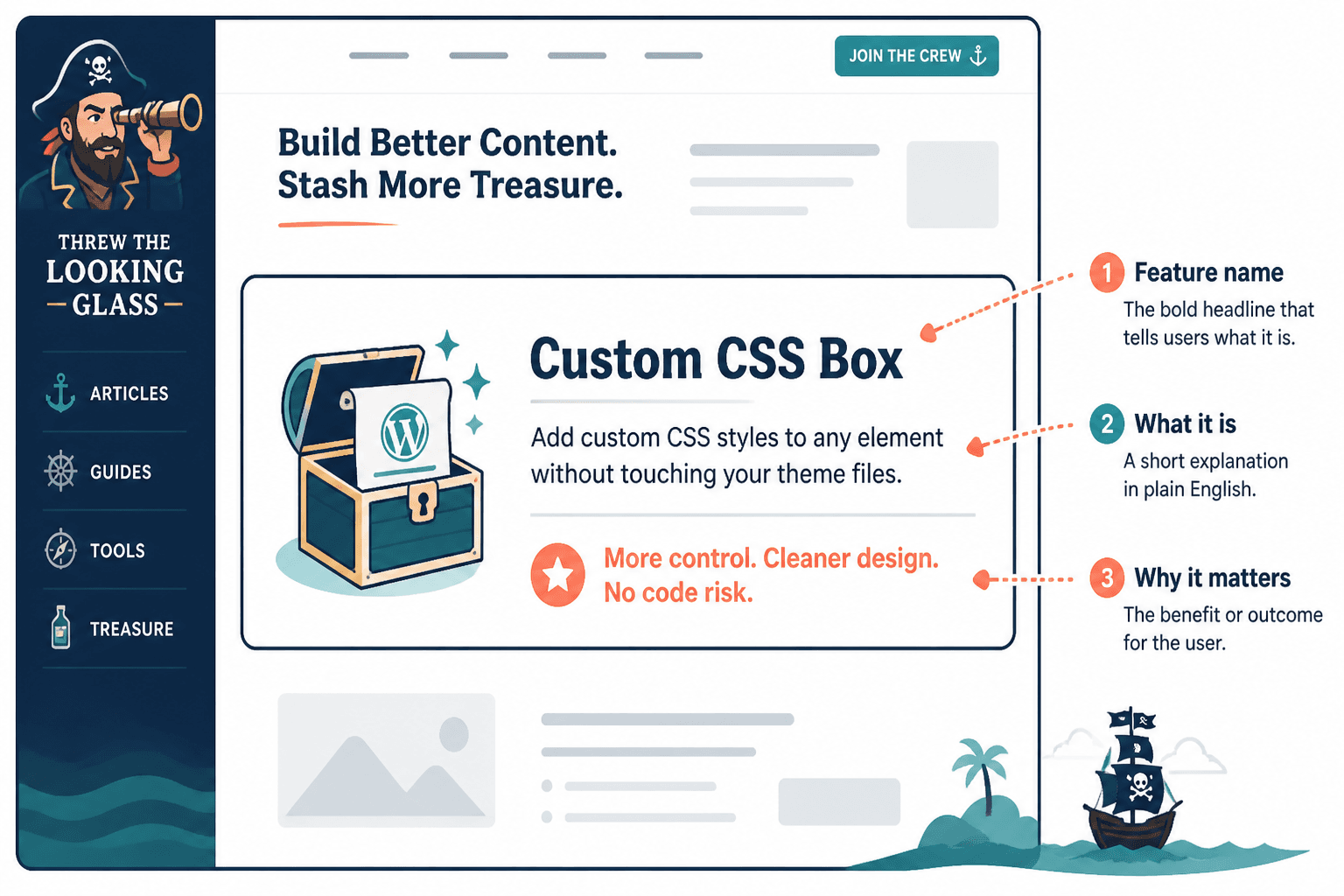
Feature sections are where many descriptions go stale. They either sound like a bored manual or drift into a long, shapeless sales paragraph. A better feature section is organized, specific, and easy to scan.
Basic feature section template
Feature name
One sentence explaining what it is and why it helps.
Example:
Weekly planning template
Use a repeatable structure to map your weekly content without rebuilding the plan every time.
Template 1: the straightforward feature list
- Feature: what is included
- Short explanation: why it matters
- Result: what changes for the buyer
Example:
- Offer audit – identifies where your current description is unclear.
- Rewrite notes – shows what to replace and what to keep.
- Priority actions – tells you what to fix first.
Template 2: feature plus outcome format
Feature: editable workbook
Outcome: lets you customize the system without rebuilding it from scratch
Feature: live coaching call
Outcome: gives you direct feedback on the parts of the offer that are still muddy
Template 3: the “what’s included” card section
This format works well for services and bundles:
- What’s included
- Who it is for
- What you get
- What happens next
It is simple, which is usually a compliment in description writing.
How to make your examples sound real instead of generic
Generic copy usually hides behind vague nouns and inflatable adjectives. Real copy uses concrete nouns, clear outcomes, and enough specificity to feel grounded.
Compare:
- Generic: “A transformative solution for your business.”
- Better: “A homepage rewrite that helps visitors understand your offer faster.”
- Generic: “Powerful tools to elevate your brand.”
- Better: “Templates for organizing your content ideas into a weekly posting plan.”
If a sentence could describe almost anything, it probably describes nothing useful.
Quick editing checklist for description examples
Before you publish, run the copy through this short check:
- Does the first line say what the offer actually is?
- Is the audience clear?
- Are the benefits specific?
- Do the features support the outcome?
- Is the CTA obvious and low-friction?
- Could a skeptical reader understand the offer without extra decoding?
If the answer to any of those is “not really,” the copy probably needs tightening, not more sparkle.
Useful sources on clarity, usability, and plain language
Descriptions work better when they are easy to read, easy to scan, and easy to understand. A few stable references worth keeping in mind:
- Nielsen Norman Group on how users read on the web
- PlainLanguage.gov
- U.S. government plain writing guidance
Wrap-up
Good product and service descriptions do not need to sound dramatic. They need to sound specific. Once the reader can see what the offer is, who it is for, and what changes because of it, the rest gets easier.
If you want the broader strategy behind these examples, go back to the product and service descriptions guide. If you are refining the writing itself, the examples above should give you enough structure to stop improvising in the dark.