
A headline that earns the click but not the next step is expensive in a very specific way: it burns trust, attracts the wrong reader, and leaves your sales page doing extra work it should never have needed to do. The post may rank, the social preview may look tidy, and the analytics may even flatter you for a while. None of that matters if the title does not move people toward a lead, a signup, or a purchase.
This is the part of title work that gets skipped when teams treat headlines as decoration. A title is not just a label. It is the first conversion filter. It tells the right person, “yes, this is for you,” while quietly telling the wrong person to keep scrolling. That is useful. That is also where the money starts.
If you want the broader system behind this, the parent guide on blog titles and headlines covers the structural side. This page stays on the monetization side: how titles earn attention that can actually convert.
What a title is really doing in a conversion path
A title has two jobs that matter most for revenue:
- Filter for fit. It should attract readers who might genuinely care about the offer behind the content.
- Set the next expectation. It should make the next click, scroll, or signup feel like a natural step rather than a hard pivot.
That is why some posts get plenty of traffic and almost no leads. The title promised curiosity, not utility. Curious clicks are not worthless, but they are usually low intent. They arrive for the headline and leave before the business value appears.
Google’s own guidance on helpful, people-first content aligns with this: search performance is not supposed to come from tricking users into a click; it comes from meeting the need behind the query. See Google Search Essentials on helpful content and the broader SEO starter guide for the basic principle.
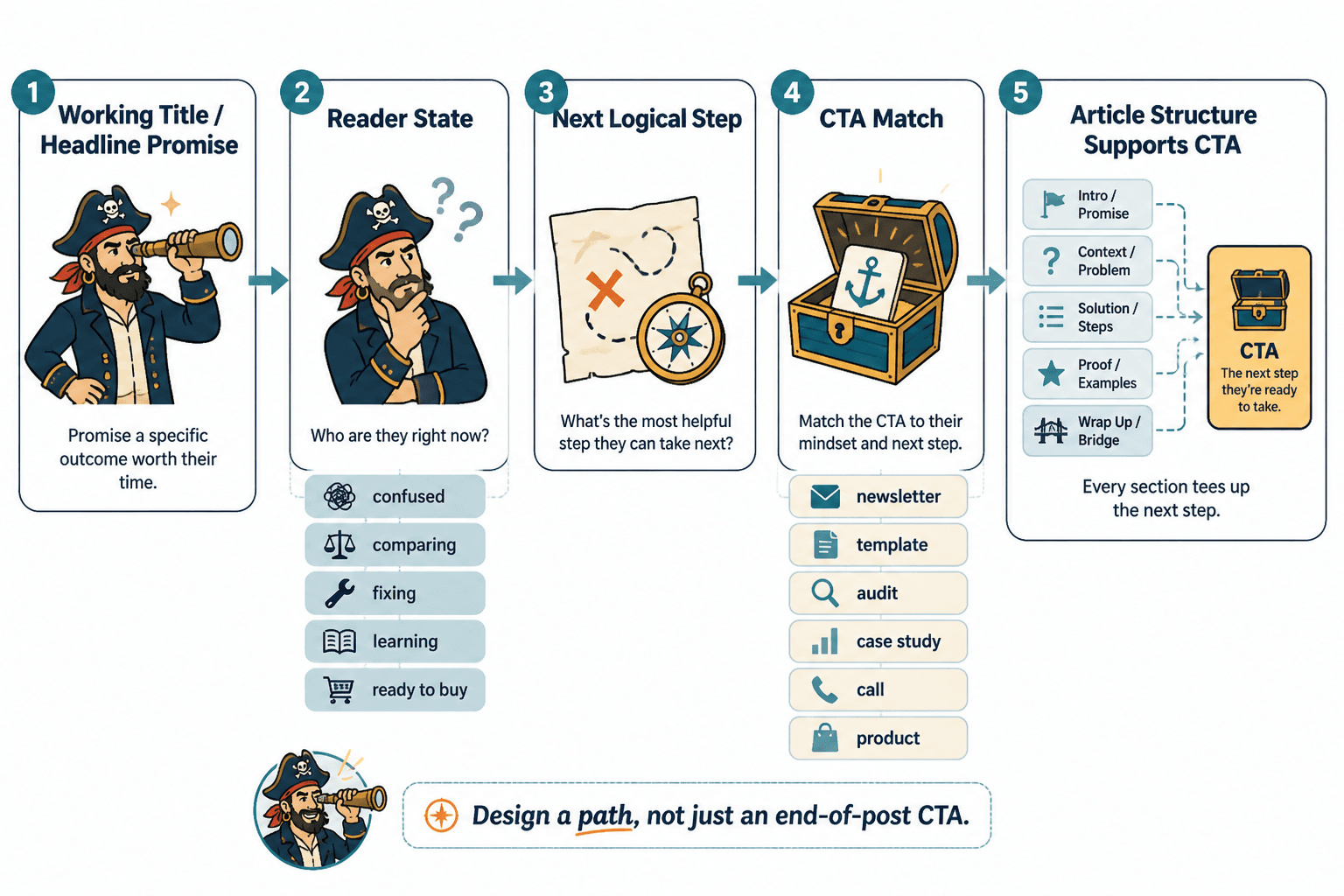
The 3 signals a monetizable headline needs
Strong conversion titles tend to do three things at once. Miss one, and the headline starts leaning toward traffic theatre.
1. Clear relevance
The reader should know immediately who the post is for and what problem it addresses. Relevance is not about being broad. It is about being unmistakable.
For example, “How to Write Better Blog Titles” is fine. “How to Write Blog Titles That Attract Leads for a Service Business” is more specific, and that specificity helps the right reader self-select.
2. Honest tension
A good title points at a real problem or gap. Not doom. Not melodrama. Just enough pressure to make the reader care.
Useful tension sounds like:
- your traffic is growing but conversions are flat
- your post gets clicks but no email signups
- your headline is getting attention from the wrong audience
That is much stronger than vague urgency. “You Won’t Believe These 7 Secrets” is not tension; it is a warning label.
3. Natural commercial alignment
The title should connect to a next step that makes sense. That might be a lead magnet, a consultation, a product, a template, or a related service. The offer should feel like the next logical move, not a random sales detour.
This is where a lot of pages get awkward. They write a helpful post, then shove in a CTA that feels imported from another universe. The headline and offer should belong to the same conversation.
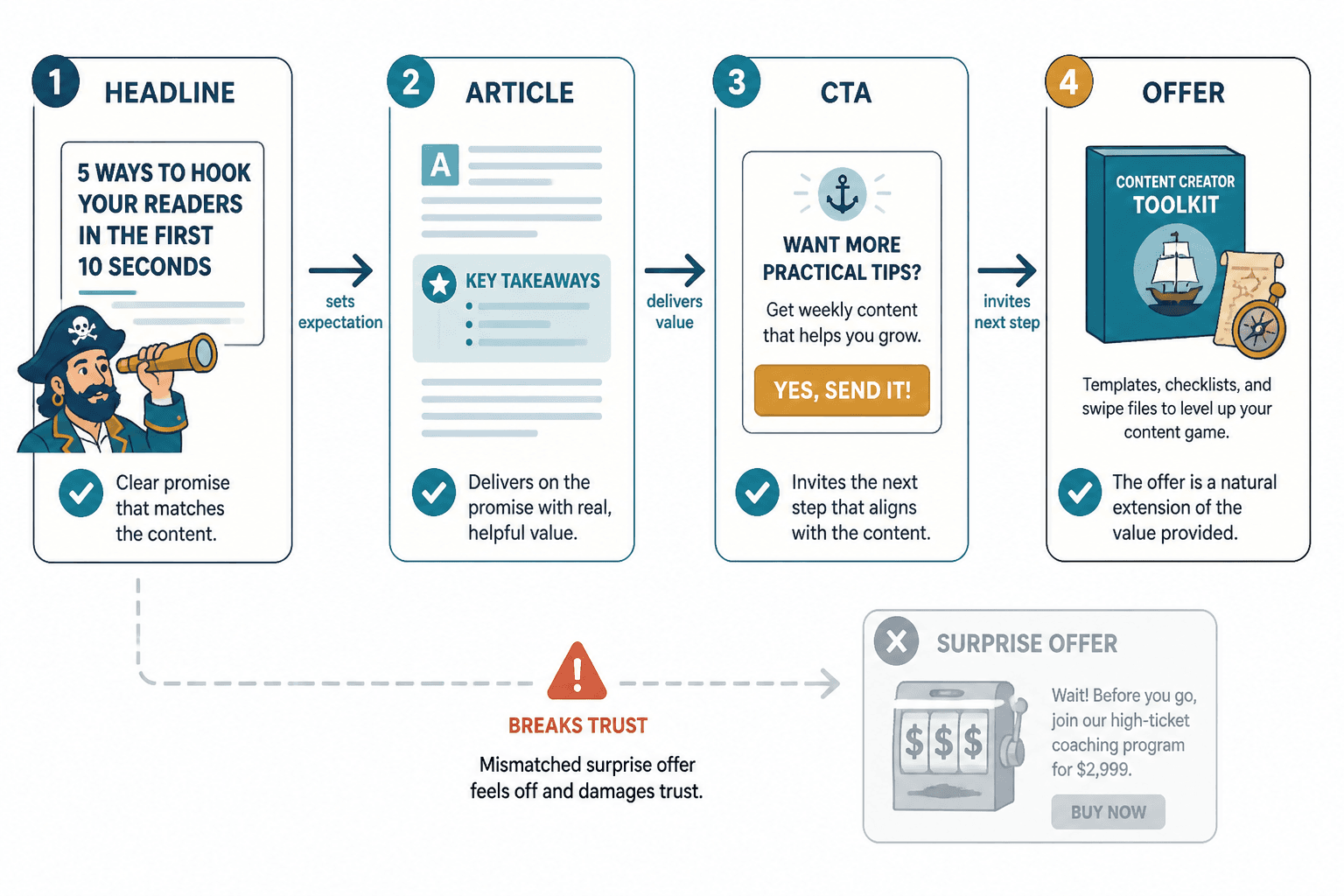
Match the title type to the kind of conversion you want
Not every post should sell the same way. The title should reflect the reader’s stage of awareness and the kind of action you want from them next. That is where title strategy becomes funnel strategy.
Problem-aware titles
Use these when the reader can feel the pain but has not chosen a solution yet.
Examples:
- Why Your Blog Posts Get Clicks but No Leads
- The Real Reason Your Content Is Not Converting
Best next step: a diagnostic checklist, audit offer, or lead magnet that helps them see the issue more clearly.
Solution-seeking titles
Use these when the reader already knows the category of fix they want.
Examples:
- How to Turn Blog Titles Into More Email Signups
- How to Rewrite Headlines for Better Conversion
Best next step: a template, framework, service, or product that helps them apply the fix.
Comparison or evaluation titles
Use these when the reader is deciding between approaches, tools, or methods.
Examples:
- Best Headline Formulas for Lead Generation
- Which Blog Title Style Works Best for Sales Pages?
Best next step: a recommendation, shortlist, or paid tool that removes decision fatigue.
Authority-building or opinion titles
Use these when the goal is to position expertise and build trust before the ask.
Examples:
- Why Clicky Headlines Usually Hurt Conversions
- The Blog Title Mistake That Makes Good Content Look Cheap
Best next step: a deeper guide, consultation, or service page that extends the argument.
That pairing matters. If you want more ideas for the funnel side of this, the companion piece on best funnel ideas to pair with blog titles and headlines breaks down what to offer after each title type.
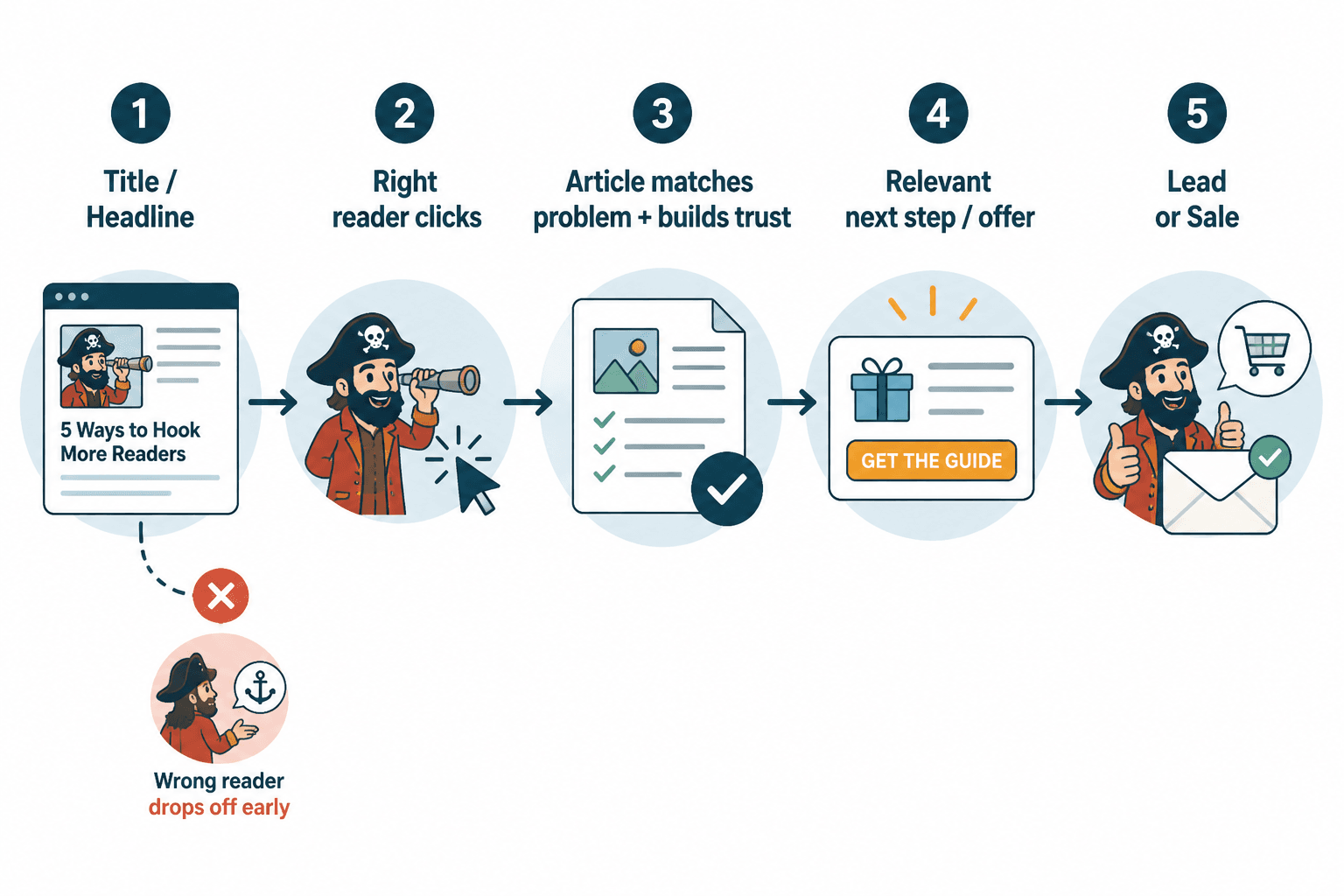
A simple workflow for rewriting old titles into higher-converting ones
Refreshing an old post is usually easier than starting over. The trick is not to “make it punchier.” The trick is to make the promise more accurate and more commercially useful.
- Identify the reader’s intent. What problem, desire, or decision is the post actually addressing?
- Find the business outcome. What should happen after the reader gets value from the post?
- Check the gap. Is the current title attracting the right reader, or just the loudest one?
- Rewrite for relevance plus tension. Keep the promise specific and the pressure real.
- Align the CTA. Make sure the next step matches the title’s promise.
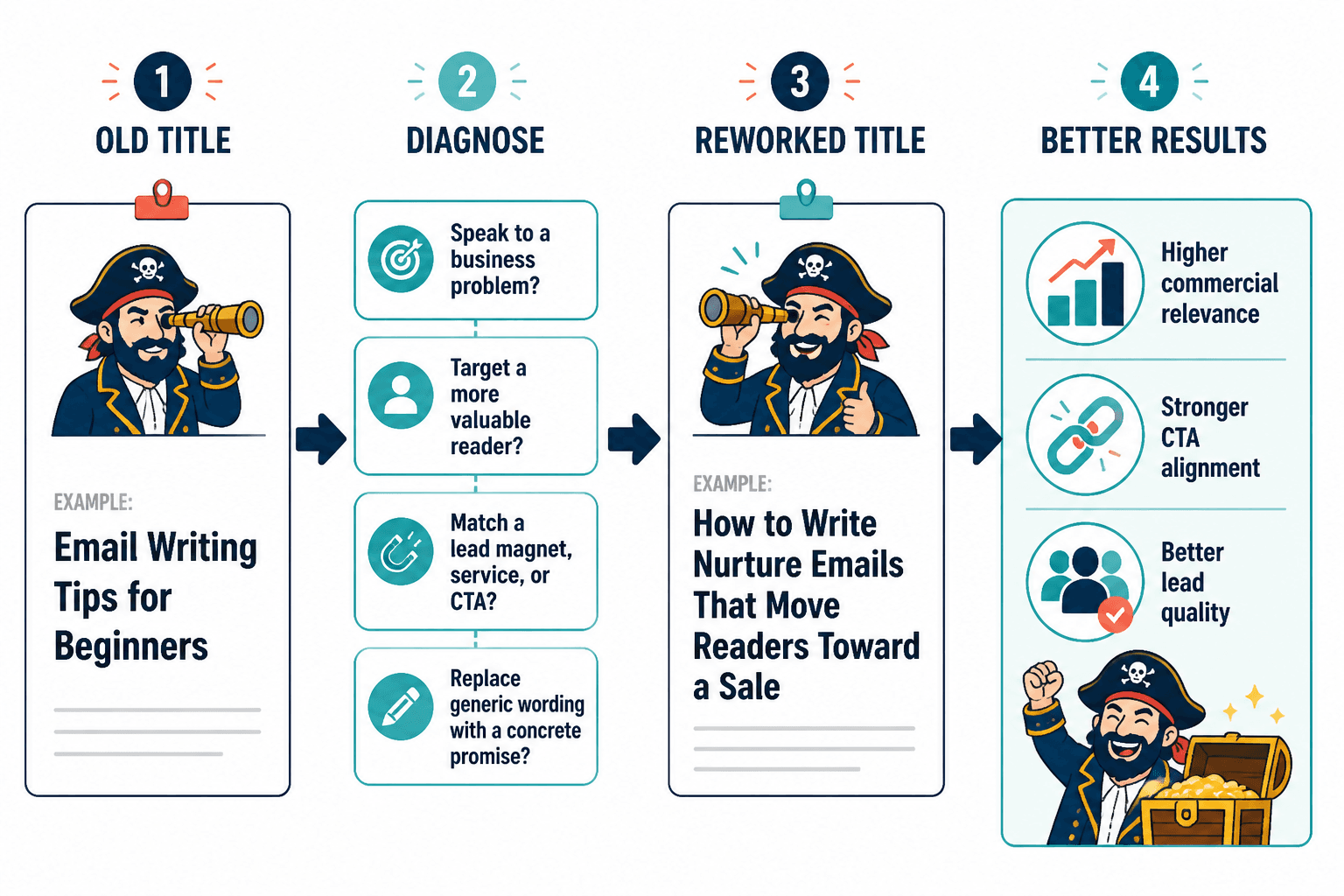
A quick example:
- Weak: Blog Title Ideas for Everyone
- Better: Blog Title Ideas That Attract Buyers, Not Just Browsers
The second version does not scream. It simply tells the right reader, “this is about the kind of attention that can pay rent.”
For more title construction help, the sibling guide on how to write better blog titles and headlines is the practical companion to this page.
What to avoid if you do not want your headlines to smell like bait
Conversion and trust are not enemies. But certain title habits make them act like they are.
1. Vague big promises
“Get More Sales Fast” sounds nice until it proves nothing. Vague promises attract skepticism, and skepticism is bad for conversion unless your product is a lie detector.
2. Mismatched curiosity
Curiosity is useful when the article delivers. It is damaging when the title over-promises and the body under-answers.
3. Overstuffed keyword strings
“Best Blog Titles Headlines Ideas Tips Examples Guide” reads like a spreadsheet fell down the stairs. Search visibility matters, but not at the expense of human comprehension.
4. Sales language too early
If the title sounds like a pitch before the reader understands the problem, the page loses credibility. Let the title open the door. Let the article earn the handoff.
Trust is fragile here. That is why the page on how to monetize blog titles and headlines without wrecking trust is a useful companion if you want the ethical side of this done properly.
Quick checklist before you publish
- Does the title attract the reader you actually want?
- Does it point to a real problem, decision, or desire?
- Is the promise specific enough to feel credible?
- Does the article deliver on that promise quickly?
- Does the CTA feel like the natural next step?
- Would a skeptical reader feel informed, not manipulated?
If the answer to the last one is no, rewrite again. “Good enough” is how teams end up with traffic that moonlights as dead weight.
Where this fits in the larger system
This article is one part of the broader blog-title system. The parent guide covers structure, and the sibling articles cover execution and monetization. Together they give you the full path from topic selection to title to funnel.
Use the parent guide when you need the framework. Use the how-to article when you need the mechanics. Use this page when the real question is not “what gets clicked?” but “what gets clicked by people who might actually buy?”
That is the difference between a headline that performs and a headline that merely exists with confidence.
For related planning, the article on best AI tools for blog titles and headlines can help with idea generation, but the judgment still has to come from the human part of the process. Fortunately, that part is still in beta nowhere.