If you have a small email list, your subject lines matter more, not less.
Big newsletters can get away with a little sloppiness. They have brand recognition, habit, momentum, and enough subscribers to survive mediocre opens. Small creators do not get that luxury. When your list is modest, every email is doing double duty: earning the open and reinforcing why people should keep caring.
That is why Newsletter Subject Lines for Creators With Small Audiences is not really a topic about clever wording. It is a topic about trust, relevance, and not wasting the attention you worked annoyingly hard to get.
The good news: you do not need gimmicks, fake urgency, or “you won’t believe this” nonsense. You need subject lines that sound specific, human, and worth opening. Here’s how to write them without sounding like a discount copywriting bot.
For the full path around this topic, head to the parent guide.
Why small audiences need better subject lines
When you have a small audience, people are not opening because you are famous. They are opening because one of three things is true:
- They know your emails are consistently useful
- The subject line feels relevant right now
- They are curious enough to give you a chance
That means your subject line has one job: make the value or intrigue clear enough that the open feels easy.
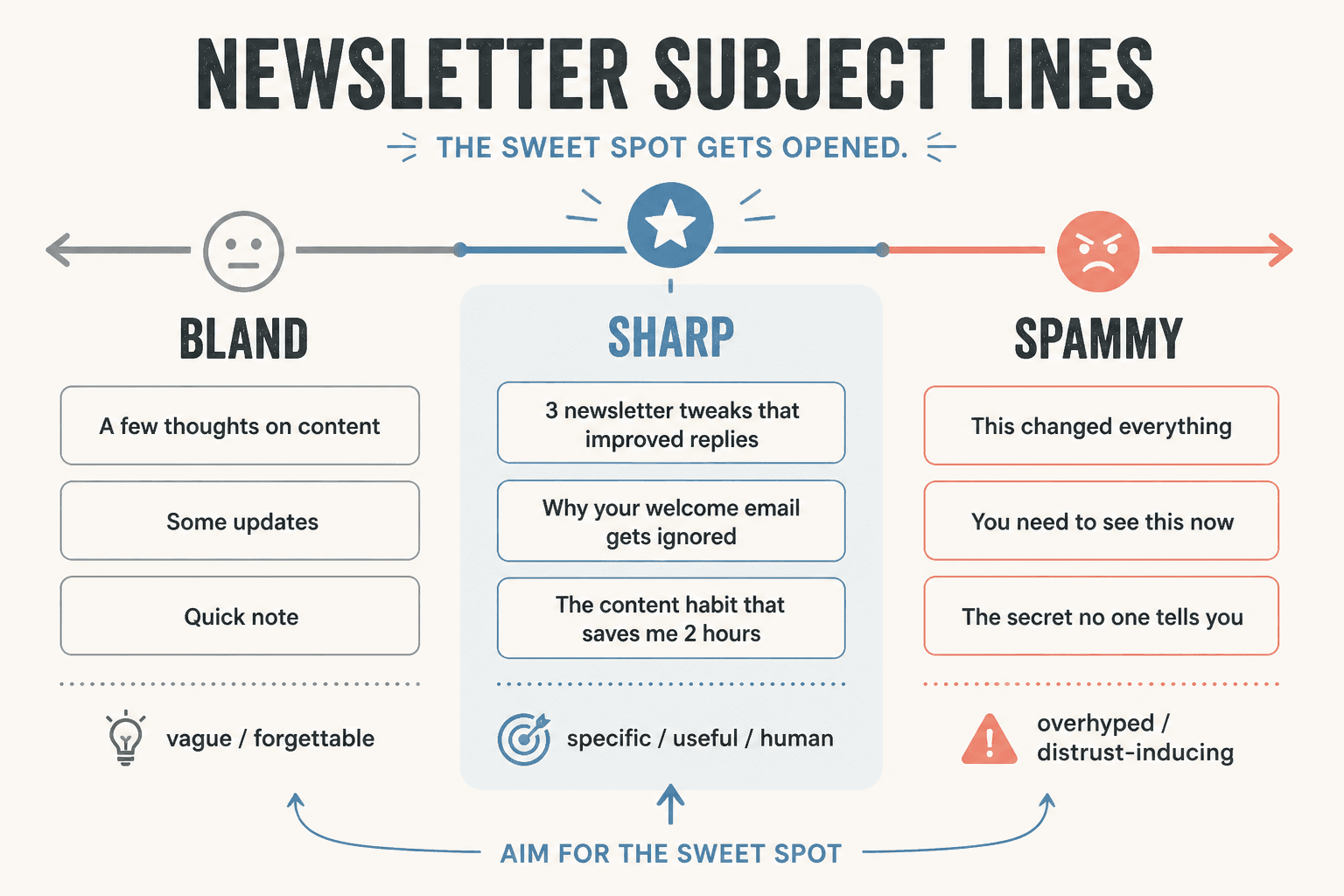
Small-list creators often mess this up in one of two directions. Either they write bland, foggy subject lines like “A few thoughts on content,” or they overcorrect into spammy drama like “This changed everything.” Neither works particularly well. One is forgettable. The other smells like regret.
A strong subject line for a smaller creator usually feels modest but sharp. Not desperate. Not vague. Not trying to cosplay a massive media brand.
What actually makes people open
Subject lines tend to earn opens when they do at least one of these well:
- Specificity: they hint at a concrete topic, problem, or outcome
- Relevance: they match what your reader already cares about
- Curiosity: they create an information gap without becoming clickbait
- Usefulness: they imply practical value
- Voice: they sound like a real person, not a funnel template
Notice what is not on that list: tricks. Open-rate stunts are overrated, especially for smaller creators. You do not need to squeeze one open out of people by being weird. You need people to keep opening over time.
That is the part a lot of newsletter advice skips. A good subject line is not just about this send. It is about training your readers to trust future sends too. If your subject lines regularly lead to useful, well-written emails, subscribers start opening with less hesitation. If your subject lines overpromise and underdeliver, the opposite happens fast.
The best subject line angles for small creators
You do not need 57 formulas. You need a handful of angles that fit your voice and your audience. These tend to work well.
1. The clear benefit angle
This is the no-drama option. Just tell people what they are getting.
- How to make your emails easier to open
- 3 ways to write stronger newsletter intros
- A simple fix for flat content hooks
- How to sound more human in your emails
This works especially well if your readers already trust your ideas and want practical help. It is not flashy. Good. Flashy is often doing too much.
2. The curiosity-with-boundaries angle
Curiosity works when it is grounded. You want a gap, not a magic trick.
- The subject line mistake I keep seeing
- Why useful newsletters still get ignored
- A small email tweak that changes the open
- This subject line type works better than “big promise” emails
These work because they imply a lesson. They do not just dangle vague drama and run away.
3. The specific problem angle
If your audience has a clear recurring frustration, lead with that.
- Still getting polite silence on your emails?
- Your newsletter is useful. So why is nobody opening it?
- If your open rates are stalling, read this
- The real reason your email subject lines feel weak
This angle works because recognition is powerful. People open when they feel seen. Not spiritually. Just practically.
4. The opinion angle
If you have a real point of view, use it. Small creators often benefit from sounding more distinct, not more neutral.
- Most newsletter subject lines try too hard
- Open-rate tricks are making your emails worse
- Stop writing subject lines like a sleepy brand manager
- “Curiosity” subject lines are often just vague
This can be great for creators, consultants, and experts building authority. Just make sure the email itself backs up the claim. Strong opinion, weak substance is a fast way to look loud and thin.
5. The numbered or structured angle
Numbers still work when the content is actually organized and useful.
- 7 subject lines you can steal and adapt
- 3 ways to get more opens without sounding spammy
- 5 newsletter mistakes small creators keep making
- 4 email hooks that earn attention fast
Good for tactical emails. Less good if every subject line becomes a listicle wearing different shoes.
What small creators should avoid
Some subject line habits are especially unhelpful when your audience is still small and trust is still forming.
Being vague to sound interesting
Examples:
- Big news
- A thought for today
- This matters
- Something I learned
These tell the reader almost nothing. Unless people already love opening everything you send, this is weak packaging.
Trying too hard to sound dramatic
- This changes everything
- You need to see this
- I can’t believe this worked
- The shocking truth about email
Come on. You are not exposing a global conspiracy. You are sending a newsletter. Tone it down.
Writing for marketers instead of your actual readers
A lot of creators accidentally write subject lines that sound like they are trying to impress copywriters on the internet rather than serve subscribers.
If your audience is coaches, consultants, freelancers, or founders, they usually do not need your subject line to be “clever.” They need it to look useful, relevant, and readable in a crowded inbox.
Overusing urgency
Urgency can work for real deadlines. It gets embarrassing when used every week.
- Last chance
- Ending tonight
- Do not miss this
- Final reminder
If everything is urgent, nothing is. Also, if you barely sell anything but somehow every email sounds like a clearance event, people notice.
A simple formula for writing better newsletter subject lines
If you want a repeatable process, use this:
- Identify the strongest idea in the email. Not the whole email. The strongest idea.
- Choose the most appealing angle. Benefit, curiosity, problem, opinion, or structure.
- Make it specific. Add the real topic, tension, or payoff.
- Cut the fluff. Remove generic filler words.
- Read it like a subscriber. Would you open this if you did not write it?
That third step matters more than people think. Most weak subject lines are not weak because they are too short or too long. They are weak because they refuse to say anything concrete.
Specific beats clever surprisingly often.
Before-and-after subject line rewrites
Here is where this gets more useful. Let’s take the sort of subject lines smaller creators often write and sharpen them.
| Weak version | Stronger version | Why it works better |
|---|---|---|
| A few thoughts on email | Why useful emails still get ignored | Adds tension and a real problem |
| Newsletter tips | 3 newsletter subject line fixes that get more opens | Makes the payoff clear |
| Something I have noticed | The subject line habit making your emails easier to skip | More specific and more relevant |
| This might help | How to write subject lines without sounding spammy | States the value plainly |
| Quick update | A small change I made to improve newsletter opens | Turns a bland label into a reason to care |
You do not need every subject line to sparkle. You do need it to give the reader a fair reason to click.
For more practical examples, it is worth pairing this article with best newsletter subject lines ideas and examples for creators and newsletter subject lines open rate hooks examples creators can adapt fast.
Good subject line examples for creators with small audiences
Here are example subject lines grouped by use case.
For teaching something practical
- How to make your newsletter easier to open
- 3 subject line upgrades for small creators
- A better way to write email hooks
- How to sound more specific in your emails
- The easiest fix for weak newsletter opens
For sharing an opinion or insight
- Most email subject lines are too careful
- Why “curiosity” often makes newsletters worse
- Useful newsletters do not need fake urgency
- The problem with overly clever subject lines
- Stop trying to sound like a big media brand
For sending a story with a lesson
- The email subject line I should have fixed sooner
- What a flat open rate taught me
- A small inbox lesson from a mediocre send
- I changed one line and the email worked better
- The problem was not the email. It was this
For promoting a resource softly
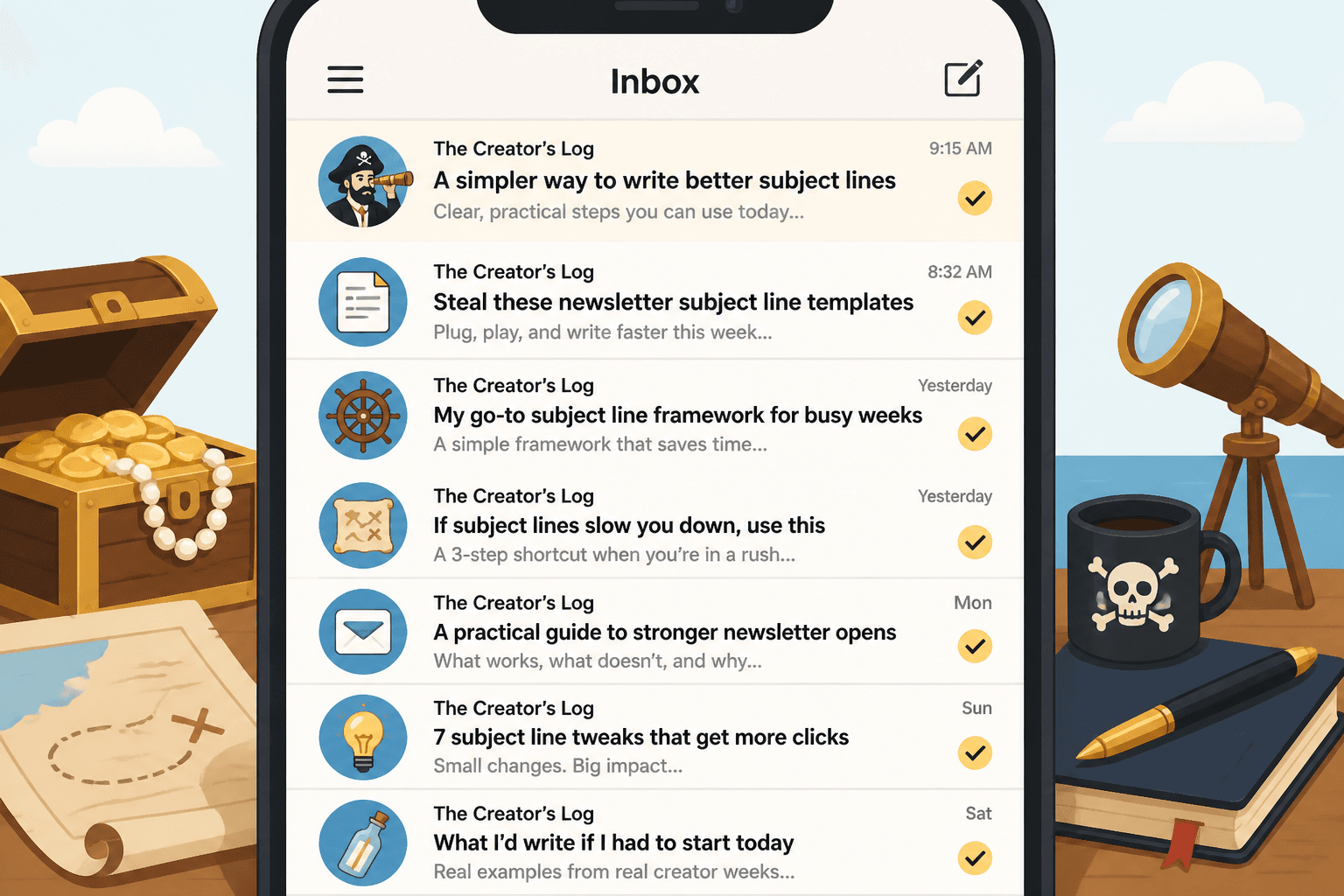
- A simpler way to write better subject lines
- Steal these newsletter subject line templates
- My go-to subject line framework for busy weeks
- If subject lines slow you down, use this
- A practical guide to stronger newsletter opens
If you want more frameworks and repeatable patterns, see simple newsletter subject lines curiosity subject lines templates for busy creators and the broader newsletter subject lines guide for creators who want better results.
How long should your subject lines be?
There is no sacred number. Ignore anyone pretending there is one perfect character count for all emails forever.
For small creators, shorter often helps because it forces clarity. But short is not automatically better. “Quick thought” is short and terrible. “Why useful newsletters get skipped” is also fairly short and much better.
A practical rule: try to keep the core idea visible and readable on mobile, but prioritize meaning over obsessive trimming. If cutting three words makes the subject line vague, keep the words.
Should you use the subscriber’s name, emojis, or brackets?
Sometimes. Calm down.
Personalization can help if it feels natural and your list data is clean. Emojis can help if they fit your tone and are not doing the heavy lifting. Brackets can help label format or intent.
Examples:
- [Weekly fix]
- [Case study]
- [Quick question]
Those devices are helpers, not substitutes for clarity. If the core idea is weak, a bracket or emoji will not save it.