
Most homepage copy is not bad because the writer lacks talent. It is bad because it is trying way too hard to sound legitimate.
So you get the usual mush: vague promises, abstract benefits, puffy words, and a hero section that says a lot without actually telling anyone what you do. It sounds polished. It also sounds like 400 other websites wearing the same blazer.
If you want to learn how to rewrite boring homepage copy, the fix is usually not “make it fancier.” It is the opposite. You need sharper positioning, clearer language, better structure, and a little more nerve. Your homepage should help the right person quickly think, “Yes, this is for me,” not “Ah yes, another premium solutions-based ecosystem.”
This guide will show you how to take sleepy, generic homepage copy and turn it into something clearer, more convincing, and much easier to trust. We will cover what makes homepage copy boring in the first place, how to rewrite each section, and what to cut before your site starts sounding like a brochure from an office park.
For the main guide behind this topic, visit the parent guide.
What makes homepage copy boring
Boring homepage copy usually has one of two problems:
- It is too vague to mean anything.
- It is too polished to feel believable.
Sometimes it manages both, which is almost impressive.
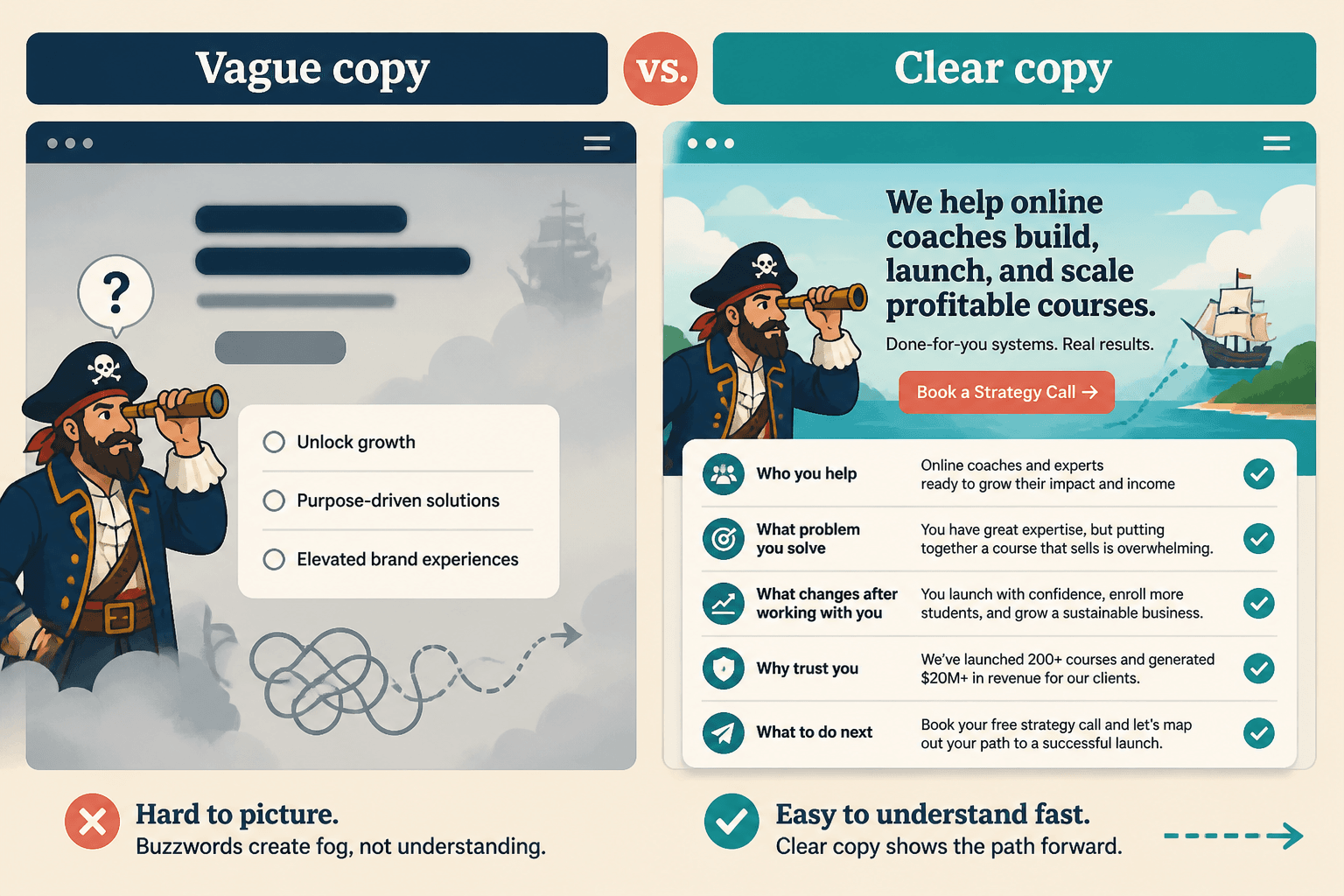
Your homepage gets boring when it relies on phrases like:
- Helping you unlock growth
- Purpose-driven solutions
- Elevated brand experiences
- Customized strategies for success
- We partner with ambitious businesses
None of that gives the reader a clean mental picture. It does not tell them who you help, what problem you solve, what changes after working with you, or why they should trust you. It just creates a vague feeling of “business words are happening.”
Good homepage copy is specific enough to attract the right people and simple enough to be understood quickly. That does not mean dry. It means useful. If a stranger lands on your homepage and still has to work hard to figure out what you do, the copy is not elegant. It is making the visitor do your job.
Start by finding the actual point
Before you rewrite anything, stop polishing sentences and figure out the core message of the page.
A homepage is not supposed to say everything. It is supposed to orient the reader fast, build trust, and move them toward the next step. If you have not decided what the page needs to do, you will keep rewriting words instead of fixing the message.
Ask these five questions:
- Who is this homepage for?
- What do they want or need right now?
- What do you help them do?
- Why should they trust you?
- What should they do next?
If you cannot answer those clearly, the copy will wander. And homepage copy that wanders tends to compensate by sounding “premium.” Not helpful.
This is also why homepage rewrites often go wrong. People think they need better wording, but they actually need a clearer argument. The writing gets easier once the page has a job.
How to rewrite boring homepage copy section by section
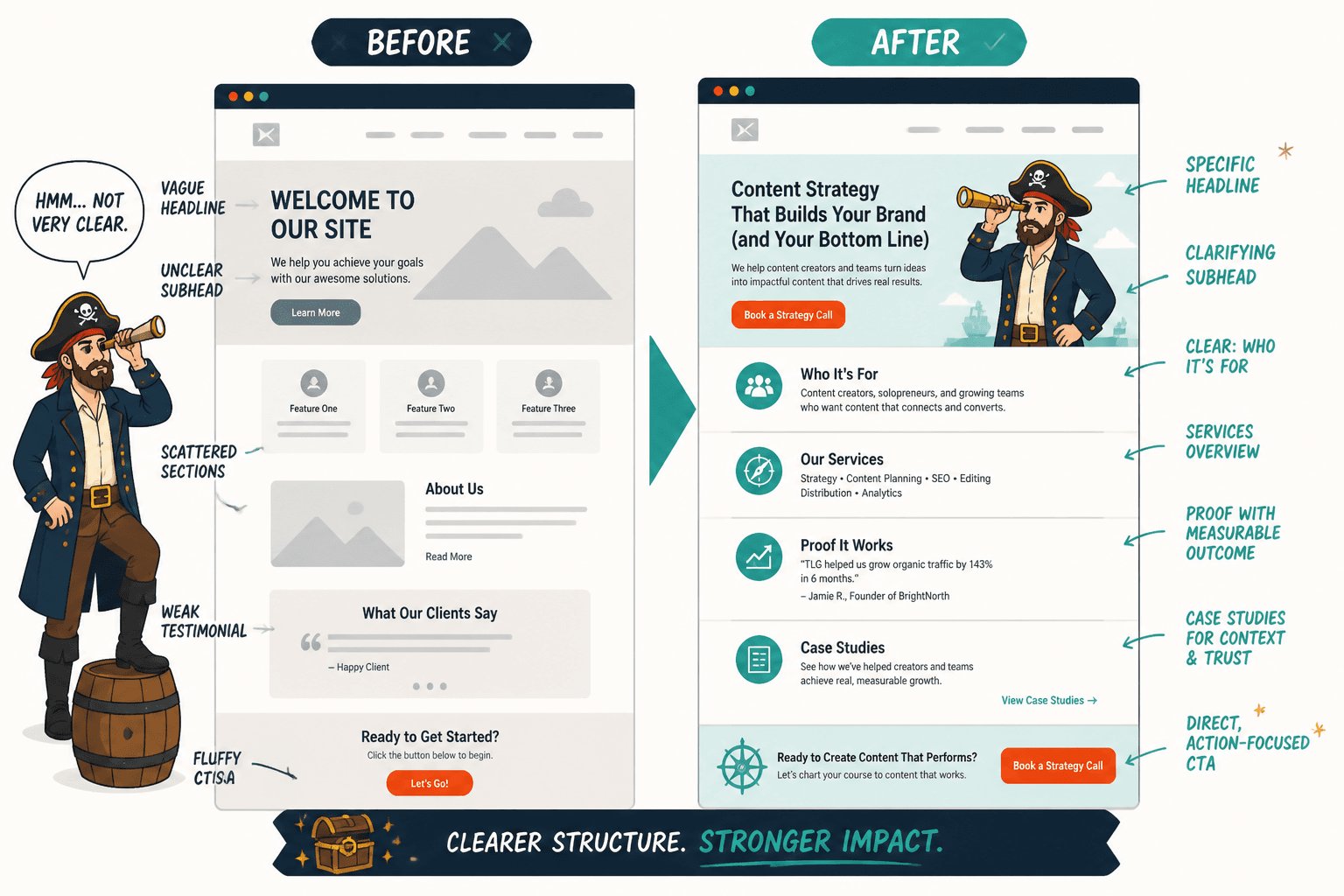
The easiest way to rewrite a homepage is to stop treating it like one giant slab of copy. Rewrite it in parts. Each section has a role. If every section is trying to sound impressive instead of doing its job, the whole page gets foggy fast.
1. Rewrite the hero section so it says something real
Your hero section usually needs three things:
- A clear headline
- A supporting line that adds context
- A CTA that tells people what to do next
The headline should not be a slogan you fell in love with during a branding workshop. It should quickly explain what you do or what result you help create.
Boring: We help visionary brands scale with clarity and confidence.
Better: Homepage copy for service businesses that need clearer messaging and more conversions.
That second version may not win a poetry award. Good. It is trying to get the right person to stay on the site.
If your current hero copy is weak, this article on how to start homepage copy without a weak opening will help you tighten the first impression.
2. Replace vague subhead copy with useful context
Your subhead should answer the obvious follow-up questions. Who is this for? What kind of work do you do? What kind of outcome should they expect?
Here is a common mistake:
Boring: Strategic messaging designed to elevate your online presence and support sustainable growth.
Better: I help coaches, consultants, and solo service brands turn vague website messaging into clear copy that makes more people inquire, book, and buy.
Notice what changed:
- The audience is named
- The problem is named
- The outcome is concrete
- The sentence sounds like a person wrote it
3. Rewrite “about” blurbs to focus on the reader first
A lot of homepages drift into autobiography too early. The visitor does not yet care about your journey from corporate burnout to purpose-led consultancy unless it helps them trust your ability to solve their problem.
This does not mean you cannot mention your story. It means the story needs a job.
Boring: After years of experience across multiple industries, I founded this business to empower brands to thrive authentically.
Better: After years of writing for service businesses, I noticed the same problem over and over: smart people with weak website copy. Now I help fix that with messaging that is clearer, more specific, and easier to trust.
That version still includes background, but it is tied to the visitor’s problem. That is the difference between useful credibility and personal fog.
4. Rewrite service sections so they are not just labels
Many homepage service sections are just category names with no real selling behind them:
- Copywriting
- Strategy
- Consulting
- Brand Messaging
That tells me what bucket you put your work into. It does not tell me why I should care.
Instead, give each service a quick explanation that connects the offer to a result.
Weak: Brand Messaging
Website Copy
Content Strategy
Stronger:
Brand Messaging: Clarify what you do, who it is for, and why people should care.
Website Copy: Turn confusing pages into copy that makes more visitors stick, click, and inquire.
Content Strategy: Build a smarter plan for content that earns attention without churning out filler.
Same services. Better selling.
5. Rewrite proof sections so they actually prove something
Trust does not come from saying you care deeply about results. Everyone says that. Trust comes from proof.
Good homepage proof can include:
- Client results
- Specific outcomes
- Numbers, if they are real and useful
- Short testimonials with concrete details
- Recognizable experience or relevant background
- Case study links
If your testimonials say things like “Amazing to work with” and “Highly recommend,” they are not useless, but they are not doing much heavy lifting either.
Compare these:
Weak testimonial: She was wonderful and really helped my business.
Stronger testimonial: Within two weeks of updating our homepage, we had better-fit inquiries and fewer calls with people who were clearly confused about what we offered.
One sounds polite. The other helps sell.
6. Rewrite your CTA so it does not sound like funnel residue
Your call to action should feel like a natural next step, not a line imported from a webinar landing page in 2018.
Weak CTAs often sound like this:
- Book your transformation
- Start your success journey
- Unlock your next level
- Let’s create magic together
Please do not create magic together. Just tell people what happens next.
Better CTA examples:
- See my services
- Book a discovery call
- Get a homepage copy review
- Read the case study
- Start with the homepage audit
Specific CTAs reduce friction. People click more readily when they know what they are clicking into.
A simple rewrite process that actually works
If your homepage feels flat and you do not know where to begin, use this process.
- Paste your existing copy into a draft. Do not edit on the live page.
- Highlight vague phrases. Anything that could apply to almost anyone goes on the chopping block.
- Underline the real claims. What do you actually help with? What specific result do you create?
- Name the audience. If the page is for everyone, it will sound like it is for no one.
- Add proof. Results, examples, testimonials, credentials, specifics.
- Tighten the opening. The first screen needs clarity fast.
- Rewrite the CTA. Make the next step obvious and low-friction.
- Read it out loud. If it sounds like a brochure, keep editing.
That last step matters more than people think. Good homepage copy should sound natural when spoken. If a sentence makes you sound like you are auditioning to be a thought leadership chandelier, cut it.
Before and after rewrites
Sometimes the fastest way to understand how to rewrite boring homepage copy is to watch the shift happen.
Example 1: Generic consultant homepage
Before:
Empowering leaders and organizations with innovative solutions for long-term success.
After:
Consulting for small teams that need clearer operations, sharper messaging, and fewer expensive bottlenecks.
Why it works better:
- “Leaders and organizations” became “small teams”
- “Innovative solutions” became actual areas of help
- The result feels more concrete and less ceremonial
Example 2: Bland copywriter homepage
Before:
Words that connect, inspire, and convert.
After:
Website copy for coaches and consultants who are tired of sounding polished but forgettable.
Why it works better:
- It names the audience
- It reflects a real frustration
- It has texture instead of slogan fog
Example 3: Abstract agency homepage
Before:
We build elevated digital experiences that drive meaningful engagement.
After:
We design and write websites that make it easier for the right clients to understand, trust, and choose your business.
Why it works better:
- It explains what the business actually does
- It translates “engagement” into trust and conversion
- It sounds clearer without sounding cheap
What to cut immediately
If you want a faster rewrite, start by deleting the usual suspects.
- Vague adjectives like transformative, impactful, elevated, authentic, premium, holistic
- Empty verbs like empower, unlock, leverage, amplify
- Big claims with no proof
- Mission statements that belong on an about page
- Overlong intros that delay the point
- Service labels with no explanation
- CTAs that sound spiritual or weirdly intense
You do not need to strip all personality out of the page. You just need to stop using personality as camouflage for weak messaging.
How to keep homepage copy clear without making it dull
This is the part people overcorrect.
They remove jargon, which is good, but then they flatten everything into stiff, joyless copy that reads like instructions on a packet of printer paper. Clear does not mean lifeless. It means the reader understands what you mean without hacking through shrubbery.
You can still have personality. Use it in the phrasing, the perspective, the way you frame the problem, the confidence of the point. A homepage can sound smart, specific, and human at the same time. In fact, it should.
If you need help sharpening your overall messaging, this guide on how to write better homepage copy is a useful next step. If your hooks tend to sound broad and interchangeable, read how to improve homepage copy hooks without sounding generic. And if you are rebuilding from older material, how to turn old content into better homepage copy will save you from rewriting everything from scratch.
You can also explore the broader website conversion copy category, the website core copy section, and the full homepage copy hub if this page is part of a bigger site rewrite.
A quick self-edit checklist
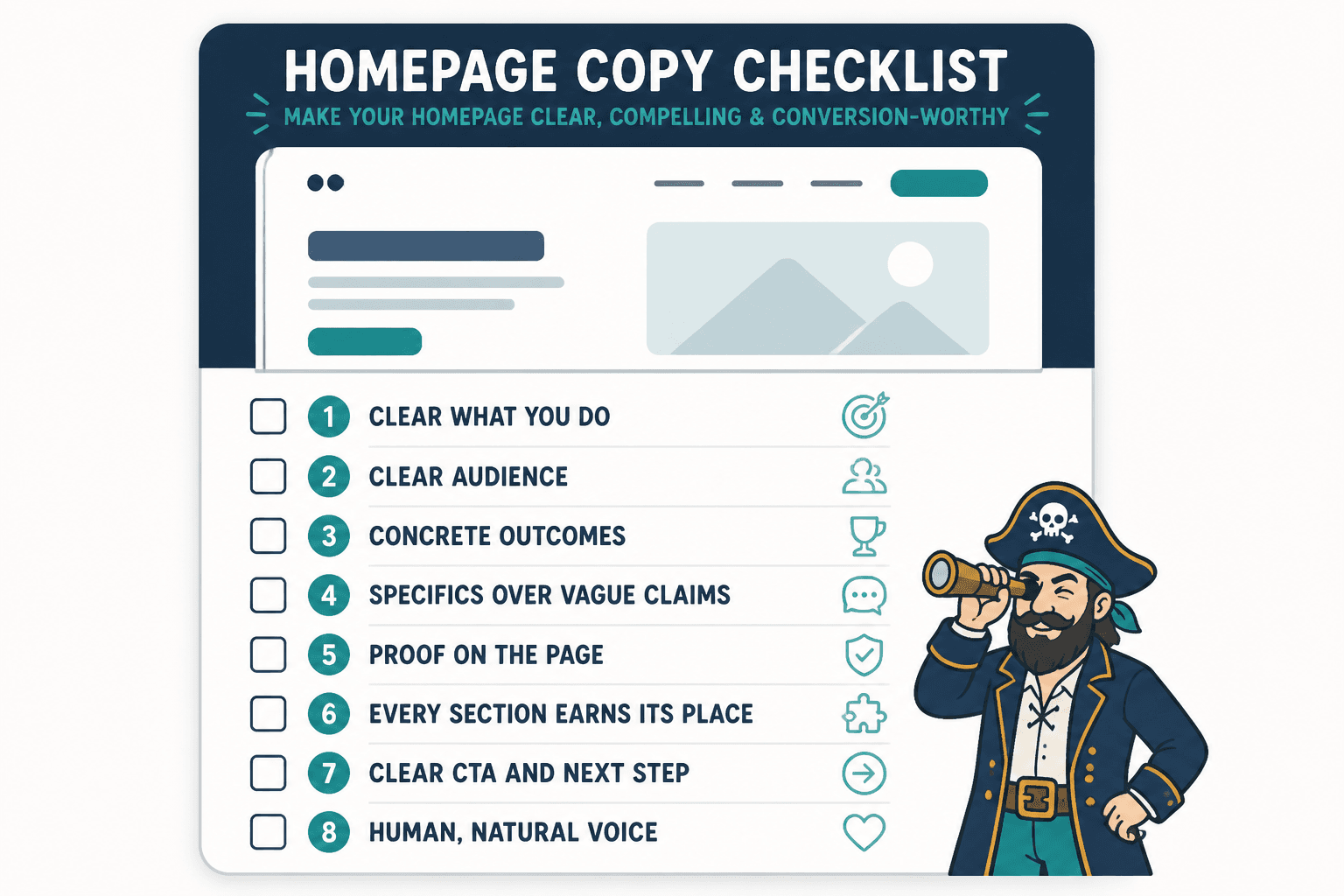
Before you publish your rewrite, check these:
- Can a stranger tell what you do in a few seconds?
- Is the audience clear?
- Are the outcomes concrete?
- Did you replace vague claims with specifics?
- Is there proof on the page?
- Does each section earn its place?
- Does the CTA clearly say what happens next?
- Does the copy sound like a person, not a panel discussion?
The bigger point is simple: clearer structure and clearer writing make the piece more useful. That is usually what makes the ending land better too.