Most creator bios are trying way too hard to sound impressive and not working nearly hard enough to be clear.
That is the real problem. Not character limits. Not “personal branding.” Not some mystical profile optimization ritual. The issue is usually simpler: your bio does not quickly tell the right person what you do, who it is for, why they should care, or what to do next.
A good bio is not a tiny resume. It is not a vague manifesto. It is not a pile of titles held together by commas and hope. It is profile copy that helps attention turn into trust, and trust turn into action.
This Creator Bios & Profile Copy Guide for Creators Who Want Better Results will help you write a bio that actually pulls its weight. We’ll cover what to include, what to cut, how to position yourself without sounding inflated, and how to write profile copy that helps with followers, leads, inquiries, email signups, and sales without making you sound like a networking robot.
If your current bio says something like “Helping ambitious entrepreneurs unlock authentic visibility through transformational storytelling,” we need to have a calm but honest conversation.
To see how this fits into the wider strategy, open the parent guide.
What a creator bio is supposed to do
Your bio has one job: reduce confusion fast enough that the right people stick around.
That does not mean it has to be boring. Personality helps. Style helps. A clean point of view helps a lot. But clarity comes first. If people have to decode your bio like it is a mildly pretentious art-school exhibition card, you are making them work too hard.
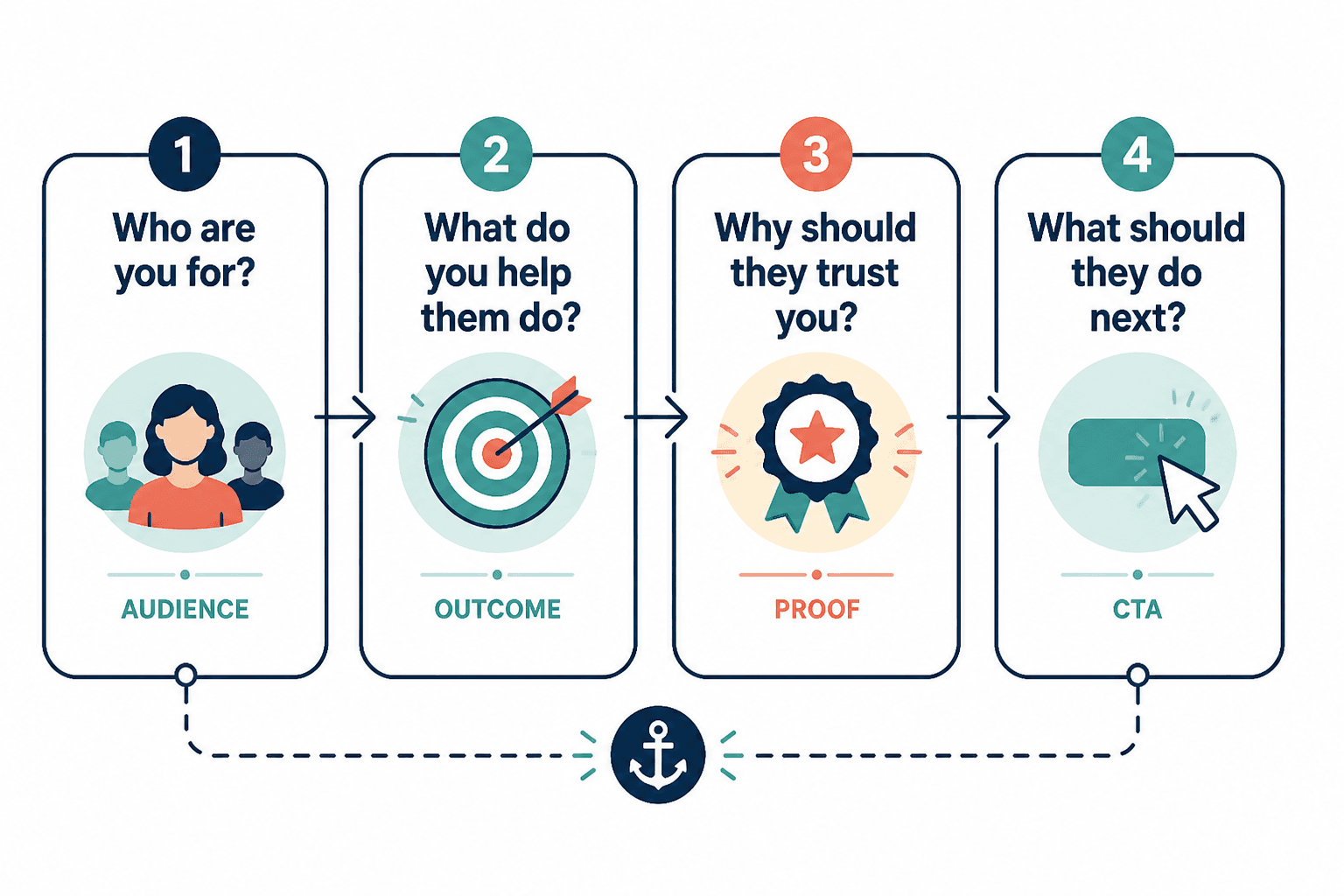
A strong creator bio usually answers four questions:
- Who are you for?
- What do you help them do?
- Why should they trust you?
- What should they do next?
That is the backbone. Nearly every good profile works because it handles those four things clearly, even if the wording is short, stylish, or platform-specific.
If you want a broader starting point for profile strategy, the main creator bios and profile copy hub is a useful next stop after this guide.
Why most creator bios underperform
Bad bios are rarely bad because the person has nothing to offer. They are bad because they hide the useful part under fog.
Here are the usual problems.
They lead with labels instead of value
“Coach | Creator | Speaker | Founder | Consultant | Strategist” tells me you have seen a pipe character and gotten carried away. It does not tell me what you actually do for someone like me.
Titles can help, but only if they support the point. Too many roles in a row usually make you sound less focused, not more accomplished.
They use broad promises nobody can picture
Words like growth, impact, visibility, transformation, alignment, empowerment, and success can mean something. But in bios, they usually mean nothing unless you pin them to a real audience or result.
“I help consultants turn expertise into clear LinkedIn content that brings in leads” is usable. “I help experts elevate their authentic brand presence” is polished wallpaper.
They try to sound impressive instead of useful
A lot of creators write bios like they are applying to be admired by strangers. That is not the goal. The goal is relevance. The right person should read your profile and think, “Ah. This is probably for me.”
They skip proof
If you make a promise, give people something to hold onto. That could be client results, years of experience, niche specificity, notable work, audience size if it is relevant, or a simple credibility marker. Not fake authority. Just enough to make your positioning believable.
They have no next step
People land on your profile for a reason. If the bio gives them no next move, you are dropping the handoff. Maybe you want them to subscribe, book, read a pinned post, grab a free resource, or send a message. Fine. Say that.
The simple structure of a bio that gets better results
You do not need a dramatic formula. You need a clear order.
Use this structure:
- Audience: who you help
- Outcome: what you help them do
- Proof: why they should trust you
- CTA: what they should do next
That structure works across LinkedIn, X, Instagram, Facebook, personal websites, and creator landing pages. The exact wording changes by platform, but the logic stays the same.
Basic template
I help [specific audience] do [specific result] through [method or expertise].
Known for [proof, credibility, or differentiator].
[Clear next step].
Filled-in example
I help consultants turn messy expertise into clear LinkedIn content that builds trust and brings in leads.
Ghostwriter and strategist behind 200M+ views across founder and expert brands.
Grab the free profile guide below.
That is not magic. It is just doing the obvious things well.
How to write each part without sounding stiff
1. Audience: say who it is for
The more clearly you name the audience, the easier it is for the right people to self-identify.
Weak audience language sounds like this:
- businesses
- brands
- people
- entrepreneurs
- professionals
- leaders
Better audience language sounds like this:
- freelance designers
- B2B consultants
- health coaches
- solo founders
- course creators
- execs building a personal brand
You do not always need to niche down to a microscopic level. But “I help everyone with everything meaningful” is not positioning. It is avoidance wearing a blazer.
2. Outcome: make the result concrete
The result should be visible, specific, and close enough to reality that a stranger can understand it instantly.
Weak outcomes:
- grow your brand
- reach your potential
- amplify your message
- create success online
Stronger outcomes:
- write LinkedIn posts that attract inbound leads
- turn expertise into an email list people actually join
- clean up your offer so your website converts better
- build a profile that makes strangers trust you faster
The difference is simple. Good outcomes are easy to picture. Weak ones are just business incense.
3. Proof: give people a reason to believe you
Proof does not have to be flashy. It just has to reduce doubt.
Useful forms of proof include:
- years of experience
- client count
- results achieved
- known brands worked with
- specific niche experience
- media features if relevant
- size of body of work
- clear personal process or specialty
Examples:
- Wrote content for 70+ B2B founders
- Helped coaches turn cold profiles into booked consults
- Ex-agency copywriter, now fixing founder messaging
- Sharing what I’ve learned from publishing 1,000+ posts
If you are newer, your proof might be narrower. That is fine. Use what you have honestly. Specificity beats puffed-up nonsense every time.
4. CTA: tell them what to do next
This is where a lot of otherwise decent bios fall apart. They explain the person. They do not direct the visitor.
Good bio CTAs are simple:
- Read my pinned post
- Download the free guide
- Book a strategy call
- Join the newsletter
- DM me “bio” for the template
- See how I work below
Your CTA should match the platform and the level of trust. Do not ask a cold visitor for a giant commitment if they barely know who you are. A profile is usually better at moving people to the next small step than straight to the hard sell.
Before-and-after bio rewrites
It helps to see what this looks like in practice.
Example 1: vague coach bio
Before: Helping ambitious humans unlock their highest potential through authentic transformation, mindset, and aligned personal branding.
After: I help coaches and service founders clarify their message so their content sounds sharper and sells without the cringe. Brand messaging strategist. 120+ client projects. Start with the pinned guide.
Why it works better: it names the audience, gives a concrete result, adds proof, and offers a next step. Also, it sounds like a person, not a scented candle description.
Example 2: overloaded creator bio
Before: Creator | Speaker | Founder | Writer | Marketer | Consultant | Community Builder | Helping brands grow online
After: I help solo founders build simple content systems that turn ideas into posts, leads, and client conversations. Writer and strategist for creator-led brands. Free content workflow in the link.
Why it works better: fewer labels, clearer purpose, and an actual outcome.
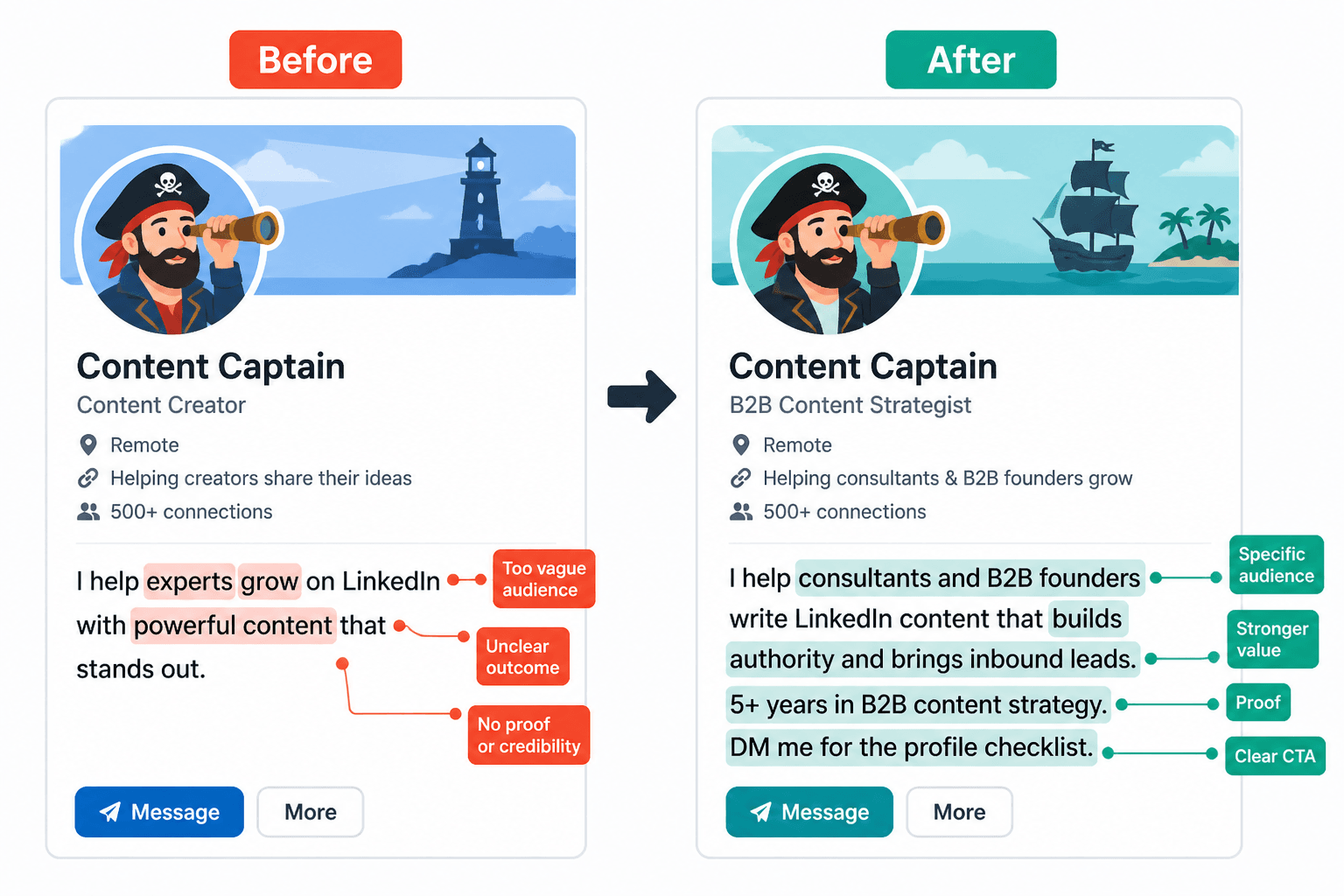
Example 3: bio with no proof
Before: I help experts grow on LinkedIn with powerful content that stands out.
After: I help consultants and B2B founders write LinkedIn content that builds authority and brings inbound leads. 5+ years in B2B content strategy. DM me for the profile checklist.
Why it works better: “grow on LinkedIn” is too broad. “Build authority and bring inbound leads” is stronger, and the proof makes the claim more believable.
For more examples you can borrow and adapt, check out best creator bios and profile copy ideas and examples for creators.
Platform-specific profile copy advice
The same core bio principles apply everywhere, but different platforms reward different kinds of emphasis.
LinkedIn bios and headlines
On LinkedIn, clarity matters more than cleverness. People are scanning fast and trying to figure out if you are relevant to their work, their problem, or their network.
Your LinkedIn headline and about section should focus on:
- clear audience
- specific professional value
- credible proof
- a sensible next step
Do not stuff your LinkedIn headline with every keyword you can think of. It makes you sound desperate and weirdly mechanical.
X bio
X gives you less room, so your bio needs compression. You want a sharper combination of positioning, point of view, and credibility.
Good X bios usually do one of these well:
- name the niche and outcome
- show a strong angle or specialty
- pair credibility with a simple CTA
You do not need to sound like a build-in-public clone who only eats metrics for breakfast.
Instagram creator bio
Instagram bios need quick clarity and often benefit from a slightly more personality-driven tone. The profile has more visual support, so the bio can be tighter, but it still needs to answer what you do and where people should go next.
If your IG bio is all vibes and no point, you are making life harder than it needs to be.
Website about section and profile blurb
On your website, you usually have room to go a little deeper. That means you can explain your approach, values, and differentiators with more nuance. But “more room” is not permission to ramble.
A good website profile blurb still needs the same core ingredients. It just has more space for voice and proof.
If you want to browse more profile-writing resources, you can also explore the broader social media writing and profile copy section.
How to position yourself if you do more than one thing
This trips up a lot of smart people. Especially creators who are writers and consultants and educators and service providers and product sellers and occasionally accidental therapists to their audience.
If you do multiple things, your bio does not need to list every branch of your business. It needs to present the clearest top-line reason someone should care.
Think umbrella, not inventory.
For example, instead of this:
Writer, ghostwriter, consultant, course creator, speaker, brand strategist, community builder
Try this:
I help expert-led brands turn sharp ideas into content, authority, and sales.
That broader line creates room for several offers underneath it. Your profile can then support that umbrella with proof and a CTA that leads to the offer you want people to see first.
You are not hiding your range. You are organizing it so strangers can understand it faster.
What to do if you have a small audience or limited proof
You do not need a huge following to write a strong bio. You need honesty, specificity, and a clear reason to exist.
If you are newer, your proof can come from things other than giant numbers. For example:
- your niche background
- your profession or prior experience
- the type of people you understand well
- the work you are creating publicly
- your process or angle
- the problem you are focused on solving
Examples:
- Former in-house recruiter helping job seekers fix weak LinkedIn profiles
- Designer sharing practical content systems for other freelancers
- Therapist writing about calm, evidence-based content for mental health brands
Small audiences do not need fake authority. They need clear relevance. In fact, a smaller creator who speaks directly to the right people often comes across as more trustworthy than a bigger account drowning in vague thought leadership soup.
For a deeper breakdown, read creator bios and profile copy for creators with small audiences.
A quick process to rewrite your current bio
If your current profile copy feels off, here is a clean way to fix it without spiraling for three hours over every word.
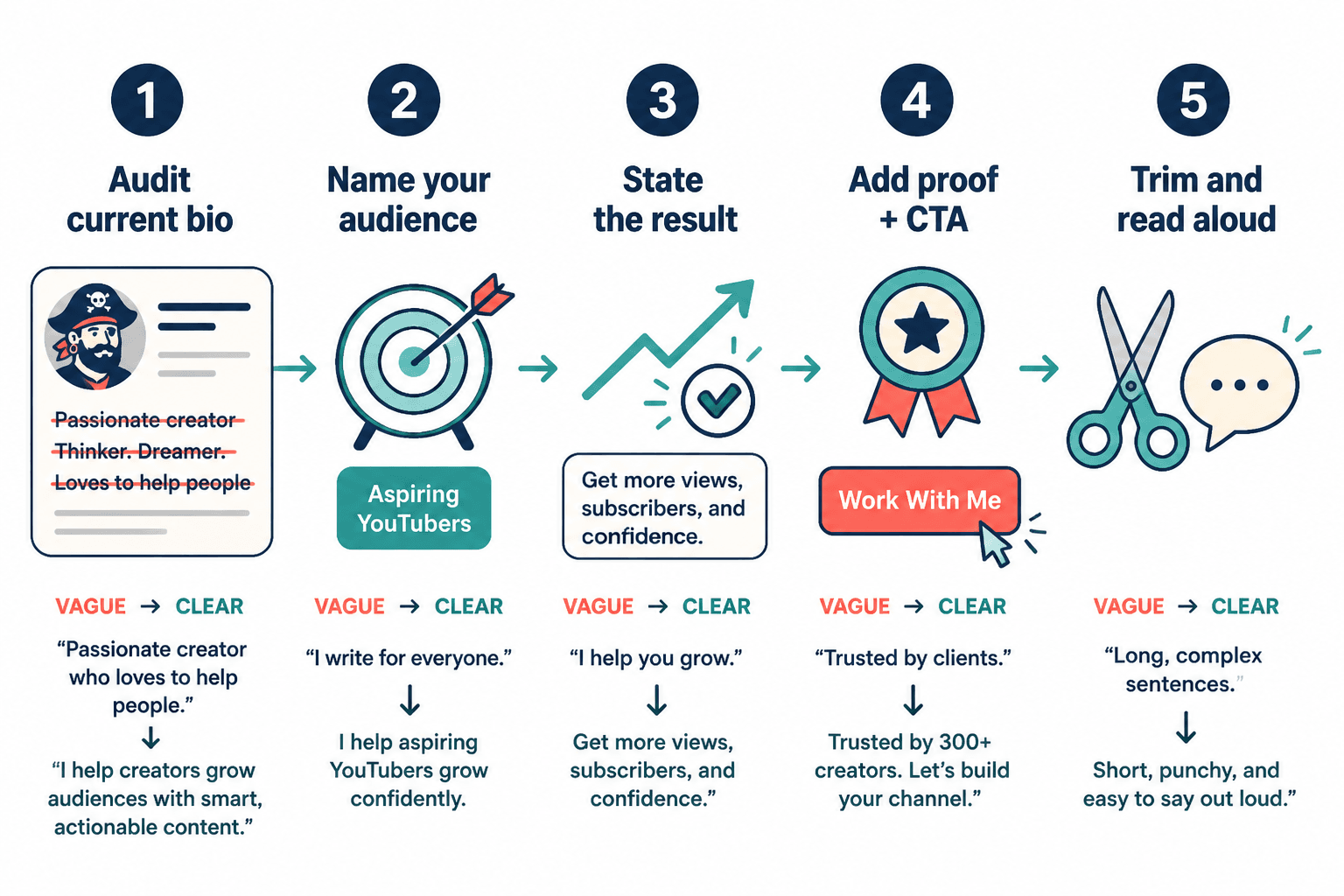
- Highlight the vague parts. Circle words like impact, authentic, transformation, visibility, success, empower, or growth if they are not tied to something concrete.
- Name your actual audience. Replace broad labels with the people you most want to attract.
- State the real result. What practical outcome do you help with?
- Add one credibility marker. Just one is enough to strengthen the line.
- Choose a next step. What should a profile visitor do after reading?
- Cut the extra titles. Keep only the ones that help the reader understand your role.
- Read it out loud. If it sounds like generated beige foam, rewrite it until it sounds like something a competent person would actually say.
This is one of those areas where less copy often performs better, but only if the shorter copy still says something meaningful. “Minimal” is not the same as “empty.”
Simple bio templates you can adapt
Use these as starting points, not sacred scripts.
Template 1: service-based creator
I help [audience] get [result] without [pain/frustration].
[role/specialty] for [niche].
[CTA].
Example:
I help consultants turn unclear offers into sharp messaging without rewriting their whole business from scratch.
Messaging strategist for expert-led brands.
Book a fit-check call below.
Template 2: content-focused creator
Writing about [topic] for [audience].
Helping you [practical result].
[proof or CTA].
Example:
Writing about creator marketing for freelancers, coaches, and solo founders.
Helping you make your content clearer, sharper, and more useful.
Start with the pinned post.
Template 3: personal-brand operator
I help [audience] build [thing they want] through [method].
[proof].
[CTA].
Example:
I help founders build trust and demand through smart, low-fluff content systems.
Worked with 50+ B2B brands across content and positioning.
Join the newsletter for weekly breakdowns.
If you want faster plug-and-play options, see simple creator bios and profile copy one-liners templates for busy creators.
What to remove from your bio immediately
The bigger point is simple: clearer structure and clearer writing make the piece more useful. That is usually what makes the ending land better too.
The bigger point is simple: clearer structure and clearer writing make the piece more useful. That is usually what makes the ending land better too.