
Weak research outputs do not just sit there looking unfinished. They waste trust, blur the offer, and turn potentially useful content into expensive busywork. The page gets published, the notes feel thorough, and the leads stay politely elsewhere.
For creator-led businesses, the job is not merely to generate better ideas with AI. The job is to make those ideas do something measurable: grow an email list, start a sales conversation, support a service offer, or move someone toward a purchase. That means research and ideation need a conversion path, not just a neat folder.
If you want the broader workflow first, start with the creator AI research and ideation guide. For supporting examples, the examples page is a useful companion, and the tool roundup helps when the workflow needs a practical stack.
Why creator AI research needs a conversion path in the first place
Research is easy to admire and hard to monetize. A strong brief, cleaner positioning notes, and a handful of audience insights can still fail if there is nowhere for the reader to go next. Helpful content without a next step becomes a brochure for your own efficiency.
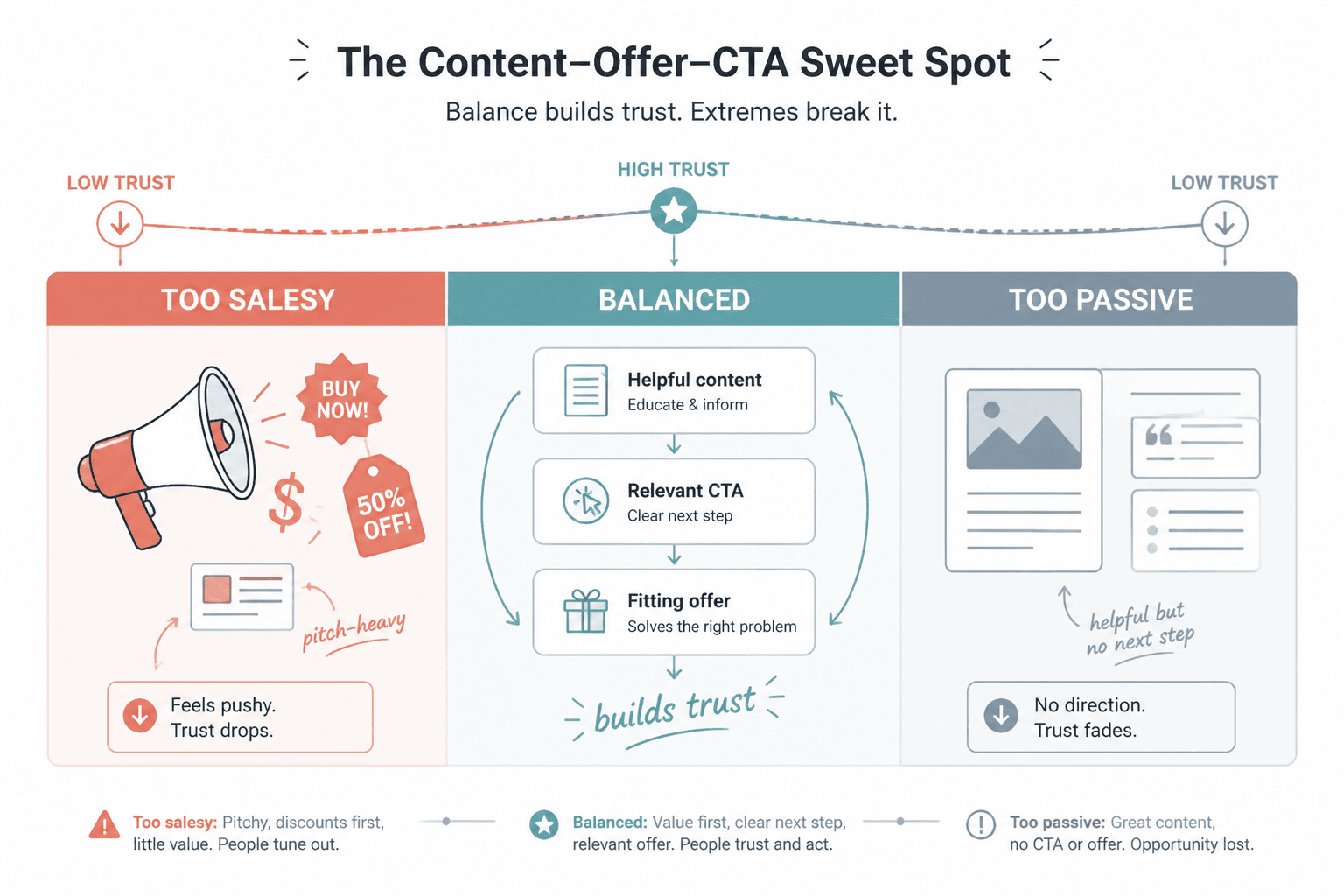
That is especially true for creator businesses, where the same piece of content often needs to do two jobs at once: prove you understand the problem and move the reader toward the right action. If those jobs are not planned together, the content usually drifts into one of two traps:
- Too informational: useful, but no clear offer path.
- Too promotional: technically clear, but it feels like a pitch wearing a fake mustache.
The middle ground is the goal. Research should help the reader trust your judgment, not just your speed. Google’s guidance on helpful, people-first content is still a good check here: content should serve a clear audience need, not simply exist to fill space. See Google Search Central’s helpful content guidance.
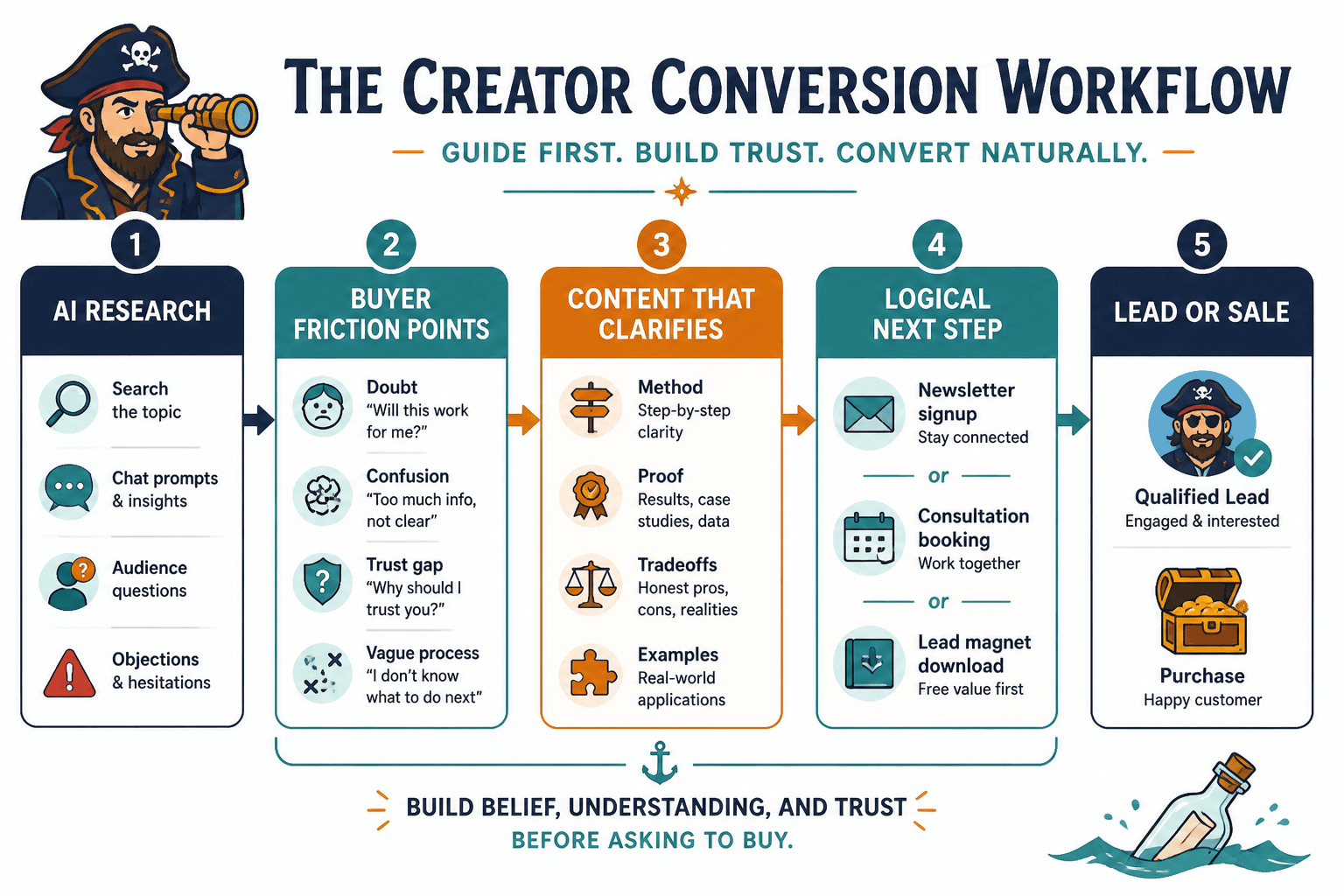
What conversion-ready research and ideation content looks like
Content that converts usually does a few things at once. It names a real problem, shows that the problem was understood properly, and makes the next step obvious. That step may be a download, a booking, a product purchase, or a follow-up conversation.
Good creator AI research and ideation content usually has these traits:
- Specific audience framing: it speaks to a defined type of reader, not “everyone with a pulse and a content calendar.”
- Clear problem-to-solution logic: the content connects the research insight to a practical outcome.
- Visible judgment: the creator’s view is present, not buried under generic synthesis.
- One obvious next step: the CTA matches the reader’s intent and the stage they are in.
That last point matters more than people like to admit. A useful article can still underperform if it asks for the wrong action. A reader who is still comparing options probably is not ready to book a call. A reader who already knows they need help may not need a PDF about “next steps.”
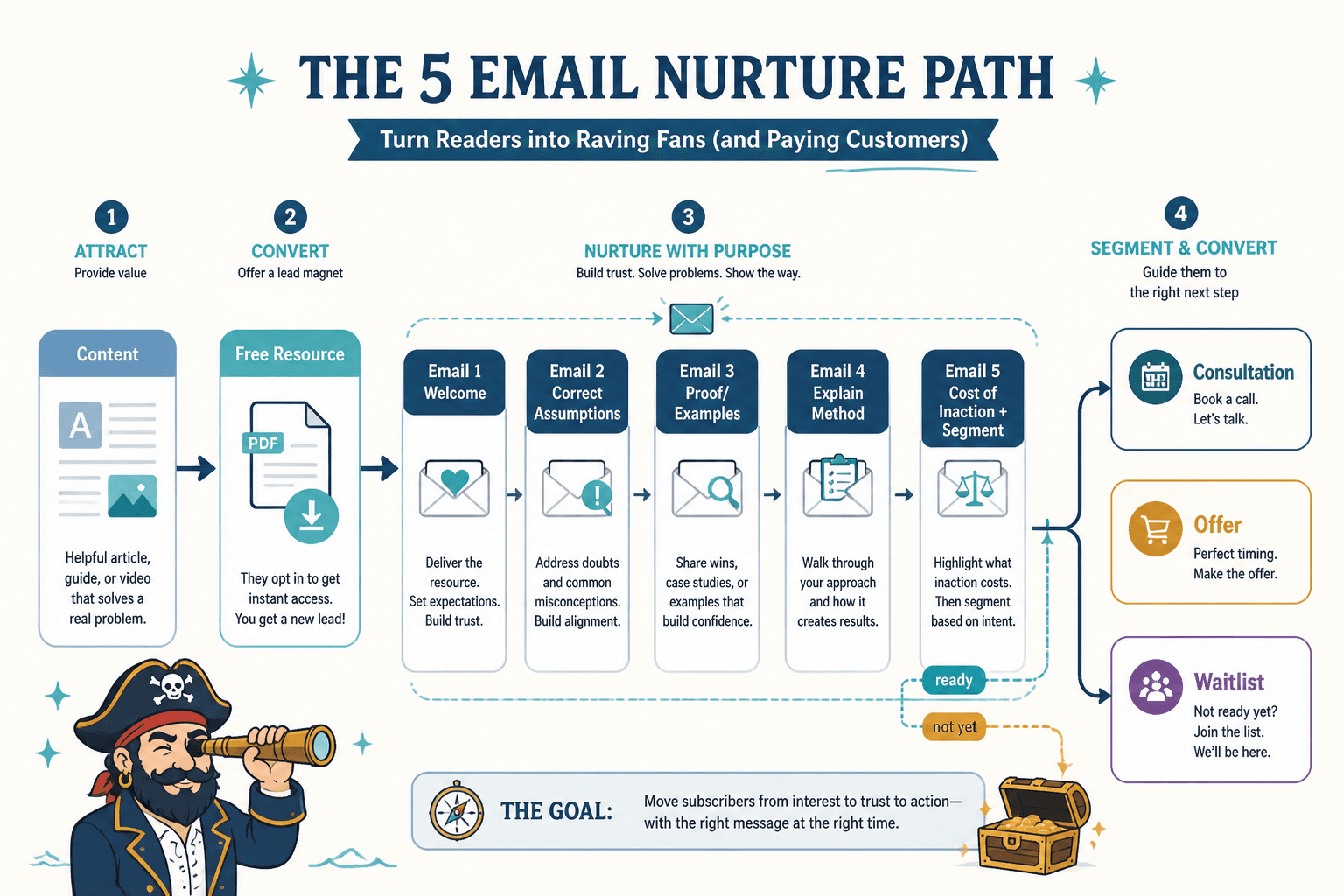
Funnel ideas that fit creator AI research and ideation content
The best funnel is not the fanciest one. It is the one that matches the reader’s intent without making the handoff feel forced. Here are the most useful patterns.
1. Post to lead magnet
This works when the content surfaces a problem that needs a deeper framework, checklist, template, or decision aid. The post earns attention; the lead magnet collects the contact and gives the reader something usable.
Good fit: content audits, strategy prompts, comparison summaries, positioning checklists, brief templates.
2. Post to newsletter
This is the lightest conversion. It fits when the reader is interested in the topic but not yet ready to buy. Newsletter signup works best when the newsletter has a clear promise beyond “updates,” which is the least motivating sentence in digital publishing.
Good fit: ongoing research notes, trend interpretation, recurring ideation prompts, weekly strategy breakdowns.
3. Article to related service or offer
This is the strongest option when the article solves a real problem that your service already solves. The content should create a believable bridge to the offer, not a surprise ending.
Good fit: audits, strategy retainers, done-for-you content systems, offer positioning support, consulting.
4. Thread or post to booking page
This works when the topic is already close to a buying decision and the reader may need human confirmation more than more information. The CTA should make the next step easy and specific.
Good fit: discovery calls, audits, consultations, assessments, implementation help.
5. Content series to low-ticket product
This is useful when you want a smaller purchase to bridge the gap between attention and a bigger offer. A sequence of related posts can warm the reader up, then hand off to a practical paid resource.
Good fit: templates, short playbooks, swipe files, mini-courses, decision kits.
How to choose the right funnel for the content
The easiest way to choose is to map the content against the reader’s stage and your goal. The deeper the trust gap, the lighter the ask should be. The more purchase-ready the reader, the more direct the CTA can be.
A simple rule:
- Awareness stage: aim for newsletter or low-friction lead magnet.
- Consideration stage: aim for lead magnet, related guide, or comparison page.
- Decision stage: aim for booking page, service page, or product checkout.
If you need a deeper planning view, pair this article with the parent guide and the supporting examples page. Those pages help you decide what the content is doing before you worry about where the button goes.
How to monetize creator AI research and ideation without wrecking trust
Trust usually breaks when the monetization move feels disconnected from the value. People do not mind paying for expertise. They mind paying for warmed-over output with a premium label.
The fastest ways to damage trust are predictable:
1. Selling raw outputs as if they are deep expertise
If the product is basically a prompt dump or a clipped summary, call it that. The buyer is not paying for the volume of text. They are paying for judgment, relevance, and reduction of effort.
2. Hiding how the work is made
You do not need to publish every prompt, but you should not pretend the process is magic. A clear method is usually more persuasive than mystery. The point is not to expose every gear; it is to show that the machine is not decorative.
3. Monetizing too early in the trust cycle
If the audience has not yet seen enough useful thinking, asking for a sale can feel abrupt. A smaller conversion step may be smarter first: newsletter, lead magnet, or a low-friction assessment.
4. Using AI to accelerate bad positioning
AI does not rescue vague offers. It speeds them up. If the positioning is fuzzy, the output will be faster fuzz.
5. Offering research with no recommendation layer
Research alone is rarely the product. The product is research plus interpretation plus a recommendation about what to do next.
That distinction lines up with how buyers evaluate value in decision-making content: they want clarity, not just more inputs. For broader credibility and accuracy standards, it helps to stay close to primary sources where possible. For example, Google’s Search Central guidance emphasizes useful, original, audience-first content, and the FTC’s disclosure guidance remains relevant whenever sponsorship, endorsement, or paid promotion enters the picture: FTC Disclosures 101 for social media influencers.
A simple workflow for turning research into leads or sales
Here is a clean way to build the path from research to revenue without turning the article into a funnel diagram with a caffeine problem.
- Start with the reader problem. Define what they are trying to solve, not just what topic you want to cover.
- Use AI to expand the research. Collect patterns, angle ideas, objections, and supporting examples.
- Apply human judgment. Decide what matters, what is noise, and what supports your actual position.
- Choose the conversion goal. Pick one primary next step: lead magnet, newsletter, booking, product, or service page.
- Write the bridge. Make the CTA feel like the next logical step from the content.
- Measure the handoff. Watch click-through, signup, booking, and assisted-conversion signals, not just pageviews.
If a piece is getting traffic but no action, the problem is often not the article length. It is usually the mismatch between intent and CTA.
Practical CTA rules that keep the offer believable
CTAs work better when they are specific and proportionate. The more trust the content has earned, the stronger the ask can be. The less trust established, the more the CTA should help rather than pressure.
- Use one primary CTA per page.
- Repeat it naturally after the value is established, not before.
- Match the CTA to the reader’s likely readiness.
- Make the benefit obvious and concrete.
- Do not ask for a sale when the page only earned curiosity.
That is also where internal linking can do quiet work. A post can point to the parent guide for strategy, to the examples page for implementation, and to the tools page for execution. The reader gets a cleaner path, and the page stops acting like a dead end with opinions.
How to know whether the content is actually converting
Look beyond vanity metrics. A piece that earns fewer visits but more qualified leads is often the better asset. Useful indicators include:
- Lead magnet signups
- Newsletter subscriptions from the page
- Booking-page clicks
- Service inquiries
- Product conversion rate
- Assisted conversions in your analytics tool
If the content gets attention but not action, revisit three things first: the audience match, the CTA, and the trust level of the offer. Usually one of those is out of tune.
Final take
Creator AI research and ideation becomes valuable when it does more than speed up thinking. It should sharpen positioning, clarify the next step, and move the right reader toward a meaningful action. That may be a lead, a sale, or a booked conversation. It should not be a pile of polished notes that politely declines to help.
Use the research to make the content clearer. Use the content to make the offer easier to understand. Then give the reader a next step that matches where they actually are. That is how the work turns into leads or sales without turning into trust damage in a blazer.
For the broader system, revisit the creator AI research and ideation guide, then use the examples page and tool roundup to operationalize the pieces that matter.