
A draft can look almost finished in the most suspicious way possible: the content is solid, the notes are messy, and the headline still reads like it was assembled from leftover packaging. That is usually the moment a title needs examples, not another round of “make it punchier.” Examples make the pattern visible. They show what to keep, what to cut, and where the actual promise lives.
This page is the examples-and-templates companion to the broader blog titles and headlines guide. If you want the strategy behind the craft, start there. If you want usable title ideas you can adapt without turning your draft into corporate soup, you are in the right place.
What a strong blog title actually needs to do
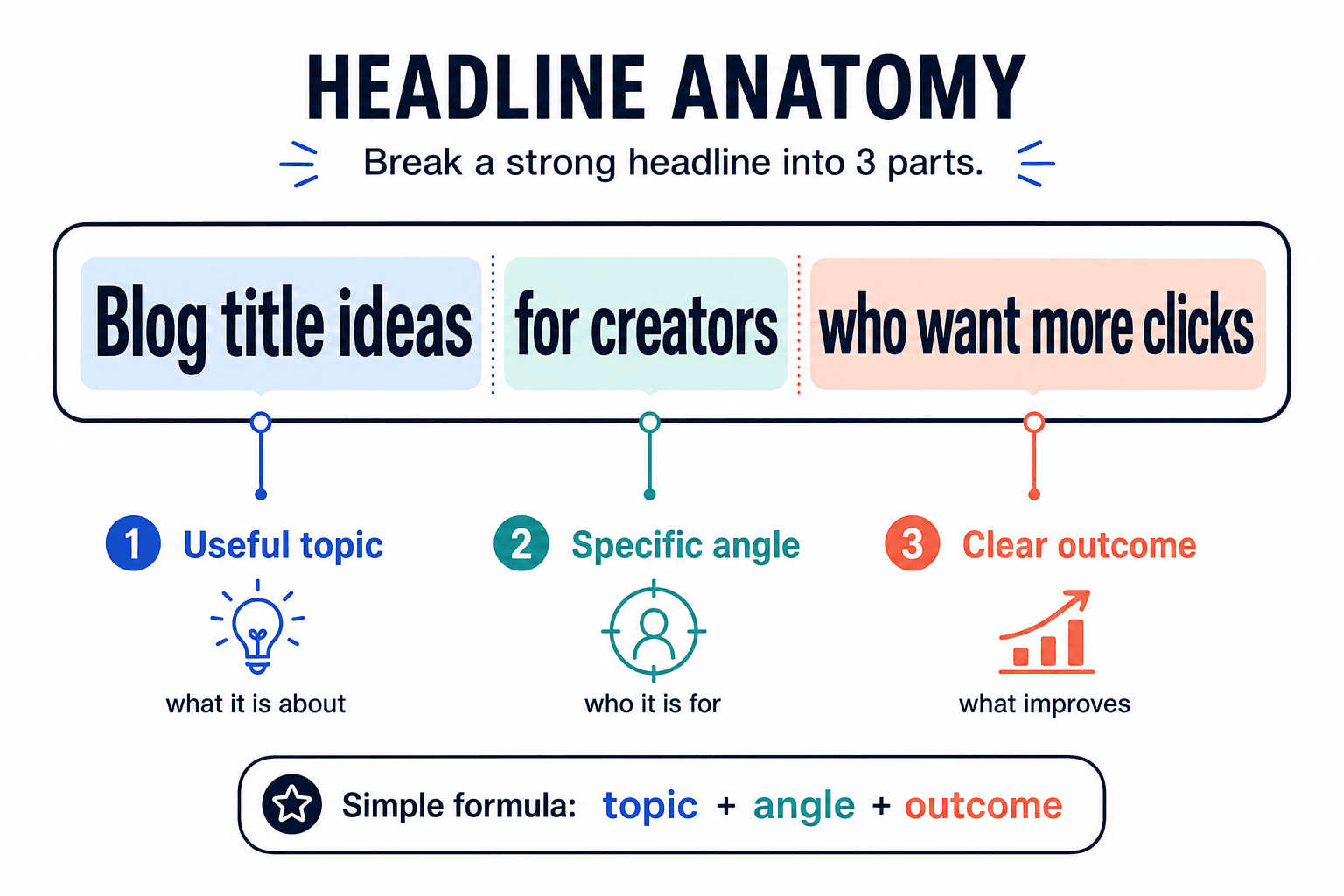
A useful title does more than announce the topic. It should tell readers what kind of post they are getting, why it matters, and why they should care now instead of later.
At minimum, a strong title usually includes three ingredients:
- Topic: what the post is about
- Angle: the specific lens, method, or promise
- Outcome: the result, benefit, or reason to click
That is also why vague titles flop so reliably. “Better Writing Tips” is technically about writing. So is a refrigerator magnet. Specificity is what makes the title earn its place.
If you want a deeper process for writing titles faster, the companion guide on how to write better blog titles and headlines walks through the decision-making step by step.
A quick way to judge whether a title is worth keeping
Before you start collecting headline ideas like spare buttons, run the title through a simple test:
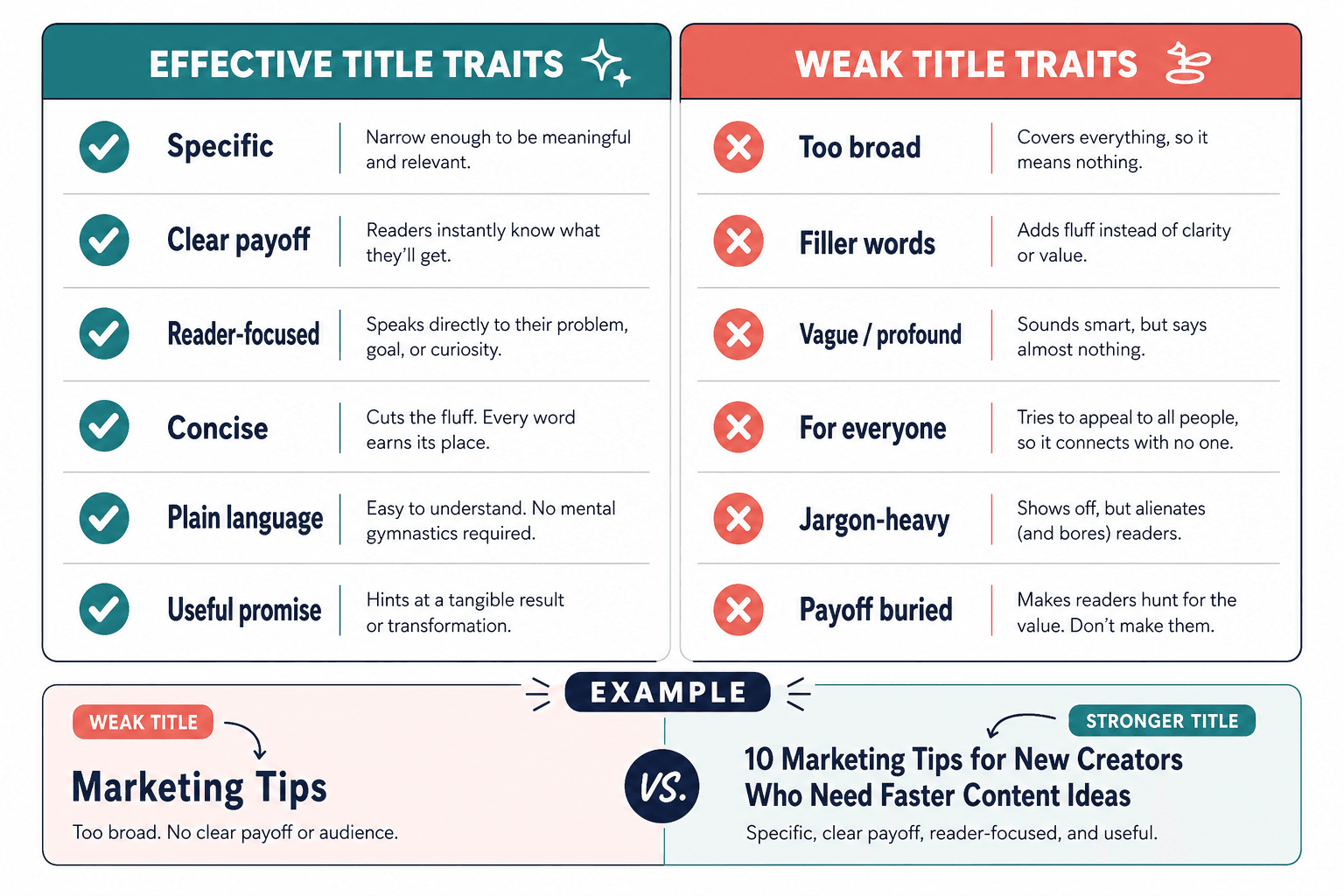
- Does it say something concrete?
- Does it fit the actual article, not the fantasy version of it?
- Does it hint at a benefit, result, or useful angle?
- Would a real reader understand why this post exists?
- Does it sound human, not like a product brochure wearing glasses?
If the answer is no to most of those, the title probably needs more work. That is not a crisis. That is just editing.
Blog title examples by pattern
Below are examples you can adapt for creator blogs, service businesses, and educational content. They are meant to show structure, not to be copied wholesale like a recipe from a suspiciously overconfident cookbook.
1. Straightforward how-to titles
These work when the article teaches a clear process.
- How to Write Better Blog Titles Without Sounding Generic
- How to Choose a Blog Title That Matches Search Intent
- How to Turn a Weak Draft Into a Click-Worthy Headline
- How to Write Blog Titles Faster Without Losing Quality
Why they work: the reader knows exactly what the post will help them do.
2. List titles with a real payoff
List posts are fine. Lazy lists are not. The title needs a reason to exist beyond counting.
- 9 Blog Title Ideas That Sound Clear Instead of Generic
- 7 Headline Examples Creators Can Adapt for Their Next Post
- 12 Blog Title Templates That Still Sound Human
- 5 Ways to Make a Boring Blog Title More Specific
Why they work: they promise a useful set of options, not just a number and a mood.
3. Problem or mistake titles
These are strong when the article fixes a common failure.
- Why Your Blog Titles Sound Flat, and How to Fix Them
- 7 Blog Title Mistakes That Make Posts Easier to Ignore
- What Makes a Blog Title Feel Vague Instead of Useful
- Common Headline Mistakes That Hurt Clicks Before the Post Even Starts
Why they work: they speak to a pain point the reader already recognizes.
4. Template or formula titles
Templates can be practical, but only if the title makes the promise feel grounded.
- Simple Blog Title Templates for Busy Creators
- Blog Headline Formulas You Can Adapt in Minutes
- Title Templates That Help You Start Faster
- Headline Formulas for Posts That Need a Clearer Angle
Why they work: they promise speed without pretending the template does all the thinking.
5. Audience-specific titles
These are useful when the article is clearly written for a defined group.
- Blog Title Ideas for Coaches and Consultants
- Headline Examples for Creators Who Sell Digital Products
- Blog Title Templates for Freelancers Who Need Better Leads
- SEO Title Ideas for Small Brands With Limited Time
Why they work: the reader immediately knows, “This is for me.”
6. Outcome-first titles
These work best when the benefit is concrete and believable.
- Write Blog Titles That Get More Clicks Without Sounding Hypey
- Make Your Headlines Clearer So More People Actually Read Them
- Turn Ordinary Blog Topics Into Titles People Want to Open
- Create Headlines That Support Traffic and Conversions
Why they work: the reader sees the result before they see the method.
7. Comparison titles
Comparison titles are strong when the reader is deciding between approaches.
- Blog Title Examples vs. Blog Title Templates: What to Use and When
- Short Blog Titles or Detailed Ones: Which Works Better?
- Simple Headlines vs. Clever Ones: What Usually Wins
- Title Ideas That Get Clicks vs. Titles That Just Sound Polite
Why they work: they frame a decision, not just a topic.
8. Example and inspiration titles
These are useful for people who want a model before they write their own version.
- Blog Title Examples for Creators Who Need a Fresh Angle
- Headline Examples That Show What Better Specificity Looks Like
- Realistic Blog Title Ideas You Can Adapt for Your Next Post
- Examples of Strong Titles That Do More Than Describe the Topic
Why they work: they promise pattern recognition, not just decoration.
Weak vs. strong blog title rewrites
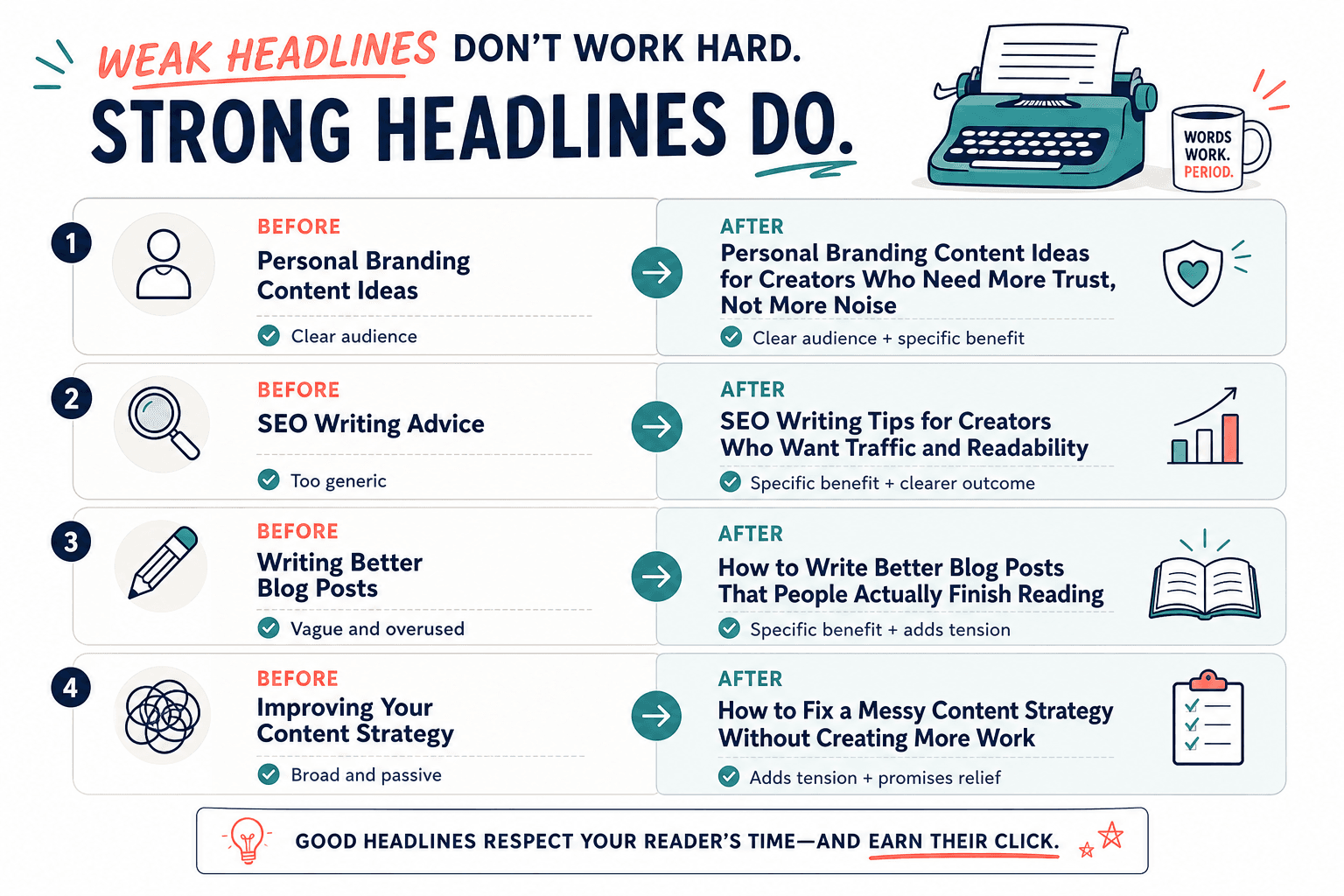
Sometimes the fastest way to improve a title is to stop asking whether it sounds good and start asking whether it says anything useful. Here are some rough examples.
- Weak: Writing Better Blog Titles
Stronger: How to Write Better Blog Titles Without Sounding Generic
- Weak: Blog Title Tips
Stronger: 7 Blog Title Tips That Make Posts Easier to Click
- Weak: Headline Templates
Stronger: Simple Headline Templates for Busy Creators
- Weak: Improve Your Titles
Stronger: How to Turn Weak Titles Into Clearer, Stronger Headlines
- Weak: Best Blog Ideas
Stronger: Blog Title Ideas That Fit Real Topics, Not Generic Advice
The pattern is usually the same: add specificity, remove filler, and make the value visible.
Simple blog title templates creators can adapt fast
Templates are most useful when they help you move from blank page to usable draft. They are less useful when they start making decisions for you. Use the structure, not the autopilot.
- How to [result] without [common frustration]
Example: How to Write Better Blog Titles Without Sounding Generic
- [Number] [topic] ideas that [benefit]
Example: 9 Blog Title Ideas That Sound Clear Instead of Generic
- Why your [topic] [problem], and how to fix it
Example: Why Your Blog Titles Sound Flat, and How to Fix Them
- [Audience] [topic] examples for [outcome]
Example: Blog Title Examples for Creators Who Need a Fresh Angle
- [Format] templates that help you [result]
Example: Title Templates That Help You Start Faster
For a practical breakdown of the mechanics, the related page on the best AI tools for blog titles and headlines can help if you are testing workflows, but the title still needs a human judgment pass. Tools can speed up options. They do not magically know which one deserves to live.
What to avoid when using examples and templates
Templates go wrong for a few predictable reasons:
- They get used before the real point of the article is clear.
- They stay broad enough to fit nearly any topic.
- They lean on vague power words and call it strategy.
- They treat numbers as if they automatically create value.
- They sound clever but fail to explain why anyone should care.
If a title looks polished but says very little, it is probably doing the exact wrong job.
A practical title checklist before you publish
Before you lock a title in place, check it against this short list:
- Does it describe the post accurately?
- Does it include a specific angle or useful promise?
- Would the intended reader recognize themselves in it?
- Does it avoid empty filler like “ultimate,” “amazing,” or “game-changing” unless those words truly earn their keep?
- Is it easy to say out loud without sounding like you are reading from a launch deck?
- Does it support the actual goal of the page, whether that is clicks, search traffic, leads, or authority?
Use examples to learn the pattern, then write your own
The goal is not to collect a giant folder of headline ideas and admire them like vintage typewriters. The goal is to learn how strong titles are built so you can make your own faster.
Once you understand the pattern, the next draft gets easier: clear topic, useful angle, believable outcome. That is the whole game, minus the ceremonial overthinking.
If you want the strategy layer behind these examples, go back to the main blog titles and headlines guide. If you need a workflow next, the companion pages on writing better titles and turning titles into more leads or sales fill in the next step.
In short: examples are not shortcuts around thinking. They are the fastest way to see what thinking should look like.