
Weak About page copy does not just feel vague. It quietly costs revenue by making the right visitors work too hard to figure out who you help, why you matter, and what they should do next. The page gets the click, the reader starts scanning, and then the whole thing turns into a polite little detour instead of a decision. That is a conversion problem dressed up as brand personality.
The fix is not to stuff the page with hype or turn your origin story into a victory lap. The useful move is simpler: make the page answer the questions buyers are already asking, then give them a next step that fits where they are in the relationship. The best About pages do three jobs at once: they build trust, clarify fit, and open a path to the next conversation.
What an About page has to do for leads and sales
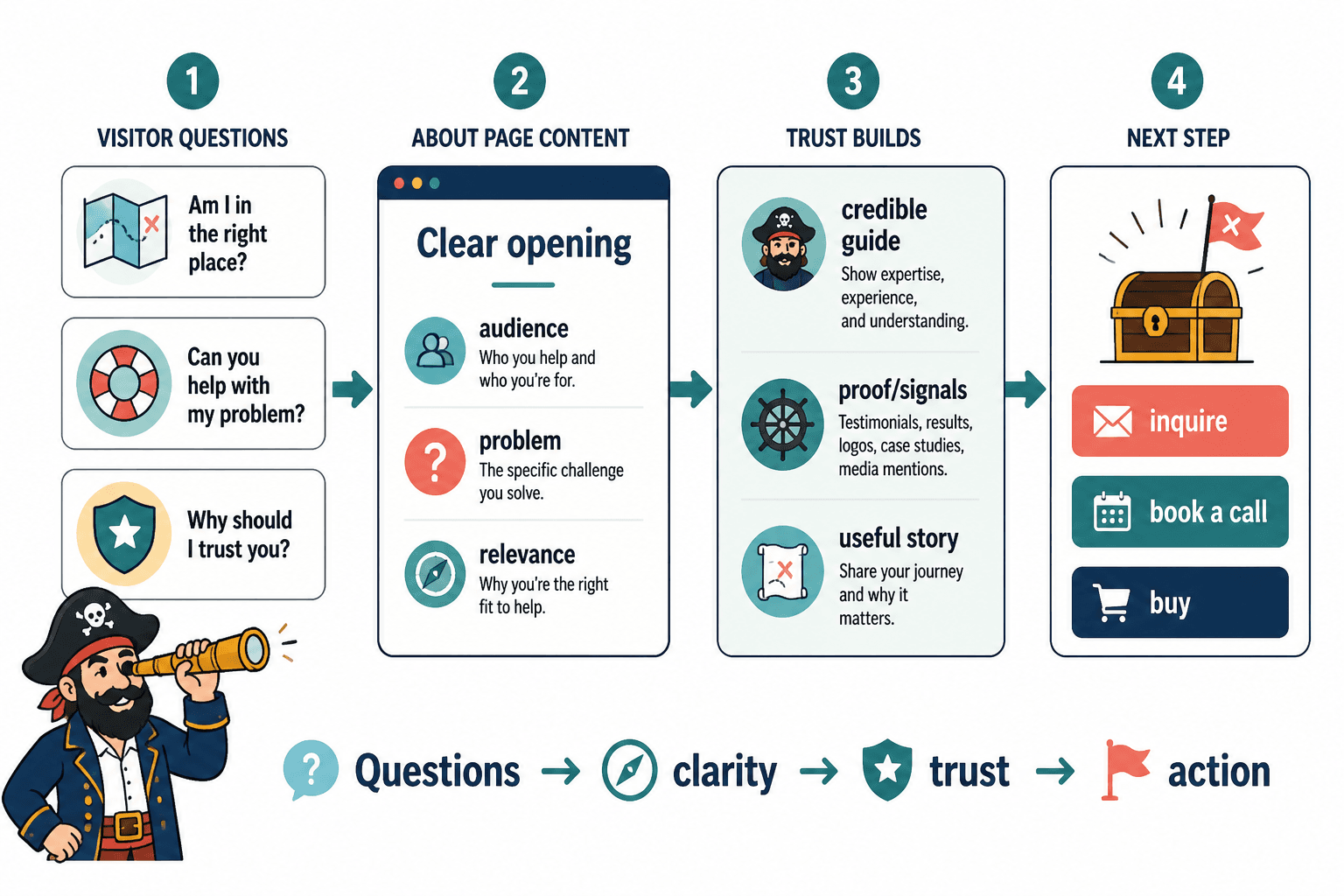
An About page is not there to admire itself in the mirror. It exists to help a visitor decide whether you are relevant, credible, and worth more attention. That means the page has to do more than explain who you are. It has to show what kind of problem you help solve, why your approach is worth believing, and how a reader can keep going if the fit is real.
That usually means the page should:
- signal relevance fast
- give proof without turning into a case study landfill
- use story with a purpose
- offer a next step that matches reader intent
If you want the broader structure behind that, the About page copy guide covers the core sections and message order. For examples of how the page can actually sound, the About page copy examples page is the better companion.
Lead with reader relevance, not autobiography
The fastest way to lose a potential lead is to begin with a biography that takes three paragraphs to become useful. Readers are not against your story. They are against waiting through it to find the point. Start with what matters to them: the problem, situation, or outcome you help with.
That can look like a sentence that says, in plain language, who you help and what changes when they work with you. For example:
I help service businesses turn fuzzy positioning into clear website copy that brings in better inquiries.
That kind of opening is not flashy. It does the job. It gives the reader a reason to stay because the page has already made itself relevant.
Then, once the reader knows the page is about them too, you can move into the background details that explain how you got here. Not as a memoir, but as context.
Make your story earn its space
Your story should not be long because it happened. It should be long enough to answer the trust question. Why should this person listen to you? Why this method? Why now?
A useful About page story usually does one or more of these things:
- shows a turning point that shaped your approach
- explains why you focus on a specific audience or problem
- demonstrates that you have been close enough to the work to understand the stakes
- connects your experience to a process readers can use
That means trimming the parts that only sound impressive and keeping the parts that clarify judgment. Buyers do not need your entire timeline. They need enough context to think, “Okay, this person understands the problem and has a sane way of solving it.”
If the story section starts drifting toward scrapbook territory, pull it back by asking a blunt question: what does this detail help the reader believe?
Use proof where people expect it
Proof works best when it appears where doubt is most likely to show up. On an About page, that usually means after you have claimed relevance and before you ask for action. You are not trying to overwhelm the reader with a parade of credentials. You are reducing friction.
Useful proof can include:
- specific outcomes
- client or project types served
- methodology or process credibility
- publications, certifications, or training where relevant
- clear before-and-after context
Here the job is to prove competence without sounding like a LinkedIn profile in formalwear. The copy should say enough to support trust, then move on.
When proof is handled well, it feels like confirmation. When it is handled badly, it feels like the page is asking for applause.
Choose the right CTA for the reader’s stage
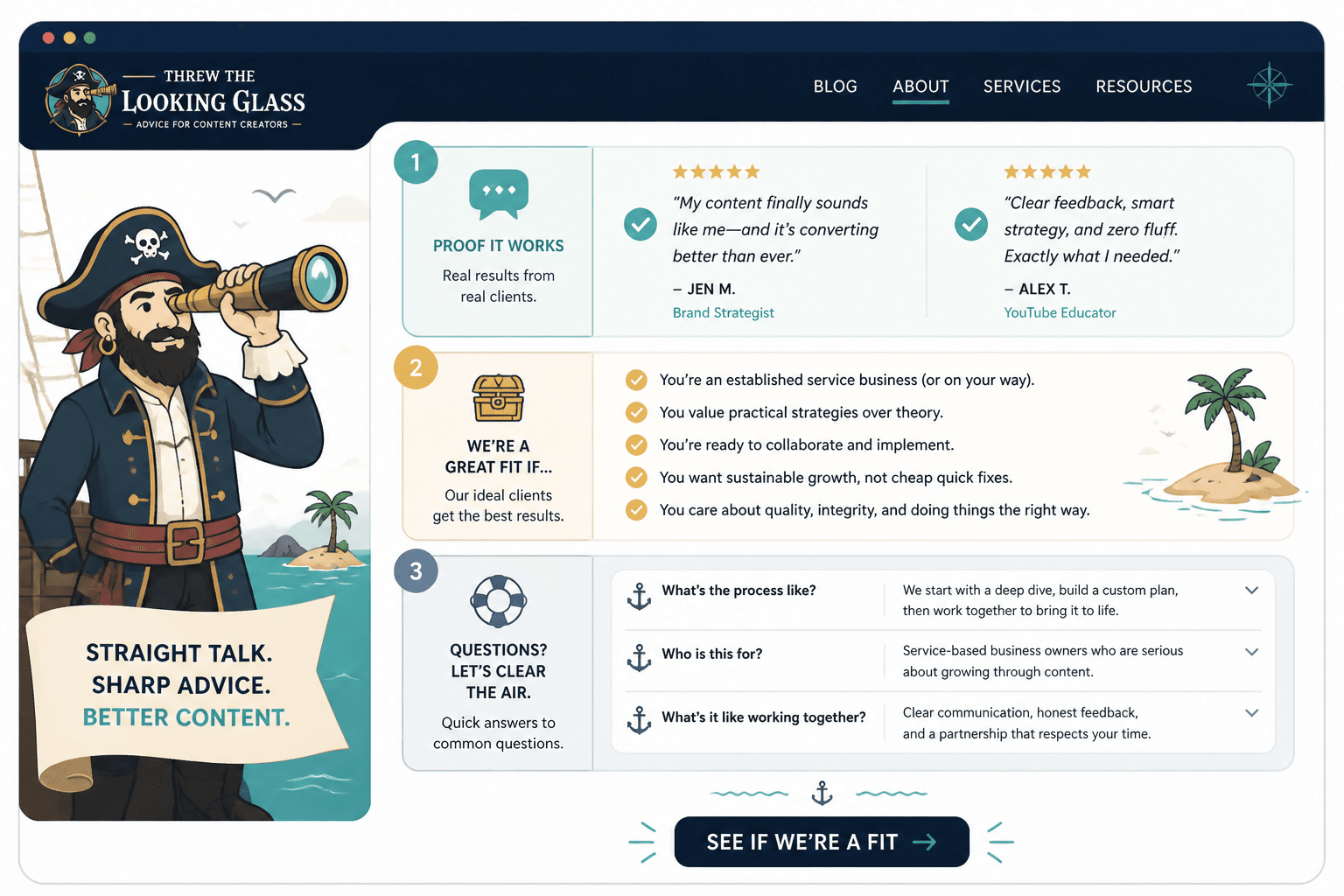
Most About page CTAs fail for the same reason: they ignore context. A reader who just met you usually does not want to be shoved straight into a hard sell, but they also should not be left with a dead end. The call to action should match how warm the visitor is when they reach the page.
1. The learn more CTA
This works well when the reader is still orienting. It can point to a services page, a process page, a case study, or a deeper explanation of what you do. The aim is simple: keep the conversation going.
2. The proof CTA
This is a good fit when the visitor needs reassurance before they are ready to inquire or buy. Send them to examples, testimonials, case studies, or a results page.
3. The content CTA
This works when the reader is interested but not ready. A useful next step could be a newsletter signup, a guide, a checklist, or a resource that keeps the relationship warm.
4. The inquiry or sales CTA
Use this when the visitor has enough context and the page has already done enough trust-building. A direct contact or booking CTA is fine here, provided the copy has earned it.
The key is not choosing the “best” CTA in theory. It is choosing the one that makes sense after the rest of the page has done its job.
For a deeper look at softer next-step language, see the future sibling draft on soft CTAs for personal brands. For the funnel side of the same problem, the next section matters more.
Pair the About page with a simple funnel
An About page should not have to do everything by itself. It can be the start of a path, not the whole road. A good funnel gives the page a practical next move instead of asking it to close the sale in one awkward leap.
Some good fits:
- About page → lead magnet → nurture sequence for visitors who need more context before they are ready to buy
- About page → newsletter signup for readers who like your point of view and want to keep hearing from you
- About page → services page → inquiry form for people who are already close to hiring
- About page → case studies or proof page → consultation for buyers who need evidence before they act
- About page → low-ticket product or workshop for audiences that want a smaller first purchase
The best funnel fit depends on intent. A cold visitor needs less pressure and more clarity. A warm visitor may need fewer detours and a more direct path. The point is to give the page a job that continues the conversation instead of ending it with a shrug.
If you want more ways to connect the page to the rest of the site, the companion article on funnel ideas for About pages is the natural next read.
How to monetize without wrecking trust
Monetizing About page copy only gets gross when the page stops being useful. That is the line. If the page feels like it exists only to nudge, sell, or corner the reader, the trust disappears. But if the page gives genuine clarity and then offers a relevant next step, monetization feels like a service, not a stunt.
That usually means:
- opening with reader relevance before talking about yourself
- keeping the story selective and purposeful
- placing proof where it reduces doubt
- using a CTA that matches intent rather than forcing urgency
- making the next step helpful, not manipulative
That also means resisting the urge to cram every offer onto the page. The About page is not the place for a sales buffet. It is the place for a clean handoff.
For a deeper treatment of that balance, the sibling draft on monetizing About page copy without wrecking trust covers the trust-first approach in more detail.
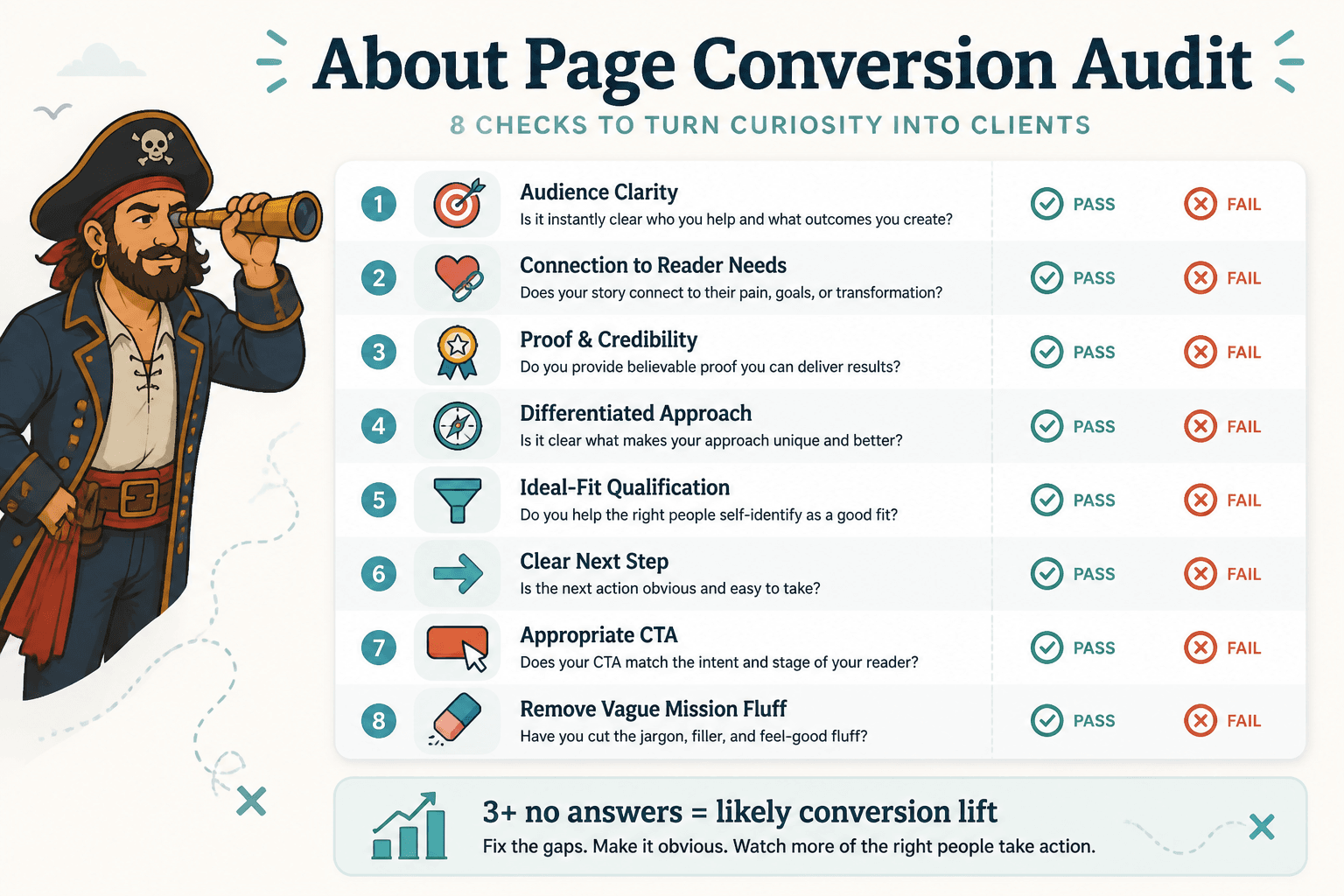
A quick About page conversion audit
If you want to know whether the page is doing real work, check it against this short list:
- Does the opening say who the page is for?
- Does the page explain the value you create in plain language?
- Does the story support trust rather than just fill space?
- Is proof included where a skeptical reader would look for it?
- Does the CTA match the reader’s likely readiness?
- Is there a natural next step, or does the page just stop?
If the answer to the last question is “it just stops,” that is the easiest win on the page. Add the next logical step. A useful About page does not leave people hanging in the lobby.
About page copy that earns attention
A strong About page does not need to do everything. It just needs to do the right things in the right order. Show relevance. Earn trust. Offer proof. Give a next step. That is the difference between a page that introduces you and a page that actually helps the business move.
For the larger framework around structure and message order, start with the About page copy guide. For examples and adjacent tactics, the sibling pages on examples and AI tools are the most useful follow-ups.