
Most affiliate articles don’t fail because the writer picked the wrong product.
They fail because the article reads like it was built backwards. Product first. Commission second. Reader somewhere down in the basement.
That is why so many affiliate posts feel flimsy, pushy, or weirdly enthusiastic about software nobody has ever daydreamed about using. The reader can feel the angle. Once that happens, trust drops fast, and your links become wallpaper.
If you want to learn How to Write Better Affiliate Articles, the fix is not “be more persuasive.” It’s to make the article genuinely useful before it tries to convert. Better affiliate content helps people make a decision, avoid a mistake, compare options clearly, and understand what fits their situation.
That means stronger structure, sharper recommendations, more honesty, and less copy that sounds like it escaped from a funnel template in a fleece vest.
This guide will show you how to write affiliate articles that build trust, rank better, and actually get clicked without sounding robotic or thirsty. If you want the broader category view first, start with this affiliate articles guide for creators who want better results or browse the main affiliate articles hub.
What better affiliate articles actually do
A better affiliate article does four things well:
- It matches a real reader intent
- It helps the reader evaluate something clearly
- It earns trust through specificity and honesty
- It makes the next step easy without acting desperate
That sounds simple. It is not complicated, but it does require discipline. A lot of writers drift into lazy patterns like “top tools for creators” with no angle, no proof, and no sense of who the article is actually for. That kind of piece usually becomes a pile of interchangeable blurbs followed by affiliate buttons nobody believes.
Good affiliate writing is closer to decision support than hype writing. You’re not there to perform excitement. You’re there to reduce friction and help the reader choose with more confidence.
If the article would still be useful with the affiliate links removed, you’re probably on the right track.
Start with reader intent, not product inventory
This is where a lot of affiliate content goes crooked.
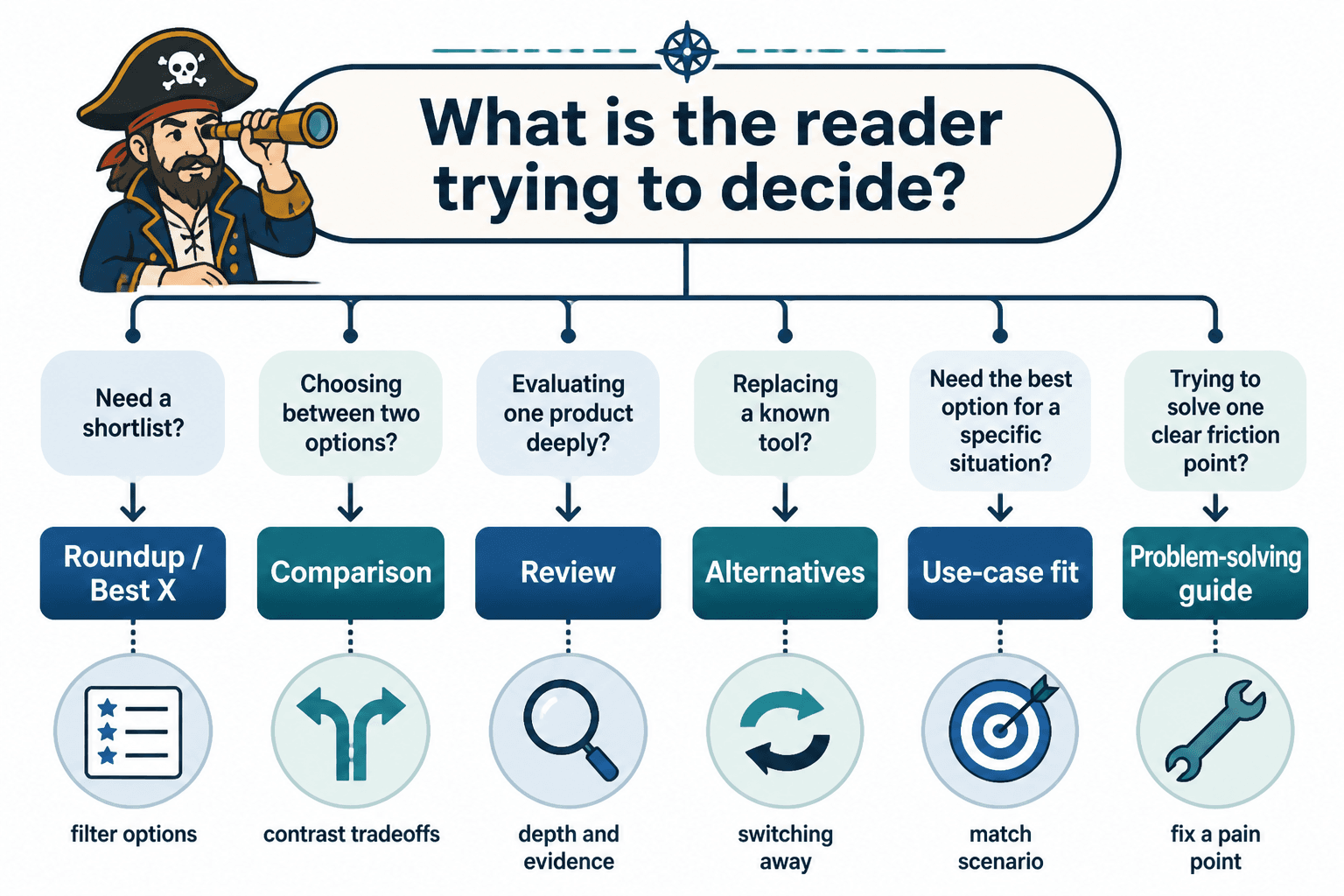
Writers often start with, “What products can I promote?” But the better question is, “What decision is the reader trying to make?” That shift changes everything: the title, the structure, the product selection, the examples, and the CTA.
Common affiliate article intents usually fall into a few buckets:
- Best-for roundup: best email tools for coaches, best microphones for podcasters, best course platforms for solo educators
- Comparison: Tool A vs Tool B
- Review: one product, deeper analysis
- Alternative search: best alternatives to a popular tool
- Use-case fit: best CRM for freelancers, best scheduling tool for content creators
- Problem-solving: tools that help with a specific friction point
Those are not interchangeable. A review needs depth. A comparison needs contrast. A roundup needs filtering logic. A “best for beginners” piece needs less jargon and more practical tradeoffs.
If you ignore intent, the article gets vague fast. And vague affiliate writing is where credibility goes to die.
Ask these questions before you draft
- What is the reader trying to decide?
- What would make them hesitate?
- What details actually matter in this decision?
- What bad advice do they usually get?
- Which products fit different scenarios, not just the highest commission?
That last one matters more than people admit. If your recommendations always just happen to favor the highest-paying option, readers are not stupid. They may not know your exact commission rate, but they can smell when the article has been arranged like a suspicious fruit display.
Pick a format that matches the decision
One reason affiliate articles underperform is that the wrong format gets used for the job.
A “best tools” roundup is not automatically the answer. Sometimes a detailed comparison will convert better because the reader is already down to two options. Sometimes a full review works better because the tool is expensive, complex, or trust-sensitive. Sometimes a short alternatives article wins because people are actively trying to leave a platform they’re annoyed with. Fair enough.
| Reader situation | Best article format | Why it works |
|---|---|---|
| They are exploring options | Best-for roundup | Gives range and helps narrow the field |
| They are stuck between two tools | Comparison article | Reduces decision friction directly |
| They want deeper validation | Review article | Builds trust with more context and specifics |
| They dislike a current tool | Alternatives article | Matches active switching intent |
| They have a niche use case | Use-case article | Feels more relevant and credible |
Choose the format based on where the reader is in the decision, not based on what is easiest to crank out.
Write an opening that earns attention fast
The intro is where a lot of affiliate articles get weak and generic.
Bad opening: broad statement, bland promise, maybe a sentence about how important tools are in modern business, which is both obvious and deeply boring.
Better opening: name the actual problem behind the search. What is hard about this choice? What usually gets oversold? What matters more than people think?
If someone searches for the best email platform for creators, they don’t need three throat-clearing sentences about how email marketing is essential. They know. That is why they searched.
Weak vs stronger opening
Weak: There are many affiliate marketing tools on the market today, and choosing the right one can be challenging.
Stronger: Most “best tool” lists lump together products built for completely different kinds of users. So people buy the most popular option, then realize it is bloated, overpriced, or wrong for the way they actually work.
The stronger version has tension. It tells the reader, “Yes, this article understands the real problem.” That’s the job.
If openings are a weak spot for you, this will help: how to start affiliate articles without a weak opening.
Use a recommendation method people can trust
Readers do not just want picks. They want to know why those picks made the list.
You do not need a dramatic “testing lab” performance if you do not have one. But you do need a clear method. Otherwise the article feels arbitrary, and arbitrary affiliate content feels suspicious.
A simple recommendation framework
- Use case: Who is this best for?
- Strength: What does it do especially well?
- Limitation: Where does it fall short?
- Fit: What kind of buyer should choose it?
- Non-fit: Who probably should not?
This makes your recommendations more believable immediately. It also protects you from writing those painfully empty product summaries where every tool is “powerful,” “easy to use,” and “great for businesses of all sizes,” which tells the reader absolutely nothing besides the fact that the article has given up.
Example product blurb: weak vs better
Weak: ConvertFlow is a powerful and user-friendly platform that helps businesses streamline lead generation and boost conversions.
Better: ConvertFlow makes the most sense for creators and small teams who want on-site lead capture tools without stitching together five plugins and a prayer. It is especially useful if you care about targeted forms, quizzes, and landing page actions. It is less ideal if you just want a dead-simple email opt-in setup and do not need extra customization.
See the difference? The second version gives shape. It draws boundaries. Boundaries create trust.
Do not pretend every product is amazing
This should not need saying, but apparently it does.
If every product in your article sounds excellent, then none of your recommendations mean much. Readers expect tradeoffs. Real tools have annoyances, limitations, quirks, learning curves, and pricing issues. Mention them.
You do not need to write a takedown. Just be honest enough to sound like a person with standards.
- Mention when a tool gets expensive quickly
- Say when it is overkill for smaller creators
- Point out clunky onboarding if that matters
- Note if the interface is powerful but not exactly charming
- Say when another option is better for a narrower use case
Honesty increases clicks more than polished praise does, because honest writing lowers reader skepticism. The best affiliate article often sounds like someone helping a smart friend avoid wasting money.
Make the article easy to scan without making it shallow
Affiliate articles need structure. People compare. They skim. They jump around. If your article is one giant stream of text, it becomes annoying to use.
But there is a second mistake here too: over-fragmenting the piece into endless mini-blurbs with no depth. That is how you get articles that look tidy and say almost nothing.
The fix is simple: build for scannability, then earn depth where it matters.
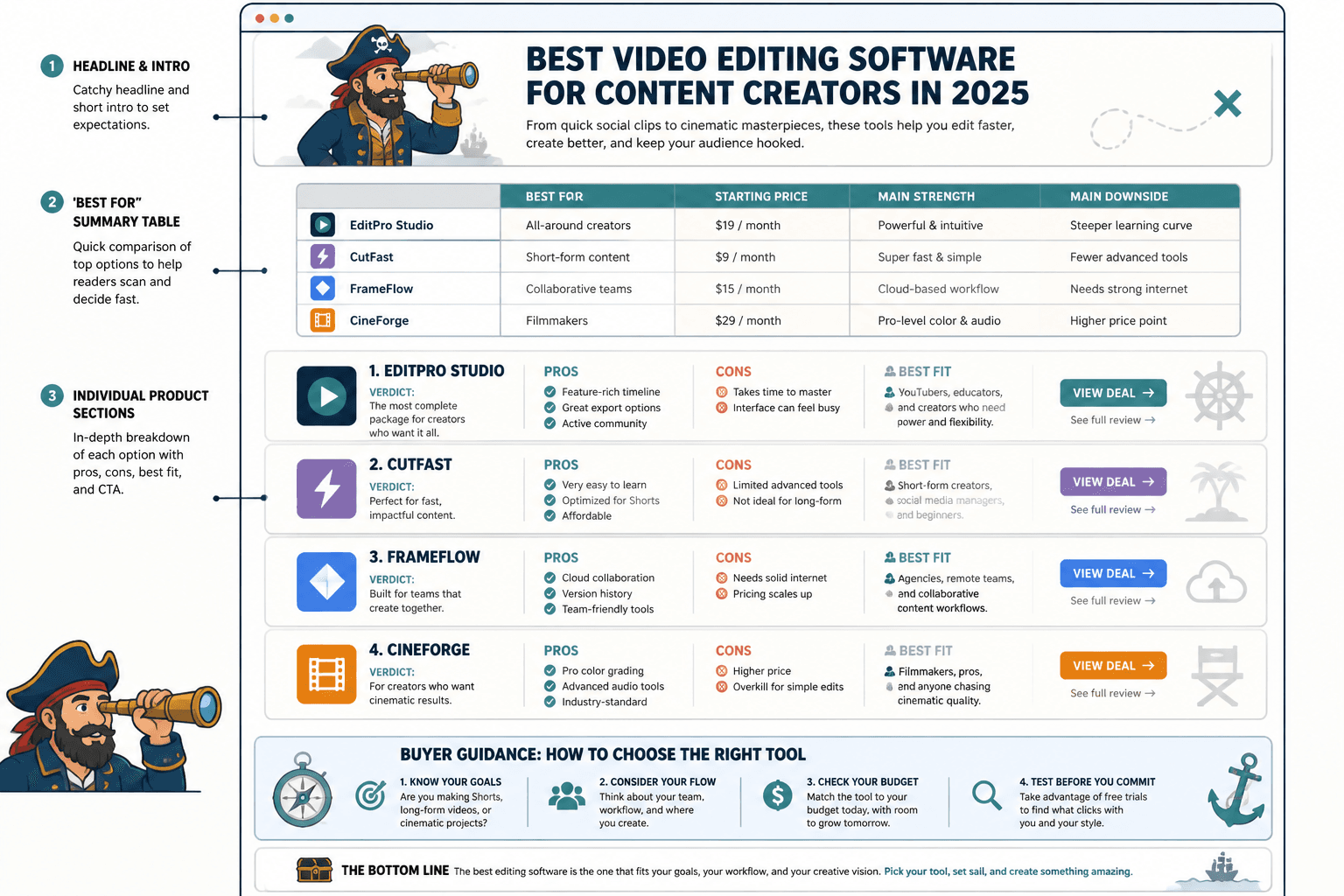
A strong affiliate article structure
- Sharp opening that frames the decision
- Quick summary of who each recommendation is for
- Clear sections for each product or option
- Specific pros, cons, and best-fit notes
- Comparison table if the topic needs one
- Buyer guidance for different scenarios
- Natural CTA or next step
When useful, include a “best for” summary near the top so readers can orient quickly. Then go deeper below. That way the article works for both skim readers and detail readers without becoming a thin listicle in a nice shirt.
Use comparison tables carefully
Tables are useful when readers need quick contrast. They are not useful when they become fake precision theater.
A lot of affiliate writers cram tables with generic labels like “easy to use,” “great support,” and “best value,” which are basically content seasoning packets. Fine in theory. Not very filling.
If you use a table, include categories that help someone decide:
- Best for
- Starting price
- Main strength
- Main downside
- Works best when
Then explain the nuance below the table. The table should guide. It should not replace the actual writing.
Write like someone with taste, not like a feature scraper
One of the fastest ways to weaken affiliate content is to rely too heavily on feature lists pulled from sales pages.
Features matter, but readers care about what those features mean in practice. “Unlimited automations” is a feature. “Useful if you run segmented email workflows and do not want to outgrow the tool in six months” is actual help.
Translate features into implications.
Feature-to-meaning examples
- Feature: advanced analytics
Meaning: useful if you make content decisions from conversion data, probably unnecessary if you just want basic reporting - Feature: customizable templates
Meaning: handy for brands that care about design control, less important if speed matters more than polish - Feature: team collaboration tools
Meaning: valuable for agencies and content teams, mostly irrelevant for solo creators
This is what good affiliate writing does: it turns product information into buying clarity.
Keep your tone useful, not salesy
If the article sounds like it really, really needs the click, readers get cautious. And they should.
A better tone is calm, specific, and clear. You are not trying to overwhelm resistance. You are trying to remove confusion.
What salesy affiliate writing sounds like
- Overpromising outcomes
- Using hype words constantly
- Pretending every tool is effortless
- Making every paragraph sound like a CTA
- Ignoring drawbacks so the recommendation feels rigged
What trust-building affiliate writing sounds like
- Specific about fit
- Open about limitations
- Clear about who should choose what
- Helpful even before the click
- Steady and unneedy in the CTA
If this is the part you tend to overcook, read how to write affiliate articles without sounding salesy or robotic. It will save you from a lot of avoidable beige.
Use CTAs that feel like guidance, not a shove
Affiliate CTAs work better when they match the reader’s decision stage.
If someone is still comparing options, “Buy now” is clumsy. If they are almost ready to test a tool, “See pricing” or “Try it here” may fit better. A CTA should feel like the next logical step, not like the article suddenly remembered rent is due.
Better affiliate CTA examples
- See how it handles content workflows
- Check current pricing and plan limits
- Try it if you need more automation depth
- Use this if your priority is simplicity over customization
- Compare features here if you are between plans
Notice the pattern. These CTAs keep helping. They do not switch into infomercial mode.
For more on that, here’s a useful companion: how to improve affiliate articles trust-building CTAs without sounding generic.
Match the recommendation to different reader types
One of the smartest ways to write better affiliate articles is to stop chasing one universal winner. Most product categories do not have one. They have different best choices for different needs.
That is why “best overall” often works poorly unless you define what “overall” even means. Better to segment recommendations clearly.
Useful recommendation categories
- Best for beginners
- Best for budget-conscious users
- Best for advanced users
- Best for solo creators
- Best for teams
- Best for a specific workflow or niche
This makes your article more credible and more convertible because readers can see themselves in the recommendation. Relevance beats volume. Usually by a lot.
Include enough proof to sound grounded
You do not need to fake authority. You do need to show your reasoning.
Proof in affiliate articles can look like:
- Clear use-case explanation
- Specific product tradeoffs
- Pricing context
- Hands-on observations if you have them
- Pattern recognition from similar tools
- Concrete examples of where the tool fits or fails
If you have personal experience, use it carefully and specifically. Not “I absolutely loved this incredible platform.” That sounds suspiciously like a testimonial pop-up.
Better: “The setup is quick if you just need landing pages and forms. It gets more fiddly once you start customizing logic-heavy flows.”
Specificity beats enthusiasm. Nearly every time.
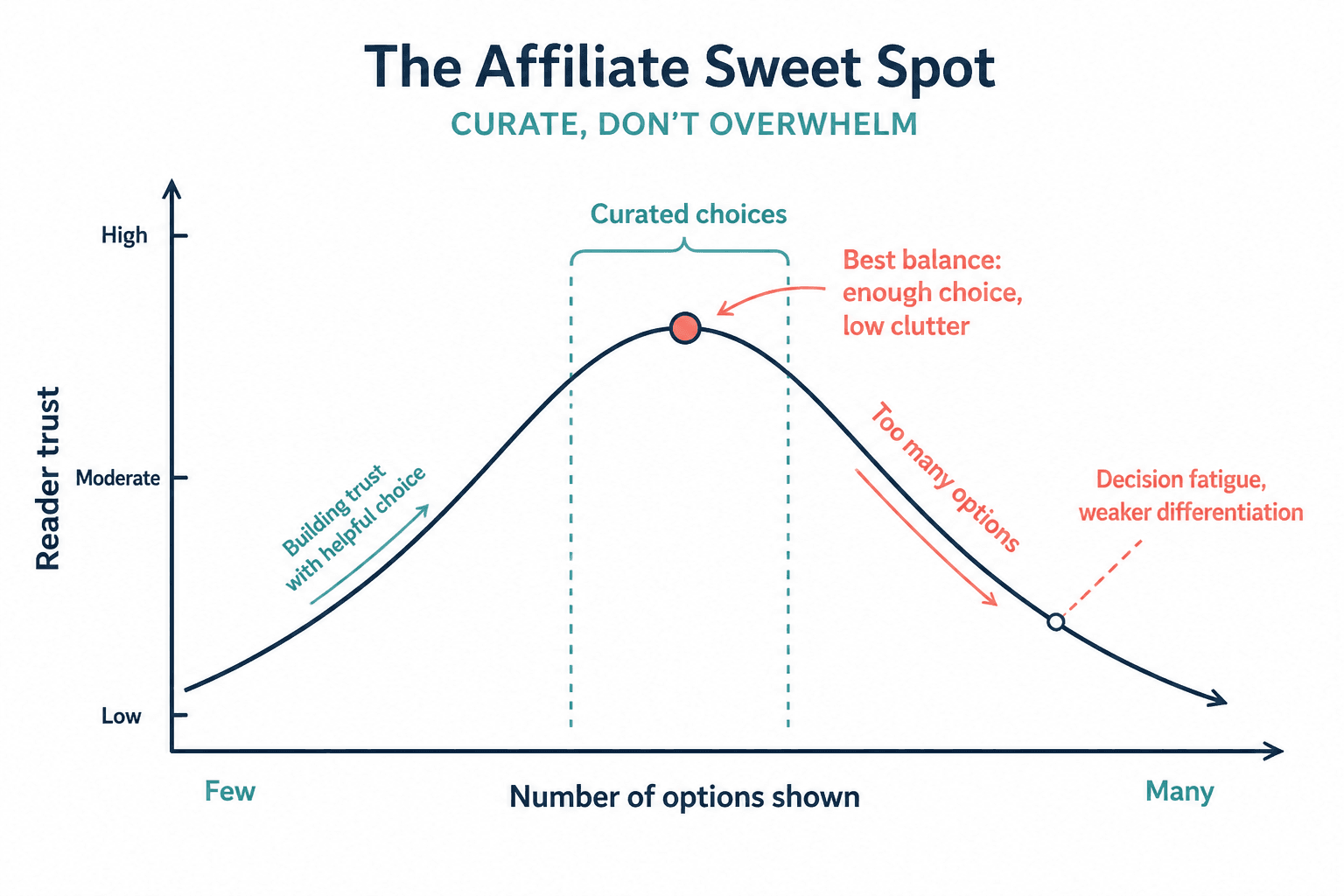
Do not stuff the article with too many options
Writers often think more products means more chances to earn commissions. In practice, too many weakly differentiated options can lower trust and make the article annoying to use.
Curate harder.
If five tools cover the important scenarios, you do not need twelve. If two tools dominate the real decision, write the comparison instead of forcing a roundup. Good affiliate content removes clutter. It does not add to it.
Readers are already trying to simplify a decision. Your job is not to throw a bucket of tabs at their face.
Basic affiliate article template you can actually use
If you want a practical structure, here is a simple one that works for most best-for or comparison-style affiliate articles.
Template
- Opening: Name the real decision and what usually gets misunderstood
- Quick answer: Summarize who each option is best for
- How we evaluated: Briefly explain the criteria
- Main picks: One section per tool with fit, strengths, drawbacks, and best use case
- Comparison help: Clarify who should choose what based on situation
- CTA: Offer the natural next step for the reader
Filled example opening
Most “best course platform” articles make the same mistake: they compare creators, coaches, and media businesses like they all need the same thing. They don’t. If you want a platform that actually fits the way you sell, the right choice depends less on feature count and more on how simple or advanced your delivery, checkout, and audience workflow need to be. Here are the best options by use case, not by whoever had the loudest homepage.
That kind of opening gives the article a brain. Very useful trait.
Edit out the phrases that make affiliate content sound fake
Some phrases instantly make affiliate writing feel mass-produced.
- powerful solution
- user-friendly interface
- designed to help businesses
- streamline your workflow
- take your results to the next level
- perfect for businesses of all sizes
Most of these are not technically wrong. They are just so generic that they collapse into mush. Replace them with observations a real person would make.
Instead of “user-friendly interface,” say “easy to navigate if you only need the core features, but the reporting area takes some getting used to.”
Instead of “great for businesses of all sizes,” say who it is actually for. That alone improves half the article.
Where internal links help
If this article is part of a larger affiliate content cluster, use internal links to guide readers to the next useful topic, not just to spray SEO confetti around the room.
Useful next-step links for this topic include:
- How to start affiliate articles without a weak opening
- How to write affiliate articles without sounding salesy or robotic
- How to improve affiliate articles trust-building CTAs without sounding generic
- Affiliate articles guide for creators who want better results
- Affiliate articles hub
If you’re mapping content across the broader monetization section, you can also route readers through the relevant content pathways here: related monetization and money content paths.
Quick mistakes that quietly wreck affiliate articles
- Choosing products before defining reader intent
- Writing generic intros that say nothing new
- Listing features without explaining fit
- Praising everything equally
- Hiding all downsides
- Stuffing too many options into one article
- Using needy, pushy CTAs
- Writing for commissions instead of decisions
Fix those, and a lot of affiliate content gets better very quickly.
FAQ
How long should an affiliate article be?
Long enough to help someone make the decision properly. For many topics, that means enough depth to explain fit, tradeoffs, and alternatives. Not endless padding.
Should affiliate articles always include comparisons?
No. Use comparisons when readers are choosing between options. A focused review or use-case article can work better when the decision is narrower.
Do I need personal experience with every product?
No, but you do need clear reasoning, honest evaluation, and useful context. Empty summaries scraped from product pages are not enough.
What makes people trust affiliate articles?
Usually clear reasoning, real tradeoffs, honest fit guidance, and a sense that the writer is trying to help the reader choose well instead of just nudging the click. Trust comes from usefulness first.
That is the real test. If the article helps someone make a smarter decision, the monetization can sit inside the content without poisoning it.