
Most weak blog titles are not failing because you picked the wrong “power word.” They fail because they are vague, overpolished, and trying way too hard to sound important.
Coaches, consultants, and personal brands do this constantly. They write titles like “My Thoughts on Leadership,” “How to Succeed in Business,” or “A Guide to Personal Growth” and then wonder why nobody clicks. Fair question. But the answer is not mysterious. The title does not promise anything clear, specific, or useful.
If you want better blog traffic, stronger authority, and content that actually pulls the right people toward your offers, your headlines need to do more than sit there looking professional. They need to signal relevance fast.
This guide will show you practical blog title and headline examples for coaches, consultants, and personal brands, plus the patterns behind them, what makes them work, and how to write your own without sounding like a content bot in loafers. If you want the broader system behind title writing, start with blog titles and headlines and then come back here for examples you can actually use.
To see how this fits into the wider strategy, open the parent guide.
Why most blog titles underperform
A lot of people write blog titles as if the job is to describe the topic politely. It is not. The job is to make the right reader think, “That is for me. I need that.”
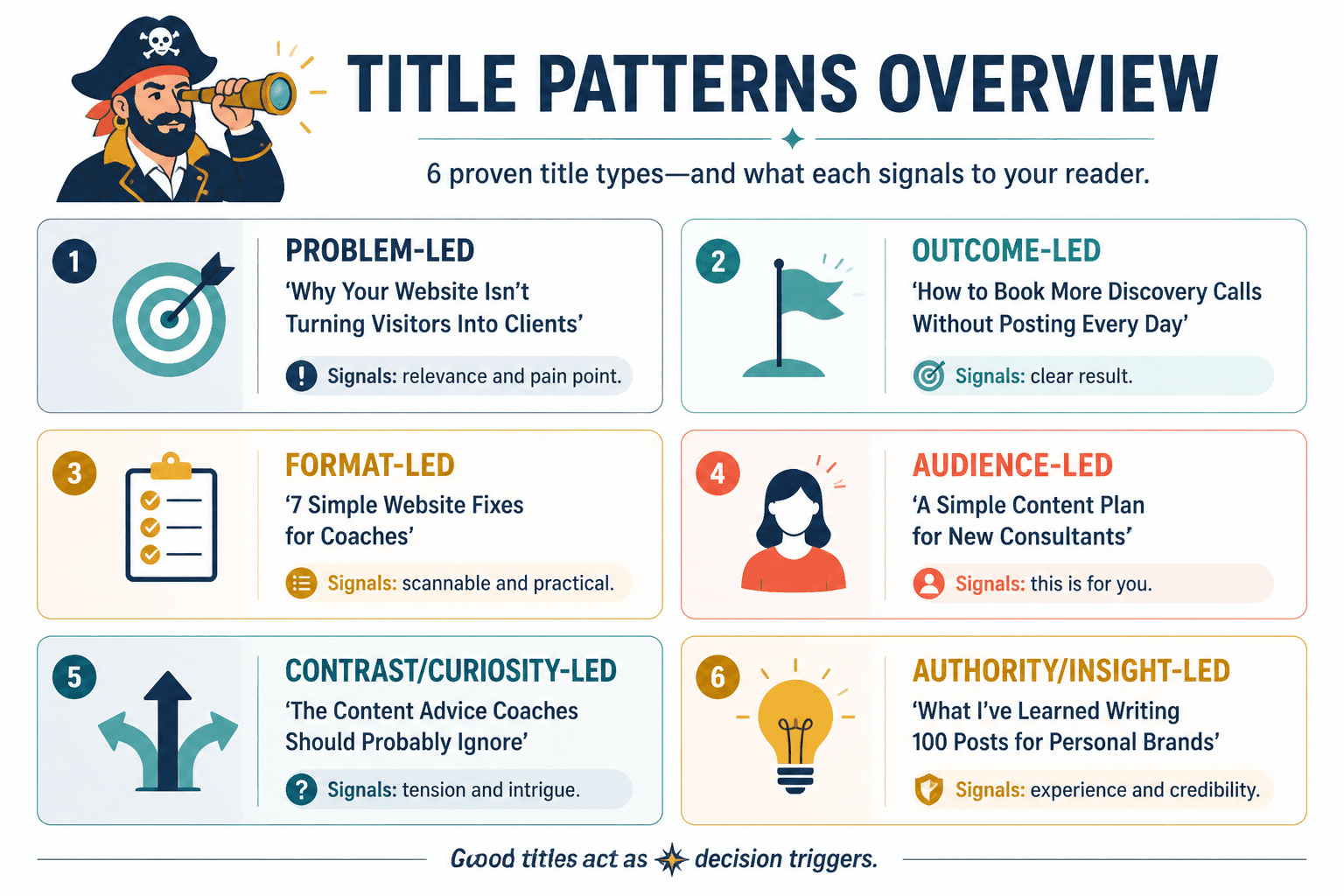
That means a title has to do at least one of these things well:
- Name a specific problem
- Promise a clear outcome
- Signal a useful format
- Call out a relevant audience
- Create tension, contrast, or curiosity without getting cheesy
What usually happens instead? People go broad, abstract, and safe. Which feels respectable right up until the click rate falls asleep.
A good title is not a label. It is a decision trigger.
That matters even more for personal brands because your content often has to do several jobs at once: attract traffic, build trust, show expertise, and gently move people toward a service, offer, or next step. A bland headline makes all of that harder.
What good blog titles and headlines actually do
Before we get into examples, here is the practical filter. Strong blog title and headline examples for coaches, consultants, and personal brands usually have four things going for them:
- Clarity: You can tell what the article is about in seconds.
- Specificity: It speaks to a real situation, result, or audience.
- Usefulness: It sounds like it will help, not just “share insights.”
- Positioning: It attracts the kind of reader who could actually become a lead, client, subscriber, or referral source.
Not every title needs all four at full volume. But if you miss all four, you usually get one of those titles that technically exists and emotionally evaporates.
7 title types that work especially well for coaches, consultants, and personal brands
1. Problem-first titles
These work because they meet the reader where they already are: annoyed, stuck, behind, or quietly tired of guessing.
Examples:
- Why Your Website Is Getting Traffic but Not Leads
- The Real Reason Your LinkedIn Posts Are Getting Ignored
- Why Your Coaching Offer Feels Hard to Sell
- What Is Making Your Personal Brand Look Generic
- Why Smart Consultants Still Struggle to Explain What They Do
Why they work: They name the pain clearly and hint that the article will explain the root issue, not just toss a few motivational crackers at it.
2. Outcome-first titles
These lead with the result people want. Very useful when the audience is problem-aware and actively searching for help.
Examples:
- How to Write Blog Posts That Attract Better-Fit Clients
- How to Build a Personal Brand That Feels Clear and Credible
- How to Turn Your Expertise Into Content People Actually Read
- How to Create a Consulting Website That Sounds Like You
- How to Write a Bio That Makes People Want to Work With You
Why they work: They are straightforward. No drama. No fog. Just a clear promise.
3. Mistake or myth titles
These are strong when your audience is doing common things badly and needs a correction. Which, to be fair, is often.
Examples:
- 5 Blog Title Mistakes That Make Good Content Look Boring
- What Most Coaches Get Wrong About Personal Brand Messaging
- The Biggest Homepage Mistake Consultants Keep Making
- Why “Professional” Copy Often Kills Trust
- 7 Headline Mistakes That Cost You Clicks and Leads
Why they work: They create tension and invite self-diagnosis. People like spotting mistakes, especially when the mistake might explain a result they hate.
4. Audience-specific titles
These narrow the field in a good way. They are especially useful when you want your content to bring in the right kind of reader rather than every wandering human on the internet.
Examples:
- Best Blog Title Ideas for Business Coaches
- Headline Examples for Consultants Who Sell Strategy, Not Just Time
- Website Copy Tips for Personal Brands With Small Audiences
- Blog Post Ideas for Executive Coaches Who Want Better Leads
- SEO Blog Titles for Freelancers, Advisors, and Solo Consultants
Why they work: The reader immediately knows if the content is relevant. And relevance beats reachy vagueness most days of the week.
5. Format-signaling titles
Sometimes people do not just want a topic. They want a format. Examples, templates, formulas, scripts, prompts, checklists. This tells them what kind of help they are getting.
Examples:
- 25 Blog Title Examples for Coaches and Consultants
- Headline Templates for Personal Brands That Want More Clicks
- 10 Blog Post Title Formulas You Can Adapt in Minutes
- Homepage Headline Examples for Service-Based Businesses
- Blog Title Ideas for Experts Who Hate Writing Clickbait
Why they work: They reduce friction. Readers know they are getting usable material, not a long sermon about “content strategy mindset.”
6. Contrast titles
Contrast creates intrigue without needing weird tricks. It works well when you are teaching nuance or challenging assumptions.
Examples:
- Good Blog Titles vs Bad Blog Titles for Personal Brands
- Simple Headlines That Convert Better Than Clever Ones
- What Sounds Smart in a Title but Gets Ignored in Search
- Clear Blog Titles vs Creative Blog Titles: What Actually Wins
- Short Headlines, Long Headlines, and Which Ones Work Best When
Why they work: They frame the article as practical judgment, not vague opinion. Readers expect examples and useful distinctions.
7. Lead or conversion-focused titles
These are useful when the article is tied to business outcomes, not just traffic. Important distinction. Traffic is lovely. Revenue is usually lovelier.
Examples:
- How to Write Blog Titles That Bring in Better-Fit Leads
- Headlines That Help Coaches Turn Readers Into Inquiries
- How to Make Your Blog Titles Pull People Toward Your Offer
- Blog Headline Ideas That Build Trust Before the Pitch
- How to Write SEO Titles That Support Sales, Not Just Clicks
Why they work: They connect content to actual business goals. If that is your lane, you may also want how to turn blog titles and headlines into more leads or sales.
Blog title and headline examples by audience type
Not all service businesses should use the same title style. A business coach, brand strategist, executive consultant, and solo creator are not selling the same kind of trust. So the headlines should not all sound interchangeable either.
For coaches
- How to Write a Coaching Blog That Builds Trust Before the Sales Call
- Blog Title Ideas for Life Coaches Who Want Better-Fit Clients
- Why Your Coaching Content Sounds Helpful but Still Does Not Convert
- How to Write Headlines That Make Your Coaching Niche Clear
- Content Ideas for Coaches Who Want to Sound Credible, Not Salesy
- The Best Blog Titles for Coaches With Small but Serious Audiences
Coaches often need titles that balance empathy with clarity. Too soft, and the content sounds floaty. Too aggressive, and it starts reading like a sales page with boundary issues.
For consultants
- How Consultants Can Write Blog Titles That Signal Expertise Fast
- Headline Examples for Consultants Who Need More Qualified Leads
- Why Generic Blog Titles Make Strategic Thinking Look Basic
- How to Write Consulting Content That Sounds Sharp, Not Stiff
- SEO Blog Titles for Consultants Selling High-Trust Services
- Thought Leadership Headlines That Do Not Sound Self-Impressed
Consultants usually benefit from titles that show precision, perspective, and commercial usefulness. Translation: less “exploring ideas,” more “here is the problem and the result.”
For personal brands
- How to Write Blog Titles That Sound Like a Real Personal Brand
- Headline Ideas for Personal Brands That Want More Authority
- Why Your Blog Titles Feel Generic Even When the Content Is Good
- How to Make Your Content Titles More Distinct Without Getting Weird
- Blog Headline Examples for Experts Building Trust Online
- Better Title Ideas for Personal Brands Tired of Beige Content
Personal brands often need a little more voice and edge, but not at the expense of clarity. A clever title with no clear promise is still a weak title. It is just wearing nicer shoes.
If your audience is still small, title strategy matters even more because every click has to count. This is where blog titles and headlines for creators with small audiences becomes especially useful.
Before-and-after title rewrites
Examples help. Rewrites help more. Here is what this usually looks like in the wild.
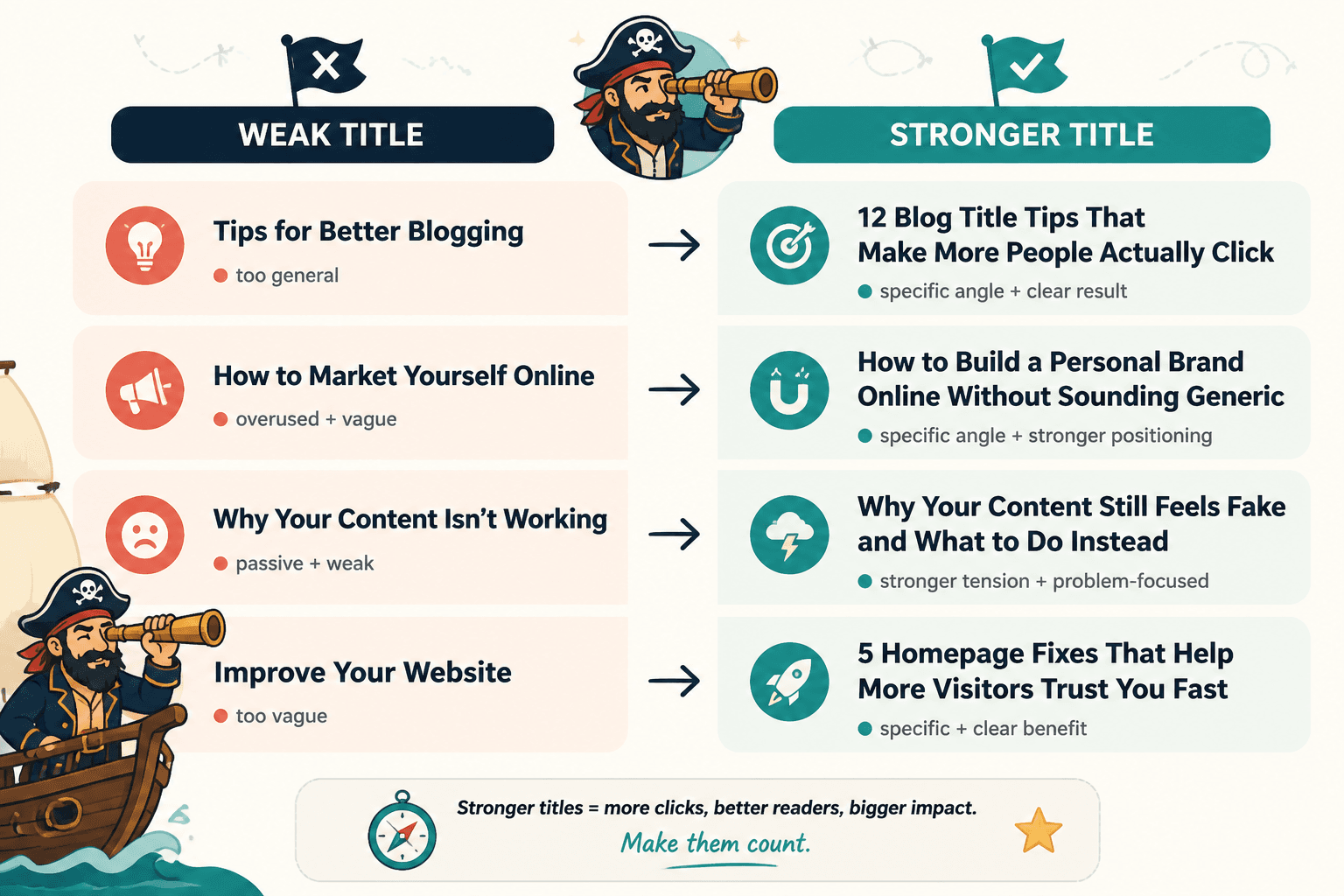
| Weak title | Stronger rewrite | Why it works better |
|---|---|---|
| My Thoughts on Branding | What Most Personal Brands Get Wrong About Positioning | Specific problem, clearer angle, more tension |
| A Guide to Content Marketing | How Coaches Can Use Content Marketing to Build Trust and Leads | Names audience and outcome |
| Leadership Lessons I Learned | 5 Leadership Mistakes That Quietly Hurt Team Trust | Sharper promise, stronger relevance |
| How to Be More Productive | How Consultants Can Get More Done Without Turning Every Day Into Admin Soup | Audience fit plus personality |
| Why Authenticity Matters | Why “Authentic” Content Still Feels Fake and What to Do Instead | Better tension and payoff |
| Tips for Better Blogging | 12 Blog Title Tips That Make More People Actually Click | Specific format and practical benefit |
The shift is usually simple:
- From broad topic to specific angle
- From vague benefit to clear result
- From “this is about a thing” to “this will help with your problem”
If you want more rewrite help, read better blog titles and headlines: weak title fixes for personal brands. That piece goes deeper into how to rescue bland titles without turning them into clickbait sludge.
Simple title formulas you can adapt fast
You do not need a giant swipe file of 800 title formulas. You need a handful that actually fit your business and voice. Here are some of the most useful ones.
Formula 1: How to get result without annoying thing
- How to Build a Personal Brand Without Sounding Like Everyone Else
- How to Write Better Blog Titles Without Resorting to Clickbait
- How to Get More Blog Traffic Without Publishing Every Day
Formula 2: Why your thing is not working
- Why Your Blog Titles Are Not Getting Clicks
- Why Your Thought Leadership Posts Feel Forgettable
- Why Your Website Copy Sounds Good but Does Not Convert
Formula 3: X examples, templates, or ideas for specific audience
- 21 Blog Title Examples for Business Coaches
- 15 Homepage Headline Ideas for Consultants
- 10 Blog Intro Templates for Personal Brands
Formula 4: What most people get wrong about thing
- What Most Coaches Get Wrong About Blogging for Leads
- What Personal Brands Miss About SEO Titles
- What Consultants Often Get Wrong in Their About Page Copy
Formula 5: Better, simpler, or clearer version of common task
- A Simpler Way to Write Blog Headlines That Work
- A Better Way to Position Your Offer on Your Website
- A Clearer Approach to Writing Personal Brand Content
These work because they align with intent. Searchers want solutions, examples, fixes, and clarity. They do not usually wake up hoping to read “Reflections on the Modern Creator Journey.”
If you want more fast-working structures, simple blog titles and headlines: click-worthy SEO title templates for busy creators is the next logical stop.
How to choose the right title style for the article
Not every article should use the same title formula. The right title depends on the job of the piece.
| If the article goal is… | Best title style | Example |
|---|---|---|
| Attract search traffic | Outcome-first or format-signaling | How to Write Blog Titles That Attract Better-Fit Clients |
| Build authority | Mistake, myth, or contrast title | What Most Consultants Get Wrong About Thought Leadership |
| Reach a niche audience | Audience-specific title | Blog Title Ideas for Executive Coaches |
| Get clicks from social or email | Problem-first or contrast title | Why Your Blog Titles Are Getting Ignored |
| Support conversion | Lead or outcome-focused title | How to Write Headlines That Pull Readers Toward Your Offer |
This is where a lot of people get stuck. They ask, “What is the best title?” when the real question is, “What is this article supposed to do?” Different job, different title shape.
How to write stronger titles without making them unbearable
There is a line between sharp and obnoxious. You do not need to cross it.
Here is the practical approach:
- Start with the real topic. What is the article actually helping the reader do, solve, avoid, or understand?
- Add specificity. Can you name the audience, outcome, problem, format, or context?
- Cut empty words. Remove things like insights, journey, thoughts, things to know, complete guide, and best practices unless they genuinely help.
- Add tension if useful. Use contrast, mistakes, myths, or “why it is not working” framing when the content supports it.
- Keep it readable. Do not stack so many keywords into the title that it reads like a hostage note from your SEO plugin.
A quick example:
- Weak: Personal Branding Tips for Professionals
- Better: 9 Personal Branding Tips That Make You Easier to Trust Online
- Stronger: 9 Personal Branding Tips for Consultants Who Want More Qualified Leads
Each version gets clearer about who it helps and what the payoff is. That is the whole game more often than not.
Common title mistakes coaches, consultants, and personal brands should stop making
- Being too broad: “Marketing Tips” is not a title. It is a folder label.
- Trying to sound impressive: Readers care more about relevance than your ability to sound strategic in 14 syllables.
- Using cleverness instead of clarity: Cute titles can work, but not if nobody knows what the article is about.
- Ignoring audience fit: A title for startup founders should not sound identical to one for leadership coaches.
- Writing for yourself: “What I Learned” is rarely as compelling as the writer hopes.
- Forgetting the next step: If the article leads to a service or offer, the title should attract the kind of person who might care about that offer.
One more thing worth saying clearly: not every title needs to be clever. In fact, most high-performing titles are just clear, specific, and well-aimed at the right person.
If the title helps the right reader recognize themselves and the problem quickly, it is already doing more useful work than a ?smart? headline that only sounds impressive to the writer.