
Most product and service descriptions do one of two bad things.
They either sit there like passive brochure copy, politely existing and converting nobody, or they lunge at the reader with too much hype, too much pressure, and not nearly enough trust. One is forgettable. The other is needy. Neither makes people feel good about buying.
If you want to learn how to monetize product and service descriptions without wrecking trust, the job is not to make your copy louder. It is to make it clearer, more believable, and more useful at the exact moment someone is deciding if you are worth their money.
Good description copy should do two things at once: help the reader understand what they are buying, and gently move them toward action. Not by cornering them. By reducing uncertainty. By showing relevance. By sounding like a competent adult instead of a funnel goblin with a Canva subscription.
Here’s how to make your descriptions pull more revenue without turning your site into a trust-destroying mess.
To see how this fits into the wider strategy, open the parent guide.
Monetization starts with clarity, not pressure
A lot of people treat monetization like a copy problem solved by stronger persuasion tactics. More urgency. Bigger promises. More “transformations.” More CTA buttons. That can work for a minute, right up until readers start feeling manipulated.
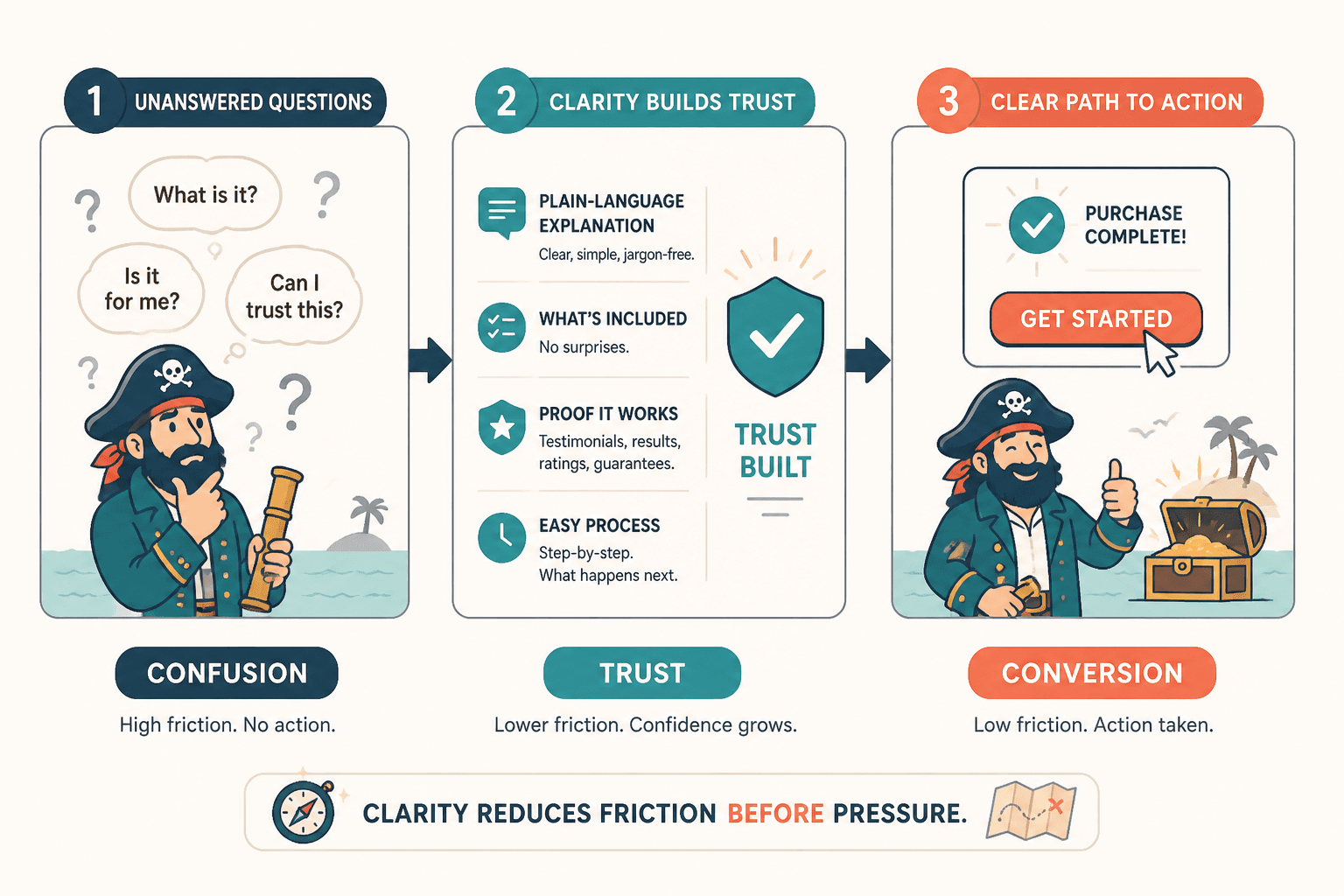
The real reason many product and service descriptions underperform is simpler: the buyer still has unanswered questions.
They are wondering:
- What exactly is this?
- Is it for someone like me?
- What problem does it solve well?
- How is it different from the ten similar things I have already seen?
- Can I trust this person to deliver?
- What happens next if I buy?
If your description does not answer those questions, adding stronger sales language usually makes things worse. You are trying to speed up a decision the buyer has not earned enough confidence to make yet.
Monetization gets easier when trust gets easier. That means your descriptions need to reduce friction, not just increase desire.
What trustworthy high-converting descriptions actually do
A strong description does not just “describe.” It positions, qualifies, reassures, and nudges.
At minimum, it should do most of the following:
- State what the offer is in plain English
- Name the outcome or practical value
- Show who it is for
- Hint at who it is not for, when useful
- Explain what is included
- Reduce buyer hesitation with proof, process, or specifics
- Create a sensible next step
That is how you make descriptions earn money without sounding greasy. If you need a broader foundation first, the main product and service descriptions guide is a good place to sharpen the basics.
The easiest way to wreck trust
Trust usually breaks in descriptions for one of four reasons.
1. The promise gets too big, too fast
If your copy sounds like buying one session, one package, or one digital product will completely reinvent someone’s business, brand, mindset, metabolism, and relationship with mornings, people get suspicious. Fairly.
Big promises without enough proof feel like compensation. Usually because they are.
2. The copy hides basic details
Vague copy often pretends to be elegant. It is usually just evasive. If readers cannot tell what they get, how it works, or what the scope is, they do not feel intrigued. They feel cautious.
3. It sounds aggressively salesy
Phrases like “don’t miss out,” “act now,” “unlock explosive growth,” and “results guaranteed” are not persuasive because they are strong. They are weak because everyone has seen them pasted onto mediocre offers for years.
4. It asks for commitment before creating confidence
If your description jumps straight from headline to “book now” without helping the buyer understand fit, process, and value, the CTA feels premature. You are asking for trust you have not earned on the page.
If your current copy leans robotic or overcooked, this companion piece on how to write product and service descriptions without sounding salesy or robotic will help clean up the tone.
How to monetize product and service descriptions without wrecking trust
Here is the practical version. If you want descriptions that generate more leads and sales while keeping your credibility intact, build them around these seven moves.
1. Lead with the real buying value
Not features first. Not your personal philosophy first. Not a vague mission statement first.
Start with what the buyer actually gets help with.
Weak: “A personalized consulting experience designed to unlock clarity and growth.”
Better: “A strategic messaging consult for founders who know their offer is solid but their website copy still makes prospects shrug and leave.”
The second version monetizes better because it gives the reader something to recognize. It sounds like a real problem, for a real person, with a real use case.
A stronger opening matters more than people think because it sets the trust tone immediately. If yours tends to wander, read how to start product and service descriptions without a weak opening.
2. Be specific about who it is for
Descriptions that try to include everybody usually convert softly. Not because the offer is bad, but because the reader cannot tell if it is meant for them.
You do not need to be theatrical about niche positioning. Just be clear.
- “For service businesses with inconsistent inbound leads”
- “For coaches who have solid offers but muddy website messaging”
- “For ecommerce brands that want cleaner product pages without fake hype”
- “For consultants selling high-trust services with longer buying cycles”
That specificity does two useful things. It helps the right people lean in, and it helps the wrong people self-filter before wasting everyone’s time.
3. Describe the mechanism, not just the outcome
One reason buyers do not trust description copy is that many offers are described like magic tricks. You get a big shiny outcome, somehow, through a proprietary process that is never explained because apparently mystery is now a business model.
People trust what they can picture.
So instead of only writing:
“Build a stronger brand that attracts premium clients.”
Try:
“We audit your current messaging, tighten the positioning, rewrite the key pages, and reshape the call to action so the site does a better job turning qualified visitors into inquiries.”
That sounds more monetizable because it sounds more real. It also gives the buyer a way to judge fit without guessing.
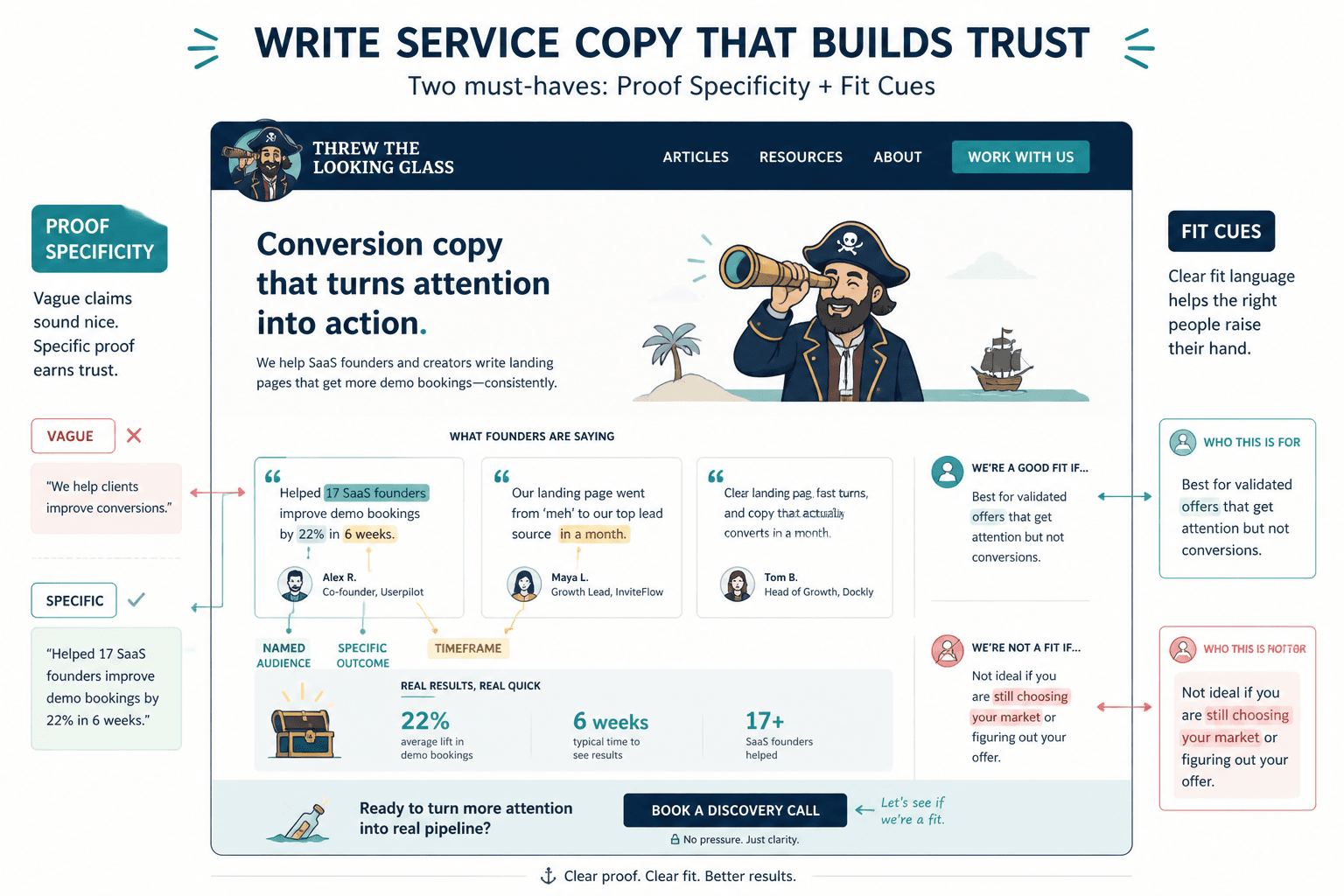
4. Use proof inside the description, not just elsewhere
Proof should not live only on a testimonials page nobody visits. It should be woven into the description itself.
This does not mean stuffing every paragraph with dramatic client wins. It means grounding your claims in something more solid than your own enthusiasm.
Useful proof can include:
- Specific outcomes
- Short client examples
- Experience level or relevant background
- Volume of work done
- Clear process details
- Constraints and boundaries that show maturity
Example: “This package is built for businesses that already have traffic but weak conversion on service pages. It is the same page-level rewrite process used across launch pages, consultant sites, and lead-gen websites where the problem was not visibility but buyer hesitation.”
Notice what that does. It does not scream. It signals experience and fit.
5. Remove fake urgency and replace it with decision clarity
Urgency is not automatically bad. Fake urgency is. There is a difference.
If you only take three clients per month, say that. If delivery starts on a fixed date, say that. If a seasonal promotion ends Friday, fine. But if every description sounds like the internet will collapse unless someone buys by midnight, people notice.
A better move is decision clarity. Help the buyer know when this offer makes sense.
Instead of: “Secure your spot now before prices increase.”
Try: “This is a good fit if your offer is already validated and the current problem is that the page is not turning interest into action.”
That kind of language respects the buyer. It also improves conversions because the right people can recognize themselves more quickly.
6. Make the CTA feel like the next step, not a trapdoor
A lot of weak monetization comes from mismatched calls to action. The page spends 500 words sounding thoughtful and useful, then ends with something like “BUY NOW AND TRANSFORM YOUR FUTURE.” Deeply unserious.
Your CTA should match the offer, the buying stage, and the level of trust already built.
Good CTA styles for product and service descriptions include:
- Book the consult
- See pricing and next steps
- Apply if this sounds like a fit
- Request the full scope
- Start with the starter package
- Get the template bundle
Notice these are concrete. They tell the reader what happens next. They do not rely on cartoon pressure.
If your goal is direct response, this article on how to turn product and service descriptions into more leads or sales can help tighten that path.
7. Use buyer-intent language, not brand-selfie language
Some descriptions are weirdly obsessed with the business owner’s identity. Their values. Their journey. Their method. Their vision. Their energy. Their why. Their carefully curated adjectives. Very moving. Not always useful.
Buyers care about themselves first. As they should. That means your wording should reflect the language of need, decision, hesitation, and desired progress.
Use phrases tied to actual buyer intent, such as:
- Need clearer messaging before launching
- Want a page that converts qualified traffic better
- Need product descriptions that sound credible and sell
- Looking for strategic copy help, not just prettier wording
- Want to reduce drop-off before inquiry or checkout
That language tends to monetize better because it sits closer to how people actually search, compare, and decide. For more on that, see better product and service descriptions buyer-intent phrasing for personal brands.
A simple structure for trustworthy revenue-focused descriptions
If you want a repeatable framework, use this one.
| Section | What it needs to do |
|---|---|
| Opening | State the offer and the buyer problem clearly |
| Fit | Show who it is for and when it makes sense |
| Value | Explain the practical outcome or benefit |
| Mechanism | Show what is included or how it works |
| Proof | Add evidence, specificity, or credibility cues |
| Objection handling | Reduce hesitation around scope, process, or expectations |
| CTA | Offer a clear, natural next step |
This structure works because it follows how buyers think. Not perfectly line by line, obviously, because humans are not spreadsheets. But close enough to reduce the common friction points that kill conversion.
Before and after: monetized without the slime
Here is a quick rewrite to show the difference.
Before
“Our premium brand messaging service helps visionary entrepreneurs unlock aligned growth through strategic storytelling, magnetic positioning, and authentic conversion. If you are ready to elevate your message and attract dream clients, this offer is for you.”
After
“This messaging service is for founders and service brands whose offer is solid but whose website still sounds vague, generic, or too close to everyone else in the market. We clarify the positioning, sharpen the page messaging, and build conversion-focused copy that helps qualified visitors understand the value faster and take the next step with more confidence.”
The second version is not fancy. Good. Fancy is overrated here. It is clear, buyer-focused, and monetizable because it increases confidence instead of coating everything in abstract brand perfume.
What to add if you sell services instead of products
Service descriptions usually need a little more trust support than product descriptions because the thing being bought is less tangible. People are not just evaluating the offer. They are evaluating your judgment, process, communication, reliability, and ability to get them from one state to another without causing chaos.
So if you sell a service, add more specifics around:
- What happens after inquiry or booking
- How the service is delivered
- Timeline or phases
- Boundaries and scope
- What the client needs in place first
- What success generally looks like
Those details do not just answer questions. They signal professionalism. And professionalism converts.
What to add if you sell products
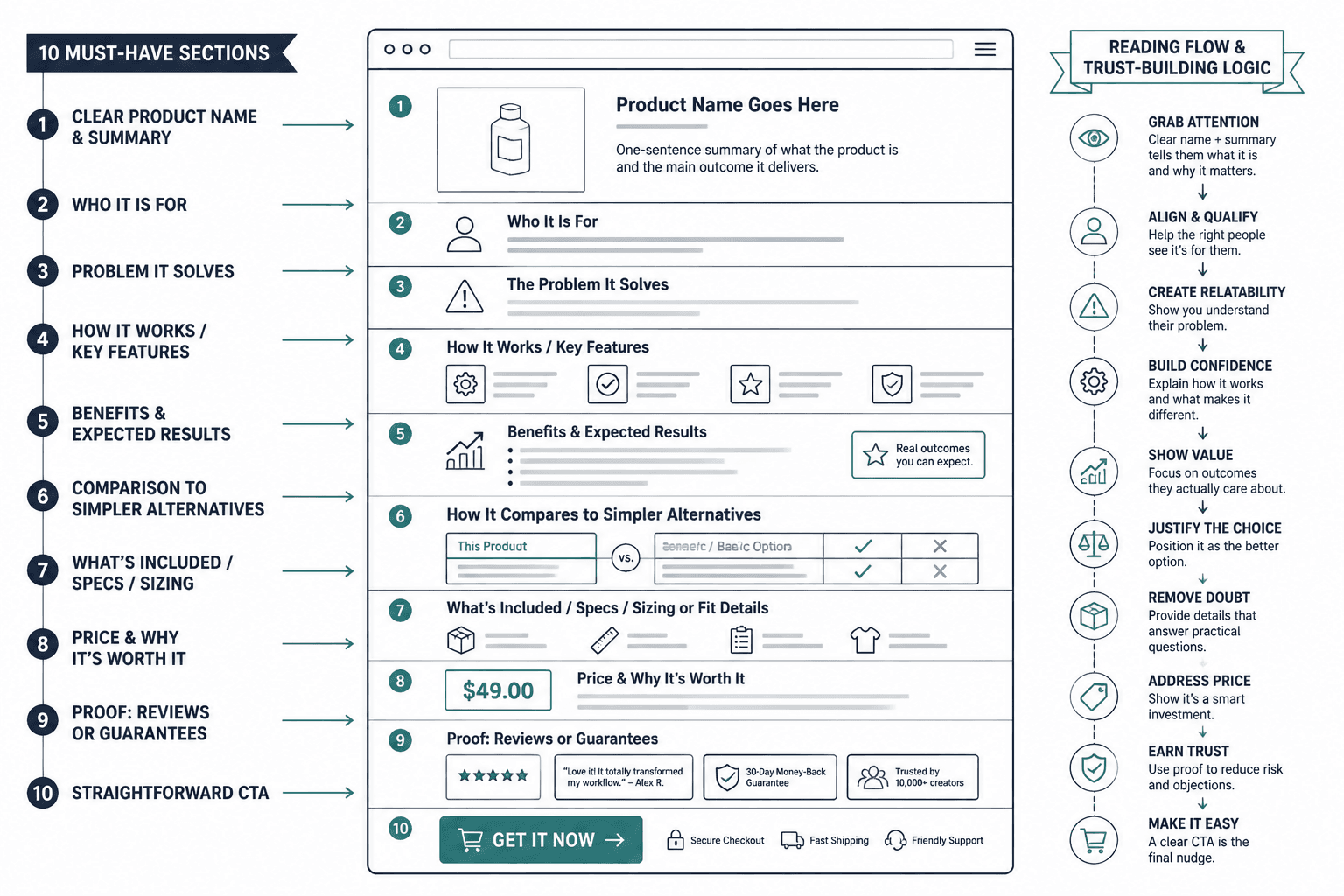
For products, trust often breaks around quality, fit, usefulness, and difference. So your descriptions should help the buyer picture use and reduce uncertainty fast.
That can include:
- Who the product is best for
- What problem it solves in practice
- How it compares to simpler alternatives
- What makes it worth the price
- What kind of result or experience someone should expect
If your product description sounds like it was assembled from leftover ecommerce clichés, stop polishing the adjectives and start improving the decision support.
A quick trust check before you publish
Run your description through these questions:
- Does the first section make the offer immediately understandable?
- Would the right buyer recognize themselves quickly?
- Are the claims believable without needing blind faith?
- Have you explained what is included or how it works?
- Does the copy sound like a person who knows the work, not a person trying to “sound premium”?
- Does the CTA match the trust level on the page?
- Have you removed vague fluff, recycled hype, and filler phrases?
If several answers are no, that is good news, actually. It means the problem is fixable on the page. You do not necessarily need a new offer. You may just need less fog and more signal.
You can also browse related guidance through the broader website conversion copy category and the conversion copy collection if you are tightening the rest of the site too.
The bigger point is simple: clearer structure and clearer writing make the piece more useful. That is usually what makes the ending land better too.