
A creator funnel that wastes attention is not a small marketing mistake. It burns trust, produces weak leads, and leaves sales stuck behind a trail of busywork that looked strategic in the planning doc. The reader did their part. The funnel responded with confusion, friction, or a pitch that arrived before the argument did. That is expensive in the boring way that actually matters.
This guide keeps the job simple: make the path from content to conversion clear, make the promise specific, and make each step earn the next one. No ceremonial funnel jargon. No pretending a prettier diagram fixes a misaligned offer.
If you want the broader system framing, start with the creator funnels parent guide. For more tactical follow-up, see how to write better creator funnels and creator funnel ideas and examples.
What a creator funnel is supposed to do
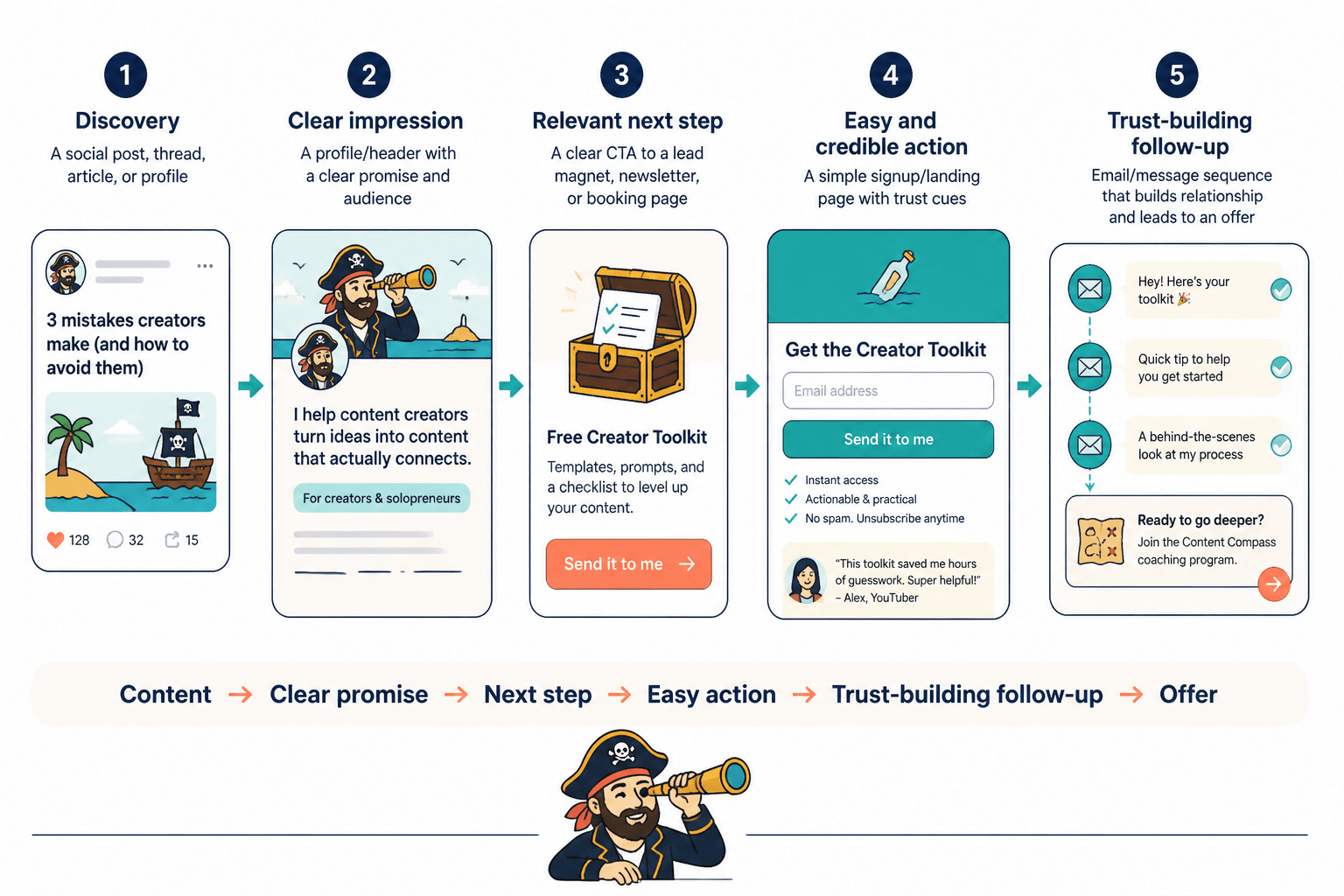
A creator funnel is the path that turns attention into action. That action might be an email opt-in, a booking call, a low-ticket purchase, a workshop sign-up, or a larger product sale. The structure can be simple, but the logic has to hold:
- content earns attention,
- a next step earns trust,
- nurture reduces doubt,
- the offer matches what the reader already believes.
When that sequence works, the funnel feels almost embarrassingly ordinary. Which is good. The best conversion systems usually look less like a magic trick and more like competent plumbing.
Why creator funnels fail
The usual failure is not tech. It is mismatch.
- The content promises one thing and the landing page asks for another.
- The lead magnet is useful, but not useful enough to change behavior.
- The nurture sequence sounds like a template, not a person.
- The offer is good, but the reader has not been brought close enough to it.
- The funnel has too many steps for the level of trust available.
In other words: the funnel is asking for commitment before it has done the work that makes commitment feel sensible. That is how you get polite clicks and thin leads.
Start with buyer readiness, not funnel aesthetics
The simplest way to choose a creator funnel is to ask how ready the audience already is.
- Low readiness: use content to newsletter or content to lead magnet.
- Medium readiness: use a workshop, checklist, swipe file, or short training that moves people closer to a decision.
- High readiness: send qualified readers to a booking page, product page, or direct sales page.
The goal is not to use the fanciest path. The goal is to pair the funnel with the actual level of trust in the room. That is why creator funnels work better when the path is matched to buyer readiness instead of to the creator’s appetite for complexity.
Use content that pre-sells the next step
Good funnel content does not merely attract attention. It prepares the reader for what happens next.
That means the post, video, thread, or podcast episode should do at least one of these jobs:
- name the problem more clearly than the audience has named it,
- show the cost of doing nothing,
- make the next step feel smaller and more obvious,
- remove one major objection before the offer appears.
That is pre-selling. It is not persuasion theater. It is alignment. When the next step feels like the natural sequel to the content, conversion stops feeling like a hard left turn.
What stronger pre-selling content usually includes
Useful pre-selling content often includes one or more of these pieces:
- a specific problem statement, not a broad category description,
- a short explanation of why the obvious fix fails,
- a concrete example or scenario,
- a quick win the reader can apply immediately,
- a natural bridge into the lead magnet, call, or offer.
That bridge matters. Without it, the content and the offer sit in the same article like they were introduced by separate assistants who never met.
Make the lead magnet solve a real micro-problem
A lead magnet should not just be “useful.” It should solve one sharply defined problem that the audience can recognize in under five seconds.
Better examples:
- a checklist for choosing the right funnel path,
- a template for writing a stronger CTA sequence,
- a mini guide that helps a reader diagnose why a funnel is leaking,
- a worksheet that turns a vague offer into a specific next step.
Bad lead magnets often try to be broad, impressive, and half a course. That is a lot of effort for something people will download, admire, and forget.
Choose simpler funnel paths than you think you need
Many creator funnels fail because they are trying to do six jobs at once. A better path usually does one job cleanly.
- Content → newsletter: best when the audience needs more trust before any sale.
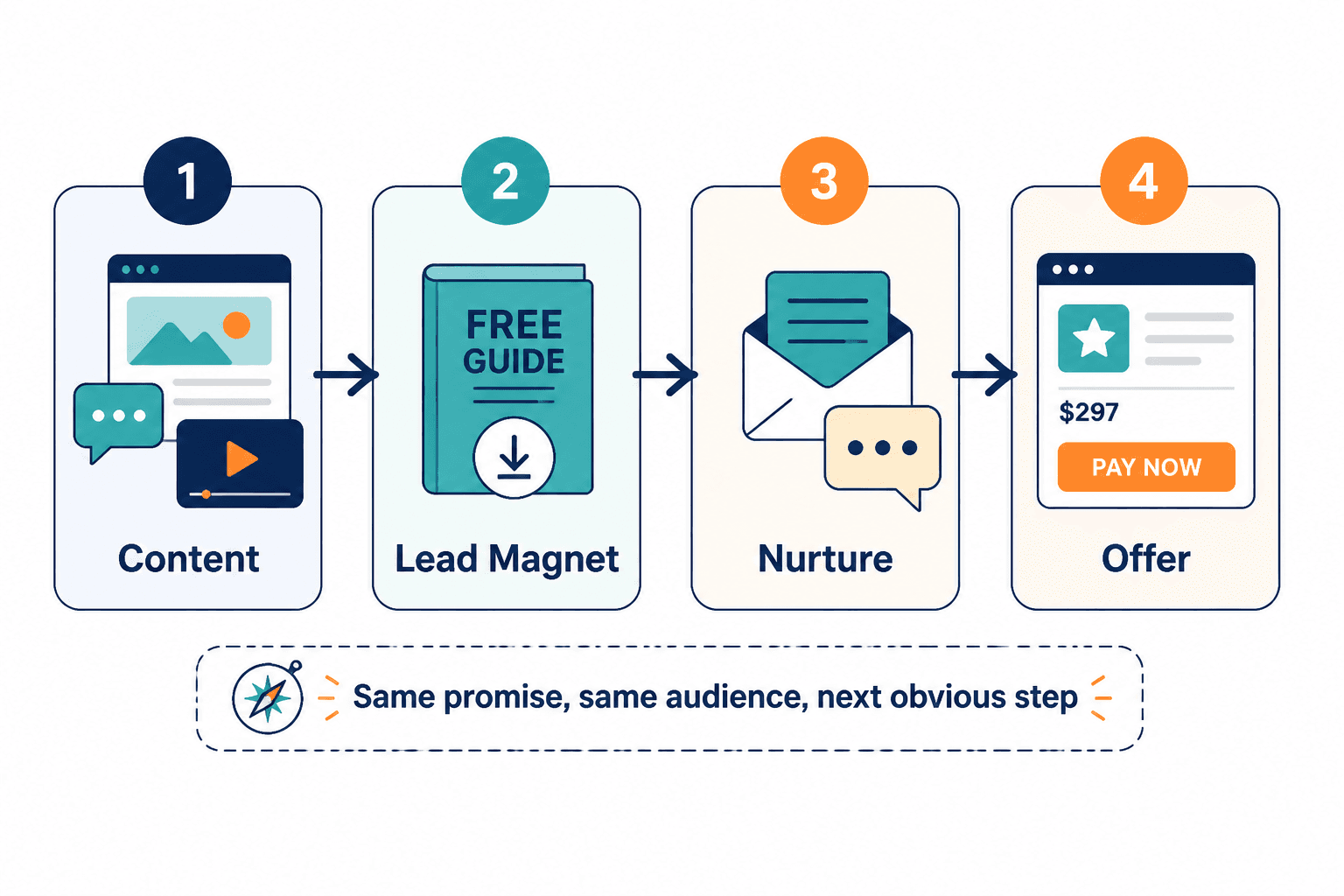
- Content → lead magnet → nurture → offer: best when the problem needs context and education.
- Content → booking page: best when the reader already knows they want help.
- Content → low-ticket product: best when the next step is a self-serve solution.
- Content → workshop/webinar: best when a live or structured teaching moment helps the reader decide.
That is also why pairing matters. The best funnel idea is the one that fits the audience’s state of mind, not the one with the most moving parts.
For a deeper comparison of path options, see best funnel ideas to pair with creator funnels.
Monetize without wrecking trust
Monetization works better when it feels like a continuation of the content, not a betrayal of it. That means the offer should be the next logical answer to the problem the content exposed.
A trust-first funnel usually does three things well:
- the free content is genuinely helpful,
- the nurture sequence sounds like a human, not a template,
- the offer arrives after belief has had time to form.
That does not mean being timid. It means being accurate. A reader who feels rushed will not trust the sale, and a reader who feels misled will not thank you for the extra urgency.
For a deeper take on the trust side of monetization, see how to monetize creator funnels without wrecking trust.
Use nurture to reduce doubt, not to pad the calendar
Nurture should move the reader closer to a decision. It should answer the questions the content could not answer in one pass.
- Why does this problem keep happening?
- What does a better path look like?
- Why is this offer a fit now?
- What happens if I wait?
If nurture does not do one of those jobs, it is probably just occupying inbox space with better formatting.
Review the funnel like a system, not a mood
Improving creator funnels gets easier when you stop treating them like a single verdict and start reviewing them as a sequence.
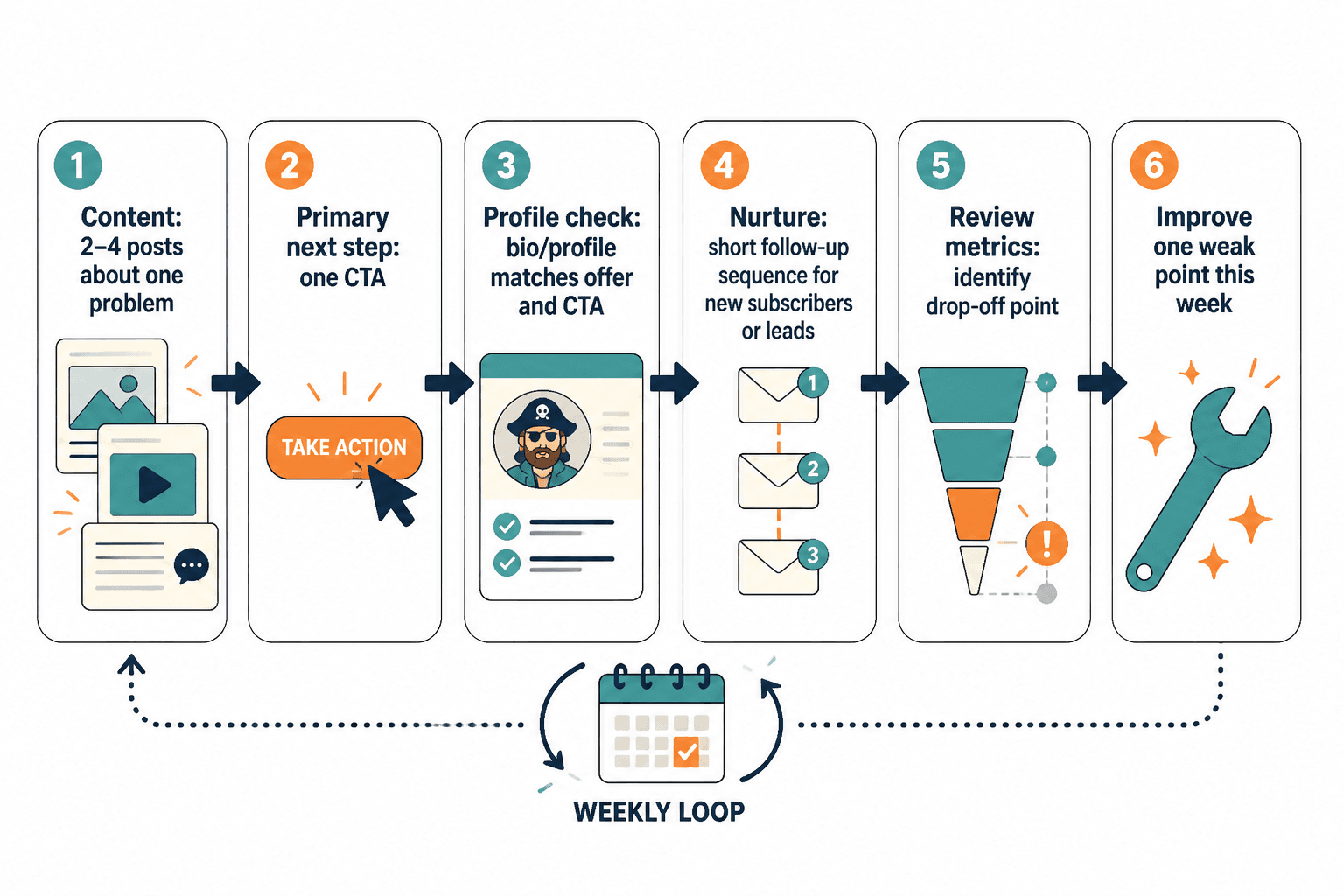
A simple weekly review can cover:
- which content brought in the best clicks,
- where readers dropped off,
- whether the CTA matched the content promise,
- whether the nurture step advanced belief,
- which one change is most likely to improve the next run.
That last point matters. Do not rewrite the whole funnel because one step underperformed. Fix the weakest link first. Creator funnels usually improve through precise edits, not dramatic renovations.
Examples of better creator funnel pairings
- Educational post → checklist: good when the audience needs a quick diagnostic tool.
- Opinion piece → email sequence: good when trust needs a few more touches before the offer.
- Tutorial → low-ticket product: good when the reader wants implementation help now.
- Case-study style content → booking page: good when the reader is already evaluating help and wants proof.
- Problem framing post → workshop: good when the audience needs one structured moment to understand the next step.
Each of those pairings works because the content and the conversion step agree on the same reality. No dramatic pivot. No confusing detour.
What to fix first when results are weak
When a creator funnel underperforms, start here:
- Check whether the content promise matches the CTA.
- Check whether the lead magnet solves a real micro-problem.
- Check whether the nurture sequence adds belief, not filler.
- Check whether the offer matches the reader’s readiness.
- Change one step, then review the result.
That is the whole game more often than not. Not more automation. Not more jargon. Better alignment.
If you want more tactical examples and format ideas, the sibling pieces on turning creator funnels into more leads or sales and best AI tools for creator funnels can help with the next layer.
Bottom line
A creator funnel works when every step earns the next one. Content should pre-sell the next move. The lead magnet should solve a real micro-problem. Nurture should reduce doubt. The offer should fit the audience’s readiness. Keep that chain intact and the funnel becomes useful instead of theatrical.
For the full system view, return to the creator funnels guide.