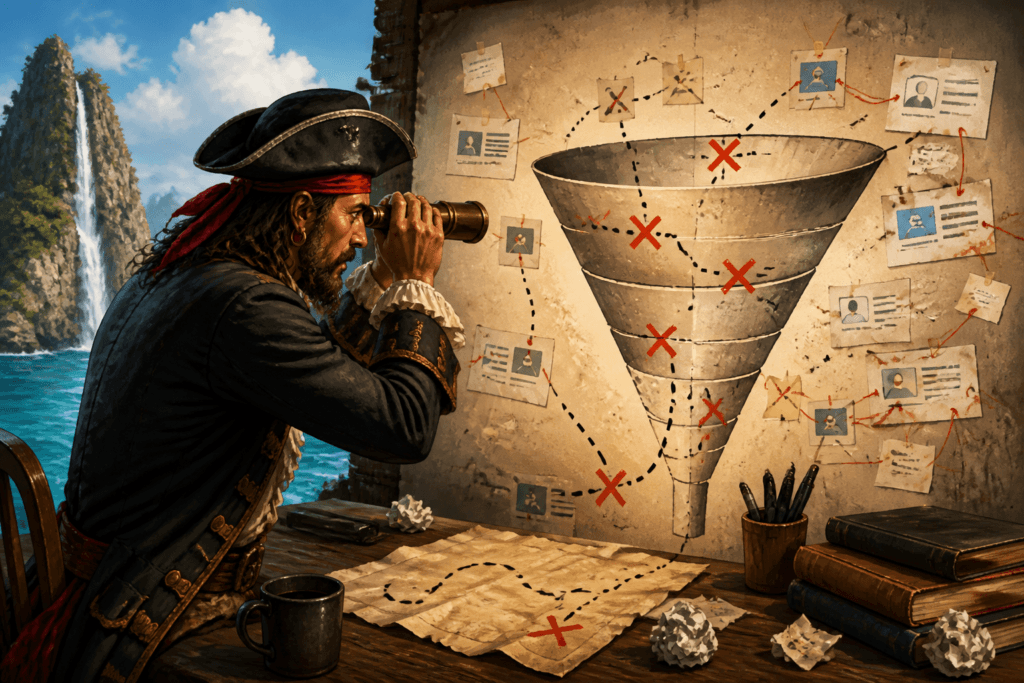
Most creator funnels do not underperform because the algorithm hates you, your audience is “cold,” or you picked the wrong lead magnet color.
They underperform because the content and the funnel are not actually working together. One part is trying to build trust. The other part is barging in with a sales agenda and bad timing. So the reader clicks, squints, loses interest, and disappears.
Creator Funnel Content Funnel Mistakes That Hurt Performance usually come down to friction, mismatch, weak messaging, and asking for too much too soon. Not sexy. Very fixable.
If your posts get attention but not leads, if your freebie gets downloads but not buyers, or if your funnel technically exists but feels like a pile of disconnected internet objects, this is the stuff to fix first. Here’s how to spot the mistakes, why they hurt, and what to do instead without turning your content into a needy little vending machine.
Want the broader roadmap? Start with the parent guide.
The biggest mistake: treating content and funnels like separate jobs
A lot of creators make content over here and build funnels over there.
The content is “for visibility.” The funnel is “for conversion.” Sounds tidy. It also creates the exact disconnect that kills performance.
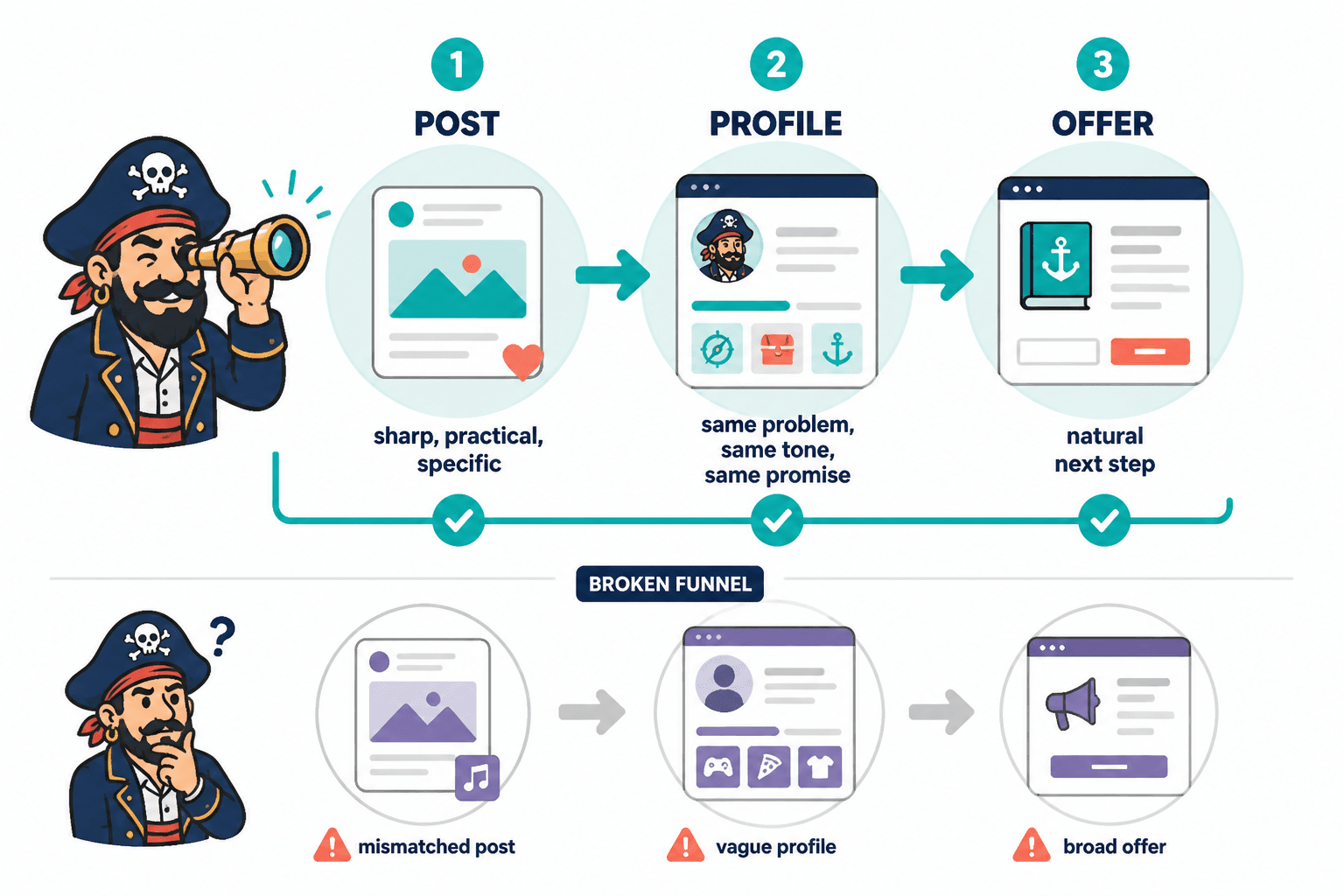
Your content is part of the funnel. It sets expectations, shapes perceived value, attracts a certain kind of person, and quietly tells them what kind of help you offer. If the post says one thing and the next step says something else, trust drops fast.
Example:
- Your post is sharp, practical, and specific.
- Your profile is vague.
- Your lead magnet is broad and fluffy.
- Your email sequence suddenly sounds like a discount webinar from 2019.
That is not a funnel. That is a personality disorder in public.
A healthy creator funnel has continuity. The tone fits. The problem fits. The promise fits. The next step feels like the natural continuation of the post, not a strange hallway turn into a dimly lit sales basement.
If your funnel feels disconnected, start there. Before you tweak the CTA. Before you redesign the landing page. Before you buy another tool that promises “optimization.”
You are pitching before you have earned enough trust
This one shows up everywhere.
A creator publishes one useful post, gets a bit of attention, and immediately turns every next touchpoint into a conversion event. Book a call. Buy the thing. Join the program. Download the PDF. Watch the training. Reply with a keyword. Fill in the form. Breathe into this funnel, stranger.
People are not resisting because they hate buying. They are resisting because the trust-to-ask ratio is off.
Content funnels perform better when the ask matches the relationship stage. Someone who just found you may be willing to read another post, check your profile, or grab a genuinely useful resource. They are usually not ready for a high-commitment leap unless the pain is urgent and your proof is obvious.
Better trust-first steps
- Post to profile
- Post to newsletter
- Post to short resource
- Article to related offer
- Case study to consultation page
- Comment conversation to soft DM
The point is not “never sell.” The point is to stop trying to cash a check your content has not written yet.
If you need a better structure for this, the creator funnels guide for creators who want better results is a useful next read.
Your content attracts the wrong people for the offer
Reach is not the same as fit. A post can perform well and still feed your funnel with the wrong crowd.
This happens when creators write broad content for attention, then wonder why the leads are weak, nosy, broke, confused, or nowhere near ready to buy. If your content attracts people who like the vibe but do not want the outcome you sell, your funnel gets noisy fast.
Good funnel content should pre-qualify a bit. Not by sounding snobby. By sounding specific.
Compare these two post angles:
- Broad: “How to grow online with content”
- Better: “Why consultants with decent expertise still get ignored online, and how to turn that into posts that lead to conversations”
The second one narrows the audience, sharpens the pain, and naturally connects to a more relevant offer. Fewer random clicks. Better pipeline.
If your funnel gets traffic but not movement, inspect the top-of-funnel content first. It may be doing its job badly by doing a different job well.
You made the lead magnet too generic to create momentum
A generic lead magnet does not help the funnel. It clogs it.
“Free guide to content success” is not a compelling next step. It is a PDF-shaped way to say nothing in particular.
People move when the next step feels specific, useful, and closely related to the thing that already got their attention. The best creator funnel magnets solve a smaller problem well. They do not try to become your entire methodology in 14 pages of beige.
Weak lead magnet vs stronger lead magnet
| Weak | Stronger |
|---|---|
| Content Growth Guide | 25 post angles for consultants who need better inbound leads |
| Personal Branding Checklist | Profile rewrite checklist for creators who sound too vague to convert |
| Sales Funnel Tips | Simple post-to-booking funnel for coaches with small audiences |
Specificity creates momentum because it gives the person a reason to care now. Generality just gives them another file to ignore later.
If your existing opt-in feels dull, you may want to rewrite boring creator funnels before you assume the whole strategy is broken.
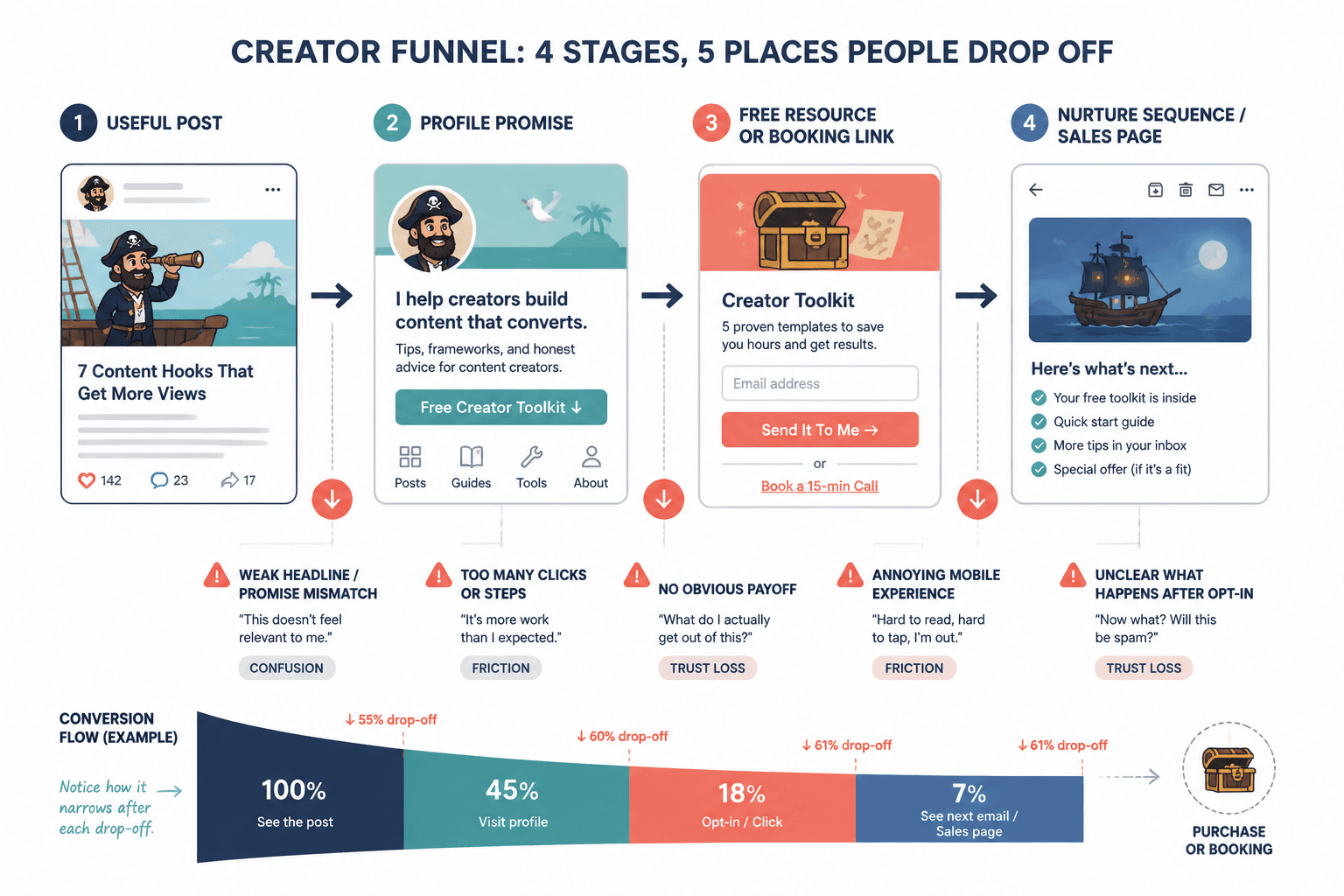
Your funnel has too many steps, too much friction, or both
Creators love adding steps because extra steps feel strategic.
In reality, every click, form, wait, redirect, and “check your inbox to confirm” moment is a small opportunity for someone to leave and forget you exist.
Simple usually wins. Not because people are lazy, but because attention is fragile and the internet is full of interruptions.
Common friction points that quietly kill conversion
- The CTA is clear, but the landing page headline says something else
- The form asks for too much information too early
- The page is visually busy and makes the next step feel heavier than it is
- The offer is buried under long-winded explanation
- The confirmation process has extra steps with no obvious payoff
- The mobile experience is annoying
- The person cannot tell what happens after they opt in
You do not need a complicated funnel for it to be “real.” A lot of effective creator funnels are just this:
- Useful post
- Clear profile promise
- Relevant free resource or booking link
- Short nurture sequence or concise sales page
That is enough to create movement if the message is right.
For more on refining the system without sanding all the personality off it, see how to improve creator funnels platform funnels without sounding generic.
Your CTA is vague, needy, or weirdly high-pressure
A weak CTA hurts performance because it forces the reader to do extra interpretation. A pushy CTA hurts performance because it makes the next step feel risky, annoying, or too committed.
Bad examples:
- “DM me if this resonates”
- “Book a call now before spots fill up”
- “Comment YES and I’ll send details”
- “Check out my offer”
These are either unclear, overused, awkwardly manipulative, or all three.
Better CTAs tend to do one of three things:
- Name the next step clearly
- Explain who it is for
- Set expectation for what happens next
Examples:
- “If you want the exact framework, grab the checklist from my profile.”
- “If your posts are getting attention but no qualified leads, the guide linked in my profile will help.”
- “If you want help building a simpler post-to-client funnel, you can book a consult here.”
Not dramatic. Not thirsty. Just clear.
You are using content that sounds good but does not move people forward
Some content gets nods. Some content gets saves. Some content gets polite little bursts of engagement from peers who also enjoy posting about posting.
None of that automatically means it is helping the funnel.
If your content is too abstract, too motivational, too self-referential, or too obsessed with broad “mindset” points, it can attract attention without building buying intent. It feels nice. It goes nowhere.
Content that supports a funnel usually does at least one of these:
- Frames a real problem clearly
- Shows your thinking
- Introduces a useful distinction
- Builds trust with proof, examples, or specifics
- Creates a natural bridge to the next step
This is one reason old content is worth revisiting. Often the idea is fine, but the packaging is lazy. You can get much more out of what you already have by tightening the message and linking it to an actual next action. If that is your current mess, read how to turn old content into better creator funnels.
Your offer is too disconnected from the promise in the content
This is a nasty one because creators often miss it.
The content promises one kind of value. The offer delivers another. Or at least it appears to.
For example, you post practical advice about writing sharper LinkedIn posts. People follow because they want better content performance. Then your offer page talks mostly about confidence, alignment, authenticity, and “stepping into your voice.” That may matter, but it is not the promise they clicked toward.
The more abstract or widened the offer becomes compared to the content, the more likely people are to drift off. They were looking for help with one thing. You invited them into a larger but blurrier transformation. That gap hurts conversion.
Your content does not need to mention every part of your service. But the path should feel coherent. If someone likes your posts because they are tactical and direct, the offer should not suddenly become vague therapy cosplay with a Stripe link.
You do not have enough proof where the decision happens
People can like your ideas and still not trust the outcome.
That is where proof comes in. Not chest-thumping. Not fake screenshots with suspiciously cropped numbers. Actual useful proof.
Proof that helps creator funnels perform better
- Short case studies
- Before-and-after examples
- Specific client outcomes with context
- Breakdowns of what changed and why
- Credibility markers that are relevant to the decision
- Samples of your thinking in action
Proof matters most near the decision point: profile, landing page, sales page, booking page, nurture emails. Yet many creators keep all the proof buried in random old posts and wonder why click-throughs do not turn into action.
Bring the proof closer to the ask.
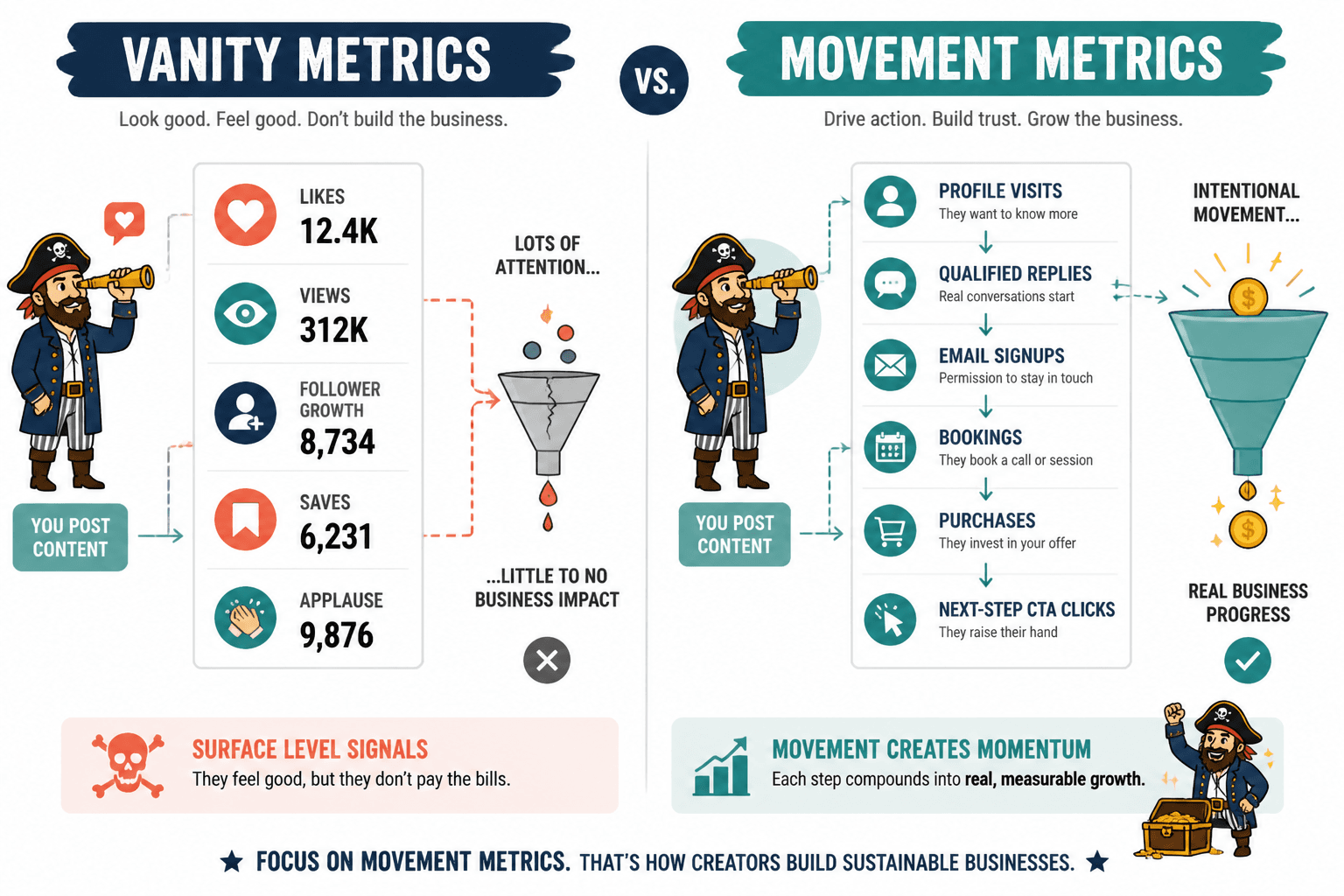
You are measuring the wrong signs of success
If you only watch impressions, likes, or opt-ins, you can convince yourself the funnel is healthy when it is quietly leaking all over the floor.
A creator funnel should be judged by movement, not vanity.
Useful questions:
- Which posts lead to profile visits from the right people?
- Which lead magnet actually leads to replies, bookings, or purchases?
- Where are people dropping off most often?
- Which topics bring in qualified conversations, not just audience applause?
- Which CTA format gets the cleanest next-step action?
You do not need a giant dashboard. You need enough visibility to tell the difference between “people liked this” and “this moved the business forward.” Very different things.
A better way to fix creator funnel content funnel mistakes that hurt performance
If your funnel feels messy, resist the urge to rebuild everything at once. Most of the time, one or two broken links in the chain are doing most of the damage.
Use this simple review process:
- Check the top-of-funnel content. Is it attracting the right people with a specific problem?
- Check the bridge. Does the CTA lead naturally to the next step?
- Check the offer match. Does the resource or service continue the same promise?
- Check friction. Are there unnecessary steps, confusion, or delays?
- Check proof. Is there enough evidence near the decision point?
- Check follow-up. Does the nurture sequence deepen trust, or just start lunging for the sale?
That is the real work. Not endlessly polishing headlines while the funnel itself makes people feel lost.
Creator funnels get better when the path feels simpler and the writing makes each next step obvious. A cleaner message usually fixes more than extra funnel complexity ever will.