
Most blog titles do not fail because the writer lacks ideas. They fail because the title is doing three bad jobs at once: trying to sound smart, trying to rank, and trying not to embarrass the person who wrote it.
That is how you end up with headlines like “Thoughts on Modern Content Strategy” or “A Few Tips for Better Marketing Results.” Technically fine. Practically invisible.
The best templates and tools for blog titles and headlines are the ones that help you get specific, clear, and useful without turning your writing into clickbait soup. You do not need 500 swipe-file headlines or some magic generator that spits out “You Won’t Believe” nonsense. You need a handful of solid patterns, a decent workflow, and enough judgment to know when a title sounds like a human and when it sounds like a content intern trapped in a spreadsheet.
So that is what this guide does. It gives you practical title templates, shows you when to use them, explains which tools are actually worth touching, and helps you avoid the boring, vague, SEO-stuffed mess a lot of blog headlines become.
For the main guide behind this topic, visit the parent guide.
What a good blog title actually needs to do
Before you grab templates, it helps to know what the title is supposed to accomplish.
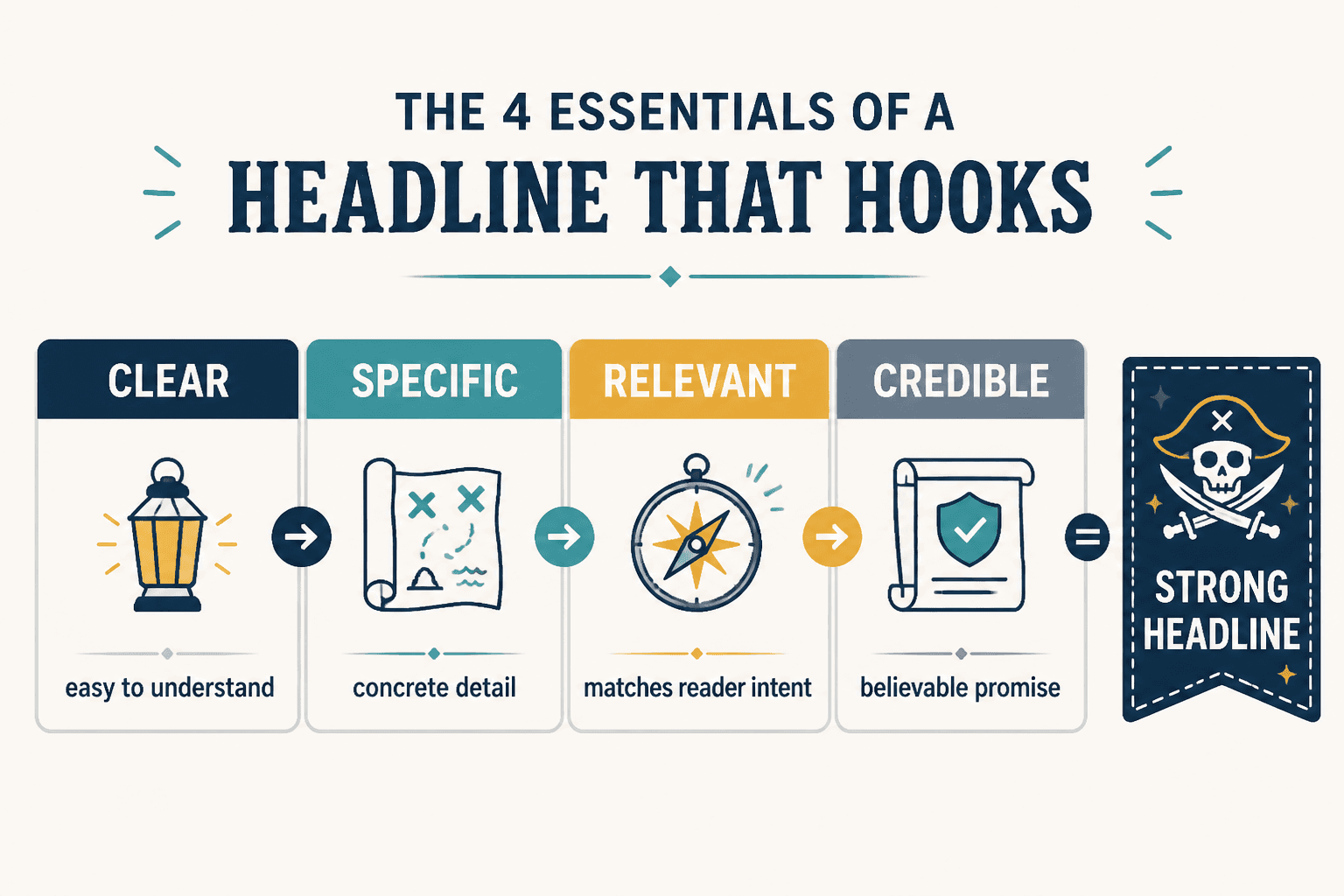
A strong blog title usually needs to do at least three things:
- Tell the reader what they are getting
- Give the topic a clear angle or promise
- Make the article worth clicking without sounding cheap
That means clarity matters more than cleverness most of the time. Clever titles can work, but usually only when the audience already knows you. Search readers do not know you. Busy readers do not owe you interpretive effort. If your headline needs a second read to make sense, it is probably making life harder than it needs to.
Good titles also match search intent. If someone is searching for templates, they want templates. If they want tools, they want tools. If your headline is vague and artsy while the article is practical and useful, you are making the reader do a guessing game before they even click.
A title is not a branding exercise. It is a clarity test.
If you want a broader system for this kind of work, the main blog SEO writing hub and the blog article systems section are good next stops after this article.
The five headline qualities that matter most
You can use all the templates in the world and still write weak titles if these pieces are missing.
1. Specificity
“Blog titles” is broad. “Blog title templates for service businesses” is more specific. “SEO blog title templates for busy creators” is even sharper.
Specificity helps the right reader recognize themselves. It also makes the article feel more useful before they have even opened it.
2. Relevance
The title should match the actual problem the reader wants solved. Not the problem you wish they cared about. The real one.
People rarely search for “elevated editorial strategies for title ideation.” They search for things like “best blog title formulas,” “headline analyzer,” or “how to write titles that get clicks.” Which, yes, is less elegant. Also more useful.
3. Clarity
The reader should understand the topic fast. If your title relies on mystery, irony, or a vague phrase that could mean six different things, expect weaker clicks.
4. Tension
Good titles often imply a gap, a mistake, a fix, or a better outcome. That is what creates momentum.
- Best templates for blog titles
- How to rewrite boring blog titles
- SEO headline tools that are actually useful
Each one hints at a problem and a payoff. That is enough. You do not need to scream.
5. Credibility
If the headline overpromises, the article starts in a trust deficit. “The Only Headline Formula You Will Ever Need” is a bit much. It sounds like a PDF from a guy who says “crushing it” too often.
A credible title makes a clear promise and then leaves room for nuance. Readers trust that more.
Best templates and tools for blog titles and headlines start with the right template
Templates are useful when they help you structure a real idea. They are useless when they become plug-and-play filler.
The best way to use a template is to start with the article’s actual point, then choose the structure that fits it. Not the other way around.
Template 1: Best for practical list posts
- Best [tools/templates/strategies] for [audience or task]
- Example: Best Templates and Tools for Blog Titles and Headlines
- Why it works: Clear topic, clear format, easy search match
This is not sexy. It is useful. Which is usually better.
Template 2: Best for problem-solving articles
- How to [fix/improve/create] [specific thing]
- Example: How to Write Blog Titles That Get Clicks Without Sounding Like Clickbait
- Why it works: Strong intent match, easy to understand, practical promise
Template 3: Best for rewrite or makeover content
- How to Rewrite [bad thing] Into [better result]
- Example: How to Rewrite Boring Blog Titles Into Click-Worthy Headlines
- Why it works: Gives the reader a before and after in one line
If you want more on that angle, this pairs nicely with How to Rewrite Boring Blog Titles and Headlines.
Template 4: Best for audience-specific content
- [Number] [types/templates/examples] for [specific audience]
- Example: 15 Blog Headline Templates for Coaches, Creators, and Consultants
- Why it works: Helps the right person self-identify fast
Template 5: Best for comparison or curation articles
- Best [category] for [goal]
- Example: Best SEO Headline Tools and Content Planning Tools for Blog Titles and Headlines
- Why it works: Great for search intent when readers are actively evaluating options
For that specific angle, see Best SEO Headline Tools and Content Planning Tools for Blog Titles and Headlines.
Template 6: Best for simplicity-driven posts
- Simple [thing] for [desired result]
- Example: Simple Blog Titles and Headlines: Click-Worthy SEO Titles Templates for Busy Creators
- Why it works: Appeals to overwhelmed readers who want less theory and more usable structure
That one naturally connects with Simple Blog Titles and Headlines: Click-Worthy SEO Titles Templates for Busy Creators.
Template 7: Best for opinionated or myth-busting content
- Why [common belief] is wrong about [topic]
- Example: Why Most SEO Blog Title Advice Makes Your Headlines Worse
- Why it works: Creates tension and curiosity without needing cheap tricks
This one works best when you actually have a real point. Not just a spicy headline attached to a shrug.
How to choose the right headline template for the article
Writers often choose titles based on what sounds smart in isolation. That is a weirdly common way to sabotage a decent article.
Choose the template based on the article’s main job:
| Article goal | Best title style |
|---|---|
| Teach a process | How to |
| Curate recommendations | Best X for Y |
| Give examples or formulas | Numbered list or templates |
| Fix a common mistake | Rewrite or problem/solution title |
| Challenge bad advice | Myth-busting or opinion title |
| Target a specific niche | Audience-specific title |
That sounds obvious, but this is where a lot of headlines go off the rails. A practical how-to article gets dressed up like a thought piece. A beginner article sounds like advanced strategy. A list post becomes a vague lifestyle essay. Then everyone wonders why the clicks are bad.
Usually, the title is not too simple. It is too blurry.
The best tools for blog titles and headlines
Tools can help a lot here, but only if you know what they are for. A title tool should support judgment, not replace it.
What tools can do:
- Generate variations faster
- Surface useful keyword phrasing
- Help compare structure options
- Improve readability
- Spot obvious weak wording
- Organize title ideas during content planning
What they cannot do:
- Know your audience better than you do
- Make a dull article irresistible
- Give you taste
- Tell you which promise feels most credible for your brand
- Fix weak positioning
1. AI drafting tools
AI tools are useful for generating title options quickly, especially when you already know the article angle and want multiple ways to phrase it.
They are less useful when you ask them to invent strategy from nothing. That is when you get bland headlines like “Unlock the Power of Better Blogging” and other crimes against specificity.
Use AI tools for:
- Variation generation
- Angle testing
- Length shortening
- Audience-specific rewrites
- Comparing SEO-first vs click-first versions
Use them carefully. Prompt them with the article goal, audience, search intent, and tone. Otherwise you are basically asking a vending machine for insight.
If you want a dedicated breakdown, read Best AI Tools for Blog Titles and Headlines.
2. SEO headline and keyword planning tools
These tools help you find the language people already use, which is useful because your audience often tells you exactly how they describe their problem. You should probably listen.
These are helpful for:
- Spotting search-friendly phrasing
- Finding related headline angles
- Comparing topic variations
- Planning clusters around one title theme
Just do not let keyword tools bully you into writing stiff nonsense. A good title can be search-aware without sounding like it was assembled by a tax form.
3. Headline analyzer tools
Headline analyzers can be useful for checking length, readability, word balance, and emotional pull. They can also be wildly overtrusted.
A tool score is not the final judge. Some analyzers reward flashy wording or overcooked emotional language that may not fit your audience at all. If your title gets a high score but sounds embarrassing, trust your dignity.
4. Content planning tools
These matter more than people think. Good titles often come from comparing article angles side by side, not from trying to invent brilliance in a blank field ten minutes before publishing.
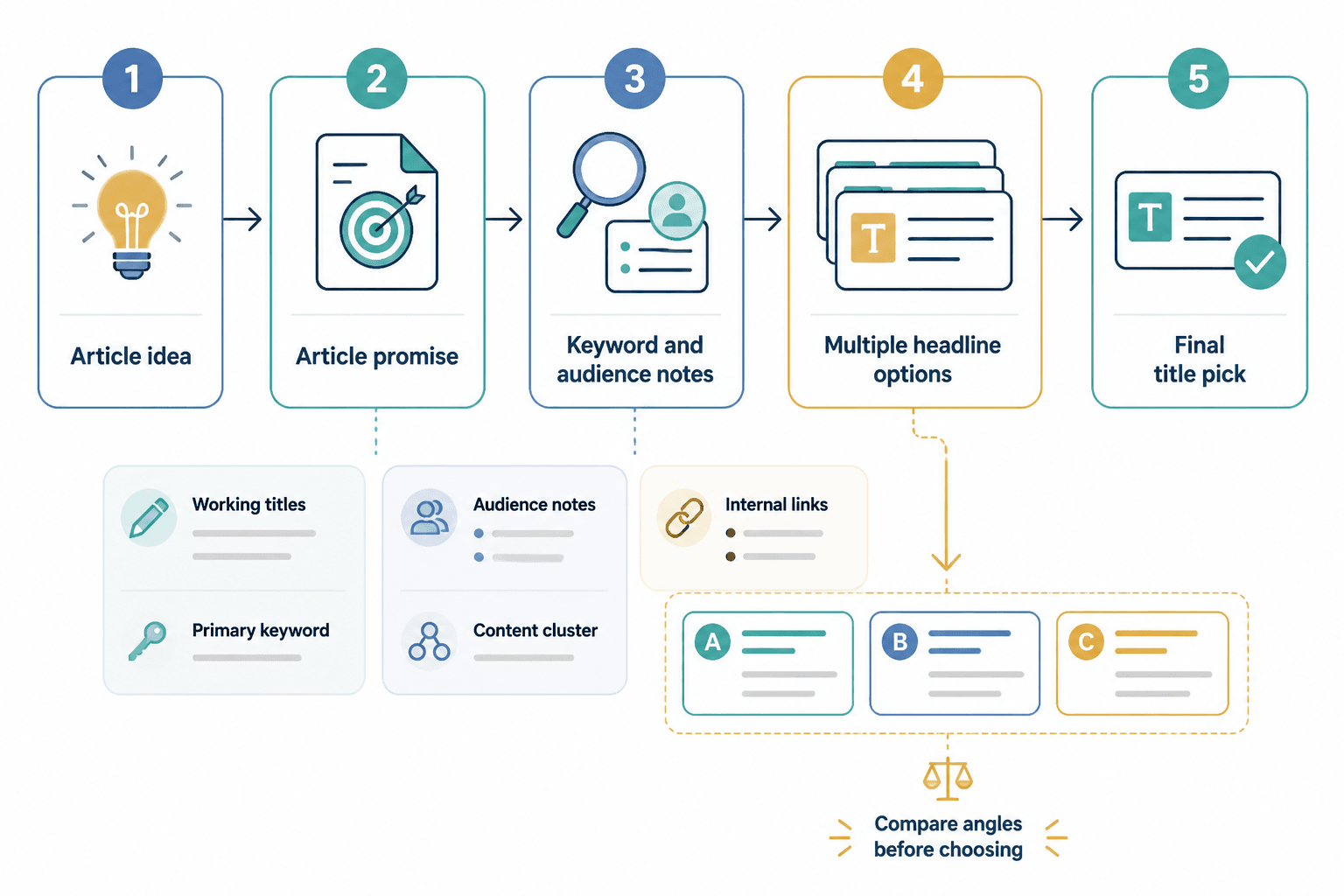
A planning tool helps you keep:
- Working titles
- Alternative headline options
- Primary keyword targets
- Audience notes
- Content clusters and internal links
That is part of why title quality improves across a site instead of one article at a time.
A practical workflow for writing stronger blog headlines
If your current method is “stare at document, type something acceptable, hope for the best,” this will be an improvement.
Step 1: Write the article promise in one blunt sentence
Not the title. The actual promise.
Example:
This article helps creators choose useful headline templates and title tools so they can write blog titles that are clearer, stronger, and easier to click.
If you cannot write that sentence, the title problem may actually be an article clarity problem.
Step 2: Identify the main search or reader intent
Ask: what is the reader most likely trying to get?
- Templates?
- Examples?
- Tools?
- A process?
- A fix for weak headlines?
This article clearly needs both templates and tools, so the title should say both. Hiding one of those would make the headline less accurate and less useful.
Step 3: Draft 10 title variations
Yes, 10. Not because every article needs a dramatic brainstorm, but because your first three are often boring for very understandable reasons.
Quick example variations:
- Best Templates and Tools for Blog Titles and Headlines
- How to Choose Better Templates and Tools for Blog Headlines
- Best Blog Title Templates and Headline Tools for Better Clicks
- Blog Title Templates and Tools That Actually Help
- The Best Tools and Templates for Writing Stronger Blog Headlines
Then compare them for clarity, search fit, and naturalness.
Step 4: Cut vague words
Delete things like:
- Ultimate
- Amazing
- Powerful
- Proven
- Essential
- Incredible
Sometimes one of those is earned. Usually they are just decorative frosting on a plain muffin.
Step 5: Check if the title matches the article’s real depth
If your title says “best tools,” the article should compare tools in a useful way. If it says “templates,” there should be actual templates. Not one lonely bullet list and several paragraphs of vibes.
This is where a lot of content loses trust. The title makes a practical promise. The article delivers a motivational speech in a trench coat.
Before-and-after title rewrites
Here is what stronger title work usually looks like in practice.
Example 1
- Weak: Thoughts on Writing Better Blog Headlines
- Better: How to Write Better Blog Headlines That Earn More Clicks
The better version gives a clear task and outcome. “Thoughts on” is usually a warning sign that not much is about to happen.
Example 2
- Weak: Blog Title Tips for Growth
- Better: 12 Blog Title Tips for More Clicks, Better SEO, and Stronger Reader Interest
This version is more concrete and gives the reader a better reason to care.
Example 3
- Weak: A Guide to Headlines
- Better: Best Templates and Tools for Blog Titles and Headlines
The original could mean anything. The rewrite tells the reader what is inside and who it is for.
Example 4
- Weak: Improve Your Content With Better Titles
- Better: How to Rewrite Boring Blog Titles Into Click-Worthy Headlines
The rewrite creates tension. It also gives a cleaner before-and-after payoff.
Common mistakes people make with blog title templates and tools
Some title problems are not creative problems. They are workflow problems, judgment problems, or “I trusted the software too much” problems.
Using templates like Mad Libs
A template should help shape a real angle. If you just swap nouns into a formula, the result usually sounds generic because it is generic.
If you keep clicking ?generate more? without tightening the angle, the software just helps you produce more clutter. Tools work best when you already know what kind of promise, audience, and search fit you are aiming for.
The strongest setups are usually simple: one place to collect ideas, one structure for testing them, and enough judgment to kill the weak ones early.