
A creator email sequence is not “a few automated emails after signup.” That is the comfortable version. The useful version is a path: it helps a reader understand why they joined, what to trust, what to do next, and whether your next offer is worth attention. Without that path, the sequence becomes decorative automation with better branding.
The fix is not writing more emails for the sake of being thorough. It is giving each email a job, each sequence a purpose, and the whole thing a clear next step. That is what separates a sequence that earns replies, clicks, and sales from one that politely occupies inbox space.
If you want the broader system around this topic, start with the creator email sequences parent guide. For examples and adjacent tactics, the sibling pages on ideas and examples, AI tools, and turning sequences into more leads or sales fill in the edges.
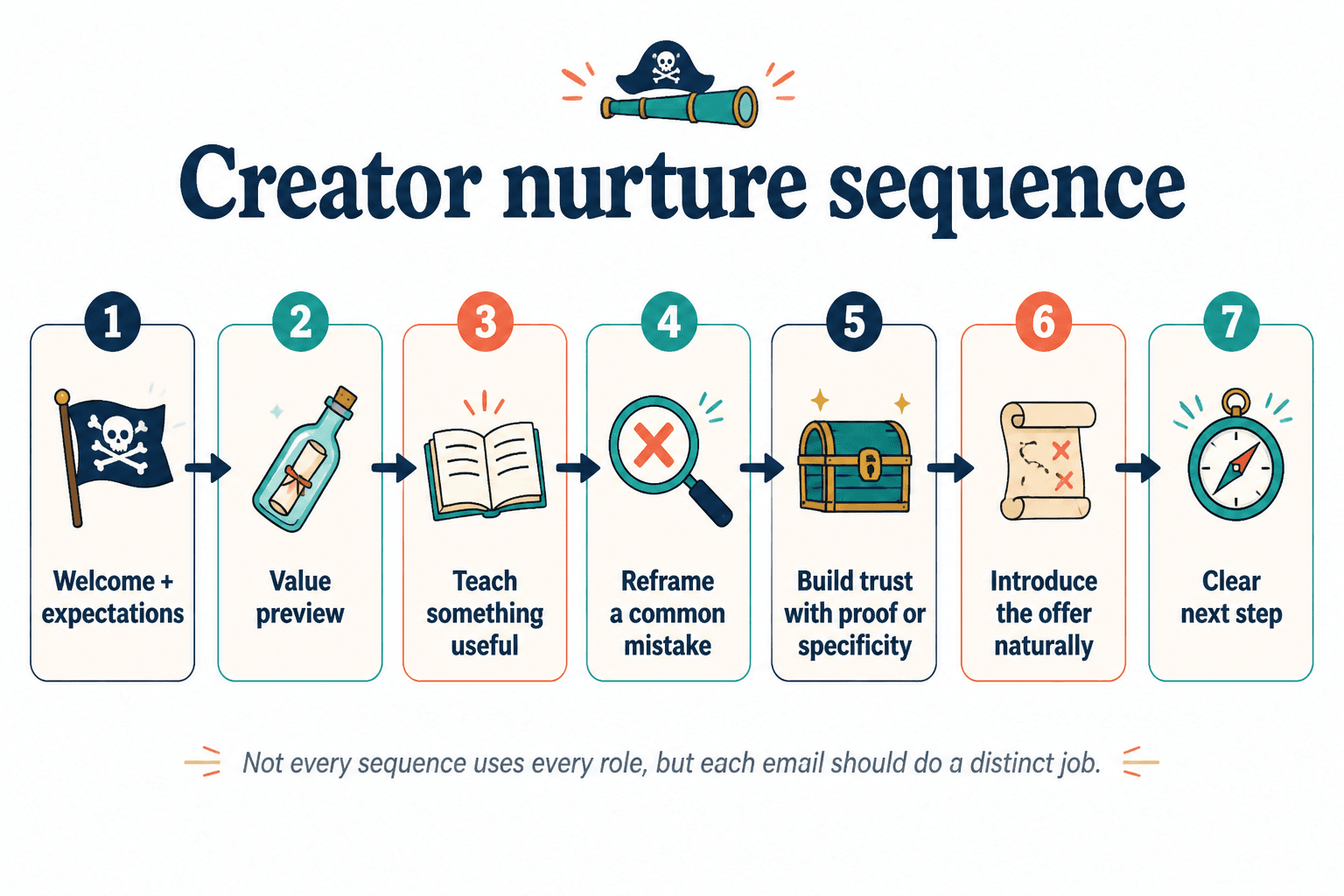
What a better creator email sequence is actually supposed to do
A good sequence does not just “nurture.” That word has been carrying too much furniture around for years. A better sequence should move a reader from one state to another in a way that feels useful and specific.
Usually that means some combination of these jobs:
- Orient the reader so they know what kind of creator they are hearing from.
- Build trust with a useful point of view, not a motivational fog machine.
- Increase relevance by speaking to the problem that brought them in.
- Reduce friction by answering objections before they turn into silence.
- Move to action with a clean next step, not a dramatic funnel trumpet blast.
That basic logic matches what email and lifecycle research consistently points toward: relevance, segmentation, and timely follow-up matter more than volume. See the practical guidance from Mailchimp’s email marketing benchmarks, HubSpot’s marketing statistics, and Google’s own guidance on useful landing-page relevance for the general principle: message match matters because people are not in the mood for a scavenger hunt.
Start with the job, not the software
The most common mistake is starting with the tool stack. Welcome automation. Tag rules. Segmentation logic. Trigger timing. Fancy thing after fancy thing. That is useful later. It is not where the writing problem lives.
Start with three questions instead:
- Who is this sequence for?
- What should they believe or do by the end?
- What is the shortest path from signup to that outcome?
Once those are clear, the sequence becomes easier to write and easier to trim. That is especially true when you are building the core set of emails most creators actually need: welcome, nurture, sales, re-engagement, and onboarding or post-purchase. The exact mix depends on the business, but the rule stays the same: every sequence should do one primary job.
For a broader planning view, the parent guide is the right home base. If you are trying to choose sequence types, the sibling piece on better results from creator email sequences may also be useful once it is live in your publishing set; for now, keep the scope anchored to the live pages above.
The sequence types worth writing
Not every creator needs ten different automations. That is how you end up with a system that looks comprehensive and behaves like a junk drawer.
The practical sequence set usually looks like this:
- Welcome sequence – explains who you are, what the reader can expect, and why they should keep paying attention.
- Lead nurture sequence – builds belief and keeps the topic useful after the first opt-in.
- Sales sequence – makes a clear offer without sounding like it learned persuasion from a discount pop-up.
- Re-engagement sequence – brings quiet subscribers back or lets them go cleanly.
- Onboarding or post-purchase sequence – helps buyers get value quickly and lowers regret.
These sequences do not need to feel formally separate in tone. They do need different jobs. A welcome sequence should not read like a hard sell. A sales sequence should not pretend it is only “sharing a few thoughts.” Readers have excellent fraud detection for that kind of thing.
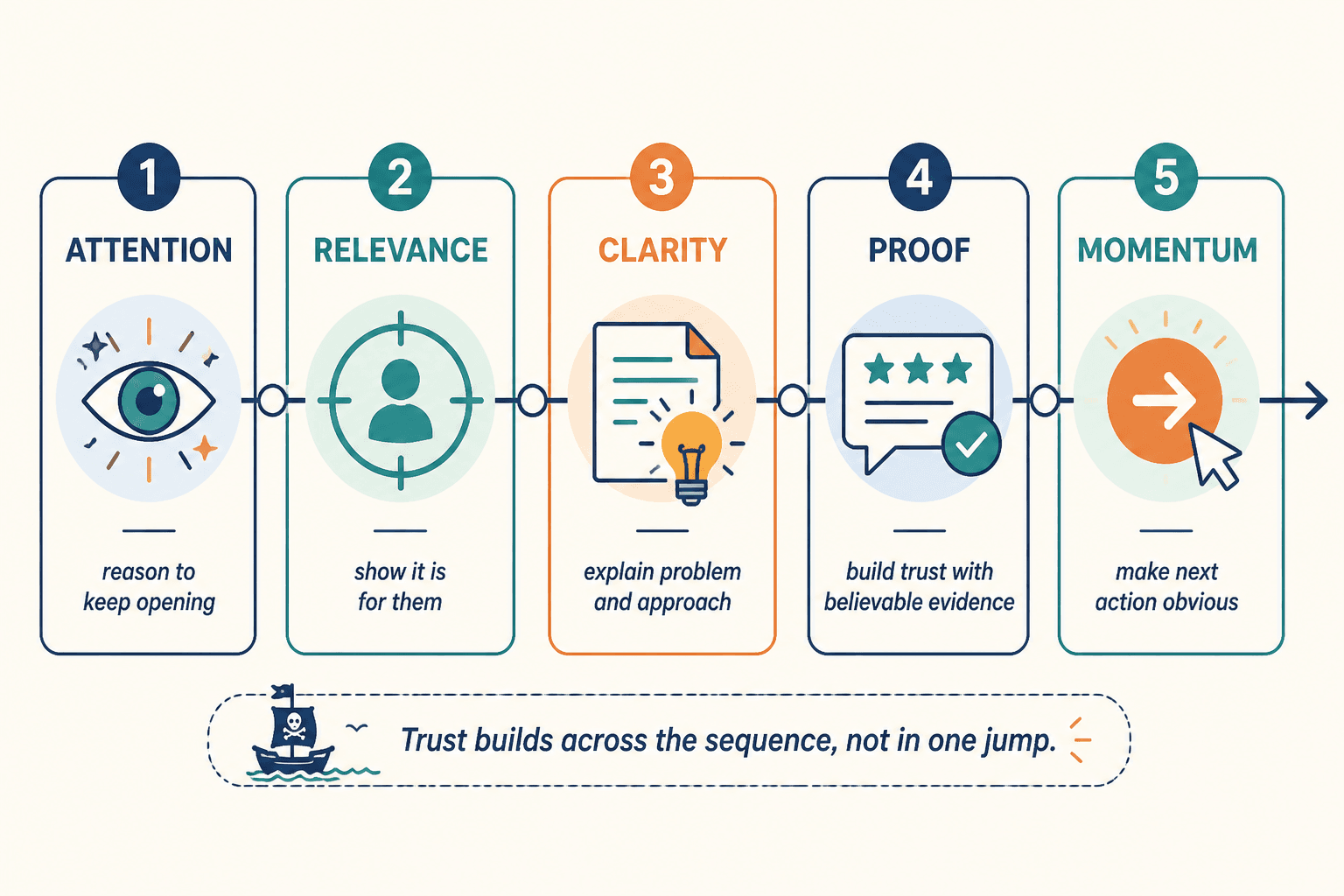
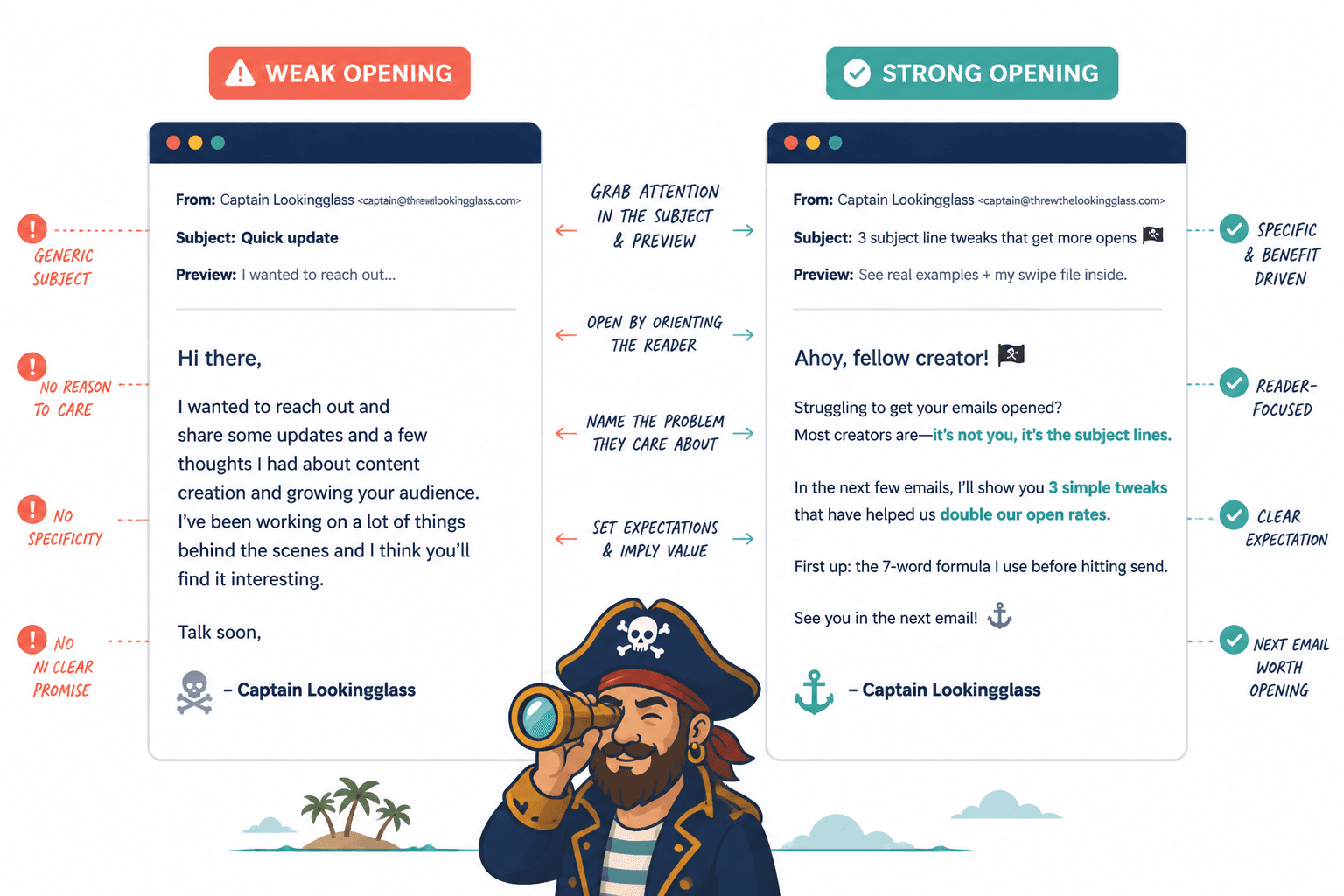
How to start without a weak opening
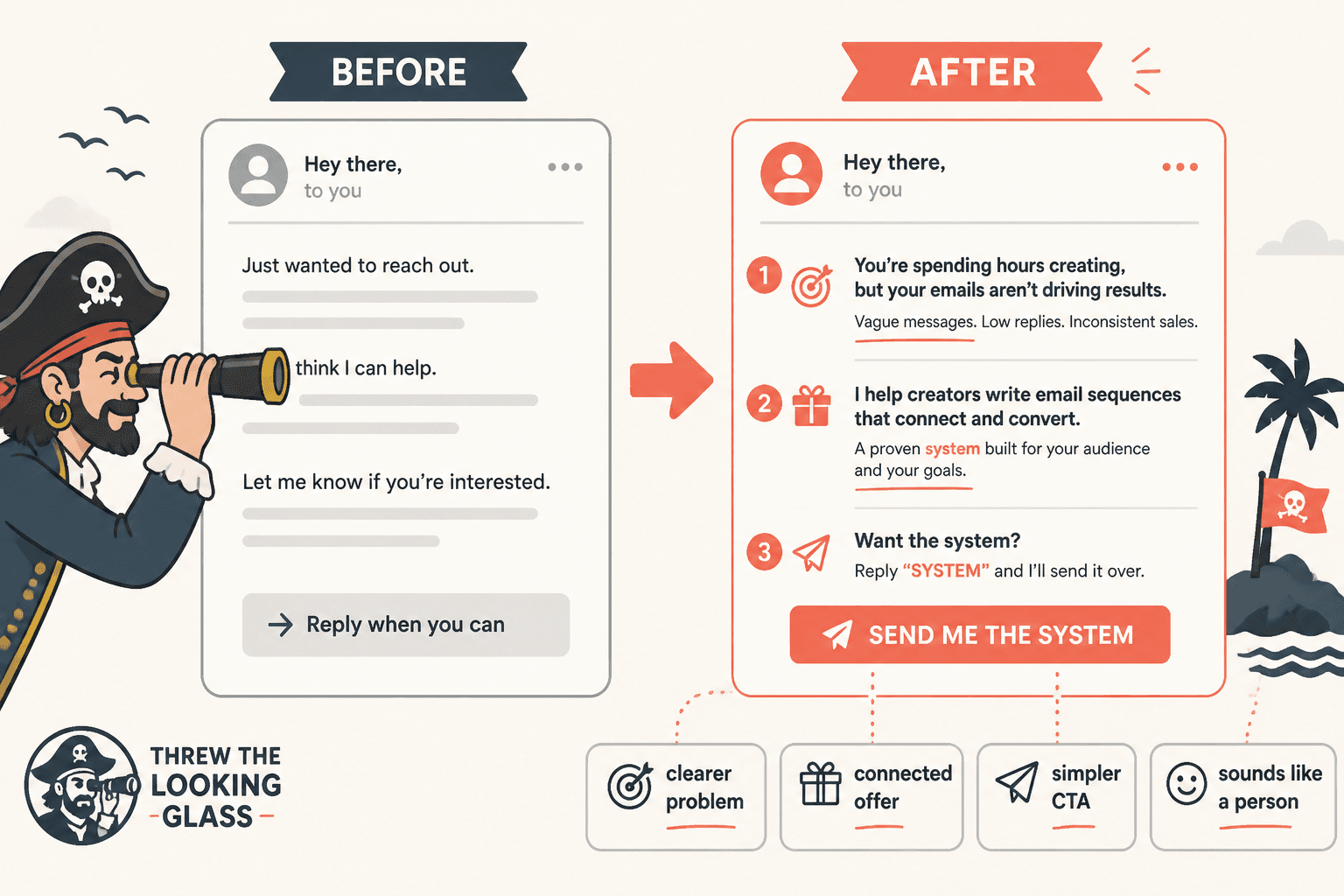
A weak opening usually happens when the sequence starts with the writer instead of the reader. That is a reliable way to turn a useful email into an extended throat-clear.
Strong openings usually do one or more of these things:
- name the reason the subscriber is here
- describe the problem more precisely than the reader’s last 17 tabs have done
- tell them what kind of sequence this is
- create a little tension early so the email feels worth staying with
A simple pattern is:
- acknowledge the context
- name the real problem
- promise the next useful step
That is cleaner than opening with a warm hello, a vague brand statement, and three paragraphs of preamble that seem designed to test loyalty. The reader is not waiting for your warm-up act.
Make each email do one clear job
Better creator sequences usually fail less because of the overall strategy and more because individual emails try to do three jobs at once. That leads to sludge.
Use a simple rule: one email, one primary job. A single email can still have supporting work, but it should not try to become the entire sequence in miniature.
Examples:
- Welcome email: orient and set expectations.
- Follow-up email: deepen the problem and show relevance.
- Proof email: make the case with one concrete example or observation.
- Offer email: explain the next step clearly and without theatrical pressure.
- Reminder email: remove one objection, not all of them in a single heroic paragraph.
This is where a lot of creator sequences get bloated. A writer thinks, “This email should cover everything.” No. That is not a job description; that is a cry for help.
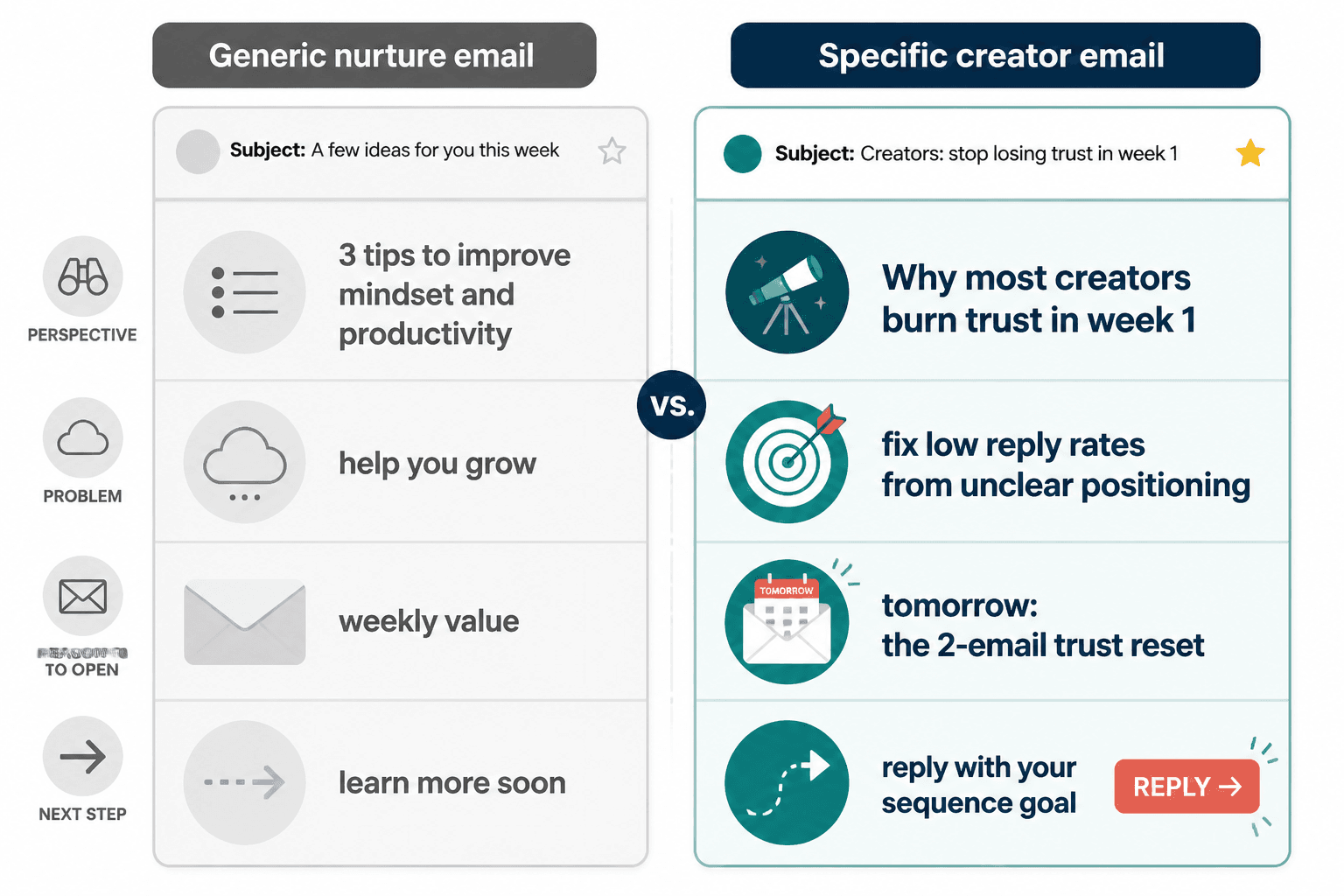
How to avoid generic, salesy, or robotic copy
Creator sequences get generic when they rely on stock phrases instead of observable details. They get salesy when the offer shows up before the reader has enough context. They get robotic when every sentence sounds approved by a committee of cautious interns.
The fix is specificity.
- Replace “I hope this helps” with a line that actually helps.
- Replace “Here’s a quick tip” with the actual tip.
- Replace “Many people struggle with this” with the specific friction point.
- Replace “just checking in” with a reason the email exists.
Specificity does not mean decorative detail for its own sake. It means the email sounds like it knows what is happening in the reader’s world. That is also why the best sequences often borrow from real audience language, support tickets, replies, comments, sales calls, and old content that already proved useful.
For a deeper pass on this problem, see how to improve nurture emails without sounding generic and how to write creator email sequences without sounding salesy or robotic. Both complement this guide well.
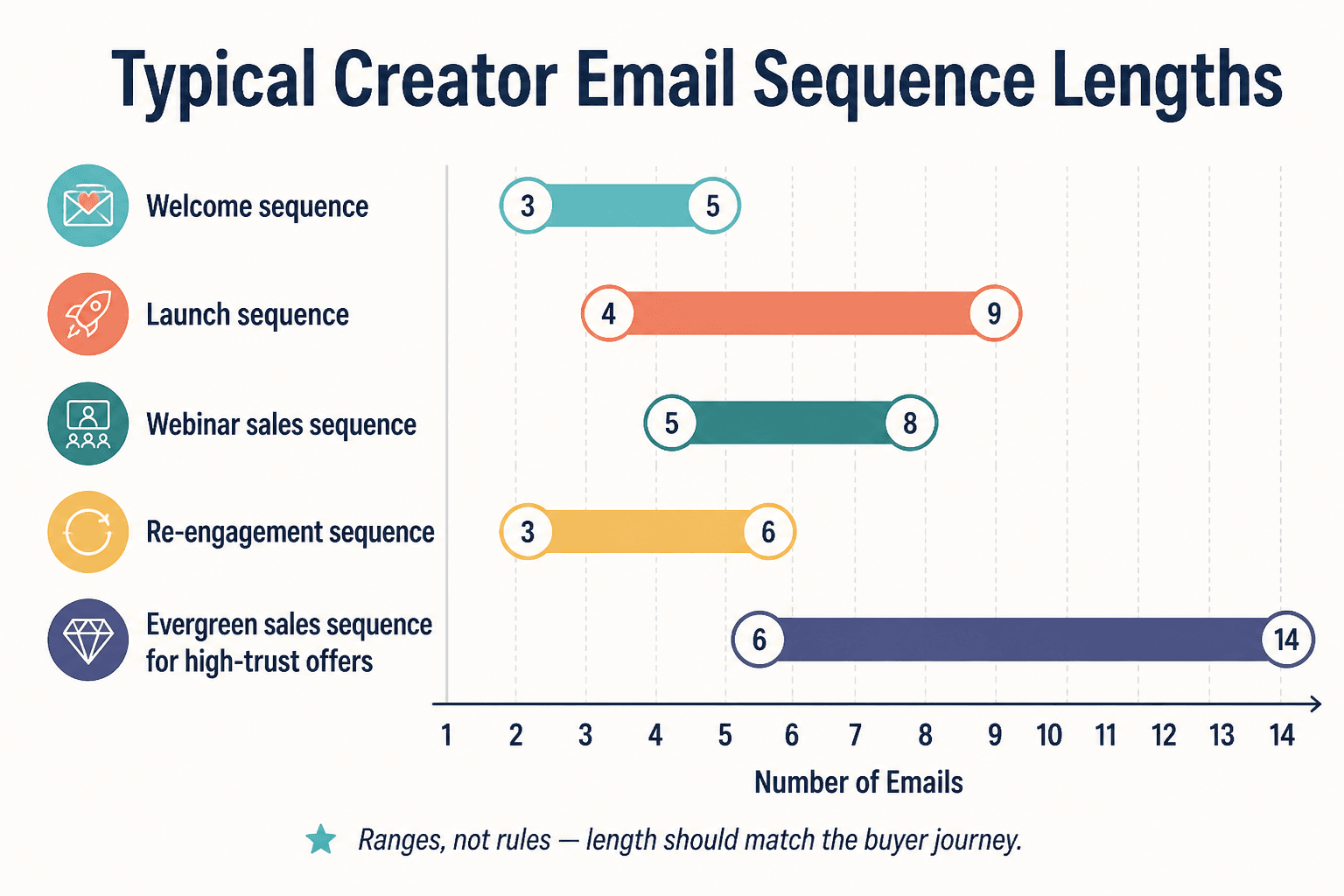
How long the sequence should be
Length should follow purpose, not superstition. A sequence is not better because it is longer, and it is not better because it is tiny and ascetic. It is better when the length matches the job.
Use these cues:
- Shorter sequences work well when the offer is simple, the audience is warm, or the action is obvious.
- Longer sequences make sense when trust needs more time, the offer is more complex, or the audience needs more proof before acting.
- Shorter sequences also win when the “extra” emails are just polite padding.
A useful test: if removing an email changes nothing except the total count, it probably did not deserve its slot. Sequence length should feel earned, not inflated.
See also: how long creator email sequences should be in 2026 and when short creator email sequences beat long ones.
Use old content as raw material, not as filler
One of the best sources for stronger creator sequences is already sitting in your archive. Old posts, podcast notes, livestream transcripts, lessons, frameworks, and FAQ answers often contain the exact material a sequence needs. The trick is to mine them for function, not to drag them in wholesale like a sofa through a narrow hallway.
Sort old content by what it does:
- what it teaches
- what belief it supports
- what objection it answers
- what proof it supplies
- what action it should lead to
Then pull only the strongest pieces and strip them down to the core idea. A good email sequence is not a museum gift shop with every souvenir on display. It is a path with purpose.
If you want the recycling workflow in more detail, the sibling guide on turning old content into better creator email sequences is the right companion piece.
Revise for clarity, not just polish
Revision is where weak sequences usually get rescued. Not by making the prose fancier, but by making the sequence more legible.
Check each email against this list:
- What is the one job of this email?
- Does the opening earn attention?
- Is the main point obvious by the midpoint?
- Does the email say something specific enough to matter?
- Is the CTA clear, proportional, and not weirdly dramatic?
Then read the sequence as a whole. Ask:
- Does each email build on the last one?
- Does the sequence progress toward a real next step?
- Did you repeat the same point in slightly different clothing?
- Did you include an email because it was useful or because it felt safe?
That last question catches a lot of dead weight.
A practical sequence checklist
- Define the sequence job before opening the draft.
- Choose the right sequence type for the reader’s stage.
- Write the first email so it earns the next one.
- Give each email one main job.
- Cut generic lines and replace them with specific observations.
- Keep the offer visible without pushing it before trust exists.
- Trim padding until every email earns its slot.
- Reuse old content only when it strengthens the sequence.
- Review the whole sequence for momentum, not just grammar.
Write the sequence like it is going somewhere
The best creator email sequences are not elaborate. They are directed. They respect the reader’s attention, keep the promise of the opt-in, and move toward a useful outcome without pretending every inbox visit is a life event.
That is the practical standard: clear purpose, specific writing, sensible length, and a clean next step. Everything else is decoration, and decoration is not a strategy.
For examples next, move to creator email sequence ideas and examples. For conversion work after the sequence, use how to turn creator email sequences into more leads or sales.