
Most creator funnels do not fail because the tech is wrong.
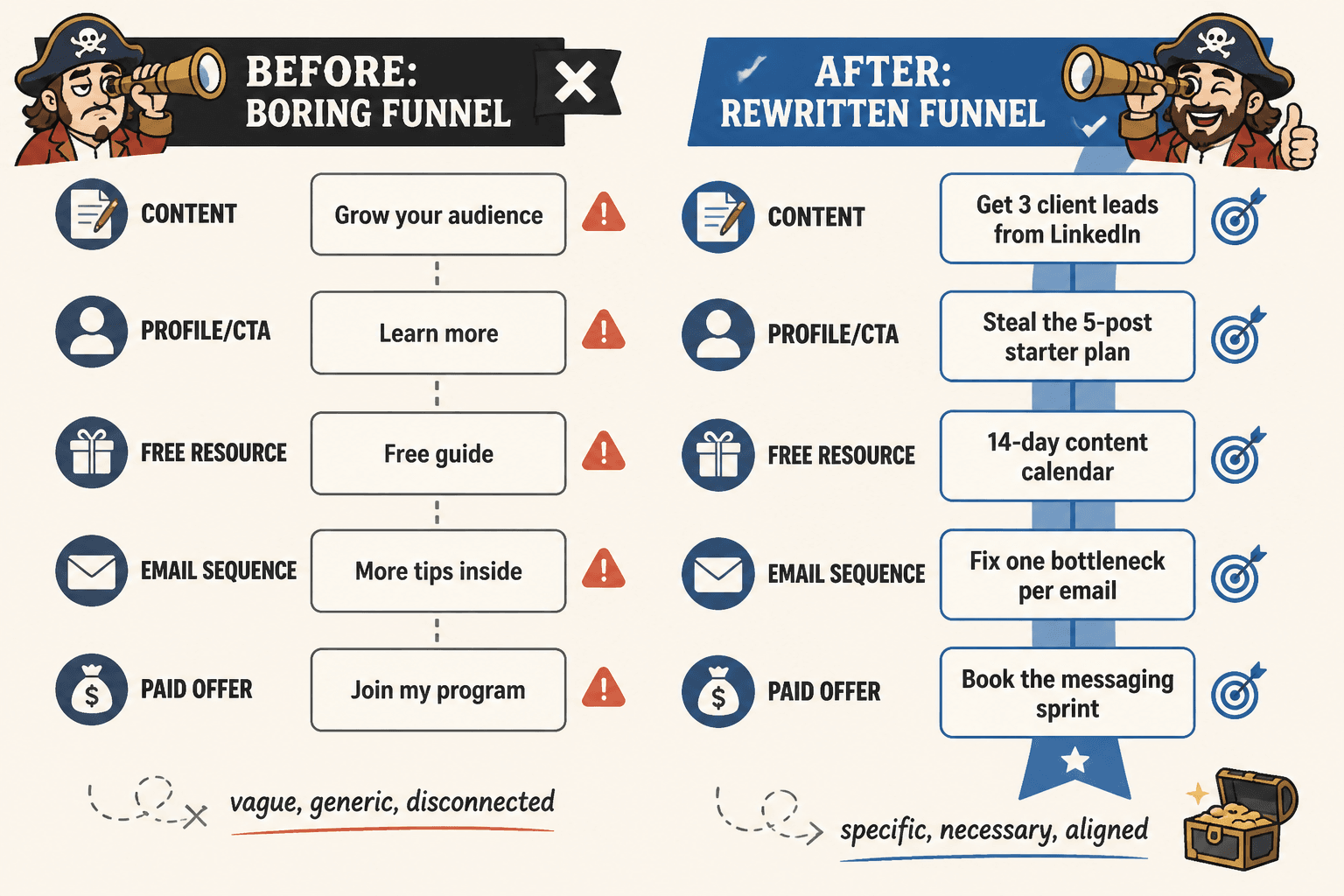
They fail because the journey makes no sense. A solid post leads to a vague profile. The profile leads to a bloated link page. The link page offers seven options, none of them especially compelling. Then people wonder why attention is not turning into leads.
That is the real problem with creator funnels for coaches, consultants, and personal brands. It is usually not a traffic problem first. It is a path problem.
This article will show you practical creator funnels examples for coaches, consultants, and personal brands that actually fit how people buy from expertise-driven businesses. Not hype-machine funnels. Not “just automate everything” nonsense. Real paths from content to conversation, trust, and sales.
If you sell advice, strategy, transformation, implementation, or access to your brain, your funnel needs to do three things well:
- attract the right people
- build trust fast enough to matter
- make the next step obvious
That is it. The rest is decoration.
For the full path around this topic, head to the parent guide.
What a creator funnel actually is
A creator funnel is just the path someone takes from discovering you to doing something useful for your business.
Useful might mean subscribing, replying, booking a call, downloading a resource, joining a workshop, or buying a small offer. It does not have to mean “becoming a high-ticket client by Thursday.” Calm down.
For coaches, consultants, and personal brands, the funnel usually starts with content and moves through one or more trust-building steps before a sale. That matters because expertise is not an impulse buy. People need to understand what you do, who you help, how you think, and why they should trust you over the other 400 people using the exact same words in their bio.
A simple creator funnel often looks like this:
- Post or article
- Profile or landing page
- Lead magnet, newsletter, booking page, or low-friction offer
- Nurture
- Consultation, application, or sale
Simple is usually better. Not always easier. Better.
What good creator funnels do differently
Before the examples, it helps to know what separates a decent funnel from a messy one.
They match the audience’s intent
If someone reads a practical post about fixing their LinkedIn positioning, the next step should feel related. A profile audit checklist? Good. A random webinar about mindset? Not so much.
They do not ask for too much too soon
Cold audiences usually should not go straight from one post to a giant commitment. If the trust level is low, offer a low-friction next step.
They make one next action obvious
People are busy, distracted, and mildly suspicious. If your funnel offers five equal options, many will choose none.
They build trust with relevance, not fluff
Trust does not come from sounding polished. It comes from sounding clear, specific, and useful. Better proof, better examples, better next steps.
7 creator funnels examples for coaches, consultants, and personal brands
These are not the only workable funnel structures, but they are reliable. You can adapt them based on offer size, sales cycle, and how warm your audience already is.
1. Post to lead magnet to email nurture to consultation
This is one of the most common creator funnels because it works well when you sell services, coaching, strategy, or advisory offers.
Flow: educational post → profile CTA or post CTA → free resource → short email sequence → consultation or application
Best for: consultants, business coaches, copywriters, strategists, personal brand advisors, marketing service providers
Example: A positioning consultant posts: “Most experts do not need more content ideas. They need a clearer problem statement.” The CTA invites readers to grab a messaging checklist. The checklist helps them diagnose weak positioning. Then a short email sequence shows common mistakes, shares a client mini-case, and invites them to book a messaging strategy call.
Why this works: the free resource is tightly connected to the content, and the consultation feels like a natural next step instead of a sudden pounce.
What people mess up: they make the lead magnet too broad, too generic, or too long. Your free resource does not need to become a small textbook. It needs to create clarity and momentum.
2. Post to profile to newsletter
This is a strong option for personal brands building long-term trust instead of forcing quick calls from every piece of content.
Flow: social post → profile → newsletter signup → ongoing nurture → occasional offer
Best for: writers, creators, thought leaders, niche consultants, fractional experts, founders with long sales cycles
Example: A leadership coach writes practical LinkedIn posts about managing difficult team conversations. Their profile points to a weekly newsletter with scripts, frameworks, and case breakdowns. Over time, readers get better advice, more proof, stronger trust, and occasional invitations to workshops or coaching.
This works because email gives you more space to deepen authority than a social feed does. It also protects you from building your whole business on rented platform attention, which is not a strategy so much as a mood disorder.
If you want broader context on how these paths fit together, it helps to review the larger structure behind creator funnels and how they support trust-based growth.
3. Article to related offer
This is underrated. Long-form articles can quietly do a lot of heavy lifting for authority, search, and conversion, especially if your work involves nuance.
Flow: search-friendly article or platform article → in-article CTA → relevant service or product page → inquiry or purchase
Best for: consultants, niche coaches, subject-matter experts, B2B advisors, educators with specific intellectual property
Example: A consultant writes an article on why most founder-led LinkedIn content sounds generic and how to fix it. Inside the article, they offer a content teardown service or a small paid audit.
This kind of funnel works well when the article solves part of the problem and the offer helps solve the rest faster, better, or with expert support. The connection must be tight. If the article is about bio positioning and the CTA is for a vague business mastermind, the path breaks.
4. Thread to email list to low-ticket product
This is a strong model for creators selling templates, mini-products, swipe files, prompts, small workshops, or starter trainings.
Flow: X thread or short-form educational content → free signup → nurture → low-ticket product → upsell or service
Best for: creators with productized knowledge, ghostwriters, designers, copywriters, niche educators, operators who teach systems
Example: A creator posts a thread on five mistakes experts make when writing lead-generating posts. The CTA offers a free hook bank. New subscribers then receive a few useful emails and a low-ticket product such as “50 Trust-Building CTAs for Coaches.” Buyers may later upgrade to a larger training or service.
The low-ticket offer works best when it creates a quick win. If it is too fluffy, it kills trust instead of building it.
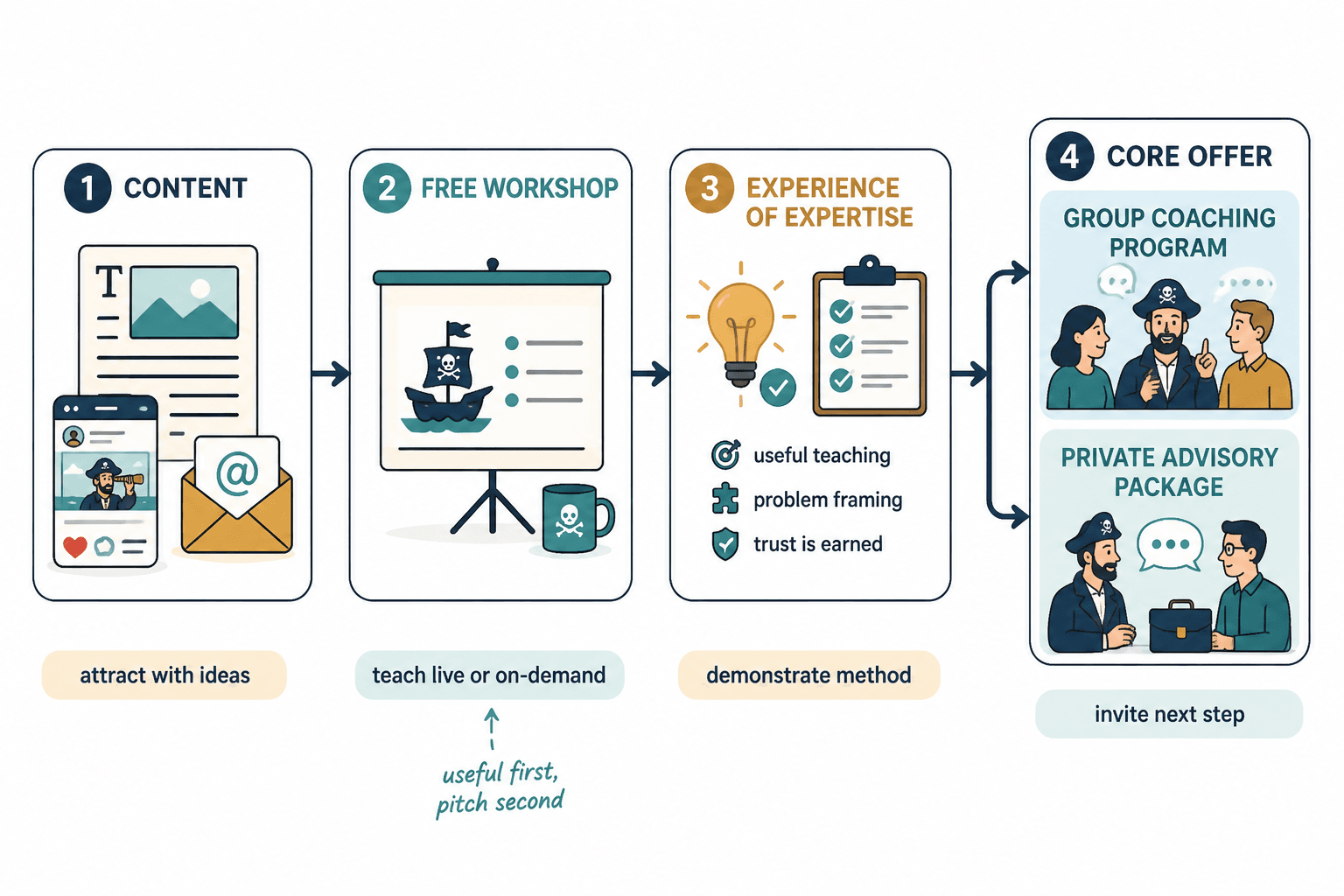
5. Content to workshop to core offer
This is a great creator funnel when your audience needs more education before they are ready to buy, but you do not want to rely only on 1:1 calls.
Flow: content → workshop registration → live or recorded workshop → invitation to coaching, consulting, or program
Best for: coaches, consultants, educators, service providers moving toward leveraged offers
Example: A sales coach publishes posts about why most sales messaging sounds pushy because the offer is not clearly framed. The CTA invites readers to a workshop on turning expertise into a clean offer narrative. At the end of the workshop, attendees can join a group coaching program or book a private advisory package.
This works because the workshop gives people a meaningful experience of your thinking. They get to see how you teach, structure, and solve problems. That does more for conversion than ten generic authority posts ever will.
Just make sure the workshop is actually useful. Too many “free trainings” are 45 minutes of throat-clearing followed by a pitch wearing a fake mustache.
6. Case study content to booking page
This one is simple and often powerful, especially for service providers and consultants with clear client outcomes.
Flow: case study post, email, or article → booking page → consult call or application
Best for: consultants, agency-style personal brands, service businesses, coaches with strong proof
Example: A LinkedIn strategist posts a detailed breakdown of how they helped a consultant turn profile views into booked calls by fixing the profile CTA, content angle, and signup path. The CTA invites readers with similar issues to book a fit call.
The reason this works is obvious: proof shortens the distance to action. Not because people love data in the abstract, but because they want evidence that you can solve a real problem for someone like them.
The catch: do not make your case study all about you. Frame it around the client problem, what changed, and why it mattered.
7. Comment conversation to soft DM to offer
This one is useful when your business depends on trust and context, and when your audience is active enough to have real conversations publicly.
Flow: post → comments → useful replies → permission-based DM → next step
Best for: coaches, consultants, service providers, niche B2B creators, relationship-driven businesses
Example: A consultant posts about why expert businesses lose leads between content and call booking. A reader comments with a specific issue around homepage confusion. The creator replies thoughtfully, offers one useful observation, and asks if they want a short framework by DM. If the conversation continues naturally, the creator may later suggest a call.
This is not code for “pitch strangers in the DMs.” That ruins trust fast. The move only works when the conversation is wanted, relevant, and permission-based.
How to choose the right creator funnel for your business
You do not need every funnel. You need the one that fits your offer, your audience, and your current stage.
| If you sell… | A strong funnel might be… | Why it fits |
|---|---|---|
| 1:1 consulting | Post → lead magnet → nurture → call | Builds trust before the sales conversation |
| High-ticket coaching | Content → workshop → application | Lets people experience your thinking first |
| Productized service | Case study → booking page | Proof creates faster conversion |
| Newsletter-led brand | Post → profile → newsletter | Compounds trust over time |
| Low-ticket digital product | Thread → email list → offer | Works well for quick-win educational products |
A few simple questions help:
- How expensive is the offer?
- How much trust does someone need before buying?
- Does your audience need education or just clarity?
- Can your content naturally lead into the next step?
- Do you want more calls, more subscribers, more buyers, or better-fit leads?
If your audience is still small, keep the funnel simpler, not fancier. This is where creator funnels for creators with small audiences become especially useful, because small audiences usually need cleaner trust paths, not more automation.
Common creator funnel mistakes that quietly kill conversions
Weak content-to-offer match
Your next step should feel like the natural extension of the content, not a random sales turn.
Too many choices
One strong CTA beats a menu of vague possibilities. Most people do not want to “explore options.” They want to know what to do next.
Pitching before trust exists
If every post sounds like it is leaning toward a sale, people feel handled. That is rarely a conversion booster.
No proof anywhere in the funnel
Proof can be results, examples, specific insights, case studies, testimonials, or sharp thinking. Without it, your funnel is asking people to trust a nice-looking opinion.
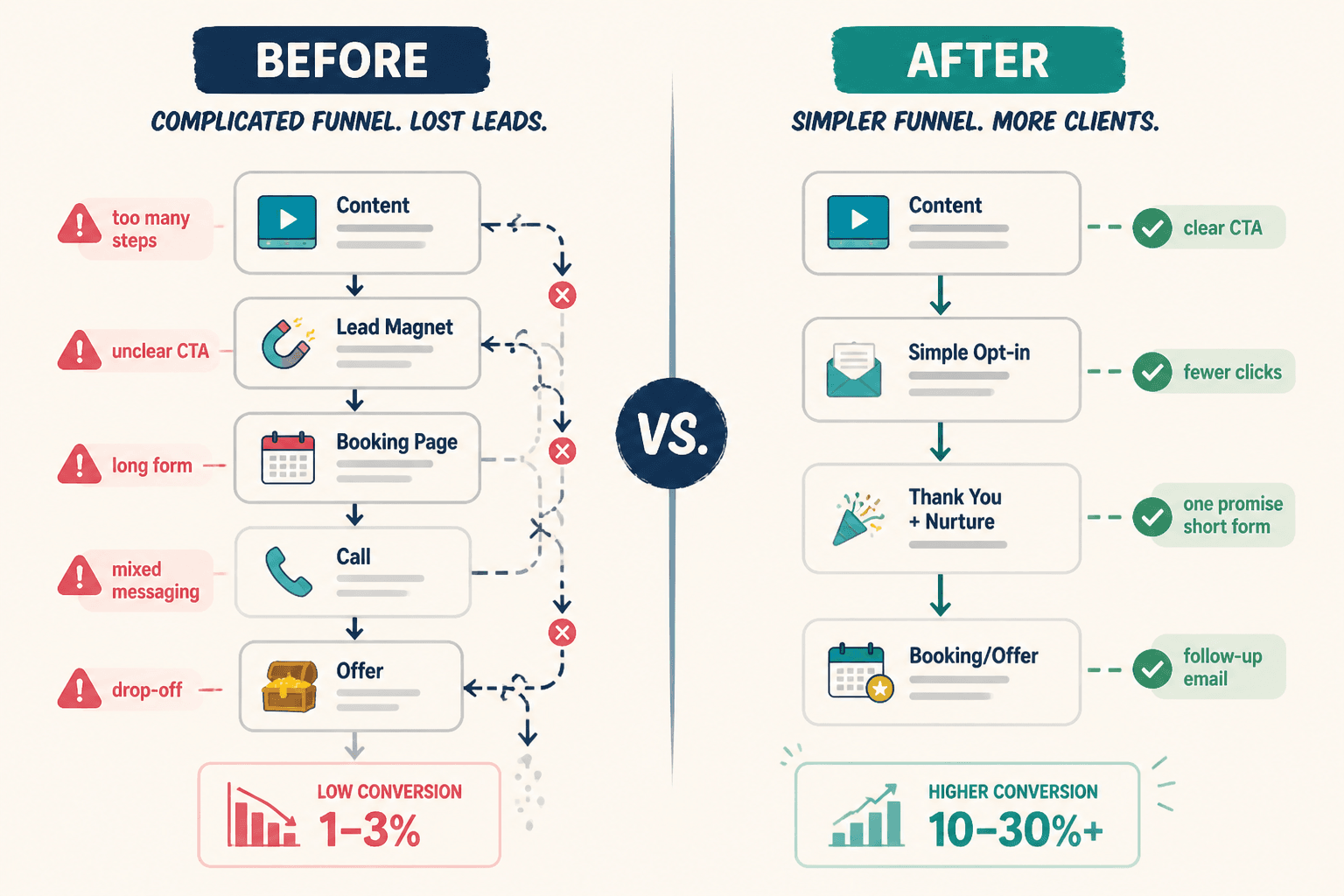
Bad signup paths
A lot of funnels break at the exact point where interest should turn into action. The CTA is muddy. The page is cluttered. The benefit is vague. The form asks for too much. Small friction points matter.
If this is where things are leaking, better creator funnels signup paths for personal brands is worth reading next.
How to tighten a creator funnel without rebuilding your entire business
You probably do not need a dramatic overhaul. You probably need a better path.
Start here:
- Pick one core offer
- Choose one primary funnel path
- Make sure your content naturally leads to that path
- Rewrite your profile CTA so the next step is obvious
- Improve the signup page or booking page
- Add proof in the emails, page copy, or booking flow
- Trim anything that adds friction without adding clarity
This is not glamorous advice, but it works. Better transitions beat bigger complexity.
If you want more structure around this, these related resources can help: creator funnels guide for creators who want better results and best creator funnels ideas and examples for creators.
And if you want a broader category view, there is also the monetization and systems path here: monetization funnels and creator funnel systems.
A simple framework for building your own funnel
If you want to build a funnel from scratch, use this four-part framework:
- Attention: What content brings the right people in?
- Bridge: What step moves them from interest to deeper trust?
- Conversion: What is the actual offer or action?
- Nurture: What helps undecided people keep moving?
Here is a quick filled-in version:
- Attention: LinkedIn posts about fixing consultant positioning
- Bridge: free profile messaging checklist
- Conversion: paid profile audit
- Nurture: 5-email sequence with examples and mini-teardowns
Notice what makes this clean: every step is about the same core problem. The prospect does not have to mentally leap from one topic to another. That consistency builds momentum.
FAQ
Do coaches and consultants need a funnel?
Yes, but it does not need to be complicated. If you use content to attract leads, you already have a funnel. The question is whether it is intentional or messy.
What is the best creator funnel for personal brands?
Usually the one that matches your offer and audience trust level. For many personal brands, content → newsletter or lead magnet → nurture → offer works well.
Should I send people straight to a booking call?
Sometimes. It works best when the content is highly specific, the audience is already warm, or your proof is strong. Cold traffic often needs an intermediate trust step.
Do I need a lead magnet?
No. A newsletter, workshop, case study, or strong booking page can also work. The key is giving people a clear next step that matches their intent.
How many steps should a creator funnel have?
As few as possible, but enough to build trust. More steps are not automatically smarter. Often they are just more places to lose people.
Final thought
The best creator funnels examples for coaches, consultants, and personal brands are not impressive because they are complicated. They are effective because they are coherent.
Good content earns attention. Good positioning makes that attention relevant. Good funnel design gives it somewhere useful to go.
If your funnel feels weak, do not start by adding more tools, more pages, or more automations. Start by asking a simpler question: after someone finds me, what is the next obvious step, and why would they want to take it?
Answer that cleanly, and your funnel gets a lot better very fast.