
Most welcome emails do not fail because the writer forgot some magical copywriting trick. They fail because they feel like an afterthought. A bland confirmation note. A mini sales page in disguise. A robotic “thanks for subscribing” that tells the reader absolutely nothing useful about what happens next.
That is a problem, because your welcome email is doing more than saying hello. It is setting expectations, establishing tone, and quietly answering the question every new subscriber has: is this worth staying for?
If you want better welcome emails for personal brands, start by fixing the mistakes that make people ignore, distrust, or forget you before the relationship even begins. This piece covers the common welcome email mistakes, why they hurt, and how to make your first email more useful, clearer, and far less forgettable.
And no, the answer is not “add more hype.” It usually is the opposite.
If you want the bigger picture, start with the parent guide.
Why welcome emails matter more than people treat them
For personal brands, the welcome email is not just an admin message. It is the first real piece of direct communication after someone gives you access to their inbox. That matters.
Social followers can scroll past you for weeks and barely notice. Email is different. When someone subscribes, they are giving you a small amount of trust up front. Your job is not to immediately cash it in with a hard pitch and a fake countdown timer. Your job is to prove subscribing was a smart choice.
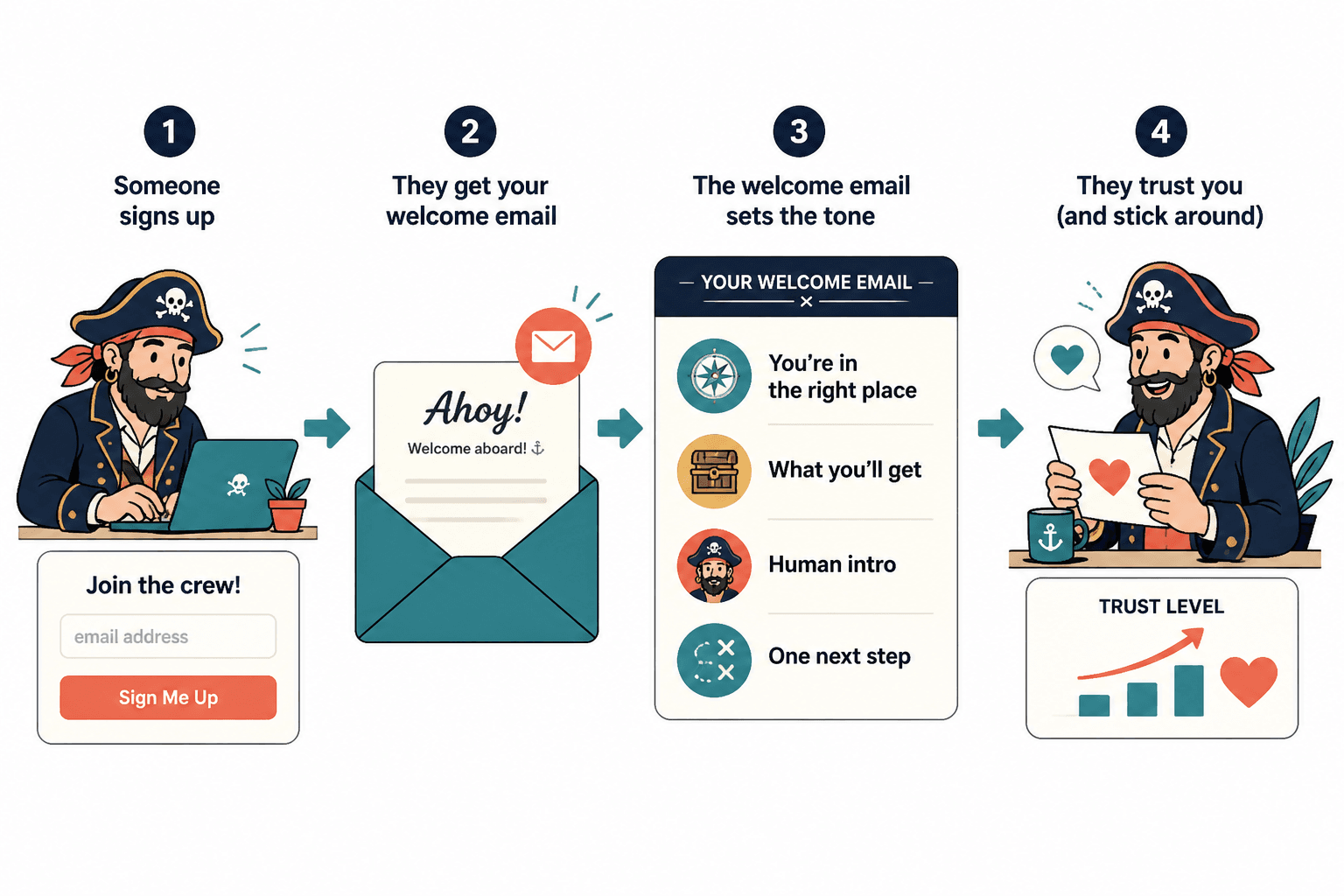
A good welcome email can do a few things at once:
- Confirm they are in the right place
- Explain what they will get from you
- Make your brand feel human and specific
- Point them to one useful next step
- Increase the chances they actually open your future emails
If you want a broader foundation first, it helps to read this guide to welcome emails for creators who want better results and the main welcome emails hub. But let us get into the mistakes, because that is usually where the rot starts.
Better Welcome Email Mistakes to Avoid for Personal Brands
1. Writing a welcome email that says almost nothing
The most common mistake is also the most boring one. The email arrives and says some version of:
Thanks for subscribing. I’m excited to have you here.
Fine. Polite. Completely forgettable.
If that is basically the whole email, the reader learns nothing. They do not know what kind of emails you send, how often you send them, what makes your perspective useful, or what they should do next.
A better approach is simple: say hello, then actually orient the person.
- What is this newsletter or email list about?
- Who is it for?
- What kind of value should they expect?
- What should they read, click, or reply to first?
You do not need a dramatic manifesto. You need clarity.
2. Making it about you instead of the reader
Some personal brands hear “build connection” and respond by writing three paragraphs about their journey, their philosophy, their background, their why, and maybe their dog.
Look, a little personality is good. A one-sided autobiography is not.
New subscribers are not asking for your full origin story on day one. They want to know if your emails will help them, interest them, or improve something they care about. You can absolutely share who you are, but tie it to relevance.
Instead of this:
I started this brand after years of exploring my passion for storytelling, marketing, entrepreneurship, and meaningful transformation.
Try something like this:
I help creators and solo businesses write sharper content and emails that sound like real people, not polished template mush. That’s what you’ll get here.
That lands because it tells the reader what the subscription means for them.
3. Trying to sell too much, too fast
Can you sell in a welcome email? Yes. Should your first email read like a rushed checkout page? Usually not.
One of the biggest personal brand mistakes is treating every new subscriber like a lead who just forgot to buy. So the welcome email shows up with a discount, a booking link, a course pitch, three testimonials, and a “spots are filling fast” line that smells like it was left out in the sun.
That move can work if the person subscribed specifically for a high-intent offer. But for most creators, coaches, consultants, and personal brands, the first email should build trust before it pushes conversion. Trust is not fluff. It is the thing that makes future sales emails work.
If you do include an offer, keep it light and relevant. A soft next step works better than a chest-first launch tackle.
- Read this popular article
- Reply and tell me what you’re working on
- Check out this resource
- If you need direct help, here is my services page
Subtle is underrated. Mostly because it still feels human.
4. Forgetting to set expectations
Expectation-setting is one of the least sexy parts of email writing, which is exactly why people skip it. Then they wonder why subscribers vanish after two sends.
Your welcome email should make future emails easier to recognize and easier to want. That means telling people what they are signing up for in plain English.
Include things like:
- How often you email
- What kinds of topics you cover
- Your tone or angle
- Whether you occasionally pitch offers
- What they should do if they want something specific from you
Example:
You’ll usually hear from me once a week with practical ideas on content, email strategy, and audience trust. Occasionally I’ll share tools, templates, or paid offers when they’re genuinely useful.
That one paragraph prevents confusion, reduces surprise, and gives your future emails context. Handy little thing, context.
5. Sounding polished but empty
This one has gotten worse thanks to AI-assisted writing and the internet’s deep commitment to sounding important. Plenty of welcome emails are technically clean and emotionally dead. They read like brand conditioner: smooth, soft, and impossible to remember.
Watch for vague phrases like:
- I’m so excited to be on this journey with you
- I’m here to support and empower you
- You’ll get insights, strategies, and inspiration
- My mission is to help you thrive
None of that tells the reader anything concrete. Better welcome emails use language that a real person would say and a busy reader can immediately understand.
Say what you actually send. Say what you actually help with. Say what people can expect. If your email could belong to a wellness coach, a marketing consultant, a mindset creator, and a productivity app at the same time, it is too generic.
6. Giving the reader too many next steps
A welcome email is not a digital junk drawer.
Some creators panic at the thought of “wasting” the first email, so they cram in every possible link:
- X
- Podcast
- Freebie library
- Course
- Booking page
- Blog
- Community
- YouTube
That is not helpful. It is noisy.
The better move is to choose one main action and maybe one secondary option. That is enough. You are not trying to show the reader your full digital ecosystem like a proud landlord. You are trying to guide them.
Strong next steps might include:
- Read your best starting article
- Reply with a specific answer
- Download the promised resource
- Visit a service page if they want help now
If you need inspiration, these welcome email examples for coaches, consultants, and personal brands can help you see how focused emails tend to outperform cluttered ones.
7. Hiding the promised freebie or making it annoying to access
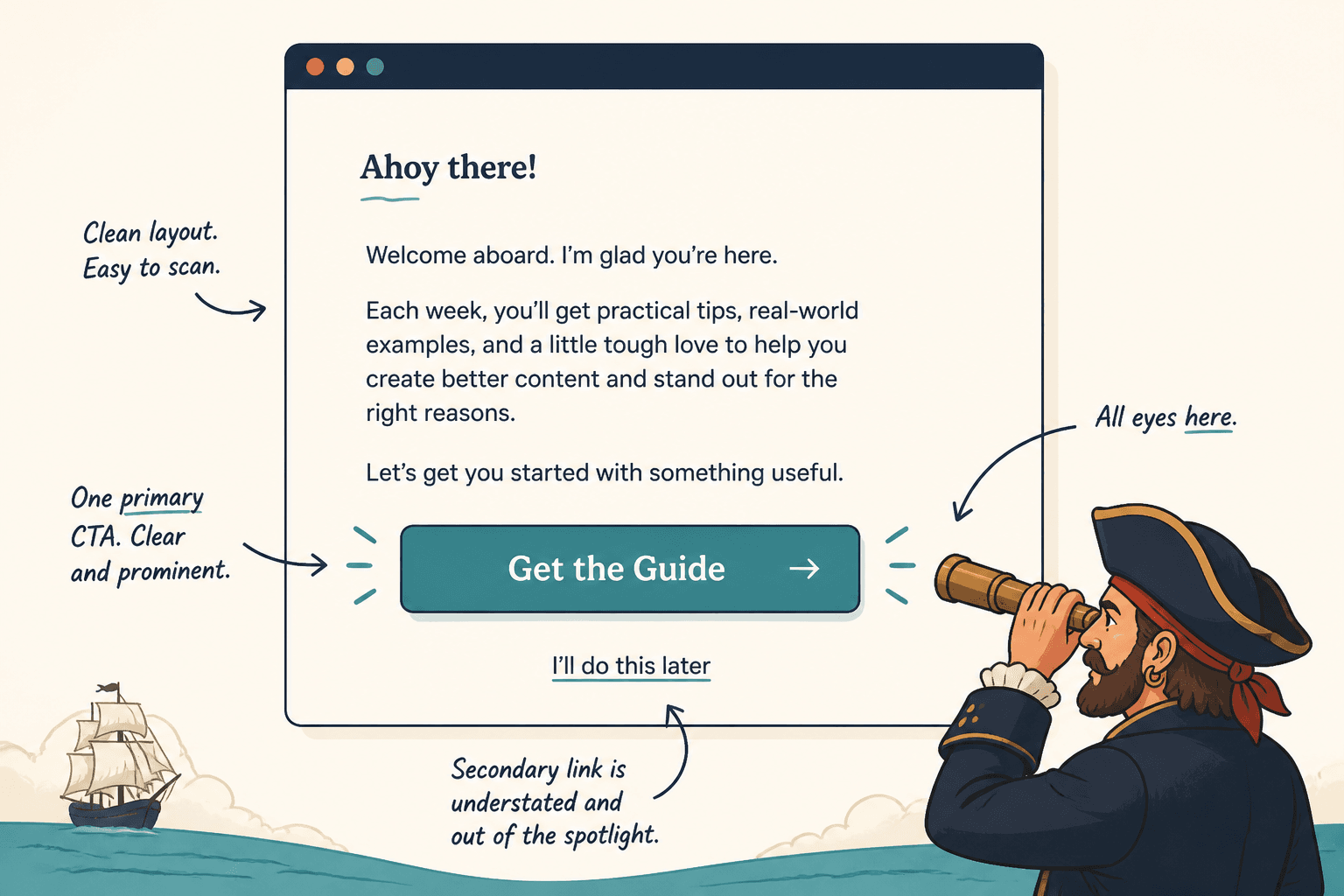
If someone signed up for a guide, checklist, workshop replay, or template, do not make them work to find it. Do not bury it under a wall of intro text. Do not rename it so cleverly that they are not sure they clicked the right thing.
Deliver the thing quickly and clearly.
A simple structure works well:
- Quick welcome
- Direct link to the promised resource
- One or two lines about what it helps with
- Short expectation-setting section
- One optional next step
This is not glamorous advice, but it matters. People remember friction. Especially unnecessary friction.
8. Not sounding like the rest of your brand
Your welcome email should feel consistent with how you show up elsewhere. If your social posts are direct and thoughtful, but your first email sounds like it was generated by a corporate intern trapped in a funnel dashboard, that disconnect hurts trust.
Consistency does not mean every channel sounds identical. Email can be calmer, warmer, and a little more personal. But it still should feel like you.
That is especially true for personal brands, where the product and the person are often linked. People are not just assessing your information. They are assessing your taste, clarity, energy, and credibility.
If your welcome email feels generic, it weakens all of that.
9. Making the email too long without earning the length
There is nothing wrong with a longer welcome email. There is something wrong with a long welcome email that rambles, repeats itself, and takes 600 words to deliver one sentence of value.
Length should match purpose. If you are introducing a nuanced newsletter, linking to key resources, and giving useful context, a longer email can work. If you are just saying thanks and dropping a PDF link, keep it tighter.
A good test: remove every sentence that exists only to sound warm, polished, or “professional.” If the email improves immediately, you had fluff.
10. Ignoring the reply opportunity
Most personal brands underuse replies in welcome emails. That is a mistake, because the first email is one of the easiest places to invite a small, natural interaction.
You do not need to force a conversation. You just need to lower the bar enough that the right people might respond.
Good reply prompts are simple and specific:
- What are you working on right now?
- What made you subscribe?
- What is your biggest struggle with welcome emails?
- Want me to point you to the most relevant resource? Hit reply and tell me your situation.
That kind of invitation can improve deliverability signals, yes, but more importantly, it gives you insight and starts actual relationships. Which is kind of the point.
What a better welcome email usually includes
If you want a practical checklist, most strong personal brand welcome emails include some version of these five pieces:
- A clear greeting that feels human, not overproduced
- The promised thing if they subscribed for a freebie or resource
- A quick explanation of what your emails are about and who they help
- Expectation-setting around frequency, themes, and occasional offers
- One next step like a reply, article, resource, or service page
That is enough for most people. You do not need to build a cathedral out of a hello email.
A simple before-and-after rewrite
Here is what a weak version might look like:
The bigger point is simple: clearer structure and clearer writing make the piece more useful. That is usually what makes the ending land better too.
Welcome emails work best when they set expectations clearly and move the relationship forward without overperforming. Clarity and trust do more than extra cleverness.