
If your LinkedIn audience is small, articles can look like a terrible bet.
You spend more time writing one, publish it, and then get what feels like six views, one polite like, and silence so loud it deserves its own byline.
That does not mean LinkedIn Articles for Creators With Small Audiences are useless. It usually means the article was doing the wrong job.
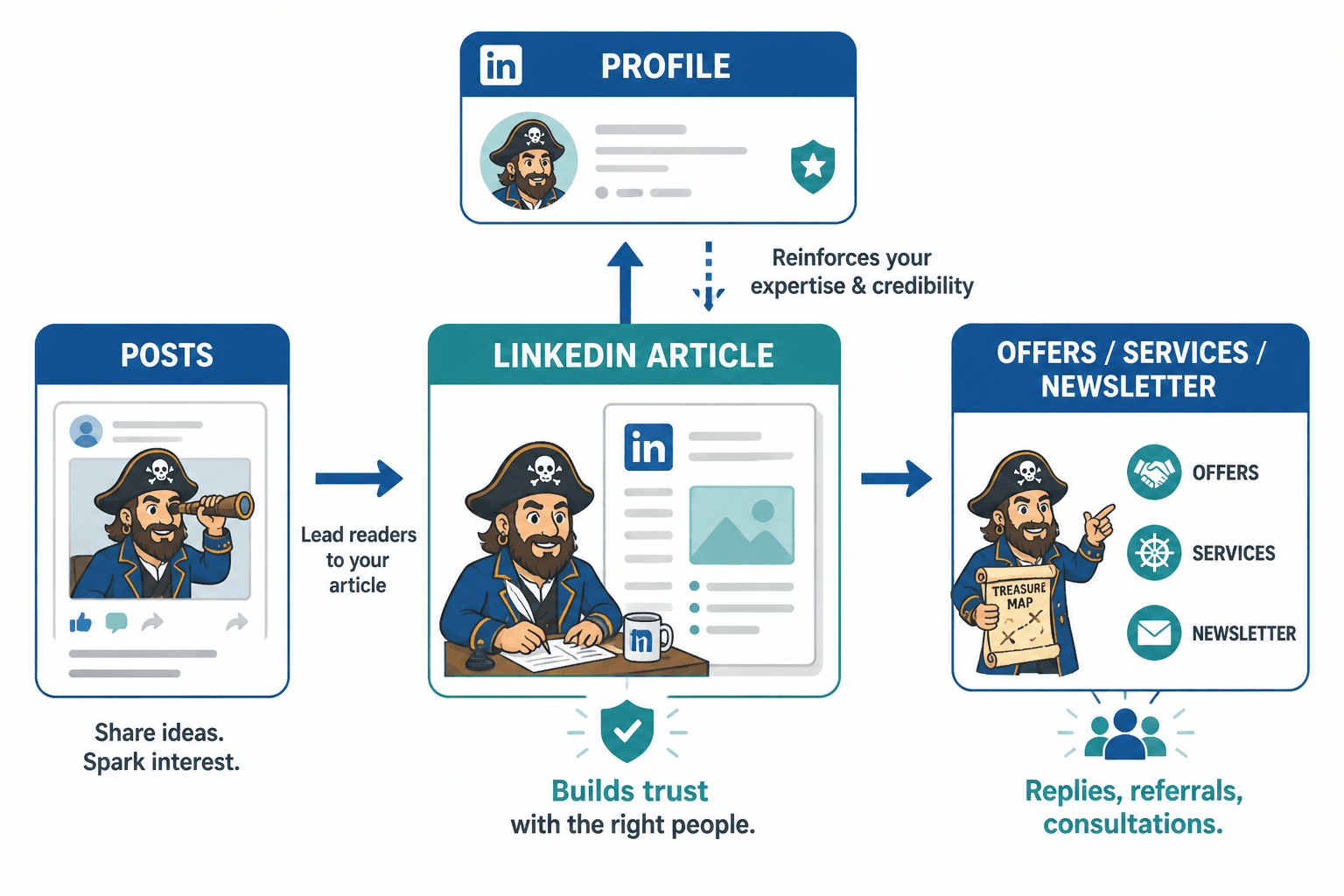
Most small creators expect articles to behave like reach machines. They are not. Articles are better at building authority, giving your profile more substance, helping the right people understand how you think, and giving you something stronger to share than another flimsy “3 lessons from my journey” post.
If you use them well, a small audience is not a deal-breaker. In some ways, it is cleaner. You are not trying to entertain a stadium. You are trying to become obviously useful to a smaller group of relevant people.
Here is how to make LinkedIn articles work when you do not have a giant audience, a blue-check aura, or endless time to burn on content that goes nowhere.
For the main guide behind this topic, visit the parent guide.
What LinkedIn articles are actually good for
For small creators, LinkedIn articles are rarely the best format for fast reach.
They are good for slower, more durable things:
- Showing depth instead of just cleverness
- Turning expertise into something searchable and reusable
- Giving profile visitors a stronger reason to trust you
- Supporting a service, offer, newsletter, or consultation without making every post a pitch
- Creating assets you can repurpose into multiple posts later
- Explaining nuanced ideas that would get flattened in a short post
That is the mindset shift. A LinkedIn article is not just a longer post. It is a trust asset.
And for creators with small audiences, trust assets matter more than vanity reach. A thousand random impressions will not help much if none of those people are likely to buy, refer, reply, or remember you. A well-positioned article that helps the right 20 people understand your expertise can do more for your business than a trendy post that gets claps from people who were never going to work with you anyway.
Why small audiences should not copy big creators
Big creators can publish broad, fluffy, slightly self-important articles and still get traction because they already have distribution.
You probably do not.
So if your audience is small, your article needs to be tighter, more specific, and more useful. It cannot coast on reputation. It has to earn attention with relevance.
That means avoiding the usual mistakes:
- Writing broad topics like “How to Succeed on LinkedIn”
- Publishing motivational advice disguised as expertise
- Turning a short post idea into 1,800 words of beige soup
- Writing for “everyone” instead of a clear kind of reader
- Using generic intros that say a lot of words and almost nothing else
- Forgetting to connect the article to your actual work
A small audience rewards specificity. If you help coaches, write for coaches. If you help B2B consultants improve thought leadership, write for them. If your best clients struggle with one stubborn problem, start there instead of trying to sound universally wise.
The smaller the audience, the less room you have for vague positioning. People should be able to tell, quickly, who this article is for and why it matters.
How to choose article topics that actually help a small creator
The best article topics for small creators usually sit at the intersection of three things:
- Something your ideal audience already cares about
- Something you can explain with real clarity or proof
- Something connected to your work, offer, or expertise
That is a much better filter than “what topic seems viral.” Viral is nice. Relevant is rent.
Strong topic angles for small-audience LinkedIn articles
- A specific problem your clients keep running into
- A common mistake in your industry that is costing people time or trust
- A framework you use repeatedly in your work
- A detailed breakdown of what good looks like in your niche
- A myth or lazy belief your audience needs to unlearn
- A behind-the-scenes process that helps people understand your approach
Examples:
- Not “How to Build Your Brand”
- Better: “Why Most Consultant Bios Sound Impressive but Convert Poorly”
- Not “Content Marketing Tips for Founders”
- Better: “The 5 Article Angles B2B Founders Can Use When They Have No Time to Write”
- Not “How to Be More Authentic on LinkedIn”
- Better: “Why Fake Vulnerability Performs Worse Than Clear Expertise”
If you want more direction on angles and article planning, this piece on simple LinkedIn article authority angles and templates for busy creators is a smart next stop.
What a good LinkedIn article needs when your audience is small
You do not need a Pulitzer entry. You need an article that does four things well.
1. A sharply relevant title
Your title should make the right reader think, “That is about my problem.”
Good LinkedIn article titles for small creators are usually:
- Specific
- Problem-aware
- Audience-aware
- Clear instead of cute
Weak: “Thoughts on Content Strategy”
Stronger: “Why Useful Content Still Fails to Bring in Leads for Solo Consultants”
2. An intro that gets to the point fast
Small creators cannot afford slow intros. You do not have enough audience goodwill for three paragraphs of throat-clearing.
Open with one of these:
- A mistake people keep making
- A false assumption you want to challenge
- A specific problem with stakes
- A contrast between what people try and what actually works
Say the useful thing sooner. Most intros fail because the writer is warming up in public.
3. Actual substance
If your article can be skimmed into a bland tweet thread with nothing lost, it probably did not need to be an article.
A good article should give the reader at least one of these:
- A framework
- A process
- Examples
- Breakdowns
- Before-and-after thinking
- Templates
- Specific criteria for judging quality
Depth does not mean word count. It means the reader leaves with something more useful than “be consistent and provide value,” which is content advice’s equivalent of office wallpaper.
4. A next step that makes sense
Do not end your article with a weirdly aggressive pitch or an empty “follow me for more.” Give the reader a logical next move.
That might be:
- Read a related article
- Visit your profile
- Reply to a post tied to the article
- Join your newsletter
- Book a consultation if the topic clearly connects to your service
If you need a broader foundation first, this LinkedIn articles guide for creators who want better results covers the basics well.
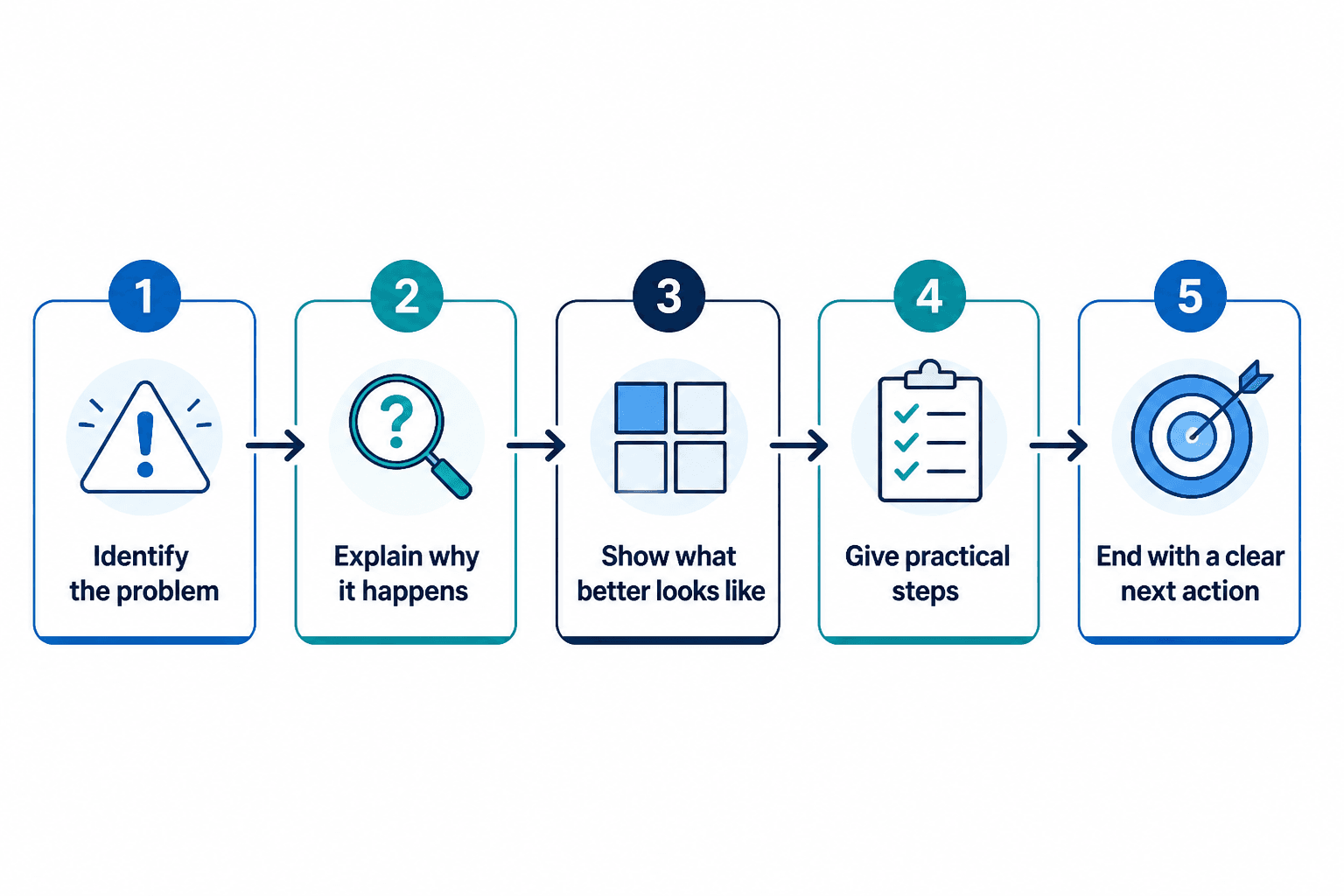
A simple structure that works well for small creators
You do not need to invent a fancy editorial format. A clear, repeatable structure is better.
Try this:
- Open with the real problem
Show what people are getting wrong or struggling with. - Explain why it happens
Give context, friction, or bad assumptions. - Break down what better looks like
Use principles, examples, or a framework. - Give practical steps
Make it usable right away. - End with a clean next action
Point them toward the next useful thing.
This structure works because it respects reader attention. It does not wander. It builds an argument. It gives payoff.
For more article layouts you can steal without guilt, see these LinkedIn article structures and examples creators can adapt fast.
How to get more value from one article when you do not have much reach
This is where a lot of creators waste perfectly decent articles.
They publish once, hope the algorithm throws confetti, then move on like the article expired after 48 hours.
No. If your audience is small, your job is not just publishing. It is extraction.
One solid article can become:
- 3 to 5 short LinkedIn posts
- A carousel outline
- A comment strategy on related conversations
- A newsletter section
- A DM resource you can share when someone asks about the topic
- A profile featured item
- A useful link in future posts
This is one of the biggest advantages of articles for smaller creators. Even if the article itself does not explode, it gives you a reusable authority piece that can support your content ecosystem for weeks.
If you are building out your broader LinkedIn approach, the main LinkedIn articles hub is worth bookmarking, along with the broader social media writing and LinkedIn writing resources.
Promotion matters more when the audience is small
If you have a small audience, do not just hit publish and stand there with your hands in your pockets.
You need a simple distribution habit.
A practical promotion routine
- Publish the article with a strong title and opening image if you use one later.
- Create a separate LinkedIn post that sells the idea of the article, not just the existence of it.
- Pull one sharp takeaway into a follow-up post a few days later.
- Link the article from your profile’s featured section if it supports your positioning.
- Use it in relevant conversations when people ask about that problem.
- Reference it in future posts instead of reinventing the same explanation every week.
The post promoting the article matters a lot. Do not write, “I just published a new article.” Nobody cares that you published. They care whether the idea helps them.
Better:
Most LinkedIn articles fail for small creators because they are too broad to matter and too weak to earn trust. I broke down a simpler way to write articles that build authority without needing a huge audience.
What to avoid if you want LinkedIn Articles for Creators With Small Audiences to work
A few things tank article performance fast, especially when you do not already have built-in distribution.
- Writing broad, generic topics
Specific beats broad almost every time for smaller creators. - Padding short ideas into long articles
If the idea is small, write a post instead. - Trying to sound too polished
Overcooked AI voice kills trust surprisingly fast. - No examples
People understand faster when they can see what you mean. - No connection to your expertise
A random article that does not reinforce your positioning is just content furniture. - No CTA or next step
Do not make people guess what to do after reading.
The big one, though, is writing articles because you think you are supposed to.
Use articles when the idea needs room, when the reader needs clarity, and when depth will strengthen trust. If the idea would work better as a post, thread, or short opinion piece, do that instead. Not every thought deserves an essay. Some barely deserve Wi-Fi.
The bigger point is simple: clearer structure and clearer writing make the piece more useful. That is usually what makes the ending land better too.