
Most people looking for the best Substack tools and creator monetization tools for Substack Posts and Series are really looking for one of two things:
- something that makes publishing easier, or
- something that makes the whole thing actually earn money.
Fair. Because writing a strong Substack is one job. Turning it into a repeatable publishing system that builds trust, grows readers, and nudges the right people toward paid offers is another.
And no, more tools do not automatically fix that. A bloated stack is still bloated. If your posts are vague, your series has no shape, and your paid offer is basically “support my work, I guess,” no dashboard is coming to save you.
What the right tools can do is help you write faster, organize ideas better, package your series more clearly, track what is working, and create cleaner paths from free reader to paying customer. That is the useful version of tooling. Not magic. Just less chaos.
This guide breaks down the best Substack tools and creator monetization tools for Substack Posts and Series by job: writing, planning, formatting, monetizing, repurposing, and managing reader flow. If you publish essays, educational newsletters, opinion pieces, paid series, or recurring creator content, this will help you build a setup that actually fits how you work.
If you want the broader publishing framework first, read the Substack Posts and Series guide for creators who want better results. If you need examples and angles before picking tools, the ideas and examples guide will help.
For the full path around this topic, head to the parent guide.
What makes a Substack tool actually useful?
A useful Substack tool does one of four things well:
- helps you publish consistently
- improves clarity or quality
- supports monetization without making your newsletter feel like a vending machine
- reduces repeat work across posts and series
That last one matters more than people think. A lot of creators do not have a content problem. They have a workflow problem. Every issue starts from zero. Every launch feels improvised. Every paid push feels awkward because there is no system underneath it.
Good tools make your process less fragile. They let you reuse structures, save research, collect ideas, test hooks, and keep your free and paid content connected without rebuilding the machine every week.
Bad tools, on the other hand, give you more tabs, more setup, and a false sense of productivity. Lovely. Another app to avoid your draft in.
The main categories of Substack tools and creator monetization tools
You do not need one “best” tool. You need the right categories covered. For most Substack creators, those categories look like this:
| Tool category | What it helps with | Why it matters for posts and series |
|---|---|---|
| Writing and drafting tools | Drafting, rewriting, outlining, editing | Keeps posts sharper and series more consistent |
| Idea capture and planning tools | Content banks, issue planning, series mapping | Stops you from inventing every issue from scratch |
| Template and structure tools | Reusable formats, intros, transitions, CTAs | Makes publishing faster without sounding robotic |
| Monetization and offer tools | Paid subscriptions, upsells, products, calls | Turns reader trust into revenue more cleanly |
| Analytics and tracking tools | Post performance, subscriber flow, conversion signals | Helps you see what attracts readers and what sells |
| Repurposing tools | Turn newsletters into social posts, threads, promos | Gets more reach from every issue |
| Workflow and CRM tools | Lead tracking, collaboration, follow-up | Useful if Substack feeds consulting, coaching, or services |
That is the lens to use as you build your stack. Not “what is trending.” Not “what some creator with a team of six uses.” Just: what problem does this solve in my publishing and monetization flow?
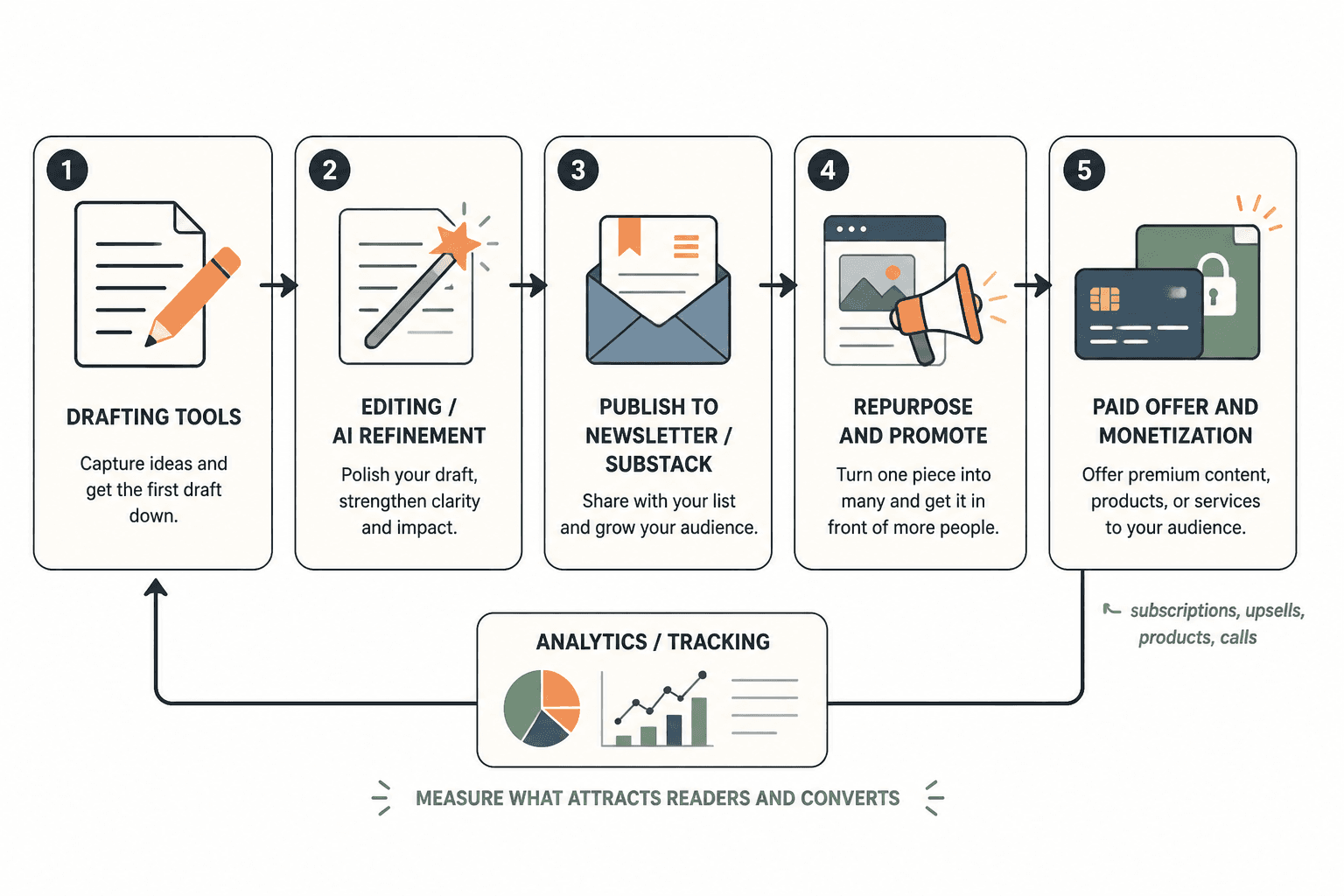
Best writing and drafting tools for Substack Posts and Series
Substack itself is fine for publishing. It is not where most people do their best thinking.
For many creators, the best setup is simple: draft elsewhere, refine there or with help, then publish into Substack once the piece has a shape. This matters even more for series, where consistency in tone, flow, and structure affects whether readers stay with you.
1. AI drafting and rewriting tools
Useful for:
- rough outlines
- headline variations
- summary rewrites
- tightening bloated sections
- turning raw notes into a first pass
Not useful for:
- creating an interesting point of view from nothing
- replacing your taste
- understanding your paying readers better than you do
- writing a whole paid series in generic oatmeal voice
If you use AI for Substack, use it like an assistant editor, not a substitute brain. It is especially good for helping you tighten recurring sections, draft alternative intros, or create promo copy for free versus paid versions of an issue.
For a more focused breakdown, see best AI tools for Substack posts and series.
2. Plain writing apps and long-form draft tools
Useful for:
- distraction-free drafting
- keeping long essays readable while editing
- storing multiple installments of a series
- preserving rough notes without cluttering your live publication space
If you write essays, educational breakdowns, or serialized content, a clean long-form drafting tool can be enough. You do not always need some heroic content machine. Sometimes you need a blank page that does not keep trying to sell you “productivity insights.”
3. Editing and readability tools
Useful for:
- finding clunky sentences
- catching repeated phrases
- spotting soft openings
- cleaning up paragraphs that wander
These tools are best used after the thinking is done. If you use them too early, they can sand off the interesting edges before the draft has any life in it.
A clean rule: first get the point right, then get the prose cleaner.
Best planning tools for recurring Substack series
If you publish one-off posts only, you can get away with a lighter system. If you are building a recurring series, planning matters a lot more than people admit.
A series dies when each installment feels like it forgot the previous one existed. Readers need a reason to keep following. That usually comes from one of three things:
- a clear theme
- an evolving argument
- a repeatable promise
Planning tools help you hold that shape.
Use planning tools to map the series, not just the next issue
A decent planning setup should let you track:
- series title or concept
- who it is for
- the central promise
- installment ideas
- what is free versus paid
- proof, examples, or case studies needed
- CTA for each issue
This can live in a notes app, a project board, or a database-style content planner. The tool matters less than the visibility. You want to be able to see where the series is repetitive, where the monetization points sit, and whether the sequence has any momentum.
Without that, plenty of creators end up publishing “series” that are really just a bunch of vaguely related posts wearing the same outfit.
If you need reusable structures, go to best templates and tools for Substack posts and series.
What to plan before you write installment one
- What specific outcome does the series help the reader achieve?
- How many parts does it likely need?
- Which part is the strongest lead magnet or entry point?
- What should a reader want after finishing the series?
- Is the monetization point a paid subscription, a product, a service, or something else?
That last question matters because the content should lead naturally toward the right next step. If your real offer is consulting, your series should build trust around your thinking and process. If your real offer is paid writing, the series should create appetite for depth and continuity. Different monetization paths need different content design.
Best template tools for faster publishing without sounding templated
Templates are useful. Template-shaped writing is not.
The right template tool helps you save structural decisions, not personality. You want repeatable scaffolding: intro shape, recurring segments, closing CTA types, issue layout, teaser format, and maybe your standard free-to-paid transition.
What templates are worth saving
- weekly issue structure
- essay framework
- teaching post framework
- paid teaser structure
- series installment outline
- promotion email for an older post
- end-of-post CTA bank
That saves time where it should: layout, flow, packaging, and consistency. It does not force every issue to sound like the same recycled memo.
For example, a useful Substack post template might look like this:
- opening tension or sharp claim
- why this matters now
- main lesson, framework, or argument
- example or proof
- what readers should do next
- soft CTA to subscribe, upgrade, reply, or book
That is structure. It is not a script. Big difference.
Best creator monetization tools for Substack beyond paid subscriptions
Substack’s built-in paid subscription model is useful, but it is not your only option and it is not always your best first option.
Some creators are better off using Substack as a trust engine that feeds other offers. Others should absolutely lean into paid tiers, but with a stronger structure than “more thoughts, but premium.” People will pay for access, depth, curation, utility, or continuity. They usually will not pay just because you posted a paywall with confidence.
Monetization paths worth building around
- paid newsletter subscriptions
- paid series or premium installments
- consulting or coaching offers
- digital products
- workshops or cohort sessions
- members-only Q&A or office hours
- sponsorships for the right audience fit
The best creator monetization tools for Substack Posts and Series support one or more of those paths cleanly. They help the reader move from interest to action without the newsletter suddenly sounding like a sales page in a trench coat.
1. Subscription tools and paid tier features
These are useful if you already have:
- a clear content difference between free and paid
- a repeatable publishing rhythm
- an audience that wants deeper access or stronger utility
Good paid setups usually offer one of these:
- exclusive analysis
- full series access
- practical templates or resources
- community access
- archives
- early access or direct support
Weak paid setups tend to offer “more content” with no sharper promise. That is not a monetization strategy. That is a vague threat.
2. Booking and service-conversion tools
If your newsletter supports a service business, then your monetization tool stack should make it easy for the right reader to:
- understand what you do
- see proof of your thinking
- book a call or inquire
- move into a nurture sequence or direct conversation
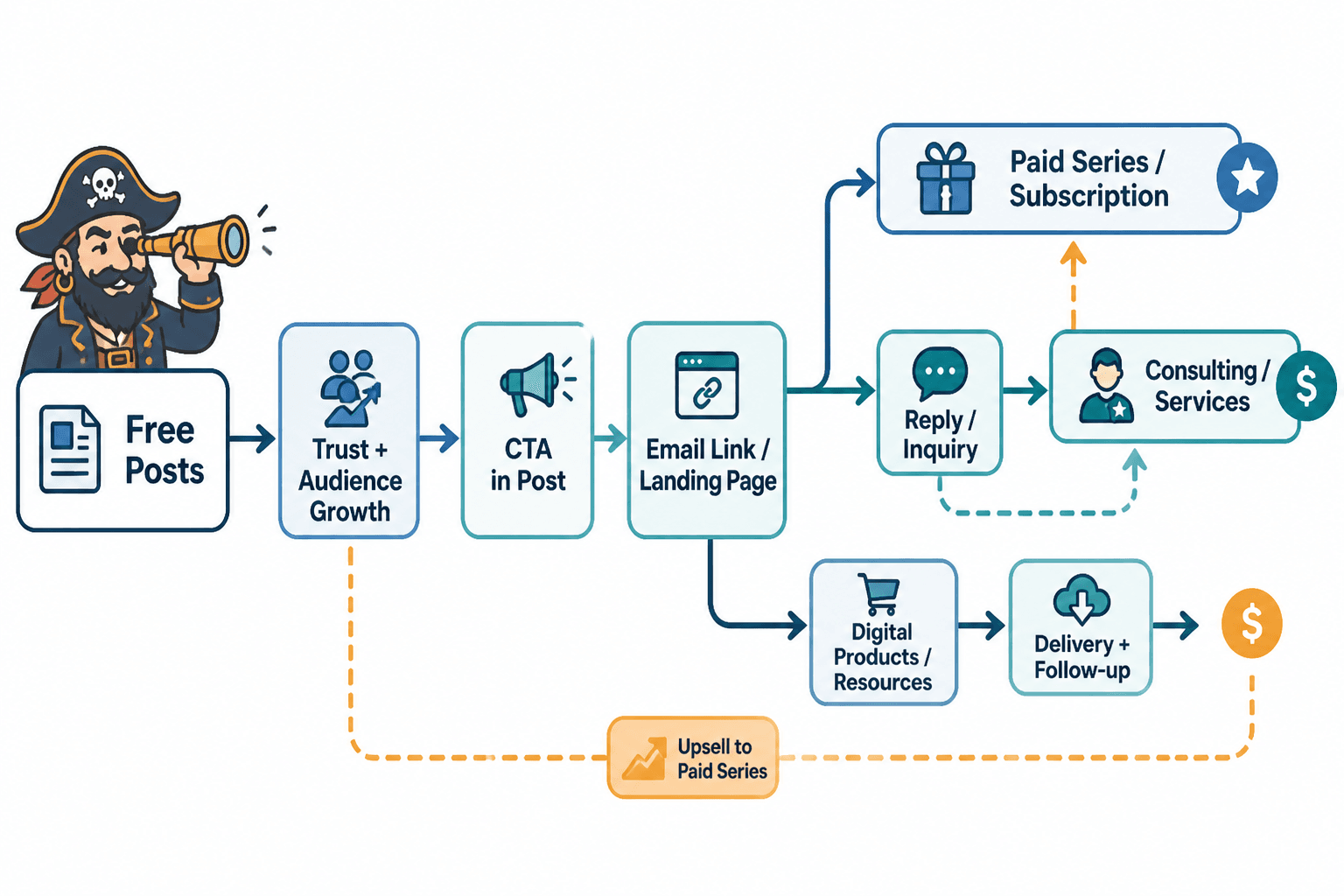
This matters for consultants, writers, strategists, coaches, and fractional folks especially. Your newsletter is often doing the top and middle of funnel work: building trust, demonstrating expertise, showing how you think. The monetization tool is what catches that trust and turns it into an actual lead path.
In those cases, the money may not come from subscriptions at all. It may come from one great reader becoming one excellent client. That is still newsletter monetization. People get weirdly narrow about this.
3. Product and resource delivery tools
If your newsletter sells templates, guides, swipe files, mini-courses, workshops, or other digital products, your tools should support:
- simple delivery
- clean reader handoff
- light automation
- follow-up or upsell sequencing
Substack can attract demand, but external delivery systems often handle fulfillment better. The key is keeping the transition clean and expected. No one likes clicking a useful newsletter link and landing in a conversion maze with seventeen popups and a countdown timer having a panic attack.
Best analytics and performance tools for Substack creators
You do not need creepy, overbuilt analytics for most newsletters. You do need enough visibility to answer a few basic questions:
- Which topics attract subscribers?
- Which posts get opened and read?
- Which series keep people engaged across multiple issues?
- Which CTAs produce upgrades, replies, clicks, or inquiries?
- Which free posts lead to paid behavior later?
That last one matters more than surface vanity metrics. A post can get lots of attention and still do almost nothing for trust or revenue. Another post can look “smaller” but quietly bring in your best readers, leads, or paid conversions.
When evaluating analytics tools or reports, focus on signals tied to business value:
- subscriber growth by topic or post type
- paid conversion around series launches
- reply quality and conversation
- click behavior on key offers
- retention for recurring paid content
Do not obsess over every decimal point. You are running a creator business, not conducting a hostage negotiation with your dashboard.
Best repurposing tools for getting more from each Substack post
If you are writing strong Substack posts and not repurposing them, you are making your life harder than necessary.
A single issue can become:
- a LinkedIn post
- an X thread
- a short Facebook post
- a carousel script
- an email teaser
- a paid-post promotion
- a talking point for a live session
Repurposing tools help you do that faster, but they still need a human hand. The best repurposed content is adapted to the platform. It is not just chopped into weird little slices and thrown around the internet like content confetti.
What a repurposing tool should help you do
- pull out key quotes or claims
- extract tweet or post-sized ideas
- create alternate hooks
- turn long sections into summaries
- save snippets for future promotion
- organize issue highlights by topic
This is especially useful for series. A series gives you built-in themes to keep promoting. You are not constantly starting from blank air. Each installment can feed the next one, revive the previous one, and drive new readers into the whole sequence.
Best workflow and CRM tools if your Substack feeds leads or clients
If you are a creator selling services, your newsletter is often part content engine, part relationship engine.
That means you may need more than publishing tools. You may need a simple creator CRM or workflow system to track:
- interesting reader replies
- warm leads
- past clients who subscribe
- people who clicked a service CTA
- follow-ups after a strong issue or launch
This does not need to be fancy. In fact, simpler is often better. A lightweight system that helps you remember who is engaged and what they care about is far more useful than a huge setup you resent maintaining.
For creators, consultants, and solo founders, the best monetization often comes from noticing signals and following up like a normal person. Not blasting everyone with “just bumping this to the top of your inbox” energy.
A practical Substack tool stack for different creator types
You do not need every category equally. Here is a simpler way to think about your stack based on your business model.
Stronger Substack posts usually come from a clearer point, tighter structure, and a more deliberate series flow. Better pacing often matters more than more volume.