
Most blog titles do one job badly.
They chase clicks, or they describe the topic, or they try very hard to sound smart. Then they wonder why traffic shows up, reads a bit, and leaves without subscribing, booking, buying, or doing much of anything useful.
That is the gap. A title can get attention. A headline can earn the click. But if the promise is vague, misaligned, too broad, too clever, or completely disconnected from what you actually sell, it will not turn into leads or sales. It will just become another nice little vanity metric sitting quietly in your analytics.
How to Turn Blog Titles and Headlines Into More Leads or Sales is really a question about alignment. Not tricks. Not keyword glitter. Not “7 shocking secrets” nonsense. You need titles that attract the right person, frame the right problem, and pull naturally toward the next step.
Here’s how to do that without turning your blog into a cheap funnel in a fake mustache.
Why most blog titles get attention but not action
A lot of titles fail before the article even starts because they optimize for the wrong win.
They aim for one of these:
- Broad traffic from people who were never going to buy
- Curiosity with no clear business relevance
- Keyword coverage with zero urgency or specificity
- Thought-leadership fluff that sounds impressive and says very little
- Topics that are technically useful but disconnected from the offer
If your title brings in the wrong reader, the article has to work absurdly hard to recover. Usually it doesn’t.
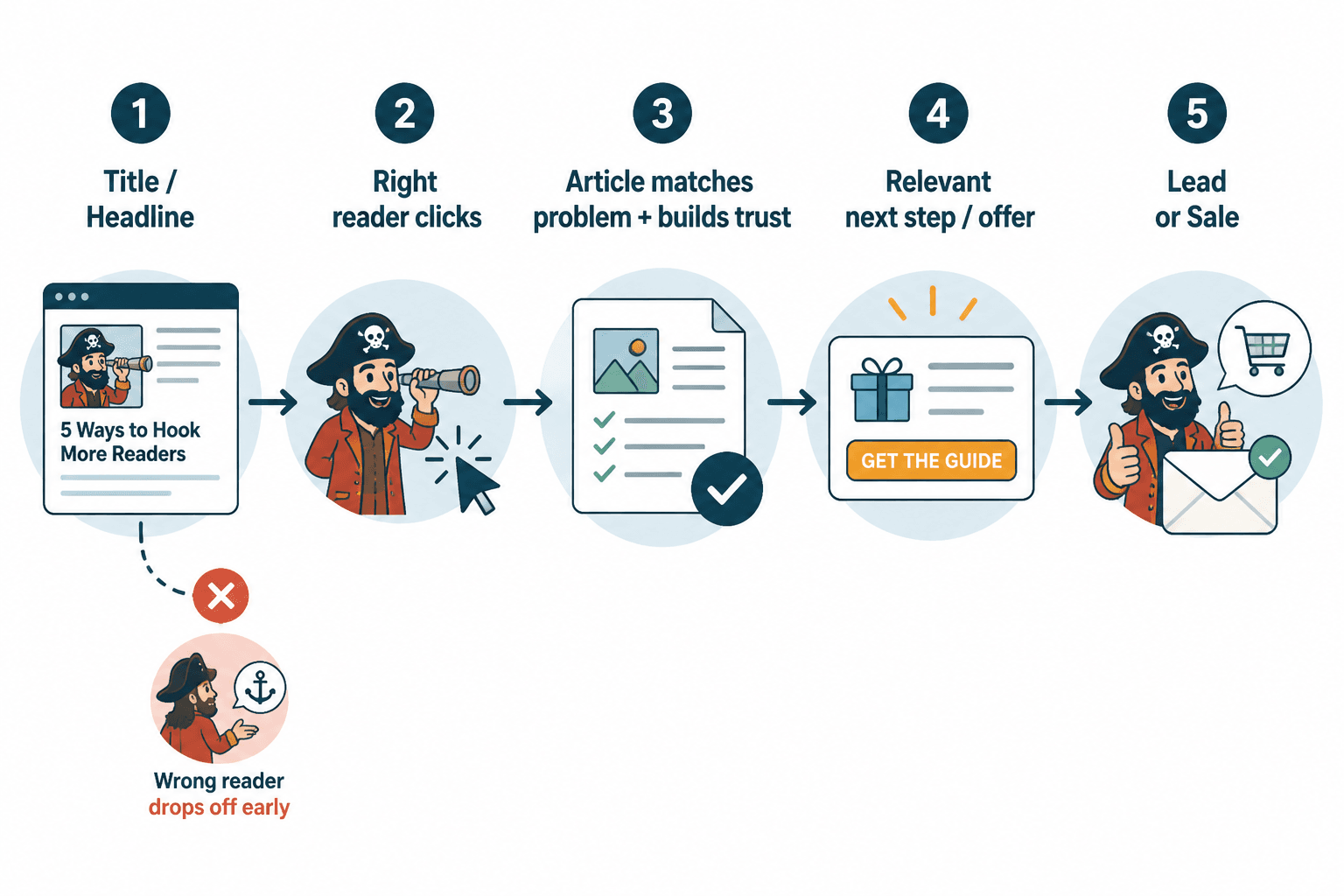
A title that helps sales does not just describe information. It pre-qualifies intent. It signals who this is for, what problem it helps solve, and why this matters now. It creates a clean bridge between attention and action.
That does not mean every title needs to scream “buy now.” Please don’t do that. It means the title should attract readers who are close enough to the problem that your article can move them one step further into trust, consideration, or conversion.
What a high-converting blog title actually needs to do
Good blog titles for leads and sales usually handle four things at once:
- Relevance: They match a real problem your ideal reader cares about.
- Specificity: They narrow the promise enough to feel credible.
- Intent: They attract people who might reasonably want help, not just random browsers.
- Continuation: They connect naturally to an offer, next step, or business outcome.
That last one gets ignored a lot. A title does not need to sell the whole offer. But it should set up an article that can lead somewhere sensible.
For example, if you sell messaging consulting, a title like How to Write Better is basically useless. Too broad. Too beginner. Too foggy. But How to Write Website Messaging That Makes Your Offer Easier to Buy is much closer to commercial relevance. It speaks to a real business pain and creates a cleaner path to a service, audit, template, or call.
The quickest test: does this title attract a buyer, a browser, or a bored content marketer?
Ask that before you publish.
Some titles mostly attract peers. Some attract students. Some attract DIY readers who will never hire anyone. Some attract people actively trying to fix a problem tied to money, time, visibility, or growth.
You do not need every post to be bottom-of-funnel. That would be exhausting and a bit desperate. But you do need enough titles that attract commercially relevant readers instead of applause from people who were never going to become clients.
Start with the conversion goal, not the clever angle
If you want more leads or sales, reverse the process.
Most people start with a topic and try to make it interesting. Better approach: start with the business outcome, then build title angles around the questions, objections, mistakes, and decisions that happen before that outcome.
Think in this order:
- What offer, service, product, or next step do you want this post to support?
- What problem or desire shows up right before someone is ready for that?
- What would they search, click, or care about at that stage?
- What title would make that problem feel specific, solvable, and worth reading?
Say you sell a content strategy service. These are very different title directions:
| Title angle | What it attracts | Sales usefulness |
|---|---|---|
| How to Write Better Blog Posts | Very broad readers | Low |
| Why Your Blog Posts Are Not Generating Leads | People with a business problem | High |
| How to Plan Blog Content Around Buyer Intent | Readers closer to strategy and offers | High |
| 25 Creative Blog Ideas for Any Niche | Idea hunters and general browsers | Medium at best |
None of this means broad content is bad. It just means broad content rarely converts well on its own.
Use title angles that naturally pull toward leads or sales
Some title types are simply better at attracting commercially useful readers. Not because they are manipulative, but because they map to higher-intent situations.
1. Problem-aware titles
These work when your reader knows something is wrong and wants a fix.
- Why Your Blog Traffic Is Not Turning Into Leads
- Why Your Website Copy Gets Read but Does Not Convert
- How to Fix Blog Posts That Get Traffic but No Sales
These titles are useful because they attract readers with friction, not just curiosity.
2. Outcome-focused titles
These promise a concrete business result, which tends to filter for more serious readers.
- How to Turn Blog Titles and Headlines Into More Leads or Sales
- How to Write Headlines That Qualify Better Clients
- How to Create Blog Titles That Support Your Funnel
The trick here is credibility. Promise a real outcome, not a ridiculous one.
3. Mistake and diagnosis titles
People click these because they suspect they are doing something wrong. Often, they are.
- 7 Blog Headline Mistakes That Cost You Subscribers
- Why Smart Founders Keep Writing Titles That Attract the Wrong Readers
- The Real Reason Your Blog Posts Are Not Supporting Sales
This angle works well if you can diagnose the issue clearly and then show a better way.
4. Comparison and decision titles
These are useful for readers closer to action because they are already evaluating options.
- Traffic Titles vs Buyer Titles: What Your Blog Actually Needs
- SEO Headlines or Conversion Headlines: Which Should You Prioritize?
- What to Put in a Blog Title if You Want Leads, Not Just Clicks
5. Funnel-connected titles
These make the bridge to your next step much cleaner.
- How to Write Blog Titles That Lead Naturally to Your Newsletter
- How to Pair Blog Headlines With Lead Magnets That Make Sense
- How to Use Article Titles to Pre-Sell Your Consulting Offer
If you want more ideas here, pair this with best funnel ideas to pair with blog titles and headlines and how to monetize blog titles and headlines without wrecking trust.
How to write titles that pull in the right reader
The easiest way to improve conversion from blog titles is to stop writing for “everyone interested in the topic” and start writing for the person most likely to need your help.
That means using clues in the title that narrow the audience and sharpen the problem.
Add audience signals when useful
Examples:
- How Coaches Can Write Blog Titles That Bring In Better Leads
- Blog Headline Formulas for Consultants Who Sell Expertise
- How Personal Brands Can Turn SEO Titles Into Sales Conversations
Audience words help when they clarify fit. They hurt when they turn the title into a bloated identity parade.
Name the business problem, not just the content topic
Compare these:
- Weak: How to Write Better Blog Headlines
- Stronger: How to Write Blog Headlines That Get More Qualified Clicks
- Stronger still: How to Write Blog Headlines That Bring In Better Leads, Not Just More Traffic
The second and third versions connect the writing task to a result that matters commercially. That changes who clicks and why.
Use specificity to filter out low-intent clicks
Specificity is doing a lot of heavy lifting here. It makes the title feel more useful, more credible, and more relevant to someone with an active problem.
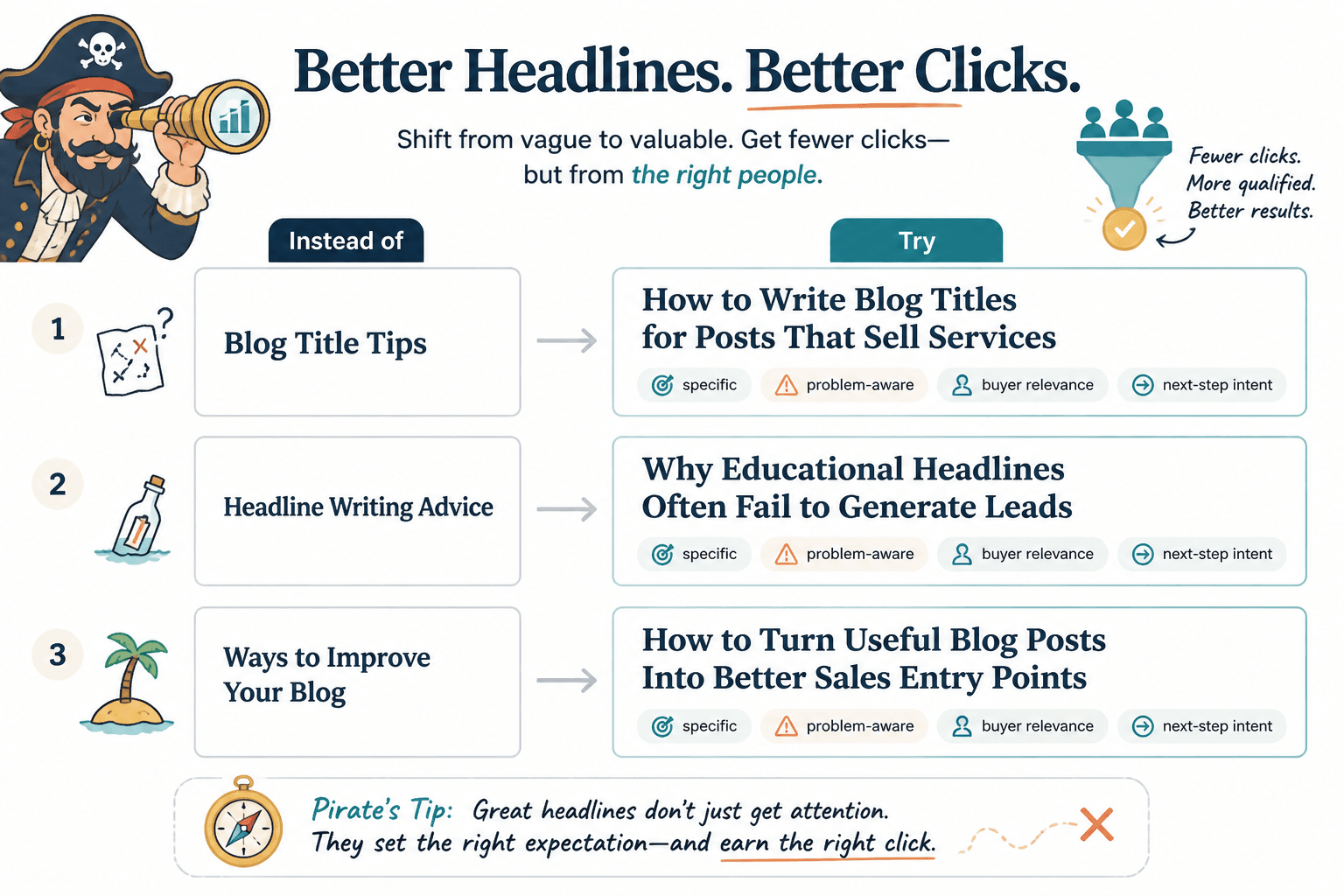
Instead of:
- Blog Title Tips
- Headline Writing Advice
- Ways to Improve Your Blog
Try:
- How to Write Blog Titles for Posts That Sell Services
- Why Educational Headlines Often Fail to Generate Leads
- How to Turn Useful Blog Posts Into Better Sales Entry Points
More specific usually means fewer clicks. Good. Random clicks are not your employer.
Match title promise to article intent and CTA
A title that drives leads or sales does not work alone. It has to match the article, and the article has to match the next step.
If your title promises a practical solution, your article needs to deliver one. If your article teaches something useful, the CTA should be the next logical move, not a wildly unrelated pitch parachuting into the final paragraph.
Here is the clean version:
- Title: names a relevant problem or outcome
- Article: gives clear help and builds trust
- CTA: offers the next step for readers who want more help
Example:
- Title: How to Write Blog Headlines That Attract Better-Fit Clients
- Article: shows positioning, examples, rewrites, and common mistakes
- CTA: download headline templates, book messaging help, or read a related article on examples
Messy version:
- Title: 31 Headline Ideas for More Clicks
- Article: generic listicle
- CTA: book a high-ticket strategy intensive
That jump is too steep. The reader came for snacks, and you are trying to sell them a kitchen renovation.
Five practical title shifts that improve conversion
If your current titles are decent but not pulling their weight, these shifts usually help.
1. Shift from topic to problem
- Before: Content Strategy Basics
- After: Why Your Content Strategy Is Not Bringing In Leads
2. Shift from information to outcome
- Before: Blog Headline Tips
- After: Blog Headline Tips That Help Turn Readers Into Subscribers
3. Shift from broad to buyer-relevant
- Before: How to Write a Great Article Title
- After: How to Write Article Titles That Support Sales, Not Just SEO
4. Shift from clever to clear
- Before: The Headline Paradox
- After: Why Clever Blog Titles Often Get Clicks but No Clients
5. Shift from standalone post to content path
- Before: Better Blog Titles in 2025
- After: How to Write Better Blog Titles for Posts That Feed Your Funnel
These are not cosmetic tweaks. They change the reader’s expectations, the traffic mix, and the article’s ability to lead somewhere useful.
A simple framework for writing sales-aware blog titles
If you want a repeatable process, use this:
The RISE framework
- R — Reader: Who is this really for?
- I — Issue: What problem, frustration, or goal are they dealing with?
- S — Stakes: Why does it matter in business terms?
- E — Entry point: What next step could this article naturally lead to?
Example:
- Reader: consultants with decent traffic but weak conversion
- Issue: their blog titles attract broad readers, not buyers
- Stakes: wasted traffic, weak lead flow, poor content ROI
- Entry point: headline template, audit, strategy service, related article
Possible titles:
- Why Your Blog Titles Are Attracting Readers but Not Clients
- How Consultants Can Write Blog Headlines That Bring In Better Leads
- How to Turn SEO Blog Titles Into Sales Entry Points
That gives you a title rooted in actual business intent instead of random inspiration and vibes.
Do not confuse traffic titles with conversion titles
You usually need both. But they are not the same thing, and mixing them up creates bad expectations.
| Traffic title | Conversion title |
|---|---|
| Broader appeal | Narrower, higher intent |
| Often keyword-led | Often problem- or outcome-led |
| Gets more clicks | Gets better clicks |
| Useful for awareness | Useful for leads, trust, and offers |
| Can sit higher in the funnel | Usually mid- or lower-funnel |
Plenty of businesses publish mostly traffic content, then complain the blog is not converting. Well, yes. You invited a crowd and then acted surprised that most of them were just passing through.
The fix is not to abandon SEO or useful educational content. It is to balance your title portfolio. Some posts bring people in. Some posts move the right people closer. You need both.
If you want help expanding that system, this blog titles and headlines hub is the right rabbit hole.
How to use old titles to generate better leads
You do not always need new content. Sometimes you need smarter packaging on content you already have.
Look for older posts that already get one of these:
- search traffic but weak conversions
- good time on page but few next-step clicks
- shares or engagement without lead generation
- solid topic relevance but bland title framing
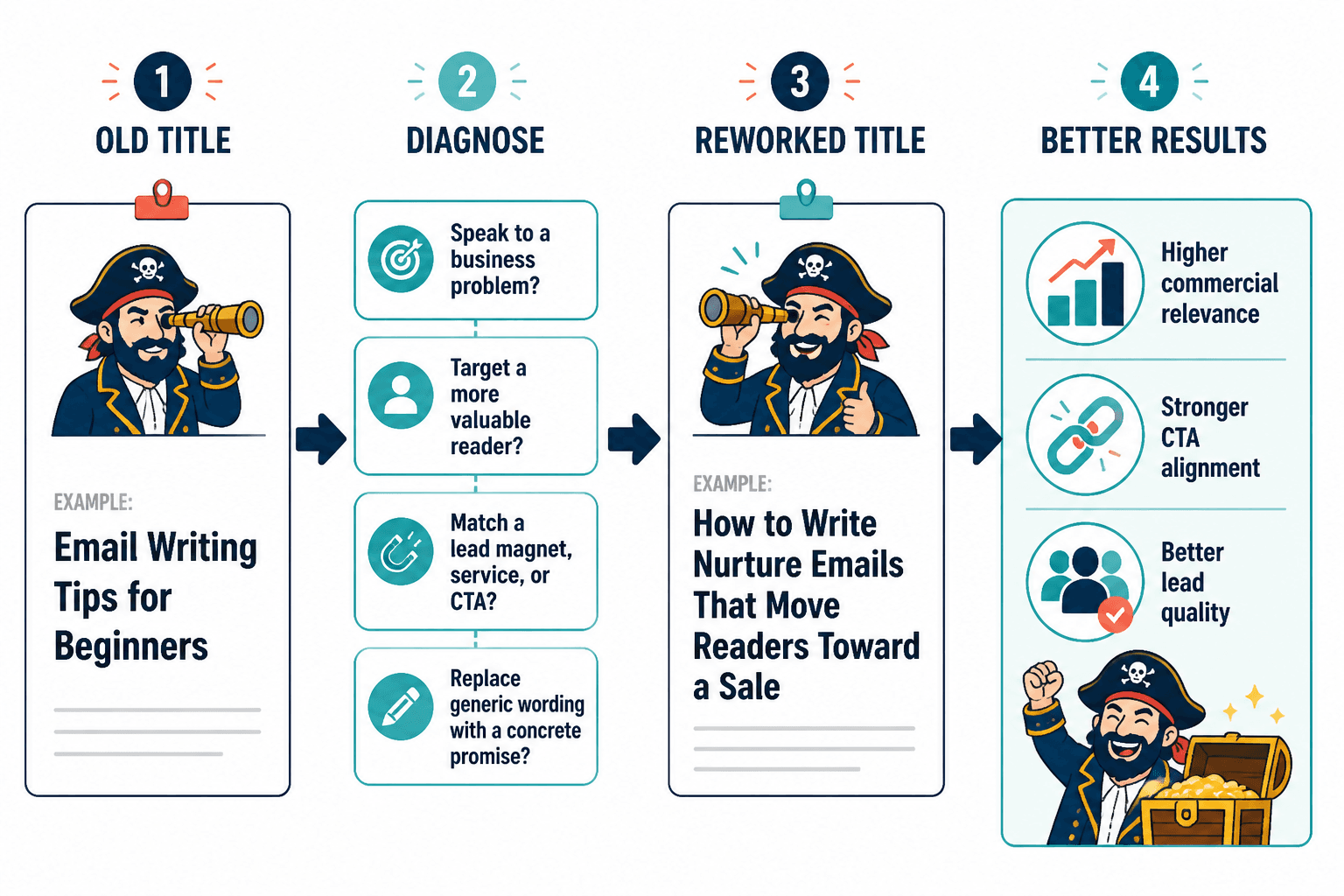
Then ask:
- Can the title speak more directly to a business problem?
- Can it be narrowed to a more valuable reader?
- Can it better match a lead magnet, service, or CTA?
- Can I remove generic wording and make the promise more concrete?
For example:
- Old: Email Writing Tips for Beginners
- Reworked: How to Write Nurture Emails That Move Readers Toward a Sale
That is not just a title polish. It changes the commercial relevance of the whole piece.
If you want a full process for this, read how to turn old content into better blog titles and headlines.
Examples of better title positioning
Here are a few side-by-side rewrites to show what changes when you optimize for leads and sales instead of generic readability.
For a coach
- Weak: How to Build Your Online Presence
- Weak: Ways to Grow Your Audience
- Better: Blog Headline Angles That Attract Readers Who Are Closer to Buying
The shift is subtle but important. Better title positioning does not just promise attention. It signals what kind of reader the article is actually for and what kind of action is likely to follow.