
Bad CTA writing wastes trust, weakens leads, and turns otherwise useful content into expensive busywork. The page gets attention, the copy gets read, and the reader still has no clear reason to take the next step. That is how a decent offer ends up acting like a polite shrug.
The fix is not louder wording. It is better handoff writing: a CTA that matches the reader’s trust level, the promise of the content, and the action you actually want them to take. That is the difference between a line that merely ends a page and a line that earns revenue.
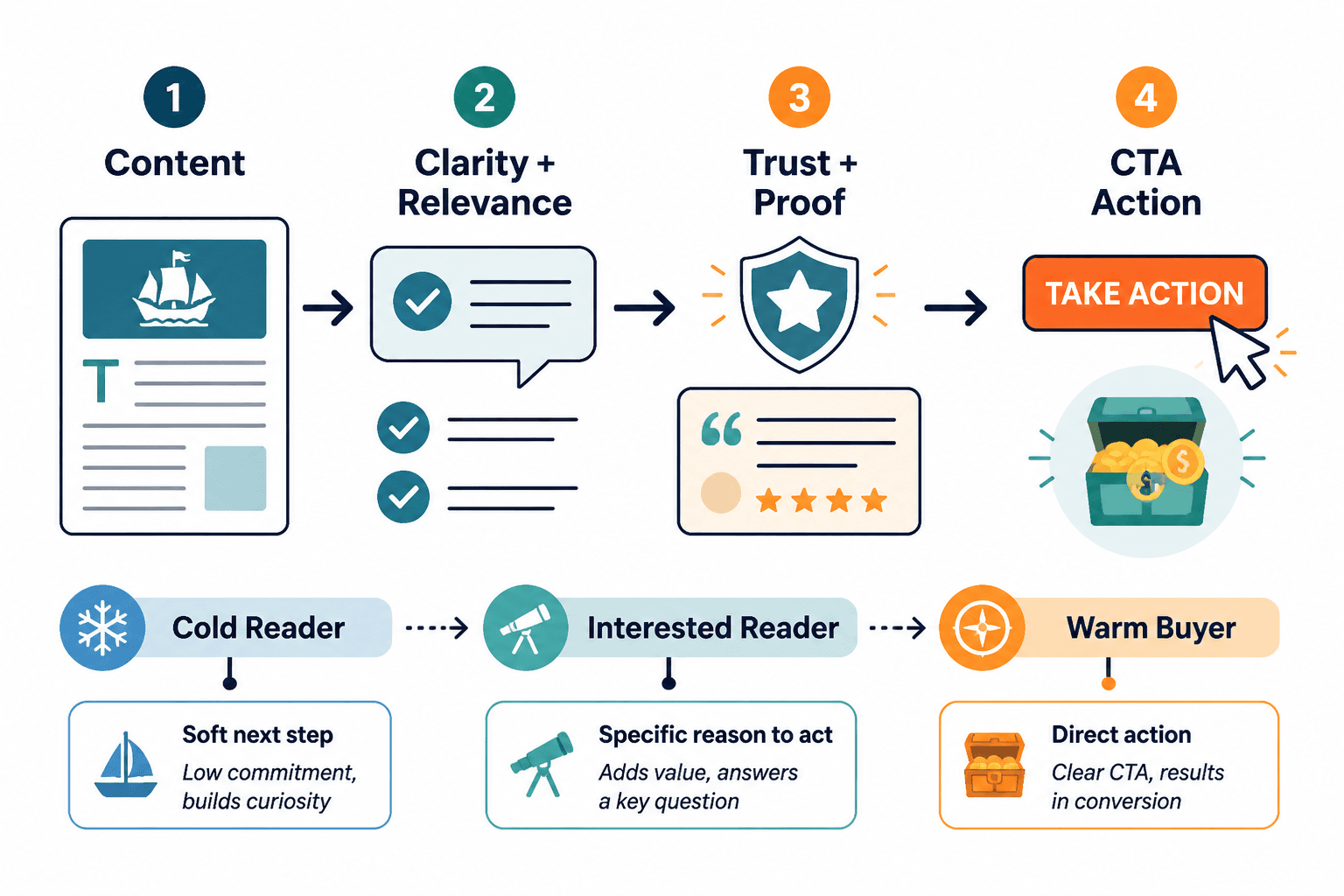
What CTA writing is supposed to do
A CTA is not decorative copy. It is the bridge between attention and action. It tells the reader what to do next, why that next step makes sense, and how much friction to expect.
Good CTA writing does three things at once:
- It gives the reader a clear next step.
- It matches the level of trust already built by the content.
- It makes the action feel useful, not ritualistic.
That matters because people do not convert just because they were told to. They convert when the ask feels like a reasonable continuation of what they already came for. Google’s helpful content guidance is a useful reminder here: content should help people first, not stage a performance of usefulness.
For a bigger structure view, the parent guide on CTA writing covers the broader role of calls to action across a page. This article stays focused on monetization: leads, sales, and the handoff between them.
Match the CTA to the reader’s trust level
The fastest way to weaken a CTA is to ask for too much too soon. A cold reader usually needs a lower-friction next step than someone who has already read three pages, signed up for emails, and clicked around your site.
Think in stages:
- Low trust: invite a small step, such as a newsletter signup, resource download, or related article.
- Medium trust: ask for a more committed action, such as a booking page visit, consultation request, or comparison page click.
- High trust: make a direct offer, such as a purchase, application, or sales call.
The CTA should fit the moment. A direct sales ask can work beautifully on a page that has already done the trust-building. On a colder page, it often feels like being proposed to after one coffee.
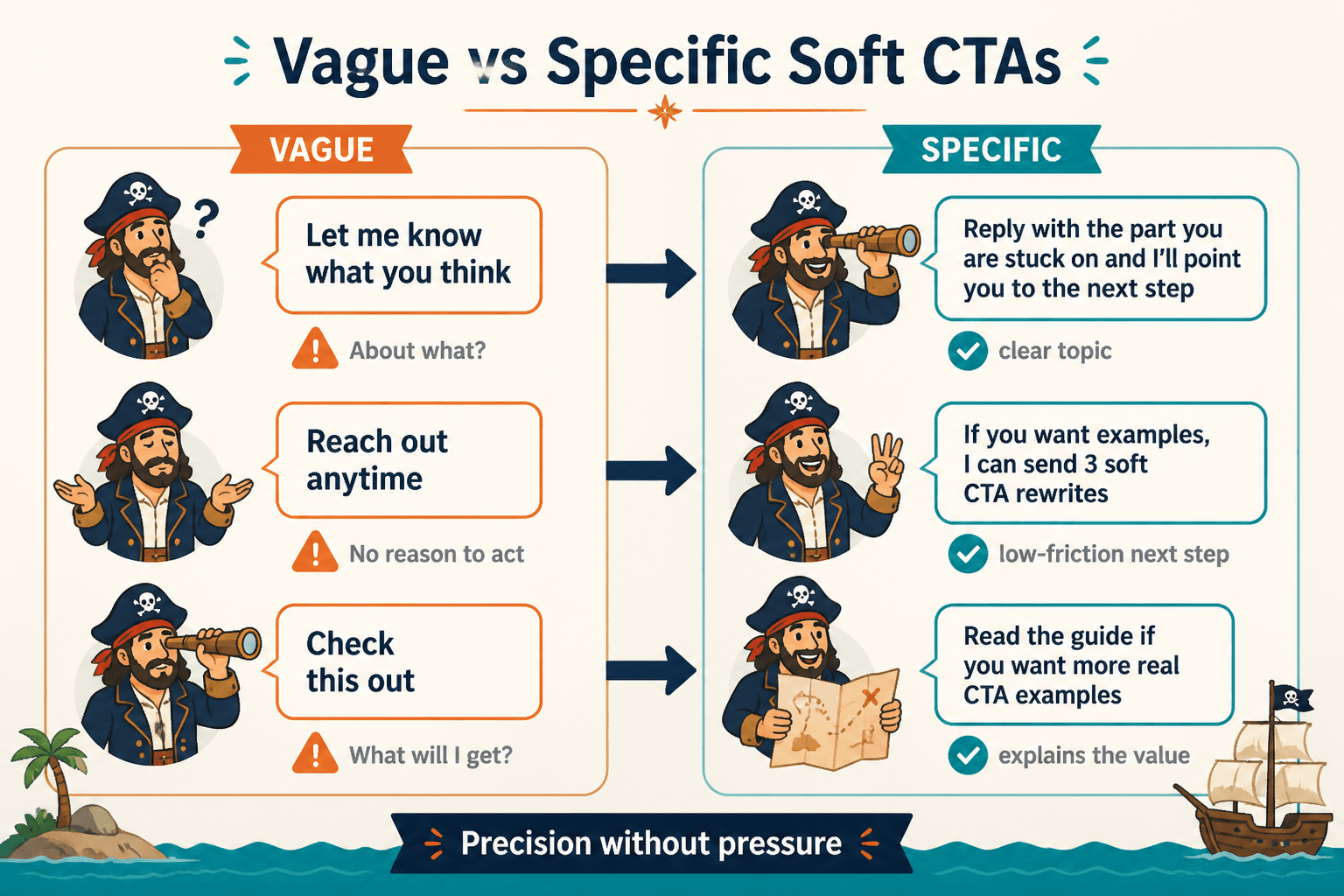
Write soft CTAs that are specific, not vague
Soft CTAs are useful when the reader is not ready for a hard ask. The problem is that most soft CTAs get written like fog in a blazer. They sound polite, but they do not say what the reader should actually do.
A good soft CTA is still clear. It simply lowers the pressure.
Instead of:
- “Let me know what you think.”
- “Check it out.”
- “Learn more.”
Try something that gives the next step shape:
- “Read the full guide if you want the step-by-step version.”
- “Grab the checklist if you want a faster implementation path.”
- “See the examples if you want to compare stronger wording.”
That is the key move: specific, low-friction, and relevant to what the reader just consumed. The goal is not to beg for a click. The goal is to make the click feel useful.
The sibling article on CTA writing examples is helpful if you want more real-world phrasing patterns you can adapt without sounding like a template generator got loose in the copy deck.
Write hard CTAs that are simple, not dramatic
Hard CTAs are where many writers suddenly decide the copy needs a velvet rope and a brass band. It does not. The stronger hard CTA is usually simpler than the weak one.
Use a plain structure:
- Who it is for
- What they get
- What to do next
- Why now
Example:
Book a strategy call if you want a cleaner conversion path, a clearer offer, and a plan you can implement this month.
That works because it names the audience, the outcome, and the action without overselling the moon. Hard CTAs do not need theatrics. They need precision.
For more pattern options, see best AI tools for CTA writing if you are using tools to draft or compare CTA variants. Just do not let the tool do the thinking for you. That is how you end up with copy that sounds efficient and means almost nothing.
Use the surrounding funnel to make the CTA easier to accept
A strong CTA is easier to write when the page has already done some of the heavy lifting. If the content has built trust, clarified the problem, and narrowed the next sensible step, the CTA does not have to work nearly as hard.
That is why funnel context matters. A CTA on a blog post should often point to a softer next step than a CTA on a sales page. A CTA at the end of a comparison article can justify a more direct offer because the reader has already signaled intent.
Common useful paths include:
- Content post → lead magnet → nurture emails → offer CTA
- Article → related resource → consultation CTA
- Social post → profile → booking page
- Post → newsletter signup → weekly trust-building → offer mention
If you want the funnel logic in more detail, the sibling piece on best funnel ideas to pair with CTA writing maps the handoff options more explicitly.
Keep monetized CTAs honest and context-fit
The moment money enters the picture, weak CTA writing starts sounding desperate, overproduced, or weirdly slippery. That is how trust gets damaged. Not by asking for the sale, but by asking in a way that feels detached from the content that came before it.
Keep these rules in play:
- Match the ask to the reader’s stage of trust.
- Sell the next step honestly.
- Keep the tone consistent with the rest of the page.
- Make the offer feel earned by the content.
- Do not inflate what happens after the click.
That lines up with standard trust and usability guidance from the Nielsen Norman Group and with conversion advice that consistently favors clarity over cleverness. If the CTA sounds like it belongs on a different page, it probably does.
The companion article on how to monetize CTA writing without wrecking trust goes deeper on that balance. It is the natural next read if your CTA needs to make money without sounding like it has a loan shark in the margins.
Practical CTA formulas you can reuse
Here are simple templates that tend to work because they are direct without being brittle:
- Soft CTA: Read the guide if you want the full framework.
- Soft CTA: Download the checklist to make the next step easier.
- Mid-intent CTA: Compare the options before you choose a path.
- Mid-intent CTA: Book a call if you want a clear recommendation.
- Hard CTA: Start the project now if you are ready to move.
- Hard CTA: Buy the plan if you want the fastest implementation route.
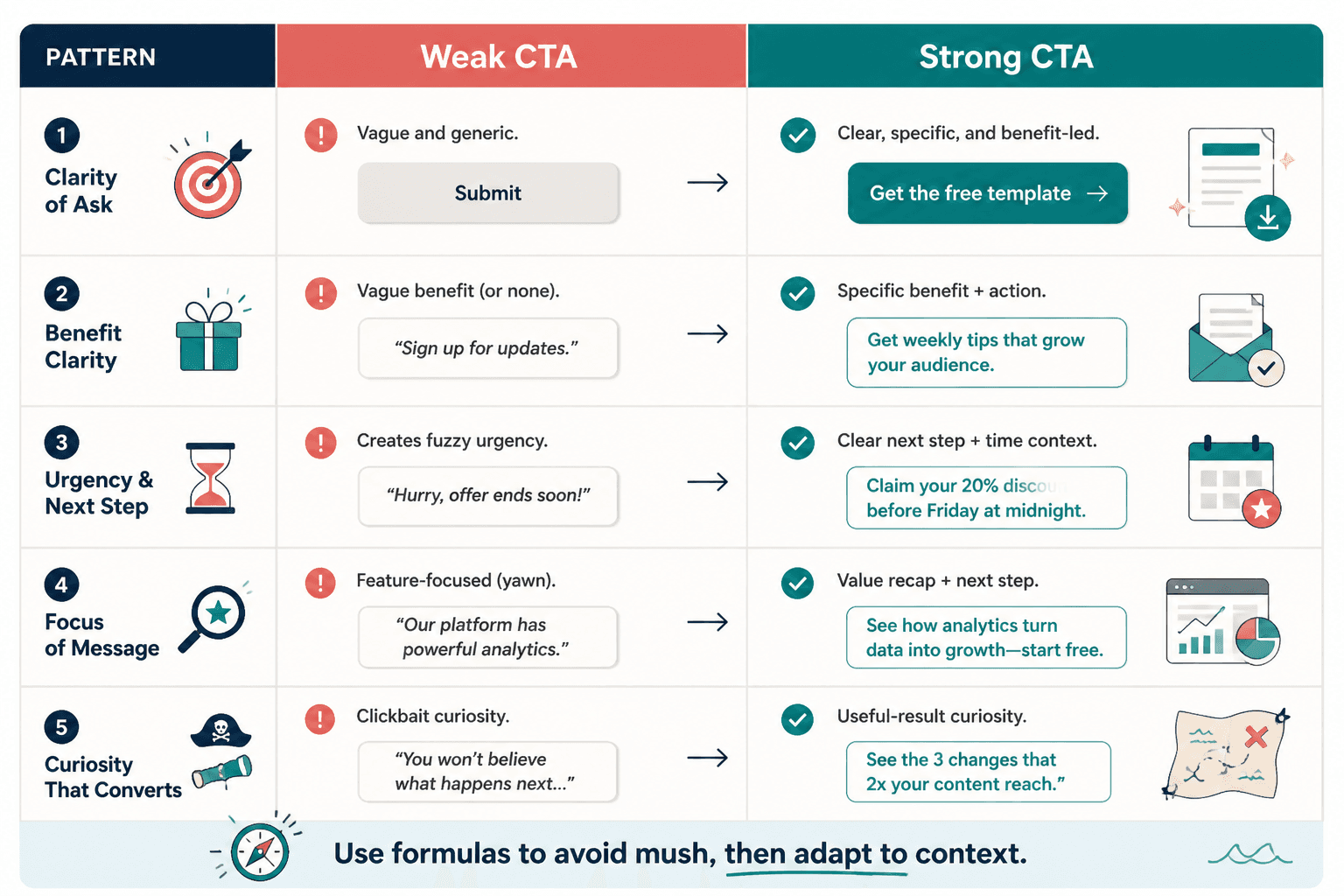
You can also rewrite weak CTAs by asking three questions:
- What does the reader probably want next?
- What amount of commitment fits this page?
- What wording makes the action feel useful instead of ceremonial?
If the CTA only says “submit,” “learn more,” or “get started,” it is probably still carrying too little meaning. A useful CTA should reduce hesitation, not just occupy space at the bottom of the page.
Quick checklist for turning CTA writing into more leads or sales
- Does the CTA match the reader’s trust level?
- Is the next step specific?
- Does the CTA sound consistent with the rest of the page?
- Does it point to a sensible funnel step?
- Is the offer honest about what happens after the click?
- Would a cautious reader still understand why this is worth doing?
If the answer to any of those is “not really,” the CTA is still doing decorative work. And decorative work is not the billable kind.
Related resources
If you want to keep tightening the conversion side of your copy, these pieces fit naturally:
For the broader conversion system, the parent guide is the right place to keep going: CTA writing. This article is the monetization-focused branch: how to turn the wording into leads or sales without making the copy flinch.
Bottom line
CTA writing converts better when it does not pretend every reader is equally ready to buy. Match the ask to trust, keep the wording specific, and let the surrounding funnel do some of the persuasion. That is usually enough to turn a decent CTA into one that actually earns a click.