
If your blog is still small, your title has a harder job than people admit.
You do not have brand recognition doing half the lifting. You do not have a giant email list waiting politely for your latest insight. And you definitely do not have the luxury of vague, clever, artsy little headlines that make sense only after someone already trusts you.
Small-audience creators usually do one of two things with titles: they write something painfully generic, or they try so hard to sound original that the reader has no idea what the article is about. Both kill clicks. Quietly, efficiently, and without much mercy.
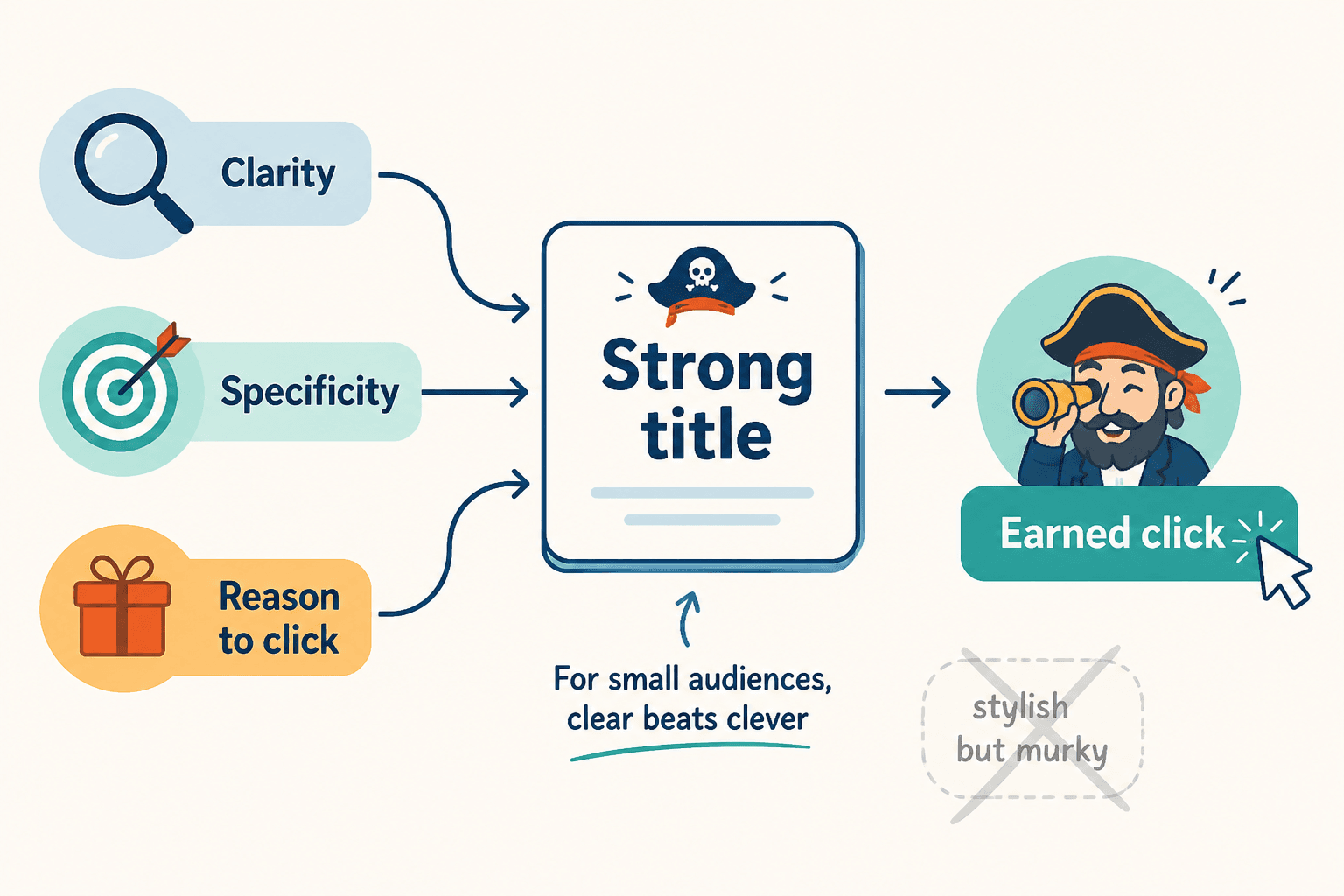
Good blog titles and headlines for creators with small audiences need to do three things fast: make the topic clear, signal who it is for, and give the reader a reason to care now instead of later. That is the game. Not being clever. Not sounding important. Not cosplaying as a magazine editor from 2014.
This article will show you how to write stronger blog titles when you do not have built-in attention yet, what kinds of headlines tend to work better for smaller creators, what to avoid, and how to build titles that can bring in the right readers instead of just random traffic that goes nowhere.
If you want the broader strategy behind title structure, SEO fit, and headline systems, it also helps to read this guide to blog titles and headlines alongside this one.
Why small creators cannot title posts like big brands
Big brands and established creators can get away with softer titles because people already know them. Their audience often clicks on trust alone.
You probably cannot.
When your audience is small, each post has to carry more weight. The title has to help with discovery, relevance, and trust at the same time. It needs to answer a silent question the reader is always asking:
Why should I spend attention on this, from you, right now?
That means your headlines usually need more clarity and more specificity than creators with bigger followings. Not because your ideas are weaker, but because your name alone is not enough to earn the click.
This is also why “brand voice” gets misused in title advice. Yes, voice matters. But if your title is stylish and murky, the reader still scrolls past. Mystery is overrated when nobody knows you yet.
For small creators, clear beats clever more often than people want to admit.
What good blog titles and headlines for creators with small audiences actually do
A strong title does not just “sound good.” It performs a few practical jobs.
- It tells the reader what the article is actually about
- It helps the right person recognize themselves in the topic
- It gives some sense of outcome, payoff, or usefulness
- It signals relevance without sounding like stale keyword soup
- It earns curiosity through specificity, not cheap tricks
That last point matters. Curiosity is fine. Manufactured suspense is not. Titles like “What Nobody Tells You About Content” are weak because they could mean almost anything. They are trying to borrow intrigue instead of providing value.
Better headlines narrow the idea enough that the right reader thinks, oh, this is for me. And that reaction is far more useful than getting a few accidental clicks from people who bounce in seven seconds.
The four signals your title should usually include
You do not need all four every time, but most strong titles include at least two or three.
- Topic: What is this about?
- Audience: Who is it for?
- Outcome: What will they get?
- Angle: Why this version, right now?
Example:
- Weak: “How to Write Better Headlines”
- Stronger: “How to Write Better Blog Headlines That Actually Earn Clicks”
- Even stronger for a specific audience: “Blog Titles and Headlines for Creators With Small Audiences”
The final version is not fancy. It is just useful. Which is the point.
The biggest title mistakes small creators keep making
1. Writing for themselves instead of for search and recognition
A lot of creators title posts based on what feels interesting to them, not what helps a stranger understand the piece. That usually creates vague headlines like:
- Thoughts on consistency
- A note on content
- Why most people stay stuck
- Some things I have learned about writing
These are not titles. They are fog with punctuation.
If someone does not know you, they need more than a mood.
2. Trying to sound profound instead of being clear
Profound titles are tempting because they feel like “real writing.” But in practice, they often hide the benefit. And hidden benefit gets skipped.
- Weak: “The Quiet Discipline of Building Something Real”
- Clearer: “How Small Creators Can Build an Audience Without Posting Every Day”
The first one might work in a memoir. The second one works better in search and in a busy reader’s browser tab.
3. Going too broad
Broad titles often sound bigger and more impressive, but they are usually weaker for small creators because they put you into competition with massive sites and say too little to the exact reader you want.
- Too broad: “Content Marketing Tips”
- Better: “Content Marketing Tips for Solo Consultants Who Need Better Leads”
Broad titles can attract broad traffic. Broad traffic is not automatically useful. Sometimes it is just a polite way to get ignored by more people.
4. Stuffing keywords like it is still 2009
Yes, search matters. No, your title should not read like a panicked spreadsheet.
- Bad: “Best Blog Titles Headlines Blog SEO Titles for Small Audience Creators”
- Better: “Blog Titles and Headlines for Creators With Small Audiences”
Natural language wins. Readers still have to want the thing.
5. Using curiosity with no payoff
Headlines that tease without clarifying can get some clicks, but they are shaky long-term assets. If people feel tricked, trust drops. And trust is the whole business model for a lot of creators.
- Weak: “The Headline Trick Nobody Uses”
- Stronger: “The Headline Pattern Small Creators Can Use to Get More Qualified Clicks”
How to write titles that work better when your audience is still small
You do not need a title formula factory. You need a practical process.
Step 1: Start with the actual reader problem
Before you write the headline, get brutally clear on the real problem behind the post.
- Not: “I want to write about blogging”
- Better: “Small creators struggle to get clicks because their titles are too vague”
That sentence gives you much better raw material. It gives you tension, audience, and practical use. Titles get stronger when the problem is sharper.
Step 2: Make the audience visible if it helps
Smaller creators often benefit from naming the audience directly in the title. It makes the post feel more relevant, and it helps filter in the right readers.
- For coaches
- For consultants
- For freelancers
- For personal brands
- For small creators
- For solo founders
This is especially helpful when the article is competing in a crowded topic. “Email marketing tips” is broad and forgettable. “Email marketing tips for coaches with tiny lists” has a pulse.
Step 3: Promise a realistic outcome
A title should suggest what the reader gets, but keep it believable. Small creators do not need another headline promising instant domination of Google by Thursday.
- Weak outcome: “that will change everything”
- Better outcome: “that get more qualified clicks”
- Better outcome: “that attract the right readers”
- Better outcome: “that help turn traffic into leads”
Specific, modest, useful outcomes often outperform dramatic nonsense because they sound credible. Credibility clicks better than hype with the right audience.
Step 4: Add an angle, not just a topic
A topic tells people what the post is about. An angle tells them why this version is worth reading.
- Topic only: “Blog Headlines”
- Topic plus angle: “Blog Headlines That Help Small Creators Compete Without Clickbait”
Your angle can come from:
- A specific audience
- A common mistake
- A desired outcome
- A practical constraint
- A stronger point of view
That is usually enough. You do not need to perform title acrobatics.
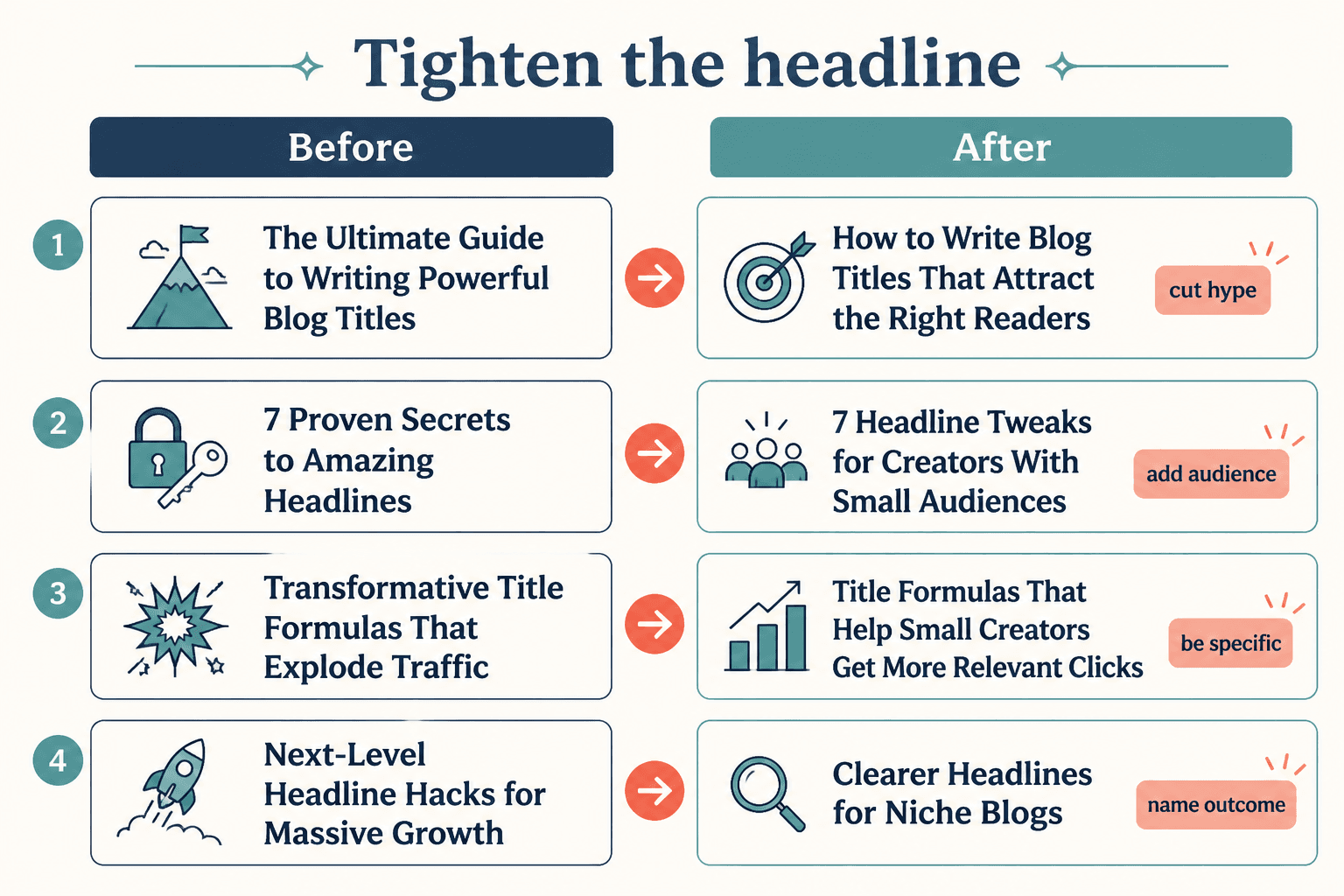
Step 5: Cut anything that sounds inflated, vague, or AI-scented
Once you have a working title, tighten it. Remove filler like:
- ultimate
- powerful
- amazing
- proven
- secret
- transformative
- next-level
If the title sounds like it wants to sell a $497 course before the reader has even clicked, calm it down.
Title formulas that tend to work well for small creators
Formulas are useful when they give structure. They are not useful when they produce 40 identical zombie headlines.
Here are some title structures that usually work well when your audience is small and relevance matters more than raw spectacle.
1. Problem + audience
- Blog Titles and Headlines for Creators With Small Audiences
- SEO Writing Tips for Coaches Who Hate Writing for Search
- Homepage Copy for Freelancers Who Sound Too Generic
This works because it quickly tells the right person, “yes, this is your mess.”
2. How to + outcome + constraint
- How to Write Blog Titles That Get Clicks Without Sounding Like Clickbait
- How to Make Your Posts More Useful Without Writing More Often
- How to Get Better Leads From Blog Content Without Turning Every Post Into a Pitch
Constraint language is underrated. It shows you understand the reader’s concern, not just the goal.
3. Number + specific use case
- 21 Blog Headline Ideas for Coaches and Consultants
- 9 Title Tweaks That Make Articles Easier to Click
- 12 Blog Intro Mistakes That Kill Reader Interest Fast
Numbers work best when the list is genuinely practical and the use case is specific. “37 Content Tips” is not specific. It is just tired.
4. Mistake-based headlines
- Why Your Blog Titles Are Not Getting Clicks
- The Biggest Headline Mistakes Small Creators Make
- Why Clever Blog Titles Often Fail for Personal Brands
Mistake headlines work because they create tension and promise diagnosis. Just make sure the article actually helps instead of scolding the reader for 2,000 words.
5. Outcome + audience + practical framing
- Blog Titles That Help Small Creators Attract Better Traffic
- Headlines for Consultants Who Want More Qualified Readers
- Blog Post Titles for Personal Brands Trying to Build Trust
This one is especially good when you want search relevance and audience clarity without sounding stiff.
If you want more straightforward structures you can use quickly, see simple blog titles and headlines templates for busy creators. If you want more niche-specific inspiration, these examples for coaches, consultants, and personal brands will help.
Before-and-after headline rewrites
The easiest way to improve your titles is to see what changes actually make them stronger. So here are some practical rewrites.
| Weak title | Stronger rewrite | Why it works better |
|---|---|---|
| Thoughts on growing an audience | How Small Creators Can Grow an Audience Without Chasing Vanity Metrics | Clear audience, clear outcome, stronger angle |
| Writing better blog posts | How to Write Blog Posts That Keep Readers Around Longer | Adds benefit and practical relevance |
| On headlines | Blog Titles and Headlines for Creators With Small Audiences | Actually says what the article is about |
| My content strategy | A Simple Content Strategy for Creators With Limited Time and Tiny Audiences | Makes the post useful to others, not just about you |
| What nobody tells you about SEO | What Small Creators Get Wrong About SEO Content Titles | Sharper, less bait-y, more relevant |
Notice the pattern. The better titles are not dramatic. They are just more informative, more targeted, and more honest about the value.
How specific should your title be?
This is where some creators freeze. They worry that if the title gets too specific, it will limit reach.
Sometimes it will. And sometimes that is exactly what you want.
If your goal is qualified traffic, better trust, and eventual leads, narrower titles can outperform broader ones because they attract people with a clearer intent. A smaller stream of right-fit readers is often more valuable than a wider stream of randoms who were never going to buy, subscribe, reply, or remember you.
There is a difference between being too narrow and being usefully specific.
- Too broad: Blog Writing Tips
- Usefully specific: Blog Writing Tips for Coaches Building Authority From Scratch
- Too narrow for most cases: Blog Writing Tips for Left-Handed Nutrition Coaches in Rural Ohio
You are not trying to shrink your audience to three people and a goat. You are trying to make the right people feel seen.
How to balance SEO and human clicks
This part gets overcomplicated fast. It does not need to.
For SEO, your title should include the main phrase naturally if it makes sense. For humans, it should still sound like a sentence someone would choose to click. If you have to choose between awkward keyword stuffing and natural clarity, pick natural clarity and rewrite until the phrase fits better.
Usually, the best titles do both:
- They name the topic clearly enough for search intent
- They add enough specificity or angle to make the click feel worthwhile
That is why a title like “Blog Titles and Headlines for Creators With Small Audiences” works. It is search-friendly, clear, targeted, and not stuffed full of desperate extras.
If you are building a stronger title system overall, it is worth browsing the wider blog SEO writing and article systems resources too, especially if you are trying to connect titles to a more consistent publishing process.
A simple title checklist before you publish
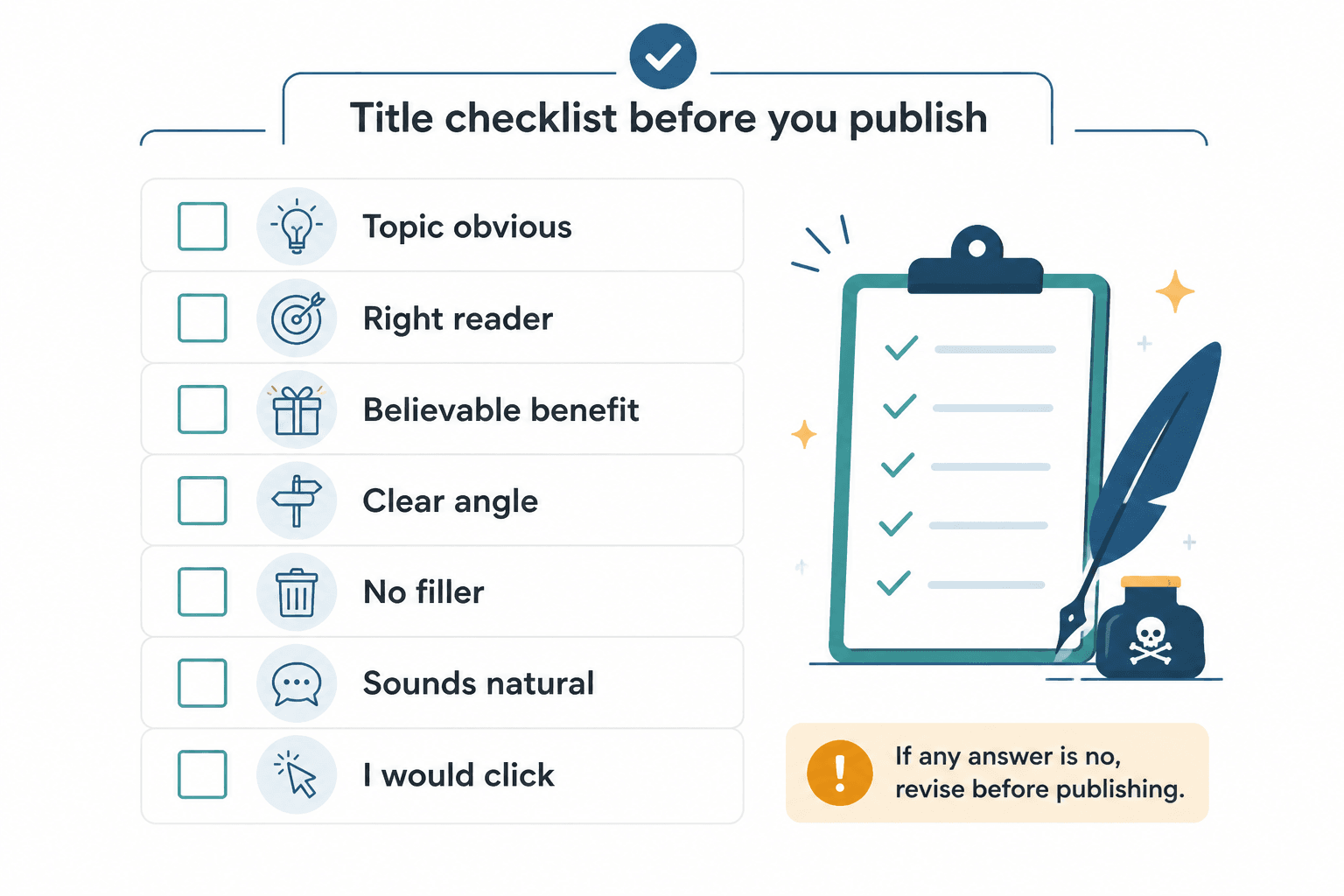
Before you hit publish, run your title through this quick check.
- Is the topic obvious within two seconds?
- Would the right reader know this is for them?
- Does it promise a believable benefit or outcome?
- Is there a clear angle, not just a broad topic?
- Have you removed filler words and vague fluff?
- Does it sound natural out loud?
- Would you click it if you did not write it?
If the answer to that last one is no, do not publish it just because you are tired. Bad titles waste good articles all the time.
What small creators should optimize titles for first
If your audience is still small, optimize your titles in this order:
- Clarity — can the reader instantly tell what this is?
- Relevance — does the right person feel addressed?
- Usefulness — is there a practical reason to click?
- Search fit