
Most lead magnets do one job badly: they collect an email address and then immediately wander off like they’ve completed their life’s purpose.
That’s the problem. A lead magnet is not the win. It is the handoff. If your freebie gets downloads but not replies, calls, sales, or qualified leads, the issue usually is not “traffic.” It’s what happens after the opt-in, what the lead magnet promises, and how closely it connects to the paid thing you actually sell.
How to turn lead magnets into more leads or sales comes down to a simple shift: stop treating them like random free stuff and start treating them like the first useful step in a buying journey. A good lead magnet should attract the right people, create trust fast, and naturally move someone toward the next action.
That next action matters more than most people think. If your freebie is helpful but disconnected, you’ll build a lovely little museum of free content and a very underwhelming pipeline. Nice for your conscience. Less nice for revenue.
If you want the bigger picture, start with the parent guide.
Why most lead magnets fail to produce leads or sales
The usual advice is “make something valuable.” Fine. But value alone is not enough.
People download free things for all kinds of reasons: curiosity, procrastination, light panic, the fantasy of getting their life together by Tuesday. That does not mean they are ready to buy. And it definitely does not mean your lead magnet is doing any filtering, qualifying, or positioning work.
Most weak lead magnets have one or more of these problems:
- They are too broad, so they attract everyone and convert almost no one.
- They solve a tiny problem that has no natural link to the paid offer.
- They provide information but create no momentum.
- They dump the lead into a dead-end thank-you page and a generic email sequence.
- They sound useful but don’t show any real expertise or point of view.
- They promise too much and deliver a bland PDF stuffed with obvious advice.
If your lead magnet is not bringing in good leads, you do not necessarily need a prettier design or a fancier landing page. You may need a better bridge between the free thing and the paid thing.
That bridge is where a lot of creators, consultants, coaches, and service businesses quietly lose money.
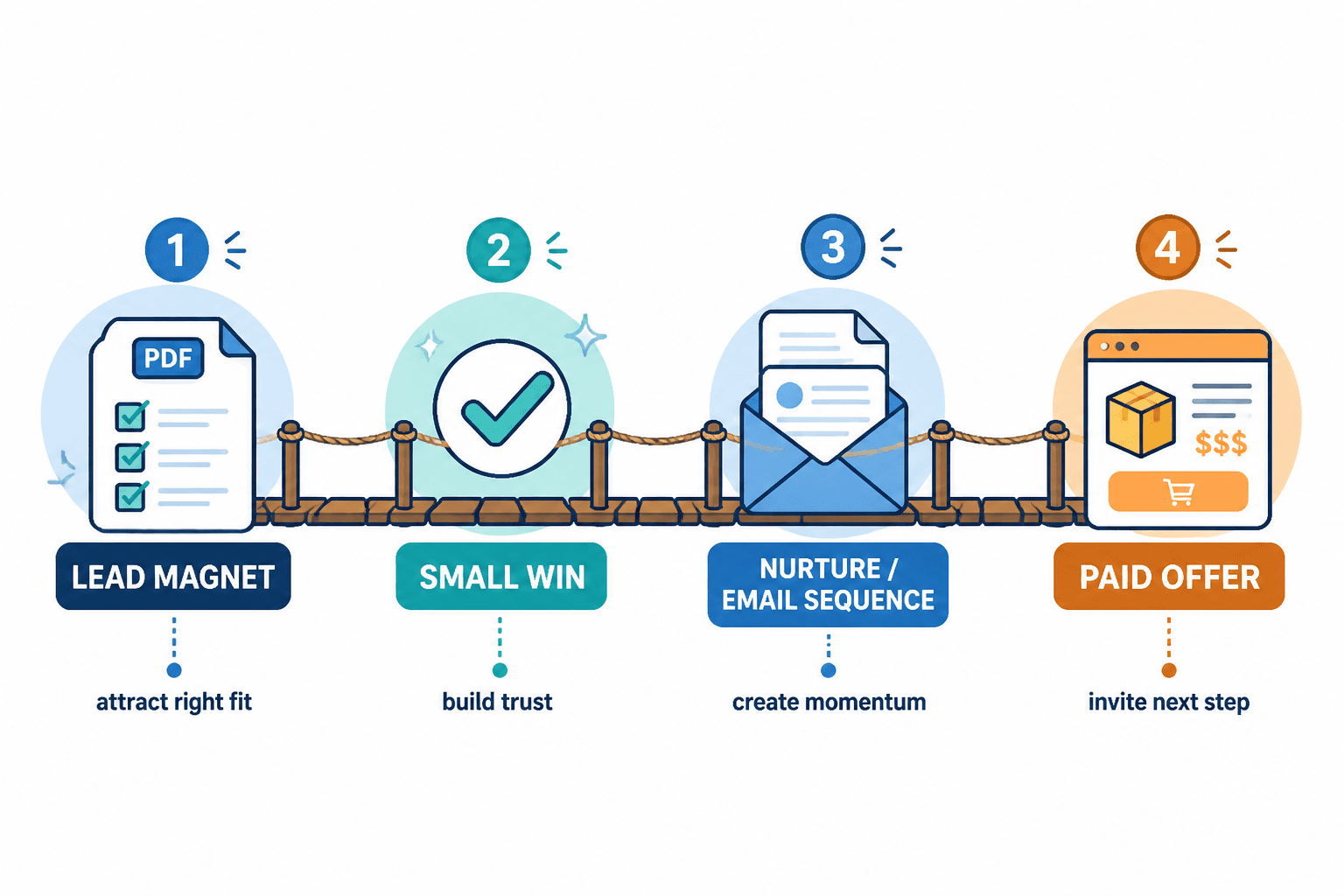
Start with the sale, not the freebie
If you want to know how to turn lead magnets into more leads or sales, begin at the end.
Before you make or revise a lead magnet, get painfully clear on what you want it to lead to. Not vaguely. Specifically.
Ask:
- What paid offer should this lead magnet warm people up for?
- Who is the ideal person for that offer?
- What problem do they know they have right now?
- What belief, confusion, or friction is stopping them from buying?
- What small win would make them more likely to trust me and take the next step?
This changes everything. Instead of creating “a helpful checklist for business owners,” you create “a messaging audit checklist for consultants whose websites sound competent but convert like damp cardboard.” One of those attracts polite downloads. The other attracts people much closer to a paid need.
The best lead magnets are not mini-courses in disguise. They are strategic proof. They show your thinking, your method, and your relevance to a specific buyer.
A simple way to align a lead magnet with your offer
| Paid offer | Best lead magnet angle | Natural next step |
|---|---|---|
| Consulting or strategy calls | Audit, diagnostic, scorecard, checklist | Book a call to fix the gaps |
| Course or workshop | Starter guide, roadmap, mistakes list, mini training | Join the full program for implementation |
| Done-for-you service | Template, framework, teardown, before/after examples | Hire you to do it properly |
| Membership or newsletter | Curated resource, swipe file, recurring insight sample | Subscribe for ongoing depth |
| Productized service | Calculator, readiness quiz, planning worksheet | Buy the fixed-scope solution |
That alignment is the difference between “people liked my freebie” and “my freebie consistently feeds the business.”
Choose a lead magnet that creates buying momentum
Not all lead magnets are equally good at generating sales. Some are nice. Some are useful. Some actually move people.
If your goal is more leads or sales, prioritize lead magnets that do at least one of these things:
- Diagnose a problem the prospect already cares about
- Organize confusion into a clear path
- Show a gap between where they are and where they want to be
- Create a quick win that builds trust in your process
- Pre-frame your method so your paid offer feels like the logical next step
That is why audits, checklists, calculators, frameworks, scorecards, mini case studies, and teardown-style resources often outperform broad ebooks. Ebooks tend to feel substantial. They also tend to get downloaded, skimmed, and forgotten under seven browser tabs and a low-grade sense of guilt.
Lead magnet types that usually convert better
- Audit checklist: Great for service businesses and consultants
- Template or swipe file: Good when your audience wants speed and structure
- Quiz or scorecard: Useful for segmentation and personalized follow-up
- Mini case study: Strong for proving your approach works in the real world
- Roadmap: Good when your buyers feel overwhelmed and need sequence
- Calculator or estimator: Useful when the value gap can be measured
If your current lead magnet is a generic guide, it may still be salvageable. You might just need to tighten the topic, sharpen the promise, and connect it more directly to a real buying decision. If you want help doing that, this guide on turning old content into better lead magnets is a good next read.
Make the promise narrower and more useful
Specific lead magnets convert better because specific problems feel more urgent.
“The ultimate guide to content marketing” sounds big. It also sounds exhausting. “A 10-minute content audit for consultants whose posts get views but no inquiries” sounds like it might solve a real issue before lunch. That’s more compelling.
Good lead magnet promises usually have four traits:
- A clear audience
- A specific problem
- A useful result
- A short or believable scope
Weak promise vs stronger promise
- Weak: Free branding guide
- Stronger: A 7-point homepage messaging guide for coaches who sound credible but still confuse prospects
- Weak: Social media checklist
- Stronger: A LinkedIn post checklist that helps consultants turn expertise into posts people actually read and reply to
- Weak: Email funnel template
- Stronger: A 5-email nurture sequence template for warm leads who downloaded your freebie but have not booked a call
Narrow does not mean tiny. It means relevant. It means the right person reads the headline and thinks, “Yes, that’s my problem.” That reaction is far more useful than getting a bunch of weak-fit signups from people who just like free stuff.
Build the next step into the lead magnet itself
A surprising number of lead magnets are built like sealed jars. You open them, consume the thing, and there is nowhere to go next.
If you want more leads or sales, the next step cannot be an afterthought buried in a tiny footer link or a vague “reach out if you need help.” People are busy. You need to make the path obvious.
Your lead magnet should naturally point toward one next action:
- Book a call
- Reply to an email
- Watch a short training
- Read a case study
- Take a quiz
- Apply for a service
- Join a newsletter
- Buy a small entry offer
This works best when the next step feels like continuation, not escalation. Someone downloads an audit checklist, sees three weak areas, and gets invited to a paid audit or strategy call. That makes sense. Someone downloads a one-page guide and instantly gets hit with “book my high-ticket package now” feels like being proposed to during a networking coffee.
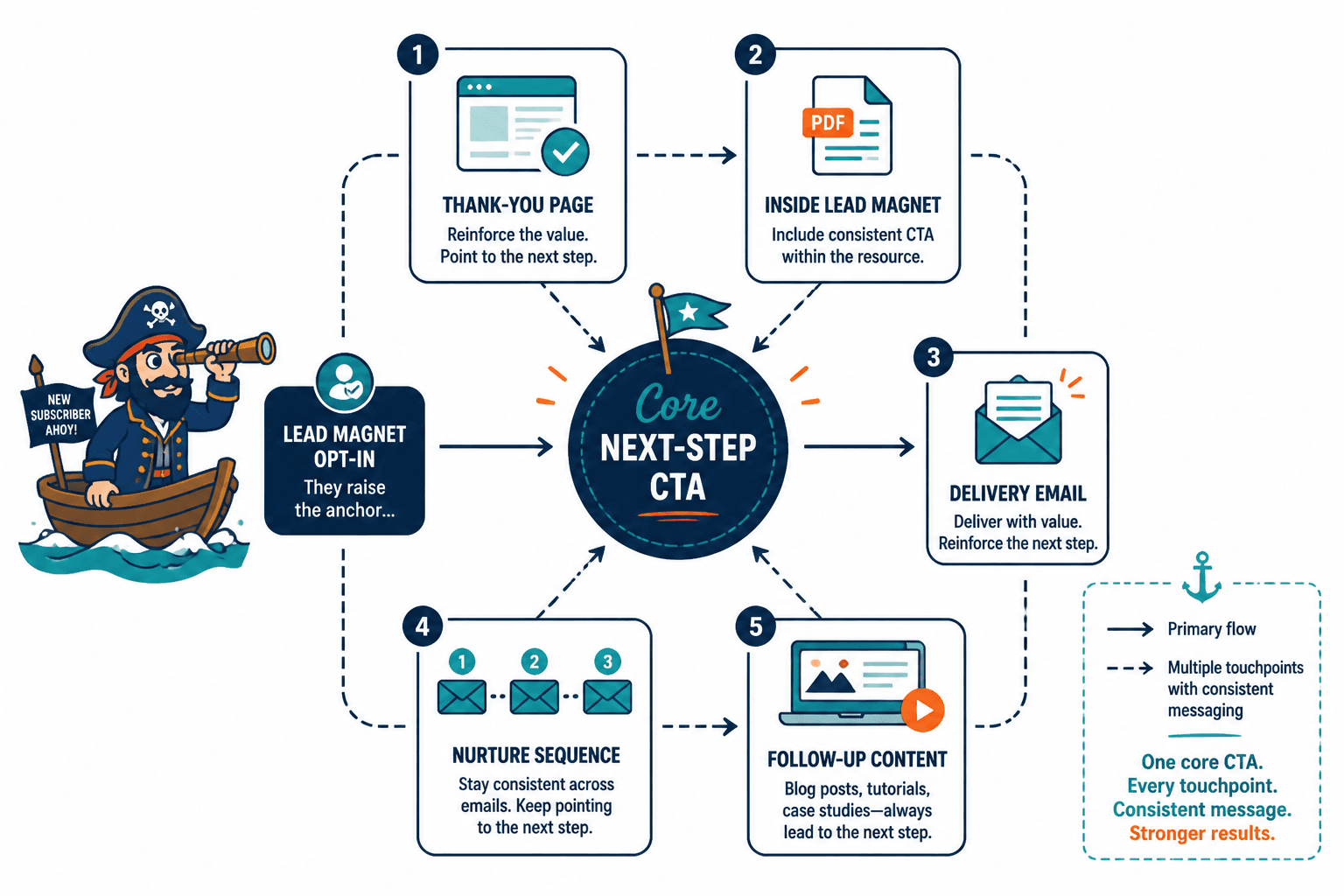
Where to place the next step
- On the thank-you page
- Inside the lead magnet itself
- In the delivery email
- In the nurture sequence
- In follow-up content tied to the same problem
Use the same core message across all of them. Repetition helps when it is clear and useful. It only becomes annoying when the pitch is clumsy or premature.
Fix the thank-you page because it is probably wasted
The average thank-you page says some version of: “Check your inbox.” Riveting stuff.
Your thank-you page is one of the highest-intent moments in the whole funnel. The person just said yes to something. They are paying attention right now. Do not squander that with a dead-end page that behaves like a receipt.
A better thank-you page can:
- Tell them exactly what to do next
- Set expectations for what they’ll receive
- Offer a related low-friction next step
- Segment them based on interest
- Move hot leads faster without forcing cold leads to pretend they are ready
Simple thank-you page options
- For service businesses: “Want help applying this? Book a 20-minute fit call.”
- For educators: “Next, watch this short training that shows how to use the framework.”
- For newsletter growth: “While the guide is on its way, read these 3 related articles.”
- For productized offers: “If you want this done faster, here’s the fixed-scope option.”
If you need ideas for what comes after the opt-in, these funnel ideas to pair with lead magnets can help you build a cleaner sequence.
Use email follow-up that actually moves people
A lead magnet without follow-up is just admin with branding.
Your email sequence does not need to be long, theatrical, or written like a copywriting course got locked in a room with a scarcity timer. It needs to continue the conversation your lead magnet started.
A simple 4-to-6 email sequence is often enough.
A practical nurture sequence structure
- Delivery email: Give them the lead magnet, restate the promise, and point to one next action.
- Quick-win email: Help them use the resource fast. Remove overwhelm.
- Problem reframing email: Show what they may be misunderstanding or overlooking.
- Proof email: Share a case study, example, or before-and-after outcome.
- Offer email: Present the paid next step clearly and calmly.
- Objection email: Answer a common hesitation and invite a reply or action.
The goal is not to “hammer conversions.” It’s to build confidence and reduce friction. Good nurture emails make the prospect think, “This person gets the problem, has a method, and seems like the adult in the room.” That is what moves leads forward.
Keep the sequence tied to the original pain point. If someone opted in for a messaging checklist, don’t spend the next five emails wandering through your life philosophy, your productivity habits, and your favorite branding metaphors. Stay on task.
If trust is a concern, and it usually should be, this article on monetizing lead magnets without wrecking trust is worth reading before you overcook the pitch.
Segment leads so your follow-up is not weirdly generic
One reason lead magnets underperform is that every new subscriber gets the exact same follow-up, no matter what they wanted, needed, or clicked on.
That is lazy at best and expensive at worst.
You do not need a massive automation maze. A little segmentation goes a long way. Even simple distinctions help:
- Beginner vs advanced
- Service provider vs creator
- Interested in consulting vs course
- Downloaded checklist vs watched training
- Clicked pricing-related links vs content-only links
This lets you send follow-up that feels more relevant and gets more action. A warm lead should not receive the same sequence as someone casually collecting freebies at 1:12 a.m. while avoiding actual work.
Personalization does not have to mean using someone’s first name 14 times. It means speaking to the problem they actually raised their hand for.
Turn the lead magnet into proof, not just information
Information is everywhere. Your lead magnet should do something information alone cannot: show how you think.
That means your freebie should reflect your method, standards, and taste. It should make the reader feel the difference between generic advice and useful expertise. This is especially important if you sell services, consulting, coaching, or strategic help. People are not just buying information from you. They are buying judgment.
Here are a few ways to make a lead magnet act as proof:
- Include a mini case study with a before and after
- Show how you would diagnose the problem
- Explain a common mistake and your alternative approach
- Include examples of weak vs strong execution
- Use frameworks you actually use with clients
A bland PDF full of generic tips says, “I can summarize the internet.” A strong lead magnet says, “I see the problem clearly, and I know what to do next.” Guess which one leads to sales.
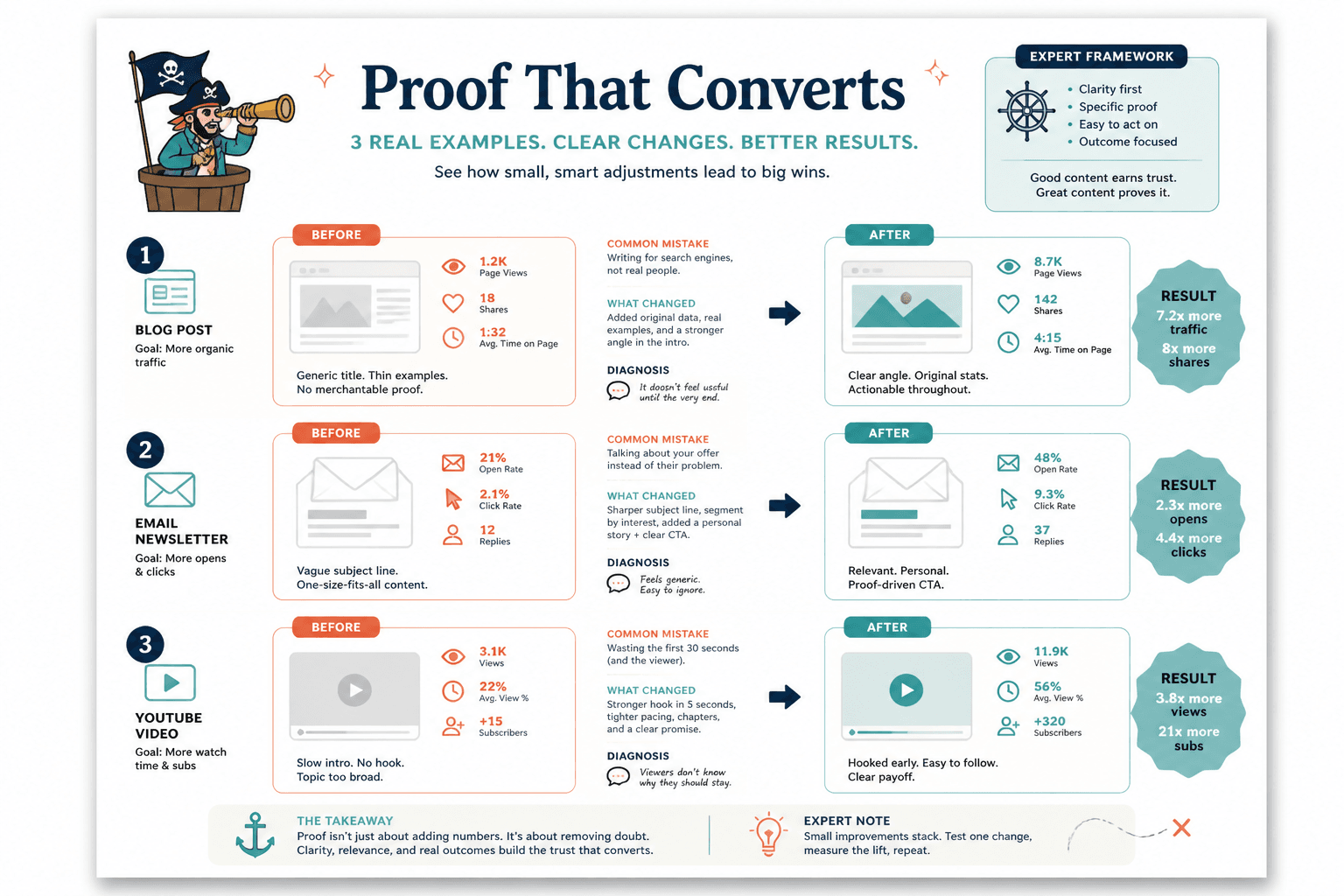
Match the CTA to the buyer’s temperature
This is where people get awkward fast. They either never ask for anything, or they ask for too much too soon.
Your call to action should match how much trust exists at that point.
| Lead temperature | Better CTA | Usually too much |
|---|---|---|
| Cold | Read this related article, reply with a question, watch a short training | Book a long sales call immediately |
| Warm | Take the next assessment, join the newsletter, see a case study | Hard close with urgency language |
| Hot | Apply, book, buy, request a proposal | Another 9-email warmup sequence |
That’s one of the cleanest ways to turn lead magnets into more leads or sales: stop using the same CTA for everybody. Someone who is curious needs clarity. Someone who is interested needs proof. Someone who is ready needs a short path.
Measure the right things
If you only track download volume, you will make lead magnets that attract lots of people and impress absolutely nobody who pays you.
Better metrics include:
- Opt-in conversion rate
- Email open and click rates
- Replies from qualified leads
- Booked calls or applications
- Sales from each lead magnet path
- Lead quality by source or magnet type
You are not just testing what gets downloaded. You are testing what creates movement.
Sometimes the lead magnet with fewer opt-ins produces better leads. Good. Keep that one. Vanity metrics are cheap. Sales tend to be less sentimental.
A simple lead magnet funnel that works for most creators and service businesses
If you want a practical setup without turning your business into a software hobby, use this:
- Create a narrowly useful lead magnet tied to one paid offer.
- Write a landing page with a specific promise and audience fit.
- Use a thank-you page with one relevant next step.
- Send a 4-to-6 email nurture sequence.
- Include proof, examples, and one clear CTA.
- Track which lead magnets produce conversations, calls, and sales.
- Improve the weak links instead of constantly making new freebies.
That last part matters. Many people respond to underperforming lead magnets by making more lead magnets. More PDFs. More templates. More clutter. Usually what they need is stronger positioning, better follow-up, or a clearer offer.
If you are still building out your system, the broader lead magnets hub and related email tools and funnel tools for lead magnets can help you tighten the setup without overcomplicating it.
You may also want to browse the wider funnel content in this monetization and money-content section if your issue is not just the freebie, but the whole path after it.
Common mistakes that quietly kill conversions
- Offering a freebie that has nothing to do with your paid service
- Making the topic so broad it attracts low-intent leads
- Giving no next step after the download
- Sending generic nurture emails that ignore the original problem
- Pitching too early and sounding desperate
- Never pitching at all and calling it “value”
- Measuring downloads instead of lead quality and sales
- Creating new lead magnets instead of fixing the funnel
If this sounds familiar, good. That means the problem is probably fixable without rebuilding your whole business from scratch and fleeing to a cabin.
FAQ
What type of lead magnet gets the most sales?
Usually the ones tied closely to a paid offer: audits, templates, checklists, scorecards, calculators, and mini case studies often outperform broad ebooks.
How many emails should follow a lead magnet?
For most businesses, 4 to 6 emails is enough to deliver the resource, create momentum, build trust, and make a clear offer.
Should every lead magnet sell something?
Not aggressively, but it should point somewhere. A lead magnet without a next step may grow your list while doing very little for your business.
Why do people download my freebie but never buy?
Usually because the lead magnet is too broad, the follow-up is weak, the offer mismatch is big, or the next step asks for too much too soon.
Is a PDF still okay as a lead magnet?
Yes, if it is specific, useful, and strategically connected to your offer. The format is not the real problem. Blandness is.
Turn the lead magnet into a path, not a souvenir
If you want to know how to turn lead magnets into more leads or sales, this is the core idea: your freebie should not just attract attention. It should guide the right person toward the next useful decision.
That means tighter promises, stronger offer alignment, better thank-you pages, smarter follow-up, and CTAs that match trust. No magic. No funnel cosplay. Just a clearer path from interest to action.
Fix that path, and your lead magnet stops being a free download graveyard and starts acting like part of the business.